
We are reader supported. When you purchase through links on our site, we may earn an affiliate commission. Also, as an Amazon affiliate, we earn from qualifying purchases.
The short answer: you usually should not vacuum broken glass with a regular household vacuum. Large shards can cut the hose, puncture the bag, damage the filter, or get lodged somewhere you cannot easily reach. If the glass is very fine, the vacuum may also blow tiny particles back into the room if the filter is not designed for that kind of debris.
The safer approach is to pick up the big pieces by hand while wearing gloves, sweep carefully, then use something slightly sticky or damp to collect the tiny slivers. A shop vac can be useful in some situations, but I would not grab a standard upright, cordless stick vacuum, or robot vacuum as the first tool.
I learned this the annoying way after dropping a glass measuring cup on my kitchen tile. My first instinct was to reach for the vacuum, because glass spreads farther than you think and I wanted it gone fast. After looking into it and checking my vacuum manual, I realized that a few minutes of careful cleanup was better than risking a damaged vacuum or leaving tiny pieces behind for bare feet, kids, or pets.
Can you vacuum broken glass with a regular vacuum?
You can physically vacuum some broken glass with a regular vacuum, but that does not mean you should. A normal household vacuum is built for dust, hair, crumbs, and dry household debris. Broken glass is sharper, heavier, and more unpredictable.
The biggest risk is not always the motor. Often, the problem is what happens before the glass even reaches the dirt bin or bag. Shards can scrape the inside of the hose, get stuck in bends, slice a bag, or damage plastic parts. If your vacuum has a spinning brush roll, pieces can bounce around, scratch flooring, or get flung outward.
I would avoid using these for broken glass:
Cordless stick vacuums because many have narrow air paths and delicate plastic dust cups.
Robot vacuums because they can drag glass across the floor and spread it to other rooms.
Bagless uprights because shards can sit in the bin and cut you later when emptying it.
Vacuums with brush rolls because glass can damage the bristles or scatter pieces.
Expensive HEPA vacuums unless the manufacturer specifically allows this type of debris.
If you already vacuumed a small amount by accident, do not panic. Turn the vacuum off, unplug it, and inspect the hose, brush roll, bag, bin, and filter area carefully. Wear gloves while emptying it. Listen for rattling, reduced suction, or scraping sounds the next time you run it.
What should you do first after glass breaks?
Before cleaning, stop the area from becoming a bigger hazard. Broken glass travels surprisingly far. A drinking glass dropped in the kitchen can send tiny pieces under the cabinet toe kick, across the grout lines, or into a nearby rug.
Here is the order I follow now:
Keep people and pets away. Tell everyone to stop walking through the area until it is cleaned.
Put on shoes. Thick-soled shoes are better than slippers.
Turn on bright lights. Use a flashlight at a low angle to make small pieces sparkle.
Wear gloves. Work gloves are best. Rubber dish gloves are better than bare hands, but sharp glass can still cut through them.
Pick up large pieces first. Place them directly into a sturdy container, not a thin plastic grocery bag.
A common mistake is sweeping right away with fast, wide strokes. That can push pieces farther under appliances or into gaps. Start slow. Move from the outside of the break area toward the center so you are not spreading the glass.
If the broken item had liquid in it, like a wine glass, jar of sauce, or flower vase, the cleanup changes slightly. Use paper towels or a rag you are willing to throw away to soak up liquid first, then collect the glass. Wet glass can stick to towels, mop heads, and grout lines.
What is the safest way to clean up broken glass?
The safest cleanup method is usually a combination of tools, not just one tool. Large shards need one approach, tiny slivers need another, and glass dust needs extra care.
Here is a practical comparison of the methods I have used or seen recommended:
Method | Best for | Pros | Watch out for |
|---|---|---|---|
Gloved hands | Large, visible shards | Controlled and precise | Never use bare hands; place shards in a hard container |
Broom and dustpan | Medium pieces on hard floors | Simple and effective | Can scatter tiny fragments if used too aggressively |
Damp paper towels | Fine slivers and glass dust | Picks up small pieces well | Use several layers so glass does not poke through |
Bread slice | Tiny pieces on hard floors | Soft surface grabs small shards | Throw it away immediately; keep away from pets |
Painter’s tape or duct tape | Small slivers on tile, wood, or counters | Good for final pass | May leave residue on delicate surfaces |
Shop vac | Remaining dry fragments after big pieces are removed | Stronger and tougher than a household vacuum | Needs correct filter; avoid sharp chunks if hose is flimsy |
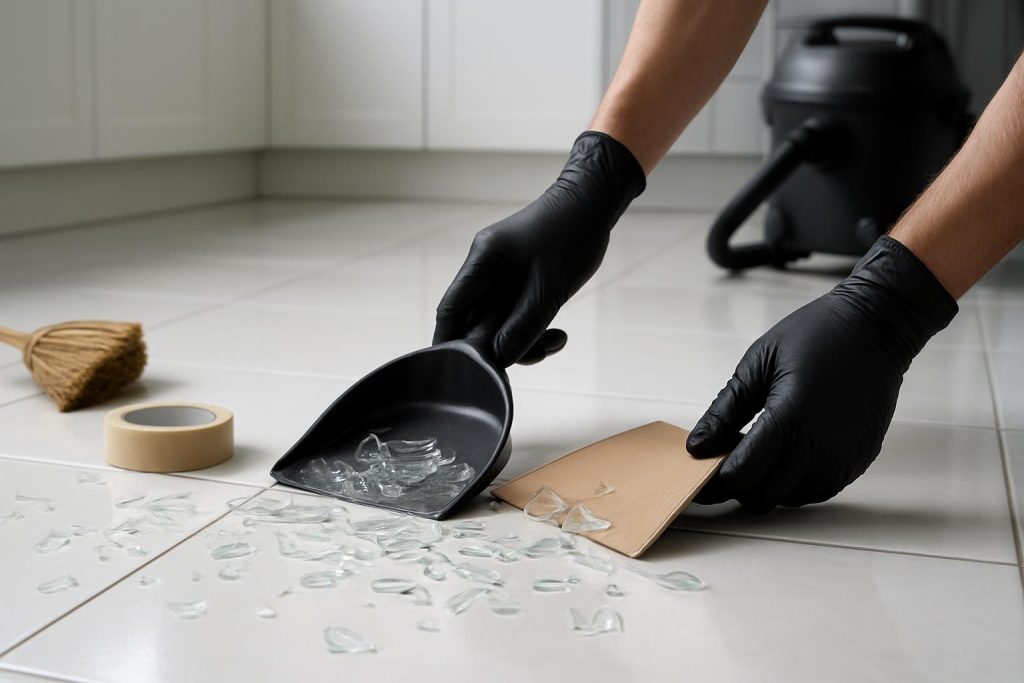
For hard floors, I usually do this:
Pick up large pieces with gloves.
Use cardboard or a stiff dustpan to collect medium pieces.
Sweep slowly from the edges inward.
Wipe the area with damp folded paper towels.
Use tape or a slice of bread for a final pass.
Shine a flashlight across the floor to check for sparkles.
Do not forget nearby spots. I check under the oven edge, refrigerator, cabinet toe kicks, table legs, chair feet, baseboards, and the soles of shoes. Tiny pieces often hitch a ride.
Is a shop vac safe for broken glass?
A shop vac is the one vacuum I would consider using for broken glass, but only after the large shards are removed. Wet/dry vacuums are generally built for rougher debris than a household vacuum. Many have wider hoses, stronger collection containers, and filters that can be replaced easily.
That said, a shop vac is not magic. Sharp glass can still damage a weak hose or tear a filter if used carelessly. Fine glass dust can be a problem if the vac is missing the correct filter.
If you use a shop vac, follow these rules:
Remove large shards first. Do not suck up big jagged pieces if you can pick them up safely.
Use the proper dry filter. Never run a shop vac without a filter for dry debris.
Use a hose without a powered brush. A plain hose or crevice tool is safer.
Move slowly. Let the suction pull in pieces without dragging the nozzle hard across the surface.
Empty it carefully. Wear gloves and avoid shaking glass dust into the air.
A shop vac is especially handy for garage floors, unfinished basements, workshops, or outdoor patios where tiny fragments can hide in rough concrete. Indoors, I still prefer manual cleanup first because it gives me more control.
How do you clean broken glass from carpet or rugs?
Carpet is trickier because glass can sink into the fibers. A broom does not help much, and rubbing the area can push shards deeper.
Start by picking up the large pieces with gloves. Then use a stiff piece of cardboard, dustpan edge, or even an old spatula to gently lift pieces sitting near the surface. Do not press down.
For small fragments in carpet:
Use tape to blot the area repeatedly.
Press a slice of soft bread gently onto the carpet surface, then discard it.
Use a flashlight from the side to spot reflective pieces.
If you use a vacuum, use a shop vac or hose attachment only after removing visible shards.
A regular vacuum with a brush roll is a poor choice for carpet glass. The brush can fling pieces around or bury them deeper. If your vacuum lets you turn off the brush roll and use only hose suction, that is safer, but I would still avoid it for sharp pieces.
Small washable rugs may be easier to handle outside. After removing visible glass, take the rug outdoors, hold it away from your body, and shake it gently over a trash area or driveway. Wear shoes and gloves. Then inspect both sides before bringing it back in.
If a glass ornament or thin drinking glass shattered into a plush rug where a baby crawls or a pet lies down, I would be extra cautious. After cleaning, run your hand over the area only while wearing a thick glove. If you still feel grit or hear crunching, keep working or consider professional cleaning for a valuable rug.
How do you clean tiny glass slivers you can barely see?
The tiny pieces are the ones that make people want to vacuum. They are also the pieces most likely to be missed.
A flashlight is your best tool here. Turn off some overhead lights and shine a flashlight almost parallel to the floor. The low angle makes small shards reflect. I have found pieces several feet away from the break this way, especially on tile.
Good tools for tiny slivers include:
Damp paper towels: Fold them thickly, wipe slowly, then throw them away.
Tape: Wrap tape around your fingers sticky-side out, then dab the area.
Bread: Press gently, lift straight up, and toss it.
Lint roller: Useful for smooth floors, upholstery, and some low-pile rugs.
Disposable cleaning wipes: Good for final cleanup, as long as they are thick enough.
Do not use your bare hand to “feel” for glass. That is one of the most common mistakes. I have done the cautious-looking version of this with a fingertip and still regretted it. Use a damp paper towel or thick glove instead.
Also be careful with mop heads. A reusable mop can pick up glass slivers and hold onto them. If you mop afterward, use disposable pads or rinse the mop head thoroughly while wearing gloves. Check it before using it in another room.
What should you avoid doing after glass breaks?
Most broken glass injuries happen because someone rushes. The cleanup feels urgent, especially if kids or pets are nearby, but a few bad moves can make the mess worse.
Avoid these common mistakes:
Do not vacuum first. Remove big pieces before using any suction tool.
Do not use a robot vacuum. It may spread glass across multiple rooms.
Do not toss shards into a thin trash bag. They can poke through and cut someone later.
Do not walk barefoot nearby. Glass travels farther than the obvious break zone.
Do not use a reusable cloth you plan to keep. Tiny shards can stay embedded.
Do not forget pets. Dogs and cats can get glass in their paws, even if they seem fine.
For disposal, I like to put broken glass into a small cardboard box, empty coffee can, thick paper bag, or another rigid container. Then I label it “broken glass” before placing it in the trash. If your local waste rules require a certain method, follow those rules.
If the glass came from a light bulb, mirror, window, or chemical container, treat it with more caution. Some bulbs require special disposal, and mirrors or window glass can break into long, sharp pieces. A broken CFL bulb also raises mercury cleanup concerns, so standard glass cleanup advice is not enough for that situation.
What if you already vacuumed broken glass?
If you already used your vacuum, stop using it until you inspect it. The steps are simple, but wear gloves because glass may be sitting in places you do not expect.
Here is what to check:
Unplug the vacuum. Do this before touching the brush roll, hose, or bin.
Empty the bag or dust cup carefully. Hold it low inside a trash container to avoid scattering debris.
Inspect the hose. Look for lodged pieces, cuts, or rattling.
Check the brush roll. Remove any glass caught near bristles or end caps.
Look at the filter. Replace it if it has visible glass dust or damage.
Listen during the next use. Rattling, scraping, or reduced suction means something may be stuck.
If you vacuumed a few tiny pieces after sweeping, the machine may be fine. If you sucked up large shards, heavy chunks, or a whole shattered jar, the risk is higher. For an expensive vacuum, checking the manual or contacting the manufacturer is worth the time.
What about broken glass on counters, sinks, and appliances?
Floors get most of the attention, but broken glass on counters or in sinks needs careful handling too. A shattered jar on a countertop can send pieces into the toaster, stove burners, drawer tracks, or garbage disposal.
For counters, pick up the large pieces first, then wipe with damp paper towels. Avoid sliding your hand across the surface. If glass broke near food, throw away exposed food. Tiny slivers in a cutting board, fruit bowl, or open container are not worth the risk.
For sinks, do not immediately run the garbage disposal. Pick out visible glass with gloves or tongs. Then use damp paper towels to collect smaller pieces. If shards went down the drain, a wet/dry vac may help remove them from the drain opening, but avoid sticking your fingers inside.
If glass breaks inside a dishwasher, unload it carefully with gloves. Remove visible pieces from the bottom, check around the filter, and inspect the spray arms if your model allows it. Running the dishwasher with glass inside can damage parts or redeposit fragments onto dishes.
FAQ: Vacuuming and cleaning up broken glass
Can a vacuum cleaner pick up glass?
Yes, a vacuum cleaner can pick up some glass, especially small dry pieces. The problem is the damage and safety risk. Regular vacuums are not designed for sharp debris, so manual cleanup first is the safer choice.
Can I use a Dyson or cordless vacuum for broken glass?
I would not use a Dyson-style cordless vacuum for broken glass unless the manufacturer clearly says it is safe. These vacuums often have narrow passages, plastic bins, and filters that can be damaged by sharp pieces. They are also unpleasant to empty if glass is inside the dust cup.
Can I vacuum tiny glass pieces after sweeping?
If you have already removed the visible shards, using a hose attachment on a sturdy vacuum may be acceptable for a few tiny pieces. A shop vac is better. For a regular vacuum, avoid the brush roll and check the machine afterward.
Is it better to sweep or vacuum broken glass?
For most household breaks, sweeping and wiping is better than vacuuming first. Pick up large pieces, sweep carefully, then use damp paper towels, tape, or bread for the tiny slivers. Vacuuming is better reserved for final cleanup with the right equipment.
Can broken glass damage a vacuum hose?
Yes. Sharp pieces can scratch, puncture, or lodge inside a hose, especially if the hose is narrow or flexible. Even if the hose looks fine from the outside, a shard can get stuck in a bend and reduce suction.
Should I mop after cleaning broken glass?
Yes, but only after the shards are removed. Use disposable mop pads if you can. If you use a reusable mop, rinse and inspect it carefully so glass slivers do not get carried into another room.
How far can broken glass spread?
Farther than most people expect. On hard floors, tiny pieces can travel several feet, especially if the item shattered with force. Check under nearby furniture, appliances, rugs, and along baseboards.
What should I do if my pet walked through broken glass?
Keep the pet still if possible and inspect the paws under good light. Look between the toes and pads. If you see bleeding, limping, swelling, or a piece you cannot remove safely, call your vet.
The safest answer for most homes
For a regular household vacuum, the safest answer is no: do not use it as your main broken glass cleanup tool. Start with gloves, a dustpan, careful sweeping, and damp or sticky materials for the tiny pieces. Save the vacuum for final cleanup only if you are using a suitable hose attachment or, better yet, a shop vac with the correct filter.
Broken glass is one of those messes where slower is faster. Taking five extra minutes to clean it methodically can save you from a cut foot, a damaged vacuum, or a hidden sliver that shows up later in the worst possible way.