
We are reader supported. When you purchase through links on our site, we may earn an affiliate commission. Also, as an Amazon affiliate, we earn from qualifying purchases.
If your dog has ridden in the car more than once, you already know the problem: hair does not just sit on top of the seat. It weaves into cloth upholstery, gathers along seams, hides between seat backs, and somehow reappears after you thought the car was clean.
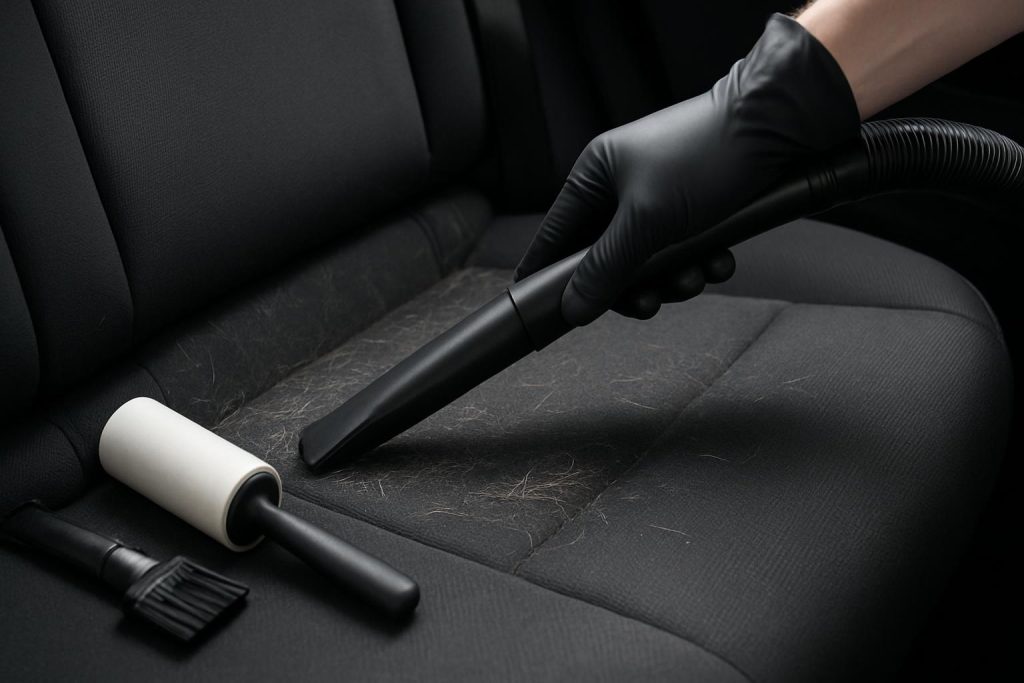
The fastest way I’ve found to remove dog hair from car seats is to loosen it first, collect it into clumps, then vacuum it up. A plain vacuum by itself usually struggles, especially on fabric seats. Rubber tools, light moisture, and the right brushing motion make a huge difference.
For most cloth car seats, my go-to order is:
- Vacuum loose dirt and surface hair first.
- Use a rubber glove, squeegee, or pet hair brush to pull embedded hair into piles.
- Vacuum again using a crevice tool.
- Finish with tape, a lint roller, or a damp microfiber cloth for the last stubborn strands.
Leather and vinyl seats are easier, but they still need care. Avoid abrasive stones or stiff brushes on leather because they can scratch the surface. For leather, a damp microfiber cloth, soft rubber brush, and vacuum are usually enough.
What’s the best way to remove dog hair from car seats quickly?
If you need the car presentable in 10 to 15 minutes, use this quick routine:
- Open all doors so you have room to work and good light.
- Remove blankets, car seats, toys, and floor mats before cleaning.
- Vacuum once to pick up loose dirt and hair.
- Drag a rubber glove or squeegee across the seat in short strokes.
- Vacuum the hair piles as they form.
- Use tape or a lint roller on seams, corners, and headrests.
This works better than vacuuming for 30 minutes straight because dog hair often clings through static and friction. You need something grippy to pull it away from the fibers before suction can do its job.
I learned this after trying to clean my back seat with only a handheld vacuum after a vet visit. The vacuum sounded busy, but the seat still looked furry. Once I used a damp rubber glove, the hair rolled up almost immediately. That was the point where I stopped treating the vacuum as the whole solution.
Which dog hair removal method should you use for your car seats?
Different tools work better on different seat materials. Cloth seats trap hair the most. Leather and vinyl release hair more easily, but they are more vulnerable to scratches and harsh cleaners.
| Method | Best For | Safe On | Watch Out For |
|---|---|---|---|
| Vacuum with pet attachment | Loose hair, dirt, crumbs | Cloth, leather, vinyl | May not remove embedded hair by itself |
| Rubber glove | Fast cleanup on fabric seats | Cloth, some leather if gentle | Too much water can soak upholstery |
| Rubber squeegee | Large flat seat areas | Cloth, vinyl | Edges can be awkward around seams |
| Pet hair removal brush | Embedded hair in upholstery | Most cloth seats | Test first; some brushes are rough |
| Pumice-style pet hair stone | Carpeted cargo areas and mats | Carpet, floor mats | Not for leather or delicate fabric |
| Lint roller or tape | Final touch-ups | Cloth, leather, vinyl | Uses a lot of sheets on heavy shedding |
| Damp microfiber cloth | Leather, vinyl, light hair | Leather, vinyl, cloth if barely damp | A wet cloth can smear dirt into fabric |
1. Start with a strong vacuum and the right attachment
Vacuuming is still the first step, even though it usually will not remove every hair on its own. It clears loose hair, dirt, grit, and crumbs so your next tool can grab the embedded fur more effectively.
Use the best suction you have available. A full-size shop vacuum, car wash vacuum, or household vacuum with a hose usually works better than a small cordless handheld. Handheld vacuums are convenient, but many lack the power needed for heavy pet hair.
The best attachments are:
- Crevice tool: for seat cracks, seams, seatbelt anchors, and between cushions.
- Upholstery tool: for broad fabric areas.
- Motorized pet brush: helpful if your vacuum has one, especially on cloth seats.
- Soft brush attachment: safer for leather and plastic trim.
One common mistake is pressing the vacuum hose flat against the seat and moving too quickly. Slow overlapping passes work better. I usually vacuum one section, brush the hair loose, then vacuum the same section again.
2. Use a damp rubber glove to roll hair into clumps
A rubber glove is one of the cheapest and most reliable dog hair tools I’ve used in the car. The rubber creates friction, and a tiny bit of moisture helps reduce static.
Here’s how to do it:
- Put on a clean rubber dishwashing glove.
- Lightly dampen the palm and fingers.
- Wipe the seat in short strokes, moving in one direction.
- Gather the hair into clumps.
- Vacuum or pick up the clumps as you go.
The key is “lightly damp.” You do not want water dripping into foam cushions. Too much moisture can leave stains, encourage musty smells, or make dirt spread into the fabric.
This method works especially well on cloth seats and rear bench seats where the dog lies down. It is also useful for vertical seat backs, where a lint roller can be awkward.
On leather, use very gentle pressure and test in a hidden spot. A soft microfiber cloth is usually a better first choice for leather, but a smooth rubber glove can help with stubborn hair along seams.
3. Pull hair from fabric seats with a rubber squeegee
A clean rubber window squeegee works surprisingly well on car upholstery. It covers more area than a glove and pulls hair into visible rows.
Use short strokes rather than long sweeping motions. Start at the top of the seat back and work downward. On the seat cushion, pull hair toward the front edge where it is easier to vacuum.
A squeegee is best for:
- Large flat cloth seat panels
- Back seats after a dog has been lying down
- Cargo-area upholstery
- Seat backs and bench cushions
It is less useful in tight corners and around seatbelt buckles. That is where a rubber glove, crevice tool, or detailing brush does a better job.
Avoid using a dirty squeegee from the garage or bathroom. Grit caught on the rubber edge can scratch trim or grind dirt into the seat fabric. Wash and dry it first.
4. Try a pet hair removal brush for embedded fur
If your dog has short, stiff hair, you may notice it sticks into the seat like tiny needles. Labradors, beagles, boxers, and many short-haired mixed breeds can leave hair that is harder to lift than long fluffy fur.
For that kind of hair, a pet hair removal brush made for upholstery can be worth buying. These brushes usually have rubber, silicone, or textured fabric edges that grip hair without needing sticky sheets.
Use light to moderate pressure and brush in short strokes. You are not trying to scrub the seat clean. You are trying to pull the hair loose so it can be vacuumed.
Before using any new brush, test it on a hidden area of the seat. Some aggressive tools can fuzz up delicate upholstery. If the fabric starts to pill, stop and switch to a gentler method.
I keep a small pet hair brush in the trunk because it is faster than searching for tape or dragging out the big vacuum for a minor cleanup. For heavy shedding, though, it works best as part of a vacuum-brush-vacuum routine.
5. Use a pumice-style pet hair stone carefully on carpets and mats
Pumice-style pet hair stones and blocks can be very effective, but they are not for every surface. They are best for carpeted floor mats, cargo liners, and durable automotive carpet. I would not use one on leather, vinyl, soft cloth seats, or delicate trim.
These stones work by catching hair and pulling it out of carpet fibers. They can also shed a little grit, so vacuum after using them.
Use this method only if:
- The surface is durable carpet, not leather or smooth upholstery.
- You test a small hidden spot first.
- You use gentle strokes instead of hard scraping.
- You vacuum thoroughly afterward.
The biggest mistake with pet hair stones is using them too aggressively. If you scrape hard, you can rough up the surface or leave residue behind. Treat the stone like a hair-lifting tool, not sandpaper.
6. Finish stubborn spots with a lint roller or packing tape
Lint rollers are not the most efficient tool for a back seat covered in hair, but they are excellent for final touch-ups. They pick up the strands left behind after vacuuming and brushing.
Use a lint roller on:
- Headrests
- Seat seams
- Armrests
- Seatbelt fabric
- Small patches of hair after the main cleanup
If you do not have a lint roller, wrap packing tape around your hand with the sticky side out. Press and lift rather than rubbing. Rubbing can push hair deeper into fabric.
The trade-off is waste. If your dog sheds heavily, you can burn through half a lint roller quickly. That is why I use sticky tools near the end, not at the beginning.
Be careful with old or cheap tape on leather or plastic trim. Strong adhesive can leave residue, especially if the car has been sitting in the sun. If residue appears, clean it with a leather-safe or interior-safe cleaner rather than scraping it.
7. Wipe leather and vinyl seats with a damp microfiber cloth
Leather and vinyl seats are much easier to clean than cloth because hair sits more on the surface. Still, hair collects in stitching, seams, and the gap where the seat back meets the cushion.
For leather or vinyl, start with a dry vacuum using a soft brush or crevice tool. Then wipe with a barely damp microfiber cloth. The cloth should feel damp, not wet.
For best results:
- Fold the microfiber cloth into quarters.
- Wipe in one direction to gather hair.
- Rinse and wring the cloth often.
- Use a soft detailing brush around stitching.
- Dry the seat with a clean cloth afterward.
Avoid harsh household cleaners, bleach, abrasive sponges, and stiff brushes on leather. They can dull the finish or damage protective coatings. If your seats are real leather, follow up with a leather-safe cleaner or conditioner if needed.
For perforated leather seats, do not flood the surface. Water and cleaner can settle into the tiny holes. Use light moisture and vacuum the perforations gently.
8. Loosen hair from seams with a detailing brush or old toothbrush
The most annoying hair is often not on the middle of the seat. It is packed into seams, seatbelt slots, car seat anchors, and the crease between cushions.
A soft detailing brush, paintbrush, or old toothbrush can loosen hair from those areas before vacuuming. I like using a brush in one hand and the vacuum hose in the other so the hair gets sucked up as soon as it comes free.
Good places to brush include:
- Seat seams and stitching
- Seatbelt buckles
- Between the seat back and cushion
- Child car seat anchor points
- Edges of removable floor mats
- Cargo area corners
Use a soft brush on leather, vinyl, and plastic trim. A stiff brush may be fine on durable carpet, but it can scratch interior panels or make cloth seats look fuzzy.
This method is slow, but it solves the “why is there still hair after I cleaned?” problem. Most leftover hair is hiding in the edges, not the main seating area.
9. Use a light anti-static spray or fabric softener mix with caution
Static makes dog hair cling to car upholstery, especially in dry weather. A very light mist can help hair release from fabric before brushing or vacuuming.
Some people use a diluted fabric softener spray. A common mix is water with a tiny amount of fabric softener in a spray bottle. The goal is not to wet the seat. It is only to reduce static.
If you try this, follow a few precautions:
- Test on a hidden area first.
- Use only a fine mist.
- Do not soak the fabric.
- Avoid spraying leather, suede, Alcantara, or specialty upholstery.
- Do not use strong scents if passengers are sensitive to fragrance.
I use this only for stubborn cloth upholstery, and not every time. Too much product can leave residue that attracts dirt later. A damp rubber glove often does the same job with less risk.
If your car has premium upholstery or you are unsure what the fabric is, skip the fabric softener and use a dry rubber tool instead.
How do you remove dog hair from car seats step by step?
For a thorough cleanup, this is the routine I use after a road trip with the dog:
Step 1: Clear the car
Remove dog blankets, toys, leashes, seat covers, child seats, and floor mats. Shake washable items outside before putting them in the laundry.
Step 2: Vacuum loose debris
Vacuum the seats, floor, and cargo area. Use a crevice tool around seat edges and buckles. This first pass removes grit that could scratch surfaces while brushing.
Step 3: Loosen embedded hair
Use a rubber glove, squeegee, or pet hair brush on cloth seats. Use a microfiber cloth and soft brush on leather or vinyl.
Step 4: Vacuum again
Vacuum the hair piles before they scatter. Move slowly and overlap your passes.
Step 5: Detail the seams
Use a soft brush or toothbrush around stitching and tight gaps. Vacuum as you brush.
Step 6: Do a final touch-up
Use a lint roller, tape, or damp microfiber cloth for the last visible strands.
Step 7: Let damp areas dry
If you used any moisture, leave the doors open for a while in a safe place or run the fan. Trapped moisture can cause odor, especially in cloth seats.
What mistakes make dog hair harder to remove?
Most failed cleanup attempts come from using the right idea in the wrong order. A vacuum is useful, but it needs help. Water can help, but too much creates new problems.
Common mistakes include:
- Vacuuming only once: Embedded hair often needs to be loosened first.
- Using too much water: Wet upholstery can smell musty and hold dirt.
- Scrubbing leather: Abrasive tools can damage the finish.
- Using a pumice stone on seats: These are better for carpet and mats.
- Ignoring seams and cracks: Hair hides there and spreads back out later.
- Starting with a lint roller on heavy hair: You waste sheets fast.
- Using dirty tools: Grit on brushes or squeegees can scratch or stain.
Another mistake is cleaning in poor light. Dog hair, especially light-colored hair on gray upholstery, can disappear until sunlight hits it. I try to clean with the doors open or use a bright flashlight to check seams.
How can you keep dog hair from taking over your car again?
Removing dog hair is easier if less of it reaches the seats in the first place. After cleaning my car a few too many times, I started treating prevention as part of the cleanup routine.
Helpful habits include:
- Use a washable rear seat cover or dog hammock. Choose one with side flaps if your dog brushes against the doors.
- Brush your dog before car rides. Even two minutes helps during shedding season.
- Keep a small rubber brush or lint roller in the car. Quick cleanups prevent hair from embedding deeply.
- Wash dog blankets often. A dirty blanket becomes a hair dispenser.
- Use a crate or cargo liner if appropriate. This keeps hair contained and can be safer for some dogs.
- Vacuum regularly. Waiting months makes the job much harder.
A seat cover is not perfect. Hair still sneaks underneath, especially around headrests and seatbelt openings. But it reduces the problem enough that the actual seats need deep cleaning less often.
Are any dog hair removal methods unsafe for car interiors?
Yes. Some popular tricks can damage seats if used on the wrong material.
Avoid these on leather or delicate upholstery:
- Pumice stones
- Razor blades
- Wire brushes
- Stiff scrub brushes
- Harsh degreasers
- Bleach or ammonia cleaners
- Very sticky industrial tape
Also be careful with steam cleaners. Steam can help with odor and grime, but it is not my first choice for dog hair alone. Too much heat or moisture can affect adhesives, electronics under seats, and some upholstery materials. If your car has heated or ventilated seats, use extra caution with liquids and steam.
If the seats are suede, Alcantara, wool, or a premium fabric, check the owner’s manual or test very carefully before using moisture or aggressive tools.
FAQ: Removing dog hair from car seats
What removes dog hair from car seats the fastest?
A rubber glove or rubber squeegee followed by a vacuum is usually the fastest method for cloth seats. For leather or vinyl, use a vacuum and a damp microfiber cloth. Sticky rollers are better for finishing touches than full-seat cleaning.
Can I use a regular household vacuum?
Yes, if it has a hose and decent suction. Use an upholstery tool and crevice attachment. A motorized pet hair attachment helps on cloth seats, but you can still get good results by loosening the hair with rubber before vacuuming.
How do I get short dog hair out of fabric car seats?
Short hair often embeds more deeply than long hair. Use a rubber glove, pet hair brush, or squeegee in short strokes to pull the hair loose. Then vacuum slowly. You may need to repeat the process more than once.
Is a pumice stone safe for car seats?
A pumice-style pet hair stone is usually best for carpeted mats and cargo carpet, not seats. It can be too abrasive for leather, vinyl, and some cloth upholstery. Always test first.
Will fabric softener remove dog hair?
Fabric softener does not remove hair by itself, but a very diluted mist can reduce static on some cloth seats. Use it sparingly and test first. Avoid it on leather, suede, Alcantara, and any upholstery that may stain.
How do detailers remove dog hair from cars?
Many detailers use a combination of strong vacuum suction, rubber pet hair tools, compressed air, brushes, and careful seam work. The process is usually repeated in stages rather than done with one tool.
How do I remove dog hair from seat belts?
Pull the seat belt out fully and hold it flat. Use a lint roller, tape, or a slightly damp microfiber cloth. Let the belt dry completely before retracting it if you used moisture.
Can dog hair damage car seats?
Dog hair itself usually does not damage seats, but trapped dirt, oils, claws, and repeated rubbing can wear upholstery. Hair also holds odor and allergens. Regular cleaning and a washable seat cover help protect the interior.
What should I keep in the car for quick dog hair cleanup?
A small rubber pet hair brush, a lint roller, a microfiber cloth, and a compact vacuum if you have room. For longer trips, a washable dog hammock or seat cover saves far more time than cleaning bare seats afterward.
The best results come from combining methods: loosen the hair, gather it, vacuum it, then detail the edges. Once you find the right tool for your seat material, cleaning dog hair from the car becomes much less frustrating.