
We are reader supported. When you purchase through links on our site, we may earn an affiliate commission. Also, as an Amazon affiliate, we earn from qualifying purchases.
The short answer: do not vacuum wet carpet with a regular household vacuum. A standard upright, canister, or stick vacuum is made for dry debris, not water. Using one on wet carpet can shock you, ruin the motor, spread dirty water through the machine, and potentially create a fire risk later.
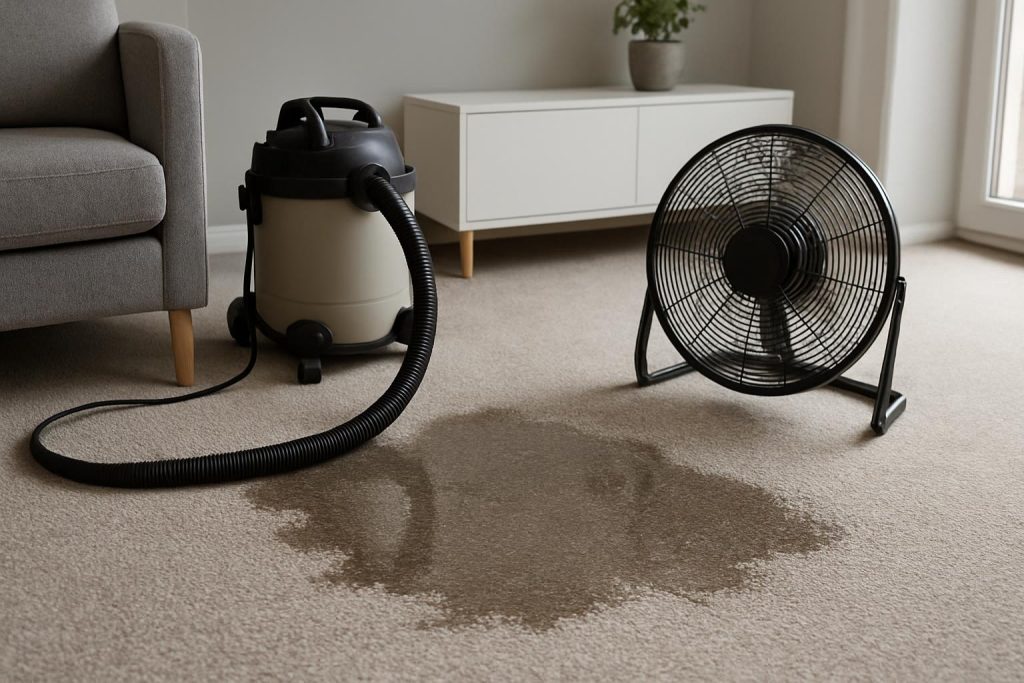
If your carpet is wet, the safe tool is a wet/dry shop vacuum or a carpet extractor, assuming the water is clean enough to handle and the power situation is safe. I learned this the stressful way after a washing machine hose leaked into our hallway carpet. My first instinct was to grab the vacuum because it was nearby. Thankfully, I stopped and checked first. That regular vacuum would have been an expensive and unsafe mistake.
If you’re dealing with wet carpet right now, your first steps are simple: stop the water source, unplug nearby electronics, keep kids and pets away, remove as much water as safely possible, and start drying the carpet fast. The longer carpet stays wet, the more likely you are to deal with odor, mold, damaged padding, and stains.
Can you vacuum wet carpet with a regular vacuum?
No, you should not use a regular vacuum on wet carpet.
Most household vacuums are designed to move air and dry particles through an electrical motor. Water changes the entire situation. Once moisture gets pulled into the vacuum, it can reach wiring, the motor, filters, or dust bin. Even if the vacuum appears to work for a few seconds, you may be damaging it internally.
The biggest risks are:
- Electric shock: Water and household electricity are a dangerous mix.
- Motor damage: Regular vacuum motors are not sealed for water pickup.
- Fire risk later: Moisture inside electrical parts can cause corrosion or shorts.
- Moldy vacuum smell: Damp dust, hair, and carpet fibers inside the machine can turn foul quickly.
- Poor results: A regular vacuum will not extract water properly from carpet or padding.
One common mistake is thinking, “I’ll just do a quick pass.” That quick pass can still pull water into the motor. Another mistake is using a vacuum on “slightly damp” carpet after cleaning. If the carpet feels damp to your hand or leaves moisture on a paper towel, treat it as wet.
What kind of vacuum can you use on wet carpet?
For wet carpet, use a machine designed to handle liquids. The most common options are a wet/dry shop vac, a carpet extractor, or a rental water extraction machine.
Here’s how the main options compare:
| Tool | Safe for Wet Carpet? | Best For | Important Caution |
|---|---|---|---|
| Regular upright vacuum | No | Dry dirt and dust only | Can cause shock or ruin the motor |
| Cordless stick vacuum | No | Dry crumbs, pet hair, light debris | Battery and motor parts are not meant for water |
| Wet/dry shop vacuum | Yes, if used correctly | Removing standing water from carpet | Remove dry filter if the manual requires it |
| Carpet extractor | Yes | Pulling moisture and cleaning solution from carpet fibers | Not always strong enough for deep flooding |
| Rental water extractor | Yes | Larger wet areas and deeper extraction | Check water source first; contaminated water may need pros |
A wet/dry shop vac is usually the fastest homeowner-friendly option if you have clean water from a sink overflow, broken supply line, or spilled bucket. It can pull a surprising amount of water from carpet, though it will not always dry the padding underneath.
A carpet extractor is helpful after the bulk of the water is gone. It is better at pulling moisture from the carpet face and can help rinse out residue, but it may struggle if the carpet is soaked down into the pad.
What should you do first if your carpet is wet?
Before grabbing any machine, make the area safe. Wet carpet often happens during stressful moments: a toilet overflow, leaking appliance, burst pipe, fish tank spill, or rain coming through a window. It is easy to rush. That is when mistakes happen.
1. Stop the water source
Turn off the supply valve, shut down the appliance, close the window, or place a bucket under the leak. If water is still entering the room, extraction will not help much.
2. Avoid electrical hazards
Do not stand in water while touching plugged-in devices. If outlets, extension cords, power strips, or appliances are wet or sitting near the wet carpet, shut off power to that area at the breaker if you can do so safely.
If the carpet is wet around major appliances, baseboard heaters, floor outlets, or electrical panels, pause and call a qualified professional. Saving the carpet is not worth risking shock.
3. Identify the water type
This part matters more than many homeowners realize. Clean water from a supply line is very different from sewage or floodwater.
- Clean water: Broken water supply line, rainwater from an open window, spilled clean water.
- Gray water: Washing machine discharge, dishwasher leak, aquarium water, some toilet overflows without feces.
- Black water: Sewage, floodwater, toilet overflow with waste, water from outside after storms.
For black water, do not use your home shop vac and do not try to save the carpet yourself. Contaminated water can carry bacteria, chemicals, and other hazards. Carpet and padding usually need removal, and the area should be cleaned professionally.
4. Remove furniture and loose items
Move anything sitting on the wet carpet. Furniture legs can stain carpet, metal can rust, and boxes can collapse into the fibers. If something is too heavy to move, place foil, plastic lids, or furniture blocks under the legs temporarily.
How do you safely vacuum wet carpet with a shop vac?
If the water is clean, the power situation is safe, and you have a wet/dry vacuum, you can start extracting. Read your machine’s manual if you have it. Different models handle filters and attachments differently.
Here is the process I use after small household leaks:
1. Set the shop vac for wet pickup
Many wet/dry vacuums require you to remove the paper or cloth dry filter before vacuuming water. Some use a foam sleeve for wet pickup. Others allow wet use with a specific filter installed.
Do not skip this step. A dry dust filter can clog quickly, collapse, or make a mess inside the tank.
2. Use the right attachment
A wide floor nozzle works better than a small crevice tool for open carpet areas. If your vacuum came with a squeegee-style wet nozzle, that is usually the best choice.
For edges, corners, and along baseboards, the crevice tool can help pull trapped water.
3. Work slowly in overlapping passes
Move the nozzle slowly over the wet carpet. You should hear water entering the tank at first. Go over each section several times from different directions.
Do not scrub aggressively with the nozzle. You are trying to extract water, not rough up the fibers.
4. Empty the tank before it overfills
Most shop vacs have a float that shuts off suction when the tank is full. Still, do not rely on it completely. Stop often and empty the tank into a toilet, utility sink, or outdoor drain approved for that water type.
If the water looks muddy, oily, sewage-like, or smells foul, stop and reassess. That may not be a safe DIY cleanup.
5. Keep extracting until water pickup slows
At first, a shop vac may pull water quickly. After several passes, you may only get a small amount. That does not mean the carpet is dry, but it means you have removed much of the accessible water.
Press a clean white towel into the carpet with your foot. If it comes up very wet, keep extracting. If it is only damp, move to drying.
How do you dry carpet after vacuuming up water?
Vacuuming up water is only the first half of the job. Drying is where many people fall short. Carpet can feel dry on top while the padding underneath stays wet. That hidden moisture is where musty smells and mold problems begin.
Start drying right away:
- Run fans across the carpet: Aim airflow over the surface, not straight down.
- Use a dehumidifier: This helps pull moisture from the room, especially in humid weather.
- Open windows only if outdoor air is dry: If it is humid outside, windows may slow drying.
- Lift carpet edges if possible: This allows air to reach the padding.
- Remove wet padding if needed: Padding holds water like a sponge and often needs replacement after heavy soaking.
In my own house, the carpet surface felt almost normal the next morning, but the pad underneath was still damp near the hallway wall. I only found it because I pressed hard with a towel and felt the coolness underfoot. That experience changed how I judge wet carpet. Touching the surface is not enough.
A good drying target is within 24 to 48 hours for clean water situations. After that, mold risk rises, especially in warm rooms or humid climates. If the carpet is still damp after two days of fans and dehumidifying, it is time to call a water damage restoration company.
Can you use a carpet cleaner on wet carpet?
You can use a carpet cleaner or extractor on wet carpet if it is designed to recover liquid. Many home carpet cleaners spray water and cleaning solution, then suck it back up into a recovery tank. That makes them safe for moisture, unlike a regular vacuum.
But a carpet cleaner is not always the best first tool after a leak.
If the carpet is saturated, a shop vac or professional extractor usually removes bulk water faster. A carpet cleaner can be useful afterward to rinse and extract light residue, especially after a clean water spill that left a smell or stain.
Be careful about adding more cleaning solution to an already wet carpet. Too much detergent can leave sticky residue that attracts dirt. If you use a carpet cleaner, make extra dry passes without spraying more water.
When should you not vacuum wet carpet yourself?
DIY cleanup has limits. Some wet carpet situations are unsafe, unhealthy, or too large for home equipment.
Call a professional or your insurance company if:
- The water came from sewage, floodwater, or a toilet overflow with waste.
- The carpet has been wet for more than 24 to 48 hours.
- The wet area is larger than one room.
- Water reached walls, baseboards, cabinets, or insulation.
- You smell strong musty, sour, or sewage odors.
- You see mold, staining, or buckling.
- Electrical outlets or cords were exposed to water.
- Someone in the home has asthma, immune issues, or severe allergies.
Professionals have stronger extractors, moisture meters, air movers, and disinfecting procedures. They can also check whether water traveled under walls or into subflooring. Homeowners often dry what they can see and miss what they cannot.
The trade-off is cost. Professional water extraction is more expensive than renting equipment or using your own shop vac. But if the water is contaminated or the structure is wet, professional help can prevent a bigger repair bill later.
What if the carpet padding is soaked?
Carpet padding is the tricky part. Carpet fibers release water faster than the cushion underneath. Padding can stay wet for days, and some types break down after soaking.
If only a small clean-water area got wet and you extracted quickly, you may be able to dry the pad with strong airflow. Lifting the carpet edge and blowing air underneath helps a lot.
If the padding is heavily soaked, contaminated, or still damp after a day or two, replacement is usually the better choice. Padding is cheaper than carpet, and replacing it can save the carpet from odor and mold.
Signs the pad may need removal include:
- A squishy feeling when you walk on the carpet.
- Water seeping up when you press down.
- A lingering musty or sour smell.
- Wetness near walls or tack strips.
- Carpet that dries on top but feels cool underneath.
If you lift a corner, be careful around tack strips. They are sharp. Wear gloves, and do not yank the carpet hard unless you know how to re-stretch it. A loose or wrinkled carpet can become a tripping hazard later.
Common mistakes people make with wet carpet
Wet carpet cleanup seems simple until you are in the middle of it. These are the mistakes I see homeowners make most often, and a few I nearly made myself.
Using the household vacuum “just once”
This is the big one. Regular vacuums are not wet vacs. Even a small amount of water can damage the machine or create a shock hazard.
Waiting until morning
Water damage does not pause overnight. If the carpet is truly wet, start extraction and airflow as soon as the area is safe.
Only drying the surface
A carpet can look dry while the pad is still wet. Use towels, pressure, and your sense of smell. If you have access to a moisture meter, even better.
Using heat without airflow
Heat alone can make the room feel drier while moisture remains trapped. Fans and dehumidifiers are more important than blasting heat.
Adding too much cleaner
More soap does not equal cleaner carpet. Residue can attract dirt and make the carpet feel stiff or sticky.
Ignoring the water source
Clean water and sewage are not the same cleanup job. If the water is contaminated, protecting your health matters more than saving the carpet.
Can wet carpet cause mold?
Yes, wet carpet can grow mold if it stays damp long enough. Mold needs moisture, a food source, and the right temperature. Carpet fibers, dust, padding, and subfloor materials can all support growth.
You will not always see mold right away. Early warning signs are often odor and persistent dampness. A musty smell after drying attempts is a red flag.
Clean water wet carpet that is extracted and dried quickly is often salvageable. Carpet wet from sewage or floodwater is a different matter and usually should be removed. Mold is not the only concern there; bacteria and other contaminants may be present.
If anyone in the home is sensitive to mold, has respiratory issues, or is immunocompromised, be more cautious. What feels like a manageable DIY job for one household may not be wise for another.
How long does wet carpet take to dry?
After good extraction, carpet may dry in 12 to 24 hours. A soaked carpet with wet padding can take 48 hours or longer, especially without a dehumidifier.
Drying speed depends on:
- How much water entered the carpet.
- Whether the padding is wet.
- Room temperature and humidity.
- Air movement across and under the carpet.
- The carpet material and thickness.
- Whether furniture is blocking airflow.
If your carpet still feels damp after 48 hours, do not keep guessing. At that point, you need a stronger drying setup or professional assessment. A restoration company can test moisture below the surface instead of relying on touch.
FAQ about vacuuming wet carpet
Can I vacuum damp carpet after shampooing?
Not with a regular vacuum. If the carpet is still damp after shampooing, use fans, a dehumidifier, and extra dry passes with the carpet cleaner if it has suction-only capability. Wait until the carpet is fully dry before using a normal vacuum.
Can I use a Dyson, Shark, or cordless vacuum on wet carpet?
No. Unless the specific model is clearly rated for wet pickup, do not use it on wet carpet. Most popular household vacuums are dry-use only.
Is a shop vac enough to dry wet carpet?
A shop vac can remove a lot of water, but it does not fully dry carpet by itself. You still need airflow and dehumidification. If the pad is soaked, the shop vac may not remove enough moisture from underneath.
Should I sprinkle baking soda on wet carpet?
Do not use baking soda while the carpet is still wet. It can clump, settle into the fibers, and make cleanup harder. Dry the carpet first. Baking soda may help with mild odor later, but it is not a substitute for proper drying.
Can I use a hair dryer to dry wet carpet?
A hair dryer is not practical for anything beyond a tiny spot. It can also create heat risk if used too close or too long in one area. Fans and dehumidifiers are safer and more effective for wet carpet.
What if the wet carpet smells bad?
A bad smell means moisture, contamination, or both may still be present. If it smells musty, sour, or sewage-like, check the padding and water source. For sewage odors or persistent mustiness, call a professional.
Can wet carpet be saved?
Yes, sometimes. Clean water carpet that is extracted quickly and dried thoroughly can often be saved. Carpet soaked with sewage, floodwater, or long-standing moisture usually should be removed for health and odor reasons.
How soon should I call a professional?
Call right away if the water is contaminated, the wet area is large, electricity is involved, or water reached walls and flooring below. For clean water, if you cannot get the carpet mostly dry within 24 to 48 hours, professional drying is the safer route.
The safest way to handle wet carpet
If your carpet is wet, skip the regular vacuum. Use a wet/dry shop vac or extractor only after you have made the area safe and confirmed the water is not contaminated. Extract slowly, empty the tank often, and then focus hard on drying with fans and a dehumidifier.
The part you cannot see matters most. Carpet padding, baseboards, and subflooring can hold moisture long after the surface feels better. If the area stays damp, smells wrong, or came from a dirty water source, bring in help. Acting quickly is good, but acting safely is what keeps a wet carpet problem from turning into a much bigger one.