
We are reader supported. When you purchase through links on our site, we may earn an affiliate commission. Also, as an Amazon affiliate, we earn from qualifying purchases.
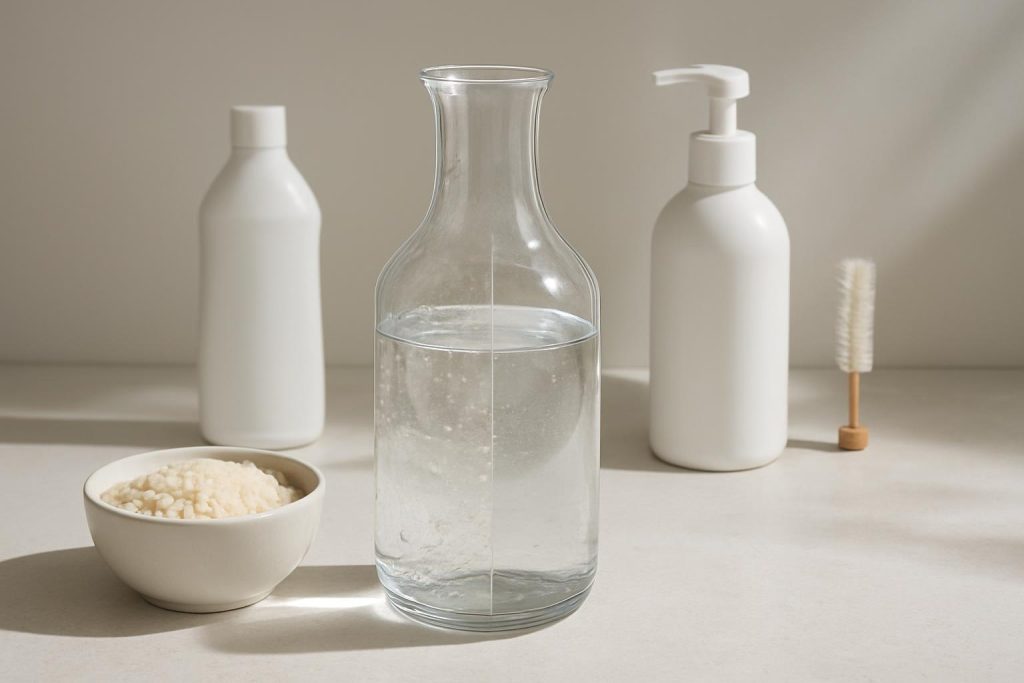
If you’re staring at a cloudy, slimy, or stained vase with an opening barely wide enough for two fingers, the fastest fix I’ve found is this: add warm water, a few drops of dish soap, and a spoonful of uncooked rice, then swirl firmly for a minute or two. The rice acts like tiny scrubbers and reaches places your hand never will.
For hard-water rings or white mineral haze, swap the soap for white vinegar and let it sit before swirling. For old flower gunk, start with a warm soak first so you’re not just smearing softened plant residue around the glass.
I’ve had this problem more times than I’d like to admit, especially with tall thrift-store vases and the pretty bud vases I use for single stems. They look elegant on the table, then become weird science experiments after a week of flower water. A bottle brush helps sometimes, but a lot of narrow-neck vases have curved shoulders or bulbous bottoms that brushes simply miss.
Below are the easiest methods I’ve used or tested, starting with the safest options for everyday glass vases and moving into stronger fixes for stubborn stains.
What should I check before cleaning a narrow-neck vase?
Before adding cleaners, check what the vase is made of. Most clear glass vases are forgiving, but not all vases should be treated the same way.
Plain glass: Usually safe with dish soap, vinegar, baking soda, rice, denture tablets, and most gentle cleaning methods.
Crystal: Avoid harsh abrasives and very hot water. Crystal can be more delicate and may etch or cloud.
Painted, gilded, or metallic trim: Keep vinegar, bleach, and abrasive materials away from decorated areas.
Ceramic or handmade pottery: Avoid soaking if unglazed, cracked, or porous. It may absorb cleaners.
Antique or sentimental pieces: Use the mildest method first. If it has a crack, repair, or unknown finish, don’t shake it aggressively.
Also, never pour boiling water into a cold vase. I cracked a cheap glass vase doing that years ago. Warm water is plenty for most cleaning jobs.
Which cleaning method is best for the kind of stain inside the vase?
The best method depends on what you’re trying to remove: flower slime, cloudy mineral deposits, brown residue, or dried-on grime. This quick guide can help you pick a method without wasting time.
Problem inside the vase | Best first method | Good backup option | Use caution with |
|---|---|---|---|
Flower slime or cloudy water residue | Dish soap + warm water + rice | Bottle brush or denture tablet | Fragile glass if shaking hard |
White hard-water stains | White vinegar soak | Vinegar + baking soda fizz | Painted or metallic finishes |
Brown or green plant stains | Baking soda paste or oxygen cleaner | Denture tablet soak | Porous ceramics |
Dried-on mystery grime | Long warm water soak | Rice or coarse salt swirl | Antique or cracked vases |
Bad smell | Dish soap wash, then vinegar rinse | Baking soda soak | Bleach mixed with other cleaners |
How do I clean a narrow vase with rice?
This is my go-to method because it’s cheap, quick, and surprisingly effective. It works especially well for vases that are wider at the bottom than at the neck.
1. Use rice, warm water, and dish soap
Add the following to the vase:
1 to 2 tablespoons of uncooked rice
A few drops of dish soap
Warm water, enough to cover the dirty area
Cover the opening with your palm, a silicone lid, or plastic wrap held tightly in place. Swirl the vase in circles, then shake gently back and forth. The rice scrubs the inside without you needing to reach in.
Pour everything out through a strainer so rice doesn’t go down the drain. Rinse several times until no soap bubbles remain.
Common mistake: Using too much soap. A few drops are enough. Too much soap makes the vase harder to rinse, especially if the neck is very narrow.
2. Try rice and vinegar for cloudy glass
If soap alone doesn’t remove the cloudy film, use white vinegar instead of dish soap. Add vinegar and rice, swirl, and let it sit for 15 to 30 minutes before rinsing.
This works best on mineral film from hard water. It won’t fix permanent etching in glass, which can look similar to cloudiness. If the glass still looks foggy after a good vinegar soak and rinse, the surface may be etched rather than dirty.
Can vinegar clean hard-water stains in a vase?
Yes, white vinegar is one of the best simple cleaners for hard-water stains. Those chalky white rings often come from minerals left behind as water evaporates. Vinegar helps dissolve those deposits.
3. Soak the vase with white vinegar
Pour enough white vinegar into the vase to cover the stained area. If the stain is high up, you can dilute the vinegar with warm water to fill the vase without using the whole bottle.
Let it sit for 30 minutes to a few hours. For heavy mineral buildup, I’ve left plain glass vases soaking overnight with good results.
After soaking, add a little rice or coarse salt, swirl, and rinse well.
Do not use vinegar on: marble, limestone, some stoneware finishes, or decorative metallic paint. Acid can dull or damage those surfaces.
4. Use vinegar and baking soda for stuck-on residue
Add 1 to 2 tablespoons of baking soda to the vase, then slowly pour in vinegar. It will foam up, so do this in the sink and don’t fill the vase too quickly.
Let the fizz settle, then swirl the mixture around. The fizz helps loosen grime, while the baking soda gives mild scrubbing power.
A small warning: the dramatic fizz is satisfying, but it’s not magic. The real cleaning happens from contact time and gentle abrasion. If the vase is badly stained, let the mixture sit after the bubbling slows.
What household items can scrub the inside without scratching?
If you can’t fit a sponge inside, you need something small enough to move around the vase and rough enough to dislodge residue. The trick is choosing a scrubber that won’t damage the surface.
5. Swirl with coarse salt and lemon juice
Coarse salt can scrub the inside of the vase, and lemon juice adds mild acidity. This is useful for light stains and fresh flower residue.
Add a tablespoon of coarse salt and enough lemon juice or warm water to make it move easily. Swirl for a minute, then rinse.
I use this more for quick freshening than deep cleaning. Salt can be too abrasive for delicate crystal or decorated glass, so use a gentler option if the vase is valuable.
6. Use crushed eggshells as a gentle abrasive
Clean, crushed eggshells can work a lot like rice. Add them with warm soapy water and swirl. The edges help knock loose residue.
This is handy if you’re out of rice, but make sure the shells are crushed small enough to pour out easily. Rinse well so no tiny bits remain trapped in the bottom.
7. Drop in a few small pebbles or aquarium gravel
Smooth aquarium gravel can scrub stubborn areas, especially in thick glass vases. Add a small handful with warm water and swirl.
Use only smooth gravel, not sharp rocks. I would not use this on thin glass, crystal, or anything with sentimental value. It cleans well, but it has more risk than rice.
8. Try a microfiber cloth with a wooden spoon
If the vase neck is wide enough for a cloth but not your hand, push a damp microfiber cloth inside with the handle of a wooden spoon. Move it around gently to wipe the inner walls.
This method is good for vases with straight sides. It’s less useful for bulb-shaped vases because the cloth bunches up and misses the shoulder area.
Do denture tablets really work for cleaning vases?
They do, and they’re one of the easiest low-effort options. Denture tablets are designed to clean stains in tight spaces, so they make sense for vases too.
9. Use denture cleaning tablets
Fill the vase with warm water and drop in one or two denture tablets, depending on the size of the vase. Let it fizz and soak for at least 30 minutes.
For a very dirty vase, leave it for a few hours. Pour out the water, rinse thoroughly, and repeat if needed.
This is a nice option when you don’t want to shake the vase. I use it for taller vases that feel awkward to handle when full.
10. Use bottle-cleaning tablets
Reusable water bottle cleaning tablets work similarly to denture tablets. They can be convenient if you already keep them around for travel mugs or coffee bottles.
Follow the package directions and rinse well. Some tablets have fragrance, and I prefer unscented ones for flower vases so the scent doesn’t linger.
How can I clean a vase if the stain is really stubborn?
Some stains need more than a quick swirl. Old flower water can leave a brown-green film, especially if the vase sat for days after the bouquet died. I’ve found that soaking first almost always makes scrubbing easier.
11. Soak with oxygen cleaner
Oxygen cleaner can help lift organic stains. Add a small amount of oxygen cleaner powder to warm water, pour it into the vase, and let it soak.
Use less than you think you need. A narrow vase can foam up quickly. After soaking, rinse several times.
Avoid this method on handmade pottery, antique finishes, or anything that might react poorly to a stronger cleaner.
12. Use baking soda and warm water overnight
For odors and general discoloration, add 1 to 2 tablespoons of baking soda and fill the vase with warm water. Let it sit overnight.
The next day, pour it out and use the rice method or a bottle brush if residue remains. Baking soda is mild, so it may not remove heavy mineral buildup, but it’s a safe first try for many vases.
13. Use a flexible bottle brush
A flexible bottle brush is worth having if you use vases often. Look for one with a long, bendable handle and a small brush head.
Brushes are best for:
Tall cylinder vases
Bud vases with straight necks
Residue near the opening
Vases that are not too bulbous at the bottom
The downside is that a brush can miss the rounded shoulder area where grime often collects. That’s why I still pair it with rice or a soaking method.
14. Use a magnetic vase cleaner
Magnetic glass cleaners are usually sold for bottles, aquariums, or decanters. One piece goes inside the vase and the other stays outside, letting you guide the inner scrubber with the magnet.
This can work well for smooth glass, especially if the vase is too narrow for a brush. The trade-off is cost, and the inner scrubber can be annoying to remove from very narrow openings.
Check that the cleaner is safe for your vase material. Avoid anything scratchy on crystal or delicate glass.
15. Use diluted bleach only as a last resort
Bleach can disinfect and remove some stains, but I rarely use it for vases because vinegar, baking soda, and denture tablets usually handle the job. If you have a plain glass vase with a stubborn smell or old organic residue, diluted bleach may help.
Use about 1 tablespoon of household bleach in 1 quart of water. Pour it into the vase, let it sit for a few minutes, then rinse extremely well.
Important safety notes:
Never mix bleach with vinegar, ammonia, or other cleaners.
Work in a ventilated area.
Wear gloves if your skin is sensitive.
Do not use bleach on metal, painted finishes, porous ceramics, or antiques.
How do I rinse and dry a narrow-neck vase properly?
Rinsing is where narrow vases can be frustrating. Soap and cleaning residue can hide in the bottom, and leftover moisture can leave new spots.
Here’s the routine that works best for me:
Rinse with warm water several times, filling the vase about one-third full and swirling.
Use a funnel if the opening is tiny and you keep spilling water down the outside.
For vinegar smell, rinse once with a little baking soda water, then rinse again with plain water.
Turn the vase upside down on a drying rack or towel.
If water pools inside the shoulder, prop the vase at a slight angle so air can circulate.
For a spotless finish on clear glass, add a final rinse with distilled water. This helps prevent hard-water spots, especially if your tap water leaves white marks on faucets and shower doors.
If you need it dry quickly, roll a paper towel into a thin tube, slide it inside, and use a chopstick or wooden skewer to move it around. Don’t force it into a fragile vase; a trapped paper towel is more annoying than a few water droplets.
What mistakes make narrow vases harder to clean?
A few habits can turn a quick cleaning job into a long soak-and-scrub situation.
Leaving flower water too long
Old flower water gets slimy fast, especially in warm rooms. If you change the water every couple of days, the vase is much easier to clean later.
Using boiling water
Hot water feels like it should clean better, but sudden temperature changes can crack glass. Warm water is safer.
Adding too much abrasive material
A little rice or salt works. A vase packed with rice won’t move well enough to scrub. Start small.
Mixing cleaners
This is the big one. Do not mix bleach with vinegar or ammonia. More cleaners at once does not mean better cleaning, and some combinations create dangerous fumes.
Scrubbing valuable pieces too aggressively
If a vase is antique, hand-painted, cracked, or expensive, skip the rough methods. Use a mild soak and gentle rinsing first. For museum-quality or heirloom pieces, professional advice is safer than experimenting.
How can I keep a vase from getting dirty so fast?
The easiest vase to clean is the one that never develops thick residue in the first place. I still forget sometimes, but these habits help a lot.
Trim flower stems before placing them in water.
Remove leaves that would sit below the waterline.
Change the water every two days.
Rinse the vase between water changes if the bouquet is long-lasting.
Wash the vase as soon as you throw the flowers away.
Use flower food as directed; too much can feed bacteria and cloud the water.
I’ve noticed that leaves below the waterline are usually the biggest cause of murky, smelly vase water. Removing them takes less than a minute and saves cleaning time later.
FAQ: Cleaning a vase with a narrow neck
What is the easiest way to clean a vase with a narrow opening?
The easiest method is warm water, a few drops of dish soap, and uncooked rice. Swirl the mixture so the rice scrubs the inside, then rinse well. It’s simple, cheap, and safe for most plain glass vases.
How do I remove white cloudy stains from inside a glass vase?
Use white vinegar. Fill the stained area with vinegar, let it sit for 30 minutes or longer, then swirl with rice or rinse thoroughly. If the cloudiness remains after vinegar, the glass may be etched rather than dirty.
Can I put a narrow-neck vase in the dishwasher?
Sometimes, but it often doesn’t clean the inside well because water jets may not reach the bottom or shoulder. Dishwashers can also damage delicate glass, crystal, metallic trim, painted designs, and antiques. Hand cleaning is usually more reliable.
Is baking soda safe for glass vases?
Yes, baking soda is generally safe for plain glass and works well for odors and light residue. Use it with water as a soak, or combine it with vinegar for fizzing action. Avoid aggressive scrubbing on delicate crystal or decorated surfaces.
How do I get rid of a bad smell inside a vase?
Wash first with dish soap and warm water. If the smell remains, soak with baking soda and warm water overnight, or use a vinegar rinse. For plain glass with a persistent odor, a very diluted bleach solution can be used carefully, followed by thorough rinsing.
What can I use if I don’t have a bottle brush?
Use rice, coarse salt, crushed eggshells, denture tablets, or a microfiber cloth pushed gently with a wooden spoon. Rice is the best all-around substitute because it reaches curved areas and is less harsh than gravel or salt.
Will rice scratch the inside of my vase?
Rice is usually gentle enough for everyday glass, but any abrasive method carries some risk on delicate surfaces. For crystal, antique glass, or painted interiors, choose a soaking method first and avoid hard shaking.
How often should I clean flower vases?
Clean the vase every time you remove old flowers. If a bouquet lasts more than a few days, change the water regularly and rinse the vase during water changes. This prevents slime, odors, and hard-to-remove rings.
What should I avoid using inside a narrow vase?
Avoid boiling water, harsh scouring powders, sharp rocks, undiluted bleach, and random cleaner combinations. Also avoid anything that could get stuck inside, such as large sponge pieces or paper towels forced through a tiny neck.
A narrow-neck vase can look impossible to clean, but most messes come out with patience, soaking, and a bit of gentle abrasion. Start with the rice and dish soap method for everyday grime, use vinegar for mineral stains, and save stronger cleaners for plain glass pieces that truly need them.