
We are reader supported. When you purchase through links on our site, we may earn an affiliate commission. Also, as an Amazon affiliate, we earn from qualifying purchases.
Yes, you can wash some shoes with clothes, but I would not toss shoes in with your everyday laundry. The safest approach is to wash machine-safe shoes with old towels, cleaning rags, or sturdy items—not your good jeans, sweaters, work shirts, or delicates.
I learned this the slightly annoying way after washing a pair of muddy sneakers with dark laundry. The shoes came out cleaner, but a couple of shirts had scuff marks, the load thumped like a brick in the washer, and one sock picked up grit from inside the shoe. Since then, I treat shoes as their own laundry project.
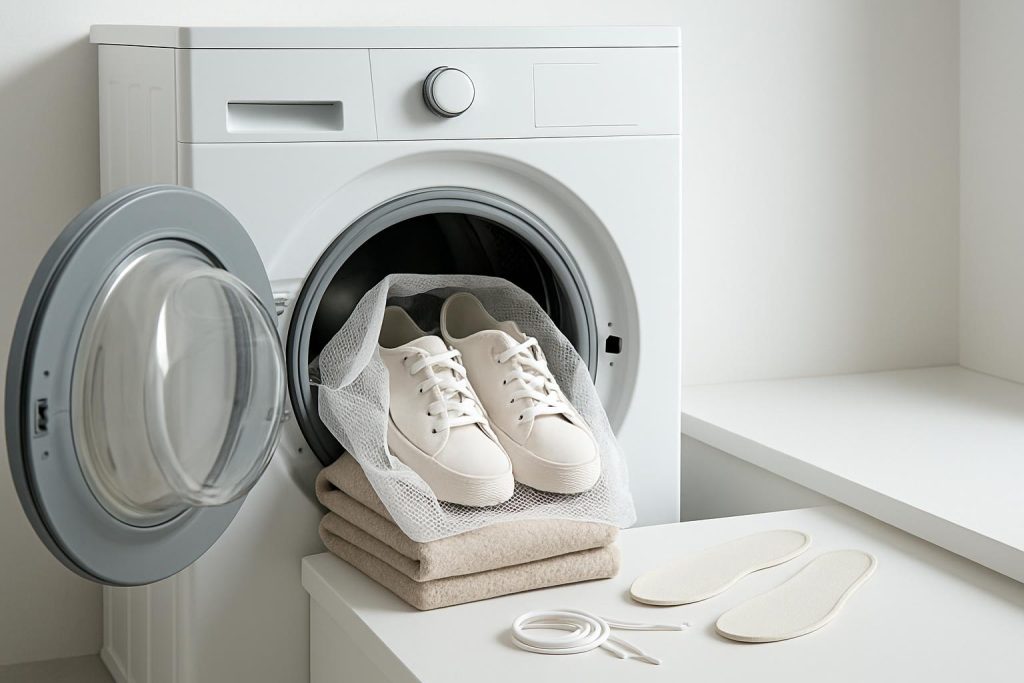
The short answer: washable canvas, nylon, mesh, and many fabric athletic shoes can usually go in the washing machine. Leather, suede, wool, dress shoes, boots, and shoes with delicate trims should not. If you do machine-wash shoes, remove the laces and insoles, use a mesh bag, add towels to balance the load, wash on cold and gentle, and air-dry them completely.
Can You Wash Shoes With Clothes?
You can, but it is usually better to wash shoes with towels instead of clothes you actually wear.
Shoes carry dirt, grit, sweat, grass stains, street residue, and sometimes small stones stuck in the treads. Even if they look “not that dirty,” the inside of a shoe can hold odor-causing bacteria and body oils. Regular clothing is more likely to absorb that grime than help clean the shoes.
The other issue is physical damage. Shoes are heavy and hard compared with fabric. During the spin cycle, they can bang into clothes, scrape softer fabrics, stretch knits, and make the washer shake if the load is unbalanced.
If you need padding in the wash, use:
- Old bath towels
- Cleaning rags
- Shop towels
- Old sweatshirts you do not mind scuffing
- A washable bath mat, if the care label allows it
Avoid washing shoes with:
- Delicate fabrics
- White clothing, unless the shoes are very clean and colorfast
- Wool, silk, lace, or rayon
- New dark clothes that may bleed dye
- Clothing with zippers, hooks, or decorations that can catch on shoes
- Baby clothes, underwear, or anything you want especially sanitary
If I am washing sneakers, I usually run them as a small separate load with two or three old towels. That gives the washer enough bulk to stay balanced without risking my regular clothes.
Which Shoes Are Safe to Put in the Washing Machine?
Not every shoe belongs in a washer. The material matters more than the amount of dirt.
| Shoe Type or Material | Machine Wash? | Best Cleaning Method |
|---|---|---|
| Canvas sneakers | Usually yes | Cold gentle cycle in a mesh bag, then air-dry |
| Mesh running shoes | Usually yes | Remove insoles and laces, wash gently, air-dry |
| Nylon or fabric trainers | Usually yes | Machine wash on cold if the care label allows |
| Leather shoes | No | Wipe with a damp cloth, condition leather after cleaning |
| Suede or nubuck shoes | No | Use a suede brush and suede cleaner |
| Wool shoes | Usually no | Spot clean unless the brand specifically says washable |
| Dress shoes | No | Hand clean and polish |
| Boots | Usually no | Brush off dirt, wipe clean, treat by material |
| Shoes with glued decorations | No | Spot clean carefully |
| Light-up shoes | No | Wipe by hand only |
Always check the care label or the shoe brand’s cleaning instructions if you can find them. Some athletic shoe brands warn against machine washing because it can weaken adhesives, distort foam, or shorten the life of the shoe. That does not mean every pair will fall apart in one wash, but it is a real trade-off.
For inexpensive canvas sneakers, I am comfortable machine washing them. For running shoes I rely on for support, I am more cautious. If the midsole foam, arch support, or fit matters, hand cleaning is safer.
Why Washing Shoes With Clothes Can Go Wrong
The washer may seem like an easy fix, but shoes create a few problems that normal laundry does not.
Grit can transfer to clothing
Shoe soles hold dirt in the grooves. If you skip brushing them off first, the wash water can carry grit through the load. I have found tiny bits of gravel in the washer seal after washing yard shoes. That is not something I want rubbing against shirts or leggings.
Colors may bleed
Bright sneakers, black canvas shoes, and dyed laces can release color, especially during the first few washes. White socks or pale clothing are risky companions.
Shoes can damage fabric
Rubber soles and eyelets can scrape softer clothing. Hooks, metal lace loops, and rough tread can snag fabric. Even if nothing tears, clothes may come out looking worn.
The washer can become unbalanced
One pair of soaked shoes can get heavy. If they slap around alone, the washer may bang, walk, or stop mid-cycle. Towels help cushion the shoes and distribute the weight.
Heat can ruin shoes
Hot water and dryers are the biggest mistakes I see people make. Heat can shrink fabric, warp soles, loosen glue, and make shoes feel stiff afterward. Cold water and air drying are much safer.
How to Wash Shoes Safely in the Washing Machine
If your shoes are machine-safe, a little prep makes a big difference. Do not just toss muddy shoes straight into the drum.
1. Knock off loose dirt first
Take the shoes outside or over a trash can and clap the soles together. Use an old toothbrush, scrub brush, or dry cloth to remove mud, grass, sand, and small stones from the tread.
This step matters. The washer is good at cleaning fabric, but it is not a garbage disposal for mud.
2. Remove the laces and insoles
Pull out the laces so detergent can reach the tongue and eyelet area. Place the laces in a small mesh laundry bag so they do not wrap around anything.
Remove the insoles if they come out. Many insoles do better with hand washing because they can hold water for a long time and may lose shape in the machine.
3. Pretreat stains and odor
For dirty fabric areas, rub in a small amount of liquid laundry detergent with a soft brush. Let it sit for 10 to 15 minutes.
For odor, sprinkle baking soda inside the shoes and let it sit for a few hours before washing, then shake it out. I do this with gym shoes before they reach the “please keep these outside” stage.
4. Use a mesh laundry bag
A mesh bag keeps shoes from slamming around as much and helps protect both the shoes and the washer. If you do not have one, a pillowcase tied closed can work in a pinch, though a proper laundry bag is easier to rinse and dry.
5. Add towels for balance
Add two or three old towels. They cushion the shoes and reduce banging. Choose towels that are similar in color to the shoes, especially if the shoes are dark or brightly colored.
6. Choose cold water and a gentle cycle
Use cold water, a gentle or delicate cycle, and a low spin setting if your washer offers one. Use a small amount of liquid detergent.
Powder detergent can sometimes leave residue in shoe seams, especially in cold water. Fabric softener is not helpful here and can leave buildup.
7. Air-dry only
Do not put shoes in the dryer unless the shoe care label clearly says it is safe. Even then, I would be careful. Dryer heat can damage glue and foam.
Instead, stuff the shoes with white paper towels, clean rags, or plain packing paper to help them hold their shape. Replace the stuffing as it gets damp. Set the shoes in a well-ventilated area away from direct heat.
A fan speeds things up. Direct sun can help with odor, but too much sun may fade colors or make some materials stiff.
Should You Wash Shoes With Towels?
Washing shoes with towels is usually the best machine-washing option. Towels protect the washer drum, soften the impact, and help keep the load balanced.
Use old towels, not your best guest towels. Shoes can leave behind dirt, marks, or odor, especially if they are heavily worn.
I keep a few “utility towels” in the laundry room for jobs like this—washing sneakers, wiping pet messes, cleaning the car, or soaking up small spills. They are perfect for shoe loads because I do not care if they get stained.
A few tips:
- Use towels close in color to the shoes.
- Do not overload the washer.
- Do not wash muddy shoes with light towels.
- Run an empty rinse or wipe the washer afterward if the shoes were very dirty.
- Avoid fluffy towels that shed lint onto dark shoes.
If the shoes smell bad, the towels may pick up some odor. Wash the towels again afterward if needed.
How to Hand Wash Shoes Instead
Hand washing is slower, but it is gentler and safer for many shoes. I use this method for shoes I care about more or shoes with glued parts that I do not want to test in the washer.
What you need
- A bowl of warm or cool water
- Mild laundry detergent or dish soap
- A soft brush or old toothbrush
- Microfiber cloths
- Baking soda for odor, if needed
- Paper towels or clean rags for drying
Basic hand-washing steps
- Remove laces and insoles.
- Brush off dry dirt from the soles and fabric.
- Mix a small amount of detergent with water.
- Scrub the upper gently with a brush or cloth.
- Scrub the soles more firmly if needed.
- Wipe away soap with a clean damp cloth.
- Clean laces separately in soapy water.
- Let everything air-dry fully before reassembling.
Try not to soak the entire shoe unless it is simple canvas or the manufacturer says soaking is fine. Too much water can seep into layers of foam and glue, making drying take much longer.
What About Insoles and Laces?
Laces are usually easy. Most can go in a mesh bag in the washer, or you can soak them in warm soapy water and scrub them by hand. If they are badly stained or frayed, replacing them is often easier than trying to make them look new.
Insoles need more care. Many insoles are made from foam, gel, fabric, cork, leather, or odor-control materials. Machine washing can make them curl, crack, peel, or hold water too long.
For insoles, I usually do this:
- Sprinkle baking soda on them and let them sit overnight.
- Shake or vacuum off the baking soda.
- Wipe with a cloth dampened with mild soapy water.
- Wipe again with a clean damp cloth.
- Air-dry completely before putting them back.
Never put damp insoles back into shoes. That trapped moisture can make odor worse and may encourage mildew.
Can Washing Shoes Damage the Washing Machine?
One pair of washable sneakers, prepared properly, is unlikely to ruin a modern washer. Still, shoes are harder on a machine than normal laundry.
The main risks are:
- Heavy banging during the spin cycle
- Scuffing inside the drum
- Small stones scratching the drum or getting trapped
- Excess mud clogging filters or drains
- An unbalanced load causing the washer to stop
Front-load washers tend to handle shoes better because they tumble instead of using a central agitator. Top-load washers can still work, but shoes may get knocked around more, especially in machines with an agitator.
If your washer starts banging loudly, pause it and rebalance the load. Add another towel if needed. Do not ignore violent thumping; it is hard on the machine.
After washing especially dirty shoes, wipe the rubber door gasket, check for grit, and leave the door open so the washer can dry.
Common Mistakes to Avoid
Most shoe-washing disasters come from rushing. These are the mistakes I would avoid:
- Using hot water: Heat can shrink fabric and weaken glue.
- Putting shoes in the dryer: This can warp soles and damage foam.
- Washing leather or suede: Water can stain, stiffen, or permanently change the texture.
- Leaving insoles inside: They may not dry well and can trap odor.
- Using too much detergent: Extra soap is harder to rinse from thick fabric and seams.
- Skipping the pre-brush: Mud and grit can spread through the washer.
- Washing with good clothes: Shoes can scuff, stain, or snag fabric.
- Drying near a heater: High heat can make shoes stiff or misshapen.
Another common misconception is that bleach is the best way to clean white shoes. Bleach can yellow some materials, weaken stitching, and leave patchy marks. If you use it at all, use a very diluted solution and test a hidden area first. For most white fabric sneakers, detergent, baking soda paste, or an oxygen-based cleaner is safer.
How to Dry Shoes Without Ruining Them
Drying takes patience. Shoes can feel dry outside while the inner layers are still damp.
After washing, press a towel against the shoes to remove surface water. Do not twist or wring them. Then stuff them loosely with absorbent white paper or clean cloth.
Good drying spots include:
- Near a fan
- In a breezy room
- On a covered porch
- Near, but not on, a sunny window
- On a drying rack with airflow underneath
Avoid:
- The clothes dryer
- Radiators
- Space heaters
- Hair dryers on high heat
- Direct harsh sun for long periods
Most sneakers need at least 24 hours to dry. Thick athletic shoes may need 36 to 48 hours. If you wear them before they are dry, they may smell worse than before.
What to Do If Shoes Still Smell After Washing
If shoes still smell after a wash, the odor may be deep in the insoles or foam. Washing the outside will not always fix that.
Try these steps:
- Remove and dry the insoles separately.
- Sprinkle baking soda inside overnight.
- Use a shoe deodorizing spray made for footwear.
- Place the shoes in sunlight for a short time if the material allows.
- Alternate shoes so each pair can dry fully between wears.
- Replace old insoles if they hold persistent odor.
For serious odor, replacing the insoles often makes the biggest difference. I have had shoes look perfectly clean but still smell because the insole foam was the real problem.
Quick Safe Laundry Guide for Shoes
If you just want the safe routine, here is the version I follow at home:
- Check that the shoes are fabric, canvas, mesh, or otherwise machine-safe.
- Do not machine wash leather, suede, wool, dress shoes, boots, or light-up shoes.
- Brush dirt and stones from the soles.
- Remove laces and insoles.
- Put shoes and laces in mesh laundry bags.
- Add two or three old towels.
- Use cold water, gentle cycle, and liquid detergent.
- Skip bleach unless the material can handle it.
- Never use the dryer.
- Air-dry with paper or cloth inside to hold the shape.
This method is not the fastest, but it is the one that gives me clean shoes without beating up the washer or sacrificing clothes I like.
FAQ
Can I wash shoes with jeans?
I would avoid it. Jeans are sturdy, but shoes can scuff denim, and dark jeans may bleed dye onto lighter shoes. If you need bulk in the washer, old towels are a better choice.
Can I wash shoes with socks?
You can, but I do not recommend it. Socks can pick up grit and odor from the shoes. If the socks are already dirty athletic socks and you do not mind, use warm judgment, but keep good socks in a regular laundry load.
Can I wash white shoes with white clothes?
It is risky. Even white shoes can have dirty soles, colored logos, or dark trim that transfers grime or dye. Wash white shoes separately with white towels or by hand.
How many pairs of shoes can I wash at once?
One or two pairs is usually enough for a home washer. More than that can create too much weight and banging. If the shoes are heavy, wash one pair at a time with towels.
Can I put shoes in the dryer on low heat?
I would not. Low heat can still soften glue, shrink fabric, or warp soles. Air drying with a fan is slower but much safer.
What detergent should I use for washing shoes?
Use a small amount of regular liquid laundry detergent. Avoid too much soap, fabric softener, and harsh cleaners. For delicate materials, hand clean with mild soap instead.
Why did my shoes turn yellow after washing?
Yellowing can come from bleach, detergent residue, hard water minerals, sunlight, or glue bleeding through the fabric. Rinse well, avoid bleach, and dry shoes away from strong heat. For white fabric shoes, an oxygen-based cleaner may help, but test first.
Is hand washing better than machine washing?
Hand washing is gentler and safer for shoes you care about. Machine washing is more convenient for sturdy canvas or mesh shoes that are already approved for washing. For expensive running shoes, leather details, or anything delicate, hand cleaning is the safer route.
Should I wash new shoes before wearing them?
Usually no. New shoes do not need machine washing, and an unnecessary wash may shorten their life. If they have a factory smell, air them out or wipe the inside lightly instead.
Can I wash shoes in a top-load washer?
Yes, if the shoes are washable, but use towels and a gentle cycle. A washer with a central agitator may be rougher on shoes. Keep the load balanced and pause the machine if it starts banging.