
We are reader supported. When you purchase through links on our site, we may earn an affiliate commission. Also, as an Amazon affiliate, we earn from qualifying purchases.
Tiny homes demand clear choices. Every inch must work hard, look calm, and stay flexible. This guide shows how to design inside and outside so your space feels bigger, functions better, and stays easy to clean. You will see simple steps, compact upgrades, and small habits that prevent clutter build-up. Start with a plan, then layer storage, style, and maintenance so nothing fights for space.
Start With A Plan
Measure And Map
Measure length, width, and ceiling height in every area. Note window sizes, door swings, outlets, and vents. Sketch a to-scale floor plan. Mark clearances for doors, drawers, and walking paths. Leave a 60 to 90 cm main walkway. Plan for ladder or stair footprints and landing zones. Good measurements prevent wasted purchases and tight corners.
Define Zones
Pick four to five core zones. Eating, sleeping, cooking, bathing, and working are typical. Keep a direct path across the home. Do not let one zone steal the main walkway width. Place the noisiest tasks near the entry and the quietest zone deeper inside. Combine tasks where safe. A fold-down desk can be a dining spot. A sofa can be a guest bed. Fewer zones with multiuse furniture beat many tiny nooks.
Set A Realistic Budget
Split the budget into must-haves and nice-to-haves. Must-haves cover safety, insulation, moisture control, and core storage. Nice-to-haves include decorative panels, premium fixtures, or custom doors. Leave 10 to 15 percent for unknowns. Buy compact items that do more than one job. One solid piece that fits beats three small items that crowd.
Layouts That Unlock Space
One-Wall Kitchen With Fold-Down Dining
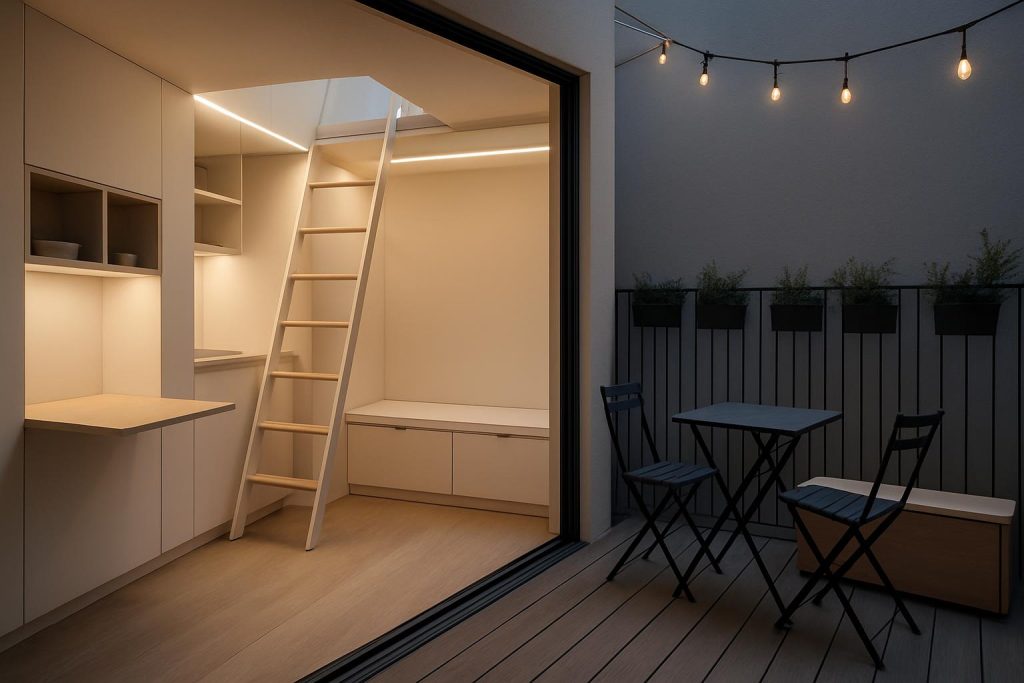
A one-wall kitchen keeps a slim profile. Use 60 cm deep base cabinets where possible. Add a 30 to 40 cm deep wall shelf rail for spices and mugs. Mount a fold-down table opposite the kitchen. Add two slim stools that tuck under. Keep 90 cm between counter edge and table for movement. Place the trash pull-out near the sink to control mess.
Loft Sleeping With Safe Access
Loft beds free floor area. Use a 10 to 15 degree ship ladder or storage stairs with closed risers for safety. Add handholds at the top. Aim for at least 90 cm headroom at the highest loft point. Install low-glare sconces with a switch at ladder base and loft edge. Keep a tray shelf in the loft for glasses and a water bottle. Store off-season clothes in soft bins at loft edges.
Bathroom Efficiency
Choose a 80 to 90 cm shower with a bi-fold or sliding door. Use a wall-mounted sink with a narrow profile. Install a medicine cabinet recessed into the wall. Mount towel hooks behind the door and one hook outside the bath for quick grab. Add a strong exhaust fan on a timer to remove moisture. Keep a squeegee and microfiber cloth in the shower for a 30 second wipe-down after use.
Storage That Disappears
Vertical Reach
Install open shelves above eye level for light items. Keep the bottom shelf at eye height for daily use. Use closed upper cabinets for visual calm in kitchens. Add a ceiling rail in the entry for baskets or hats. Use tall peg rails to hang bags, jackets, and leashes.
Hidden Underfoot And Overhead
Build toe-kick drawers under base cabinets. Use lift-top bench seating at dining or entry. Add a ceiling shelf above the hallway for long items like skis or folded tables. Use bed drawers or under-bed bins with labels facing out. Plan a trap-door storage bay if the trailer or foundation allows it, and seal it to prevent dust.
Furniture With Jobs
Pick a sofa with a storage chaise. Choose ottomans with lids and trays for serving. Use a coffee table that raises to desk height. Pick nesting side tables that slide under the sofa. Use a headboard shelf instead of nightstands. Buy a folding guest mattress that slides behind the sofa.
Entry Drop Zone
Set a shoe tray and a small bench by the door. Add two wall hooks per person. Mount a slim key rail and mail slot. Keep a closed bin for returns and donations. Place an outdoor doormat and an indoor washable rug to trap dirt. This prevents dirt and paper clutter from spreading inside.
Visual Tricks That Make It Feel Bigger
Color Strategy
Use a light neutral base on walls and ceilings. Keep trim the same color as walls to erase visual lines. Limit bold color to one accent wall or a single large item. Match the floor tone from front to back so the eye travels without stopping. Use two to three colors total and repeat them across rooms.
Lighting Layers
Use three lighting layers. Ambient light from a ceiling rail or flush LEDs. Task light from under-cabinet strips, plug-in sconces, or clip lamps. Accent light from a table lamp or LED uplight for corners. Stick with warm light around 2700 to 3000 K. Add dimmers where you can. Bounce light off pale walls and ceilings to widen the feel.
Window Treatments And Mirrors
Mount shades inside frames for a clean line. Use light-filtering roller shades or linen curtains that stack tight. Hang curtain rods wider than the window so panels do not block the glass when open. Place a large mirror across from a window to pull in daylight. Keep mirror frames slim to save space.
Materials And Textures
Choose matte or eggshell finishes on walls to hide scuffs. Use water-resistant paints in the kitchen and bath. Add one textured element per zone such as a woven basket, ribbed throw, or fluted panel. Repeat a texture rather than mixing many. Use compact rugs with low pile for easy cleaning and smooth door clearance.
Decor Rules That Keep Order
One-In, One-Out
Every new item replaces an old one. Keep donation and sell bins ready. Review duplicates each month. This prevents slow clutter creep.
Small Art, Big Impact
Group two or three small frames instead of one very large piece. Keep frames thin and colors consistent. Use removable hooks to avoid wall damage and to test layout before committing.
Textiles That Fold Flat
Pick towels and throws that compress well. Store spare bedding in vacuum bags. Use two sets of sheets per bed. Wash and rotate weekly. Avoid bulky seasonal pillows. Use pillow covers over the same inserts.
Scent And Sound Minimalism
Use one diffuser and one cleaning scent. Quiet machines help a tiny space feel calm. Check decibel ratings when buying fans or air purifiers.
Cleaning Routines For Tiny Spaces
Daily Reset
Run a 10 minute reset. Open windows for five minutes if weather allows. Make the bed. Clear and wipe kitchen and bath counters. Wash dishes or run the compact dishwasher. Sweep high-traffic floors and spot mop. Put laundry directly into a lidded bin. This small routine stops mess from compounding.
Weekly Deep Zones
Pick one zone per day. Kitchen on Monday, bath on Tuesday, floors on Wednesday, dust and vents on Thursday, laundry and bedding on Friday. Empty the fridge weekly and wipe shelves before restocking. Clean shower glass with vinegar and water. Degrease the cooktop and hood filter. Vacuum the loft and ladder steps.
Micro-Organization Maintenance
Label bins and drawers. Review one drawer or shelf each week. Return items to their zone daily. Keep a handheld vacuum on a wall charger for crumbs and lint. Store only enough backups for four weeks of use unless remote.
Pet And Allergy Control
Brush pets outside. Use a washable pet blanket on the sofa. Vacuum soft surfaces twice weekly. Run a compact HEPA air purifier. Replace or wash filters on schedule. Keep a closed container for pet food to block odors.
DIY Projects For Beginners
Fold-Down Desk Or Table
Use a wall cleat, a plywood top sealed with water-based poly, and locking folding brackets. Mount at 74 to 76 cm for dining or 72 to 74 cm for desk work. Add a cable grommet for chargers. Sand edges smooth and round to prevent snags.
Magnetic Spice Rack
Mount a steel strip on a backsplash or side panel. Use uniform magnetic tins with labels on the front. Keep the rack out of direct stove heat. Refill monthly and toss stale spices.
Pegboard Wall
Install a plywood-backed pegboard in the entry or kitchen. Add hooks, small shelves, and baskets. Place daily items at eye to waist height. Load-heavy items closer to studs. Paint to match walls for visual calm.
Removable Wallpaper Accent
Choose one wall or the stair risers. Clean the surface and prime glossy walls. Align patterns from center out. Use a squeegee to remove bubbles. This adds character without long-term commitment.
Outdoor Design That Extends Living Space
Define An Outdoor Room
Lay a weatherproof rug or set two rows of pavers to mark a sitting area. Keep a clear path from the door. Frame the space with planters or a narrow bench. A defined edge makes small zones feel intentional.
Compact Seating And Tables
Pick folding bistro chairs and a narrow table. Add hooks on the exterior wall to hang chairs when not in use. Use a storage bench that seats two and holds cushions. Keep cushions in weatherproof covers.
Planters That Work
Use vertical planters or railing boxes for herbs and flowers. Plant shallow-rooted greens in stackable planters. Group three planters for impact instead of many singles. Choose self-watering inserts to cut care time.
Shade And Privacy
Add a retractable shade, a sail anchored to proper points, or a freestanding umbrella with a weighted base. For privacy, use tall planters with bamboo or grasses. Lattice panels with climbing plants add cover without closing the space.
Lighting Outdoors
Run solar stake lights along paths. Hang string lights on a timer and proper anchors. Add a motion light near steps. Use warm light temperatures to keep the mood calm and reduce glare.
Weatherproof Storage
Use a deck box for tools, hoses, and outdoor games. Store dirty items outside the main door path. Keep a boot tray outside. Wipe tools before storing to prevent grime transfer inside.
Low-Maintenance Surfaces
Choose composite decking or sealed pavers that sweep clean. Avoid deep grooves that trap dirt. Rinse the outdoor area monthly. Clear leaves quickly to reduce slipping and staining.
Sustainability In Small Scale
Efficient Appliances
Use induction cooktops, a compact dishwasher, and a high spin washer to lower drying time. Pick a heat pump dryer or an indoor drying rack near a window and fan. Choose Energy Star where possible.
Rainwater And Compost Basics
If local rules allow, set a downspout barrel with a screened lid and overflow path. Use collected water for planters. Start a sealed compost caddy under the sink. Empty into a backyard bin or a community program. Keep carbon rich browns like dry leaves to balance food scraps.
Native Plants And Mulch
Pick native or drought-tolerant plants for lower water use. Add 5 to 7 cm of mulch to hold moisture and reduce weeds. Group plants by water needs so hoses are not always out.
Seasonal Swaps And Staging
Summer And Winter Kits
Pack off-season gear into two labeled bins. Summer kit holds fans, mesh screens, and light bedding. Winter kit holds a draft stopper, heavier duvet, and a humidifier filter. Swap kits the same weekend you change clocks. Wash and store clean to avoid odors.
Guest-Ready In One Hour
Close all storage doors. Clear counters to one tray of daily items. Vacuum traffic paths and steps. Wipe bath fixtures and replace hand towels. Make the sofa or loft bed with fresh sheets. Set two glasses and a carafe on a tray. Turn on soft lamps. Simple staging shows space and calm.
Safety And Code Reminders
Egress And Detectors
Keep one egress window in the sleeping zone with clear access. Test smoke and carbon monoxide detectors monthly. Place a small fire extinguisher near the kitchen entry. Do not block exits with furniture or bins.
Ventilation And Moisture
Run the bath fan during and after showers for at least 20 minutes. Crack a window when cooking. Use a dehumidifier if humidity stays above 60 percent. Check under sinks and around windows for moisture weekly. Dry wet rugs the same day to prevent mildew.
Conclusion
Tiny homes succeed when every choice earns its keep. Start with a clear plan. Choose compact multiuse furniture. Build hidden storage. Use light colors, layered lighting, and calm textures. Keep a tight cleaning rhythm and control what comes inside. Extend living space outdoors with defined seating, smart lighting, and vertical planting. Protect safety with egress, detectors, and good ventilation. Small, steady actions create a space that looks open, functions smoothly, and stays easy to live in.
FAQ
Q: How should I define zones in a tiny home
A: Pick four to five core zones. Eating, sleeping, cooking, bathing, and working are typical. Keep a direct path across the home and do not let one zone steal the main walkway width.
Q: What color strategy makes a tiny home feel bigger
A: Use a light neutral base on walls and ceilings, keep trim the same color as walls, and match the floor tone from front to back. Limit bold color to one accent wall or a single large item.
Q: What lighting layers work best in small spaces
A: Use three lighting layers. Ambient light from a ceiling rail or flush LEDs, task light from under-cabinet strips or plug-in sconces, and accent light from a table lamp or LED uplight. Stick with warm light around 2700 to 3000 K and add dimmers where you can.
Q: How can I extend living space outdoors without clutter
A: Define an outdoor room with a weatherproof rug or pavers, choose folding bistro seating with wall hooks for storage, use vertical planters or railing boxes, and hang string lights on a timer.
Q: What is a fast daily cleaning routine for a tiny home
A: Run a 10 minute reset. Open windows for five minutes if weather allows, make the bed, clear and wipe counters, wash dishes, sweep and spot mop, and put laundry directly into a lidded bin.