
We are reader supported. When you purchase through links on our site, we may earn an affiliate commission. Also, as an Amazon affiliate, we earn from qualifying purchases.
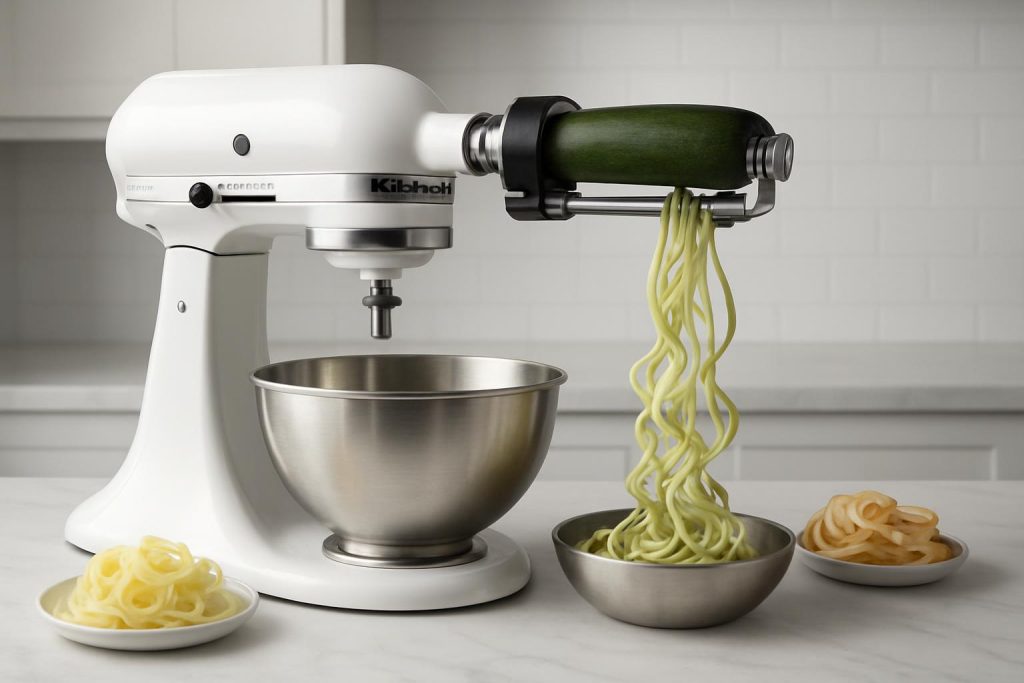
Spiralizing with a KitchenAid stand mixer saves time, cuts down on knife work, and keeps prep consistent. The right spiralizer attachment turns zucchini into even noodles, pears into elegant ribbons, and potatoes into quick-cooking curls. I tested top options side by side and tracked cut quality, speed, ease of setup, stability on the mixer, cleanup time, and long‑term durability. This guide highlights the four best picks for 2026, who each is for, and simple tips to get the most from them.
How I evaluated KitchenAid spiralizer attachments
I focused on real kitchen use. Each attachment handled apples, zucchini, potatoes, carrots, and butternut squash. I logged how straight the cut tracked, how well the blade self-fed, whether produce slipped, and how much edible waste peeling removed. I used mixer speeds 2 to 4, and timed setup and cleanup. I noted storage footprint and small design details that affect daily use, like how easily the skewer inserts and how secure the quick‑change blades lock in. I also checked parts labeling accuracy and whether instructions matched what actually works in practice.
The winners at a glance
- Best overall KitchenAid Spiralizer Plus 7‑Blade KSM2APC
- Best value KitchenAid Spiralizer 5‑Blade KSM1APC
- Best third‑party upgrade Antree 7‑Blade Spiralizer Attachment for KitchenAid
- Best budget 7‑blade set GVODE 7‑Blade Spiralizer Attachment for KitchenAid
What to know before you buy
Choose blade variety for your most common tasks. If you spiralize weekly and want peeling and coring for apples and pears, get a set with both spiral blades and peel core slice functions. If you mostly make zucchini noodles, a simpler kit is fine. Metal housings feel steadier at speed. Dishwasher safe blades help, but plan to hand wash the main body. Consider storage. A 7‑blade set takes more space but covers more use cases. Finally, match your mixer speed habits. These work best around speed 2 for most produce.
Reviews
KitchenAid Spiralizer Plus 7‑Blade KSM2APC
This is the most complete official set and the one I reach for first. It includes spiralizing, slicing, and peeling options that cover everyday prep and light entertaining. The metal body mounts flush to the power hub with no play. Blades click in firmly and eject easily, which keeps momentum when switching between tasks.
What stands out Cut accuracy is high. Zucchini noodles stay even across long passes, and the peel blade removes a consistent, thin strip from apples without digging in. The small core slicing option helps with petite apples and pears so you waste less. The skewer tolerances feel tight, so produce stays centered during the entire run.
Performance notes On speed 2, it handled firm russet potatoes smoothly and made long, continuous strands. With butternut necks, alignment was straightforward after trimming a flat face. I think the peel blade saves the most time on apple batches for crisps and chips. It takes under a minute per apple including mounting and peeling.
Why it helps Reliable alignment and blade variety reduce rework and scrap. You get spiral cuts, uniform slices for chips, and fast peeling on one hub‑mounted tool.
Best for Frequent spiralizers who want a one‑and‑done kit that handles produce from soft zucchini to firm potatoes and apples with peel core slice needs.
Potential downsides Higher price, a larger storage footprint, and extra blades you may not use every week. On very soft summer squash, the peeler can remove a touch more flesh than ideal unless you support lightly with your hand.
Setup tips Trim a flat face on both ends, seat the skewer straight, and run speed 2 to start. For small apples, use the small core accessory. For butternut, only spiralize the neck for best results.
KitchenAid Spiralizer 5‑Blade KSM1APC
The base official set is the smarter buy if you want dependable spiralizing without the expanded blade catalog. It covers the same core motions of peeling, coring, slicing, and spiral cuts with fewer packing pieces to manage. The metal chassis feels solid on the mixer, and the blades are labeled clearly.
What stands out Ease of use. Fewer blades mean faster selection and less chance of grabbing the wrong one. In testing, zucchini, cucumbers, and medium potatoes fed smoothly at speed 2. Apple peeling was uniform with little adjusting. The simpler kit is less intimidating if you are new to spiralizing.
Performance notes I think this set hits the sweet spot for a small kitchen. Storage is simpler, and the results on common produce match the 7‑blade set for straight spirals and neat peels. The limits show up with smaller fruit where an extra small core option would help, and with specialty cuts you might want for garnishes.
Why it helps Straightforward blade selection and consistent performance reduce decision fatigue and keep prep fast.
Best for Home cooks who spiralize a few times a week and want official build quality without paying for blades they rarely use.
Potential downsides Less granular control of cut thickness, and not as flexible for very small apples or specialty ribbons. If you often host and need multiple textures, you may outgrow it.
Setup tips Keep to speed 2. Support very soft produce with one hand to prevent chatter. For firmer items, let the feeder do the work and avoid pushing.
Antree 7‑Blade Spiralizer Attachment for KitchenAid
This third‑party set aims to mirror the official 7‑blade coverage at a lower price. It includes multiple spiral thickness options along with slicing and peeling, and it mounts on the hub of all major KitchenAid stand mixers. The housing is metal with stainless blades that feel sharp out of the box.
What stands out Value with range. The assortment brings fine, medium, and thicker spirals plus slicing. During tests, zucchini noodles were clean with minimal tearing. Potatoes tracked straight if I centered carefully. The peeler was efficient on firm apples and pears.
Performance notes I think it delivers 80 to 90 percent of the official 7‑blade experience for most households. The locking feel on the quick‑change blades is slightly less crisp, and the skewer has a hint more play. That said, results were steady at mixer speed 2. I noticed more variance on very hard carrots and very small apples.
Why it helps Broad blade selection supports weeknight cooking and batch prep without a premium price.
Best for Budget‑minded cooks who still want multiple spiral widths and peeling for fruit.
Potential downsides Tighter tolerances would improve stability. Quality control can vary, which may affect how precisely the blades seat. Warranty support is not the same as the official brand.
Setup tips Check blade seating before each run. Trim produce squarely and apply light forward support on very firm items to prevent chatter. Keep blades dry after washing to protect sharpness.
GVODE 7‑Blade Spiralizer Attachment for KitchenAid
GVODE offers another full 7‑blade kit with a sturdy hub mount and stainless blades. It targets the same use cases as the Antree with a similar blade mix. In practice, the fit on the mixer hub felt snug and the blade changes were positive and predictable.
What stands out Steady performance on firm produce. Potatoes and butternut necks stayed aligned in my tests, and the strands remained even through the core. Zucchini noodles were delicate without shredding. The peeler made fast work of pears, and slice thickness was consistent for chips.
Performance notes I think this is the safer pick if you want a third‑party set that leans toward sturdiness. The skewer holds centered well once seated. There is a bit more mass in the main body, which reduces vibration. Some users may find it slightly heavier when mounting.
Why it helps Solid hub fit and reliable spiral cuts improve confidence, especially on denser vegetables.
Best for Cooks who want a budget 7‑blade kit with an emphasis on stability and consistency.
Potential downsides Heavier body means a touch more effort during setup and storage. Like other third‑party options, long‑term blade replacement sourcing can be uncertain compared with the official brand.
Setup tips Start at speed 2. For very firm items, pause after the first turn to confirm alignment, then continue. Hand wash the main body to protect the finish.
Key differences that matter in daily use
- Blade variety Official 7‑blade has the most flexibility for small fruit and specialty cuts. Five‑blade covers core needs. Third‑party 7‑blade kits match range closely with minor differences in thickness steps.
- Stability Official housings feel slightly more planted, which shows on very firm produce. Top third‑party picks still track well at speed 2.
- Peeling efficiency All four sets peel apples and pears quickly. Official peeler blades removed the thinnest strip in testing, which saves fruit.
- Ease of blade changes Official kits have more tactile clicks and clearer labels. Third‑party kits require a brief fit check before runs.
- Storage Fewer blades store easier. Plan a small bin or drawer divider if you go 7‑blade.
Buying guide for KitchenAid spiralizer attachments
Match the kit to your produce
If you spiralize apples, pears, and potatoes weekly, prioritize blades that peel and core in addition to spiralize. If you are here for zucchini noodles, a simpler set is fine.
Think about maintenance
Blades are usually dishwasher safe on the top rack. The main body should be hand washed and dried immediately. If you want fast cleanup, look for blades that eject easily and have minimal crevices.
Weight and build
Metal housings resist vibration better. Heavier bodies feel stable but add to setup time. If you store the attachment on a high shelf, weight matters.
Budget and longevity
Official kits cost more but have consistent tolerances. Third‑party kits save money and perform well in home use. Balance how often you spiralize against how much range you truly need.
Setup and cutting tips for clean results
- Trim both ends flat and square for a positive start.
- Center the skewer carefully and press straight on. Do not angle.
- Use mixer speed 2 for the cleanest spirals and even peeling.
- Support soft produce lightly with one hand to prevent chatter.
- For butternut squash, use only the neck. The bulb is better diced.
- Choose the smallest core option that fits to minimize waste on apples and pears.
- Let the blade feed. Avoid pushing hard, which can cause wobble.
Cleaning and maintenance
Unplug the mixer. Remove the blade and skewer first. Rinse blades immediately to prevent starch from drying on. Blades can go on the top rack; the main body should be hand washed in warm soapy water and dried fully. A small brush cleans the blade teeth safely from the back side. Lightly oil the skewer if it shows drag. Store blades in a labeled pouch or divider so you grab the right one fast next time.
Troubleshooting common issues
- Produce slips on the skewer Trim a flatter face and press more firmly into the skewer. Reduce to speed 2.
- Uneven noodles Confirm blade is fully seated and not canted. Check that the produce is centered and not tapered heavily.
- Too much peel removed Switch to a thinner peel blade if available. On soft squash, spiralize without peeling.
- Stalling on hard vegetables Start the first turn by hand, then let the blade engage. Do not exceed speed 4.
- Cleanup takes too long Rinse blades immediately after use. Keep a drying towel nearby and air dry in a rack.
Which one should you get
Pick the KitchenAid 7‑Blade KSM2APC if you want the most capability and the most polished feel. Choose the KitchenAid 5‑Blade KSM1APC if you mainly spiralize zucchini and potatoes and want simple, dependable operation. Go for the Antree 7‑Blade to maximize value while keeping flexibility. Choose the GVODE 7‑Blade if you want a budget kit that feels especially steady on firm produce.
Conclusion
The right spiralizer attachment turns a stand mixer into a fast prep tool for weeknight cooking and batch fruit work. Official KitchenAid kits provide the best stability and the crispest blade changes. The 5‑Blade set is the practical choice for most homes, while the 7‑Blade set unlocks extra control for small fruit and specialty textures. Third‑party kits like Antree and GVODE have matured, delivering strong day‑to‑day performance for less. Trim flat, run at speed 2, rinse blades right away, and you will get clean spirals and minimal waste every time.
FAQ
Q: Which spiralizer attachment is best overall for most home cooks
A: The KitchenAid Spiralizer Plus 7‑Blade KSM2APC is best overall thanks to blade variety, stability, and consistent cut quality.
Q: What mixer speed works best for spiralizing
A: Speed 2 works best for clean spirals and even peeling on all the kits tested.
Q: Do I need the 7‑blade set or is the 5‑blade enough
A: The 5‑Blade KSM1APC covers core needs for zucchini and potatoes, while the 7‑Blade KSM2APC adds more control for small fruit and specialty cuts.
Q: Are the blades dishwasher safe
A: Blades are typically top‑rack dishwasher safe, but the main body should be hand washed and dried fully.
Q: How do I prevent produce from slipping on the skewer
A: Trim both ends flat, center carefully, press firmly onto the skewer, and use speed 2 to reduce wobble.