
We are reader supported. When you purchase through links on our site, we may earn an affiliate commission. Also, as an Amazon affiliate, we earn from qualifying purchases.
Lemon and chocolate sound like opposites. One is sharp and bright. The other is deep and rich. Many people ask if they actually work together. The short answer is yes. When handled the right way, lemon and chocolate can taste clean, balanced, and exciting. This guide shows you why the pairing works, when it fails, and how to do it well at home with simple steps, friendly recipes, storage tips, and smart cleanup advice.
Introduction
Food pairing is not about guessing. It is about balance. Lemon brings acidity, freshness, and high aroma. Chocolate brings fat, sweetness, and cocoa bitterness. When these meet at the right ratio, the result is focused and satisfying. If the ratio is off, the result can be harsh or dull. You will learn how to find the sweet spot.
Start with small tests. Work with basic tools. Keep ingredients fresh. Follow the steps below and adjust to your taste. You will get reliable results without stress.
What Makes Lemon And Chocolate Work
Flavor Basics
Chocolate has fat from cocoa butter. Fat carries aroma and softens sharp flavors. Lemon has acids and aromatic oils mostly in the zest. Acidity cuts through fat. Aromas add brightness. This balance creates clarity. Neither side should dominate.
Bitterness, Acidity, and Sweetness
Cocoa has bitterness. Lemon has acidity. Together they need enough sweetness to round the edges. Without sweetness, the blend tastes harsh. With too much sweetness, the lemon disappears. Aim for moderate sugar. Taste and adjust.
Aroma Matters
Lemon zest adds oils with strong aroma and low water. Chocolate hates excess water but loves fat and oil. Zest is safer than lemon juice in many chocolate applications. This is why zest often gives a cleaner lemon note in chocolate desserts.
Cocoa Percentage
As cocoa percentage goes up, bitterness and dryness go up. Very high cocoa chocolate can overpower lemon. A balanced range is 60 to 70 percent for dark chocolate. This range keeps depth and leaves room for lemon notes. White chocolate also pairs well because it is sweet, creamy, and neutral. It lets lemon shine. Milk chocolate can work in small doses with gentle lemon, but it needs careful control.
When Lemon And Chocolate Do Not Work
Too Much Lemon Juice With Dairy
Lemon juice can curdle milk and cream. If you add lemon juice to a cream-based ganache or mousse without control, it may split. Use zest or add juice in very small amounts after stabilizing with sugar or gelatin.
Overly Bitter Dark Chocolate
Chocolate above 75 percent cocoa can block the lemon. The result tastes dry and sharp. Lower the cocoa percentage or increase sugar slightly to balance.
Weak Lemon Flavor
If lemon is only from juice, the aroma may feel flat in chocolate. Use zest or lemon oil for clear lemon aroma without adding water.
Temperature Problems
Cold chocolate can mute aromas. Serve at cool room temperature. Citrus desserts can be chilled, but let them sit a few minutes before serving so the chocolate flavor opens up.
Best Chocolate Types For Lemon
Dark Chocolate 60 to 70 Percent
This is the most reliable range. It has depth and a touch of bitterness. It also has enough sugar to support acidity. Use it for cookies, barks, glazes, and truffles with lemon zest.
White Chocolate
White chocolate is sweet and creamy. Lemon adds freshness and reduces the heavy feel. Use zest, lemon oil, or a thick lemon curd folded in gently. Avoid a lot of lemon juice because it can seize melted white chocolate.
Milk Chocolate
Milk chocolate adds caramel-like notes. Lemon can feel faint next to it. Use lemon zest and a pinch of salt to keep definition. Use thin layers or small amounts so the flavors do not fight.
Forms Of Lemon That Pair Well
Lemon Zest
Zest provides aroma without much water. It blends into batter, ganache, or melted chocolate. Finely grate and use sparingly. Fresh zest is best.
Lemon Curd
Curd is thick, sweet-tart, and stable. It layers well with chocolate cake, cookies, tart shells, or parfaits. Keep curd chilled until assembly. Avoid mixing curd directly into hot chocolate.
Candied Lemon Peel
Chewy texture and sweet citrus bite. Chop small and mix into bark or sprinkle on top of glazed cakes. It adds both flavor and visual interest.
Lemon Oil Or Extract
A drop or two goes a long way. Use food-grade lemon oil for ganache or chocolate mousse. This keeps water content low and flavor clear.
Fresh Lemon Juice
Use in small amounts. Stabilize with sugar. Add to syrups for brushing cakes or to frostings after whipping. Avoid dumping juice into melted chocolate.
Simple Pairing Tests At Home
Two Bite Test
1. Break a square of dark chocolate 60 to 70 percent. Let it sit at room temperature for 5 to 10 minutes.
2. Take a small bite and let it melt. Note bitterness and sweetness.
3. Grate a tiny bit of lemon zest onto the next bite. Taste again. Look for brighter aroma and cleaner finish.
4. Add a grain or two of salt if needed. Taste again. Stop when the lemon is present but not sharp.
Mini Ganache Test
1. Heat 30 g cream to steaming. Remove from heat.
2. Pour over 60 g finely chopped dark chocolate. Rest 1 minute. Stir slowly until smooth.
3. Add 1 teaspoon sugar and a pinch of salt. Stir.
4. Add 1 teaspoon finely grated lemon zest. Stir and taste. If it is too rich, add a few more grains of salt. If it is too bitter, add a half teaspoon more sugar.
5. Chill 10 minutes and taste again. Flavors settle as it cools.
Easy Recipes For Beginners
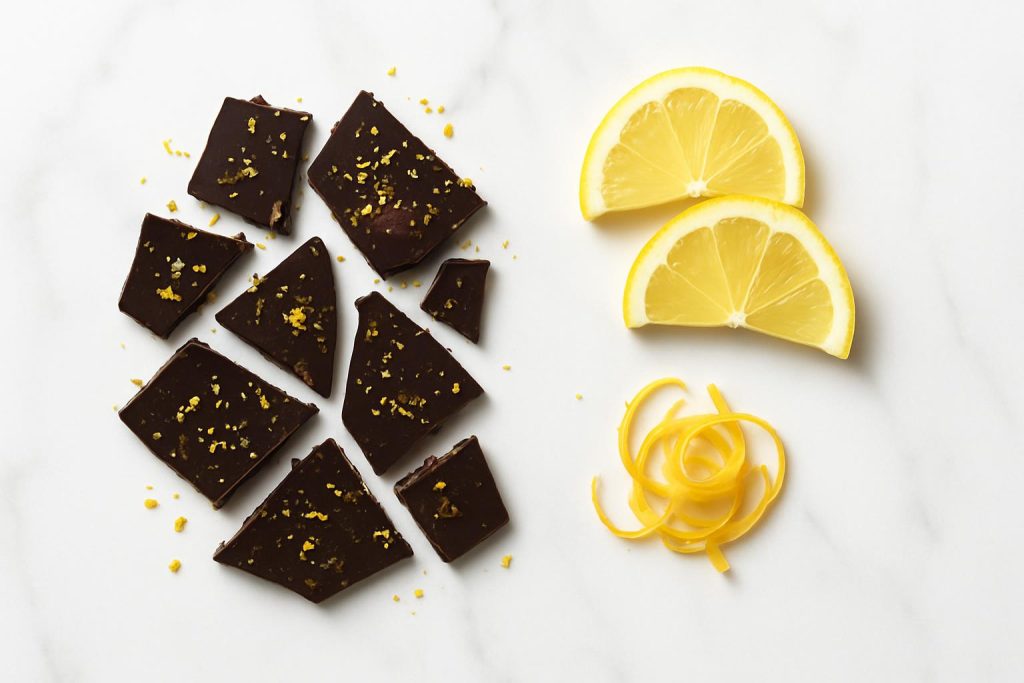
No-Bake Lemon Dark Chocolate Bark
1. Line a baking sheet with parchment.
2. Melt 200 g dark chocolate 60 to 70 percent using a double boiler or microwave in short bursts. Stir until smooth.
3. Mix in 1 tablespoon very fine lemon zest and a pinch of sea salt.
4. Spread the chocolate about 4 mm thick. Sprinkle chopped candied lemon peel on top.
5. Let set at room temperature or chill 10 to 15 minutes. Break into pieces.
Result is crisp, bright, and balanced.
Lemon Zest Dark Chocolate Cookies
1. Preheat oven to 175 C or 350 F. Line a tray.
2. Cream 115 g softened butter with 100 g sugar and a pinch of salt.
3. Beat in 1 egg and 1 teaspoon vanilla.
4. Add 1 tablespoon fine lemon zest.
5. Stir in 150 g all-purpose flour, 25 g cocoa powder, and 0.5 teaspoon baking soda. Do not overmix.
6. Fold in 100 g chopped dark chocolate.
7. Scoop small balls and bake 9 to 11 minutes until edges set.
Cookies will taste chocolate-forward with a clear lemon lift.
White Chocolate Lemon Mousse
1. Melt 150 g white chocolate. Cool to lukewarm.
2. Whip 200 g cold heavy cream to soft peaks with 1 tablespoon sugar and a pinch of salt.
3. Fold 1 teaspoon lemon oil or 1 tablespoon very fine lemon zest into the cream.
4. Fold in the melted white chocolate gently.
5. Chill 2 hours. Top with candied peel and a few microplanes of fresh zest before serving.
The result is creamy with a clean citrus finish.
Lemon Hot Chocolate
1. Warm 300 ml milk or a dairy alternative with 1 strip of lemon zest and 1 tablespoon sugar. Do not boil.
2. Remove zest. Add 60 g chopped dark chocolate. Whisk until smooth.
3. Add a pinch of salt. Taste. If you want more citrus, add a few drops of lemon oil. Do not add lemon juice.
Serve warm. The lemon aroma lifts the richness.
Baking Tips To Avoid Common Mistakes
Prevent Splitting Ganache
Keep ratios stable. Use 2 parts chocolate to 1 part cream for a firm set. Add lemon zest or oil, not juice. If it splits, whisk in a small splash of warm milk and a teaspoon of honey or corn syrup to bring it back.
Stop Curdling With Dairy
Do not add lemon juice directly to cream-based mixtures. If you need the juice, stabilize first with sugar or gelatin and add at cool temperatures. Zest and oil are safer.
Control Moisture In Batters
Extra liquid thins batters and weakens structure. Replace part of liquid with lemon juice only if you add a bit more flour. Better yet, use zest for lemon flavor. Keep batters mixed just until combined.
Temperature And Timing
Bake at steady heat. Overbaking dries chocolate and flattens citrus aroma. Remove when edges set and centers look slightly soft. Cooling finishes the set and preserves aroma.
Presentation And Serving Ideas
Balance Texture
Combine smooth and crisp. Add candied peel to soft mousse. Add cocoa nibs to lemon chocolate bark. A pinch of flaky salt sharpens flavor and improves contrast.
Plating And Portions
Keep portions small. Lemon and chocolate are both strong. Serve with a neutral side like unsweetened whipped cream or plain yogurt to refresh the palate.
Beverage Pairing
Match intensity. Espresso highlights cocoa notes. Green tea supports citrus without adding heavy flavors. Sparkling water with a lemon twist resets the palate between bites.
Storage And Make-Ahead Tips
Shelf Life
Chocolate bark with zest keeps 1 to 2 weeks in an airtight container at cool room temperature. Mousse and curd-based desserts keep 2 to 3 days in the fridge. Cookies keep 3 to 5 days in an airtight tin.
Avoid Odor Transfer
Chocolate absorbs odors. Store lemon and chocolate desserts away from onions, garlic, and strong cheeses. Use sealed containers. Keep white chocolate desserts especially protected.
Freezing Guidance
Freeze baked goods like cookies for up to 2 months in airtight bags. Avoid freezing ganache with lemon juice. Zest-based ganache freezes better. Thaw in the fridge overnight to prevent condensation on chocolate surfaces.
Cleaning And Kitchen Care
Clean Melted Chocolate Mess
On counters and tools, scrape solids first with a spatula. Wipe with a dry paper towel. Then wash with hot soapy water. Hot water melts the fat. Finish with a rinse and dry cloth.
Remove Chocolate Stains From Fabric
1. Lift off any excess with a dull knife.
2. Rinse the back of the stain with cold water.
3. Treat with liquid laundry detergent or a stain remover. Let sit 10 minutes.
4. Wash in warm water if fabric allows. Air dry and check. Repeat if needed. Heat from dryers can set stains, so avoid it until the stain is gone.
Use Lemon For Kitchen Care
Lemon cuts grease and odor. After working with chocolate, rub lemon on cutting boards to deodorize, then rinse and dry. For microwaves, heat a bowl with water and lemon slices for 2 minutes. Let the steam loosen splatters. Wipe clean.
Organize Pantry For Citrus And Chocolate
Store chocolate in a cool, dry, dark spot, ideally 15 to 20 C. Keep it sealed to prevent sugar bloom from humidity. Keep lemons in the fridge crisper to extend life. Zest lemons before they go soft, freeze the zest in small packets, and label dates. Keep extracts and oils in a closed bin away from heat and light.
Frequently Asked Questions
Does lemon make chocolate seize
Yes if you add juice directly to melted chocolate. Use zest or oil. If you must add juice, emulsify with cream and sugar and add when cool.
Which is better for pairing, zest or juice
Zest gives strong aroma and low water. Juice adds acidity and water. Zest is safer and clearer in flavor for chocolate.
Can I use bottled lemon juice
Fresh is better. Bottled juice can taste dull. If using bottled, adjust with a bit more zest to improve aroma.
Is white chocolate and lemon always sweet
It can be too sweet if you do not add acid or salt. Use zest and a pinch of salt. Add a small amount of lemon juice to whipped cream, not to melted chocolate, to lighten the profile.
What about lemon and cocoa powder
Yes. Cocoa powder is intense and dry. Balance with sugar and fat. Zest helps carry aroma without overshooting acidity.
Quick Troubleshooting
Flavor Is Harsh Or Sour
Add a little more sugar or a pinch of salt. Reduce lemon juice next time. Use zest instead of more juice.
Flavor Feels Flat
Add a little more zest or a drop of lemon oil. Warm the dessert slightly before serving to open aromas. Check chocolate freshness.
Ganache Split Or Grainy
Warm gently and whisk in a spoon of warm milk and a teaspoon of honey or corn syrup. Strain if needed. Next time add lemon in oil or zest form.
Chocolate Bloom Or Dull Finish
Store cooler and drier. Avoid fridge unless sealed well. If bloom appears, it is safe to eat. Use it for baking or remelt for glaze.
Smart Scaling For Parties
Plan A Simple Menu
Pick one no-bake item and one baked item. Example: lemon dark chocolate bark and lemon zest cookies. Both scale well and store well.
Batch Prep
Make candied peel and zest in advance. Keep in sealed jars. Bake cookies one day ahead. Assemble mousse or curd parfaits the morning of serving.
Label And Portion
Use small cups or jars for mousse. Break bark into even pieces and store in tins with parchment layers. This keeps edges clean and serving easy.
Health And Dietary Notes
Adjust Sugar
Use 70 percent chocolate to reduce sugar, then fine-tune with zest and a small amount of sweetener. Taste as you go.
Dairy-Free Options
Use coconut cream for ganache with dark chocolate. Infuse zest, not juice. For mousse, whip aquafaba and fold into melted dark chocolate with lemon oil.
Gluten-Free Ideas
Choose bark, mousse, flourless cakes, or meringues. Confirm that chocolate and add-ins are gluten-free.
Conclusion
Lemon and chocolate do go together. The key is balance and form. Use chocolate in a friendly cocoa range or use white chocolate for a creamy base. Focus on lemon zest and lemon oil to add bright aroma without excess water. Add sweetness and a pinch of salt to round bitterness and acidity. Start with small tests, follow simple recipes, and adjust to your taste.
With the right approach, you can build desserts that feel fresh, clean, and memorable. Keep ingredients organized, store them well, and clean smart to make the process smooth. Try a bark today, bake cookies tomorrow, and then move to mousse. You will gain skill fast and enjoy a pairing that is clear, modern, and satisfying.