
We are reader supported. When you purchase through links on our site, we may earn an affiliate commission. Also, as an Amazon affiliate, we earn from qualifying purchases.
Eggs are often the first thing we whisk in a kitchen. When you have a mixer grinder on the counter, the question comes up fast. Can you beat eggs in it and get good results without mess or smell. Yes, you can, but only for certain goals and with care. This guide gives you the clear when, why, and how, plus cleaning and organizing tips so the process is easy and the appliance stays fresh.
Short Answer
Use a mixer grinder to beat whole eggs for omelets, scrambles, French toast, and for lightly beaten eggs in baking. Do not rely on it for airy meringue, stiff peaks, or delicate foam. Keep batches small, use pulse on low speed, and keep the jar cold to avoid heat and smell.
What Beating Eggs Really Means
Mixing vs Aerating vs Whipping
Mixing means blending yolks and whites into a uniform liquid. Aerating means adding air to create bubbles for a fluffier result. Whipping means building a stable foam that holds soft or stiff peaks. A mixer grinder can mix well and aerate a little. It struggles to whip to peaks because its blades cut more than they lift and fold. That difference decides your results.
When a Mixer Grinder Works Well
Everyday Eggs
For omelets and scrambles, you want uniform eggs with some bubbles. A mixer grinder does this fast. You get a fluffy pan result if you do short bursts on low speed. It is also fine for French toast custard where eggs, milk, and sugar need to blend without lumps.
Lightly Beaten Eggs for Baking
Many cakes and cookies ask for lightly beaten eggs. This means just combined, not foamy. A mixer grinder on low speed for a few seconds does the job. It prevents streaks of egg that can bake into rubbery bits.
When a Mixer Grinder Fails
Meringue and Stiff Peaks
Egg whites for meringue and macarons need high-volume foam built by stretching proteins around tiny bubbles. Whisks do this by lifting and folding air in. Grinder blades shear and warm the whites, which collapses foam. Use a hand mixer or stand mixer instead.
Delicate Sponge Techniques
Genoise, chiffon, and angel food cakes rely on stable foam and careful folding. A mixer grinder over-aerates in big bubbles and warms the mix. The batter loses structure and bakes dense or sunken. Use a whisk or electric beater.
Risks You Need to Manage
Heat Build Up
Mixer grinders run fast. Even 10 to 20 seconds can warm the jar. Heat destabilizes egg foam and can lightly cook edges on the jar wall. Keep eggs and jar cold and work in short pulses.
Blade Shear vs Whisk Action
Whisks stretch proteins gently and trap air. Grinder blades chop and spin. Chopping breaks bubbles and can give a thin froth that collapses. This is fine for simple mixing, not for structured foam.
Overmixing and Texture
Overmixing gives too much air for scrambles and can turn the texture spongy. For baking, overmixing can make cakes coarse or tough once eggs meet flour. Use brief pulses only.
Exactly How To Beat Eggs In a Mixer Grinder
Tools and Setup
Use the medium or large jar, not the small chutney jar. Chill the jar and lid in the fridge for 10 minutes. Make sure the lid gasket is clean and odor free. If your model has a whisk or whipping disc attachment, use it. Otherwise use the standard multi-purpose blade on the lowest speed.
Whole Eggs for Omelet or Scramble
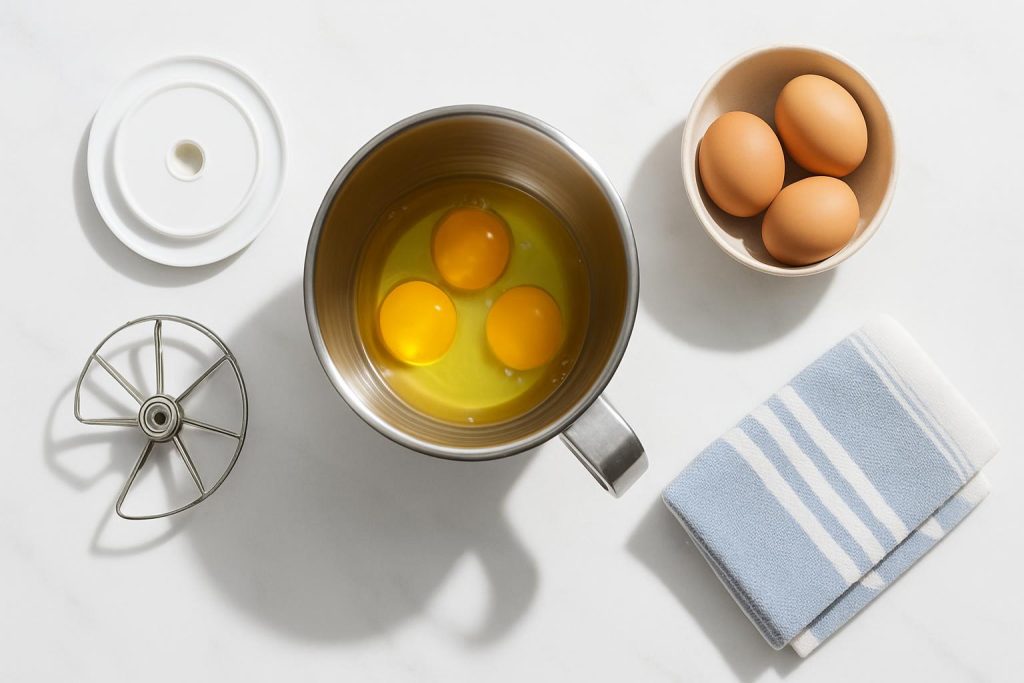
Crack 2 to 4 eggs into the chilled jar. Add a pinch of salt if you like. Lock the lid. Run on speed 1 for 5 seconds, stop for 5 seconds, and repeat once or twice. Open and check. You want a smooth mix with small bubbles, not a thick foam. If you add milk or water, add 1 to 2 tablespoons per 2 eggs before blending. Avoid more than 10 to 12 seconds total run time to limit heat. Cook immediately.
Lightly Beaten Eggs for Baking
Crack eggs into the chilled jar. Pulse on speed 1 for 3 to 5 seconds. Stop and check. The goal is uniform color with no streaks. Do not aerate. Pour into your mixing bowl and proceed with the recipe.
Egg Whites Only
If you only need lightly foamy whites for an omelet, you can pulse for 5 seconds. For soft or stiff peaks, do not use a mixer grinder. Move to a hand whisk or electric hand mixer in a clean, grease free bowl.
Settings, Time, and Batch Size
Use the lowest speed only. Work in short pulses of 3 to 5 seconds with rests to limit heat. Keep batches to 2 to 4 eggs. In larger batches the blade action is uneven. If you need more, process in multiple small batches. Always stop when the mix looks uniform. Extra time does not improve texture and often hurts it.
Preventing Egg Smell and Easy Cleanup
Immediate Rinse Routine
Right after pouring out the eggs, rinse the jar, lid, and gasket with cold water. Cold water prevents proteins from setting. Then wash with warm water and mild dish soap. Rinse and let dry with the lid off.
Deep Deodorizing When Needed
For lingering smell, fill the jar halfway with warm water and a teaspoon of baking soda. Let soak for 15 minutes, then scrub and rinse. Or use a tablespoon of white vinegar in water for 10 minutes, then rinse well. Dry completely. A short sun dry near a window helps odors fade faster.
Lid, Gasket, and Blade Focus
Smell hides under the gasket and around the blade hub. Remove the gasket and wash separately. If your blade assembly is detachable, unscrew and clean under it. Dry all parts before reassembly to avoid trapped moisture and odor.
Avoiding Mess and Splatter
Fill Level and Air Control
Do not fill above halfway. Eggs foam and rise. Always use the lid and hold it down. Pulse instead of continuous running. If the jar has a small cap, keep it closed during blending and open it only to add liquids while the motor is off. A chilled jar helps reduce foam expansion.
Safety Tips
Always lock the jar correctly before starting. Keep hands away from the lid opening while the motor runs. Do not run the motor empty. Do not exceed short duty cycles. If the base gets warm, let it rest. Never immerse the motor base in water. Unplug before cleaning around the coupler.
Alternatives That Work Better
Hand Whisk
A balloon whisk in a large bowl gives the best control for both light mixing and structured foam. It is quiet, cool, and easy to clean. For two to four eggs, it is fast enough.
Electric Hand Mixer
A hand mixer with beaters whips air in efficiently and stays cooler. It is the right tool for meringue and sponge cakes. Use a clean, dry, grease free bowl for whites.
Immersion Blender With Whisk Attachment
If your hand blender kit includes a whisk, it does a better job of aeration than a grinder jar. It is also easier to clean and store. Use low to medium speed for control.
Small Kitchen Organizing Tips
Keep a small caddy near the sink with baking soda, white vinegar, a soft brush, and dish soap for quick deodorizing after egg prep. Store the jar with the lid off to avoid trapped smells. Label one gasket as egg use if smell persists and rotate gaskets to extend life. Keep the whisk or beater attachment in the same drawer as the grinder to avoid searching when time is short. If space allows, reserve a container for egg cracking waste and empty it right after cooking to prevent odors in the bin.
Troubleshooting
Eggs Are Not Foamy
If you want more air for a fluffier omelet, start colder and pulse a few more times on low. Add a teaspoon of water per egg before pulsing. Do not increase speed. If you need stable foam, switch to a whisk or hand mixer.
Eggs Are Too Frothy or Watery
You overmixed. Let the mixture rest 1 to 2 minutes before cooking so larger bubbles pop. Next time, use fewer pulses and stop sooner. Use the medium jar, not a large one, to reduce overaeration.
Bits of Cooked Egg on Jar Walls
The jar warmed up from long blending. Work in shorter bursts and pre-chill the jar. Scrape down the sides right after the first short pulse, then pulse again briefly. Clean immediately with cold water to lift residue.
Metallic Smell or Taste
Some stainless jars retain odor after acidic recipes. Deodorize with baking soda or vinegar soaks as above. Rinse well. Dry fully. If the smell persists, keep a separate plastic or glass jar for eggs if your model supports it.
Frequently Asked Practical Questions
Can I Add Milk, Cream, Oil, or Water
Yes, for omelets and scrambles you can add 1 to 2 tablespoons of milk, cream, oil, or water per 2 eggs. Add before blending and pulse briefly. Do not add hot liquids. Extra fat gives silkier texture; water gives lighter fluff.
What About Sugar and Salt
A pinch of salt at blending time is fine. For sweet custards or French toast, add sugar directly and pulse on low to dissolve. For meringue, do not use a mixer grinder. Use a whisk or hand mixer so sugar can be incorporated slowly while whipping.
How Many Eggs Per Batch
Two to four eggs per batch is ideal. Up to six works in a large jar if you keep it short and on low. Bigger batches mix unevenly and warm up fast. Do multiple small batches for better control.
Maintenance That Keeps Results Consistent
Inspect and replace old gaskets that trap odor. Tighten any loose blade assemblies. Check the coupler for wear so the jar spins smoothly without slippage. Keep vents on the motor base dust free so the motor runs cooler during short pulses. Store the jar dry and open. Keep a note on your fridge with your preferred timing for eggs, for example two pulses of five seconds, so you repeat good results without guesswork.
When To Avoid the Mixer Grinder
Avoid it for meringue, macarons, angel food, chiffon, whipped cream, and any recipe that says whip to soft or stiff peaks. Avoid it if your jar smells strongly from spices or garlic and you do not have time to deodorize. Avoid it for single egg prep if cleaning time outweighs the benefit. Use a whisk instead.
A Simple Workflow To Follow
Chill the jar. Crack eggs into the jar. Add seasonings or small liquids if needed. Pulse on low in two short bursts, checking after each. Pour out and cook or continue the recipe. Rinse immediately with cold water. Wash, deodorize if needed, and dry with the lid off. Store parts organized for the next use.
Conclusion
Yes, you can beat eggs in a mixer grinder, but use it for mixing and light aeration only. Keep speed low, time short, and batches small. Pre-chill the jar to avoid heat. For real whipping or any recipe that depends on stable foam, switch to a whisk or hand mixer. Clean right away to prevent odor. With these steps, you get fast, neat results and a fresh, ready appliance every time.