
We are reader supported. When you purchase through links on our site, we may earn an affiliate commission. Also, as an Amazon affiliate, we earn from qualifying purchases.
You want faster meals and better results, but the right machine matters. Instant Pot and Zojirushi both promise easier cooking. They solve different problems, and that is where most confusion starts. This guide explains how they differ, how they fit into a real kitchen, and how to choose with confidence.
If you are new to countertop cookers, keep going. You will see what each brand does best, what it cannot do, and how that translates into weeknight cooking, cleanup, and storage. No fluff, just clear guidance.
What They Are
Instant Pot in brief
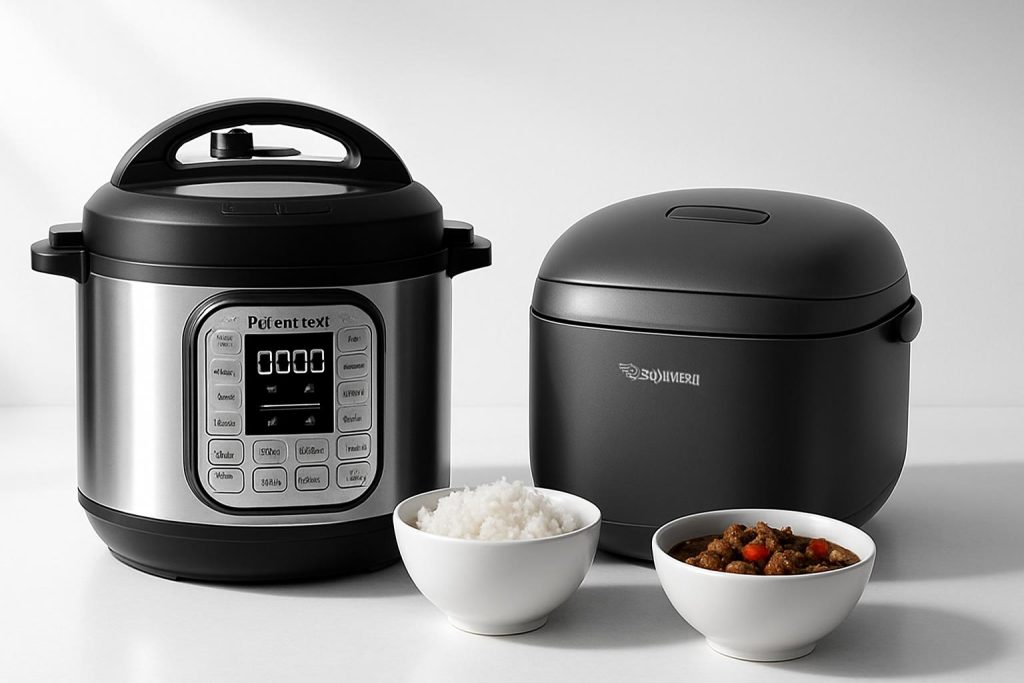
Instant Pot is a multi cooker built around electric pressure cooking. It also sautés, steams, slow cooks, makes yogurt, and keeps food warm. It is designed to replace several appliances and speed up tough tasks like beans, stew, and pulled meats. Most models use a stainless steel inner pot, a locking lid with a silicone ring, and a control panel with presets and manual modes.
Zojirushi in brief
Zojirushi is best known for premium rice cookers and water boilers. Its rice cookers use Micom fuzzy logic, Induction Heating, and on some models Pressure IH, to control temperature and timing precisely. The focus is perfect rice, porridge, and grains with long, safe keep warm. Some models add steam, cake, or mixed rice programs, but the core strength is consistent rice texture and flavor over many hours.
The Core Difference
Cooking methods and scope
Instant Pot uses pressure to speed cooking across many foods. It is about versatility and time savings. Zojirushi uses precise heat control for rice and grains. It is about quality and reliability for a narrower set of tasks. If you want one pot for everything, Instant Pot leans in your favor. If rice quality is critical, Zojirushi leads.
Who each is for
Instant Pot suits busy home cooks who batch cook, meal prep, or handle tough cuts and dry beans often. It also helps smaller kitchens replace multiple tools. Zojirushi suits households that cook rice several times a week, care about texture details, and want to keep rice ready for hours without drying or burning. It is also the safer pick if you rarely pressure cook and prefer set and forget rice every time.
Cooking Performance
Rice quality
Zojirushi wins on rice. It handles jasmine, basmati, sushi rice, brown, and mixed grains with tailored curves. The texture is distinct, moisture is even, and the bottom layer does not crust under normal programs. Extended keep warm preserves flavor and structure for many hours. If you pack lunch boxes or serve rice across lunch and dinner, this matters.
Instant Pot can cook good white and brown rice, but consistency depends on your water ratio and release method. It is easy to overshoot or get slightly sticky results during learning. If rice is a side and speed matters more than perfection, Instant Pot is acceptable. If rice is the star, Zojirushi feels effortless.
Grains, porridge, and oatmeal
Both handle porridge and oats. Zojirushi excels with congee, steel cut oats, and multigrain blends because of gentle temperature control and even heat. Instant Pot is faster for steel cut oats and barley if you use pressure, but the texture is denser and you must account for natural release time.
Beans and tough cuts
Instant Pot dominates here. Dried beans without soaking, chickpeas for hummus, shredded beef, pork shoulder, short ribs, and rich broths all finish far faster under pressure. Zojirushi rice cookers are not built for high pressure braising. If beans and braises are weekly staples, Instant Pot is the practical choice.
Soups, stews, and curries
Instant Pot gives you sauté for browning aromatics and meats, then pressure to finish soups and stews quickly. Results are full flavored and repeatable. Zojirushi can handle gentle soups or congee on porridge programs, but it is not intended for heavy browning or big meat stews.
Yogurt and extras
Many Instant Pot models include a yogurt mode that holds stable incubation temperatures. This is useful for meal prep and saves money on store yogurt. Some Zojirushi rice cookers include cake or steam functions, but yogurt is uncommon. If homemade yogurt matters, Instant Pot has the edge.
Bread and baking note
Zojirushi also sells bread makers. Those are separate appliances and not directly comparable to an Instant Pot. If your priority is bread, a Zojirushi bread maker will beat workarounds in a multi cooker. For this comparison, focus on rice cookers versus multi cookers.
Speed, Consistency, and Control
Time to table
Instant Pot is fast under pressure, but total time includes preheat to pressure and release. A dish that pressure cooks for 10 minutes may still take 25 to 40 minutes end to end. Beans, broths, and stews still finish much faster than stovetop.
Zojirushi is slower for white rice than basic rice cookers because it optimizes soaking and steaming stages. The tradeoff is better texture and more forgiving results. For weekday rush, start rice early and let keep warm hold it until meal time.
Precision and repeatability
Zojirushi offers unmatched repeatability for rice. You fill to the water line and press start. It adapts to rice age and ambient temperature. Instant Pot is repeatable once you dial in ratios and release methods, but it requires more user input and testing for different rice types.
Ease of Use
Controls and learning curve
Instant Pot has many programs and buttons. It is flexible but can feel complex at first. You will learn to use sauté, pressure level, manual time, natural or quick release, and keep warm. After a few runs, it becomes routine.
Zojirushi has focused menus. Select the rice type, press start, and walk away. Some models offer mixed rice, quick, sushi, brown, GABA brown, and porridge. The options are clear and purposeful.
Preprograms and manual modes
Instant Pot lets you customize time and pressure. You can adapt for altitude, quantity, and ingredient size. Zojirushi mostly runs preset curves and expects you to follow its cup markings. This removes guesswork and supports consistent rice, but it is less open ended for non rice dishes.
Cleaning and Maintenance
Daily cleaning routine
Instant Pot cleanup involves the inner pot, lid, silicone ring, steam rack if used, and the condensation collector. The stainless steel pot is usually dishwasher safe. The lid needs a quick hand wash. The silicone ring can hold strong odors. Many users keep separate rings for savory and sweet dishes.
Zojirushi cleanup includes the nonstick inner bowl, inner lid or steam cap depending on model, and the outer lid wipe down. The nonstick bowl should be hand washed with a soft sponge. Avoid metal utensils to protect the coating.
Deep clean schedule
Instant Pot gaskets and small lid parts benefit from a monthly deep clean. Remove the anti block shield, wash the float valve parts, and check the ring for tears every few months. Run a vinegar and water steam cycle to clear odors as needed.
Zojirushi rice cookers benefit from a gentle citric acid clean every few months to remove starch film and mineral deposits. Many models include a cleaning cycle. Wipe sensors and the heating plate gently to maintain even cooking.
Odor control and storage
Instant Pot silicone rings absorb smells. Store the lid upside down to air out, or place rings in a breathable bag. Keep at least two rings to separate flavor profiles. For Zojirushi, ensure the inner lid is dry before closing to prevent odor buildup. Store the scoop and cup in a small caddy so they do not go missing.
Longevity and parts
Instant Pot parts like rings and float valves are inexpensive and easy to replace. The stainless inner pot is durable. Nonstick ceramic versions require more care. Zojirushi bowls are model specific and more costly to replace, but the machines are extremely reliable when used with care. Follow the manual for nonstick protection and correct cup usage.
Kitchen Space and Organization
Footprint and capacity
Instant Pot sizes commonly include around 3, 6, and 8 quart. A 6 quart suits most families of 2 to 5. An 8 quart fits batch cooking and large roasts but takes more counter space. Zojirushi rice cookers are sized by cups, often 3, 5.5, and 10 cup uncooked rice. A 5.5 cup model fits most families and kitchens well.
Accessory management
Keep Instant Pot accessories in a shallow bin near the cooker. Group rings, steam rack, trivet, and measuring tools together. Label spare rings. For Zojirushi, store the scoop, measuring cup, and steaming accessory in a narrow drawer organizer. A dedicated bin prevents lost parts and speeds setup.
Safety and setup
Instant Pot needs space around the steam release. Never park it under cabinets while venting. Use a heat safe trivet and keep kids away during depressurizing. Zojirushi needs a stable, dry surface and room for the lid to open fully. Avoid stacking items on top of either appliance.
Cost and Value
Price ranges
Instant Pot models generally range from about 80 to 200 USD depending on size and features. Zojirushi rice cookers range widely. Micom models often start near 150 USD. IH and Pressure IH models can reach 350 to 600 USD. The premium reflects precision heating, materials, and longevity.
Energy use and running costs
Instant Pot is energy efficient for long cooks since pressure cooking is insulated and fast. Zojirushi uses modest power during cooking and minimal power during keep warm. Extended keep warm for rice is economical and safe. Replacement rings for Instant Pot are low cost. Replacement bowls for Zojirushi are higher cost but infrequent.
Warranty and support
Both brands provide warranties that vary by region and model. Instant Pot parts are widely available online. Zojirushi support is strong for higher end models, and parts can be ordered by model number. Register your unit and keep receipts for faster service.
Rice Ratios and Quick Start Tips
Instant Pot rice basics
Rinse rice until water runs mostly clear. For white long grain or jasmine, start with 1 part rice to 1 part water by volume. For basmati, use 1 part rice to about 1.1 parts water. For brown rice, use about 1 part rice to 1.25 parts water. Use high pressure. White rice 3 to 5 minutes then natural release 10 minutes before opening. Brown rice 20 to 24 minutes then natural release 10 minutes. Adjust water by small amounts if results are too firm or too soft.
Do not overfill. Fluff with a rice paddle to release steam and prevent clumping. If you get a burn warning, ensure the pot has enough water and that any sautéed aromatics are deglazed fully.
Zojirushi rice basics
Use the included cup for measuring. Rinse rice well. Fill water to the matching line inside the bowl. Choose the correct program for the rice type. Close the lid and press start. For quick meals, use the quick program knowing texture may be slightly firmer. For brown or GABA brown, allow the full cycle time. When finished, fluff gently and serve or keep warm.
Troubleshooting
Instant Pot common issues
If the pot does not pressurize, check the silicone ring placement, ensure the steam release is set to sealing, and confirm there is enough liquid. If food burns on the bottom, add more liquid, avoid thick tomato sauces on the bottom, and deglaze after sautéing. If rice is mushy, reduce water slightly or shorten natural release time. If rice is too firm, add a few tablespoons of water and run a short extra pressure time.
Zojirushi common issues
If rice is too soft, reduce water to slightly below the line or use a firmer texture setting if available. If rice is too firm, add a touch more water next time or allow a few extra minutes on keep warm before serving. If the lid drips during keep warm, ensure the inner lid or steam cap is clean and seated properly. If you see uneven cooking, verify the bowl and heating plate are clean and dry before starting.
Decision Guide
Choose Instant Pot if
You cook beans, stews, and tough meats often. You want one machine to sauté, pressure cook, and hold warm. You like making yogurt or batch cooking proteins and soups. You need speed and versatility more than perfect rice texture.
Choose Zojirushi if
You make rice several times a week. You care about precise texture across different rice types. You want safe, long keep warm without babysitting. You prefer a simple workflow that produces consistent results with minimal input.
When owning both makes sense
If budget and space allow, a Zojirushi rice cooker plus a mid size Instant Pot creates a strong cooking system. Put perfect rice on a set and forget cycle, and pressure cook proteins, beans, or curry at the same time. Dinner assembles fast with less stress, and cleanup stays organized.
Real Kitchen Workflow Tips
Weeknight flow
Start rice in the Zojirushi as you walk in. Chop vegetables. Sauté onions and spices in the Instant Pot. Add protein and liquid, then pressure cook. When the Instant Pot finishes, quick release if appropriate. Fluff rice and plate. The timing lines up naturally, and nothing overcooks.
Meal prep routine
Batch cook beans or shredded chicken in the Instant Pot. Portion and chill. Use Zojirushi to cook a large batch of brown rice or mixed grains. Cool and portion for the week. Reheat rice gently with a splash of water or rely on fresh batches with keep warm if you prefer fresh texture.
Care and Safety Checklist
Instant Pot
Check the silicone ring monthly. Replace if stretched or cracked. Clean the anti block shield and float valve. Keep the steam release area clear. Do not force the lid open under pressure. Use natural release for starchy foods to prevent sputtering.
Zojirushi
Use the correct measuring cup. Keep the nonstick bowl scratch free. Remove and wash the inner lid or steam cap after starchy cooks. Run a citric acid cleaning cycle every few months. Dry all parts before storage to prevent odors.
Cost Scenarios
Small household
A 3 quart Instant Pot covers quick soups, beans, and small batches. A 3 or 5.5 cup Zojirushi cooks enough rice for two to four servings with leftovers. Choose one based on whether rice or pressure cooking is the top priority.
Family of four
A 6 quart Instant Pot is the sweet spot for family meals. Pair with a 5.5 cup Zojirushi if rice is frequent. If budget limits you to one, decide based on your weekly menu. Beans and stews point to Instant Pot. Daily rice points to Zojirushi.
Final Checks Before You Buy
Counter space
Measure your counter and cabinet clearance. Instant Pot needs vertical room to release steam safely. Zojirushi needs space to open the lid fully. Plan a permanent spot if you use the cooker daily.
Noise and steam
Instant Pot makes a brief jet of steam during release. Zojirushi is very quiet with gentle steam. If you have sleeping kids or an open plan space, consider the timing of pressure release.
Water quality
Hard water leaves mineral residue. Use filtered water for both appliances to preserve taste and reduce maintenance. Descale periodically as needed.
Conclusion
Instant Pot and Zojirushi shine in different lanes. Instant Pot is the flexible workhorse that speeds beans, stews, and braises while offering extras like yogurt and sauté. Zojirushi is the precision tool that delivers top tier rice and grains with simple operation and superb keep warm performance. Your best pick depends on how you cook most days. Choose Instant Pot for versatility and fast pressure cooking. Choose Zojirushi for flawless rice and low effort consistency. If you can pair them, you get the best of both and a calmer kitchen routine.