
We are reader supported. When you purchase through links on our site, we may earn an affiliate commission. Also, as an Amazon affiliate, we earn from qualifying purchases.
Yes, furniture can dent vinyl plank flooring. I learned this the annoying way after moving a heavy bookcase and finding four little “dimples” where the feet had been sitting. Vinyl plank is tough, waterproof, and easy to live with, but it is not dent-proof—especially under concentrated weight from narrow furniture legs, metal feet, rolling chairs, or appliances.
The good news is that most dents are preventable. The main trick is to spread the furniture’s weight over a wider area and avoid dragging anything across the floor. Felt pads, wide furniture cups, caster protectors, and temporary moving boards make a big difference.
If you already have dents, small ones may soften visually over time, but deep dents are often permanent. Some planks can be replaced individually, which is one reason I’m glad I saved extra boxes from my flooring project.
Why does furniture dent vinyl plank flooring?
Vinyl plank flooring has some flexibility. That flexibility is part of why it feels more comfortable underfoot than tile, but it also means heavy objects can press into the surface or core.
The problem usually comes from pressure, not just weight. A 200-pound dresser with six wide legs may cause no damage, while a lighter chair with tiny metal feet can leave marks because all the pressure is concentrated in a small spot.
In my house, the worst offender was not the heaviest piece of furniture. It was a small accent cabinet with narrow tapered legs. Each leg had a hard plastic glide about the size of a dime. After a few months, I noticed small indentations right where those glides sat.
Common causes of dents include:
Narrow furniture legs that concentrate weight into a small area.
Metal feet or hard plastic glides that press directly into the vinyl.
Heavy furniture that stays in one place for months or years.
Rolling office chairs used without a protective mat.
Dragging furniture instead of lifting it.
Heavy appliances such as refrigerators, freezers, and washers.
Soft or uneven subfloors that allow the plank to flex too much.
A common misconception is that a thicker wear layer prevents dents. The wear layer helps protect against scratches and surface wear, but dent resistance is more about the plank’s core, overall construction, and how pressure is distributed.
Which types of vinyl plank dent more easily?
Not all vinyl plank floors behave the same. I noticed this while comparing samples before replacing flooring in a hallway. Some planks felt stiff and dense, while others had a softer, slightly cushioned feel.
Here is a practical comparison of the main types:
| Vinyl plank type | Dent resistance | What to know | Best prevention approach |
|---|---|---|---|
| SPC rigid core | Usually better | Dense stone-plastic core resists dents well, but sharp furniture feet can still leave marks. | Use felt pads, wide cups, and chair mats. |
| WPC core | Moderate | Softer and warmer underfoot, but may compress more under heavy furniture. | Use wider load-spreading protectors under heavy items. |
| Flexible glue-down vinyl plank | Varies widely | Can perform well when installed over a very smooth, hard subfloor; imperfections may telegraph through. | Make sure the subfloor is flat and use furniture pads. |
| Loose lay vinyl plank | Moderate | Heavy furniture can sometimes help hold it in place, but concentrated pressure can still dent. | Avoid small hard feet and dragging. |
| Budget thin vinyl plank | Often lower | May show dents sooner, especially in busy rooms or under heavy furniture. | Be extra careful with furniture cups and mats. |
Luxury vinyl plank is often marketed as durable, and many products are. But “durable” does not mean immune to point pressure. Even high-quality rigid core planks can dent if a metal bed frame foot is pressing into one tiny spot for a long time.
How do I stop furniture from denting vinyl plank flooring?
The simplest answer is to put something under the furniture that spreads the weight. The right protector depends on the furniture.
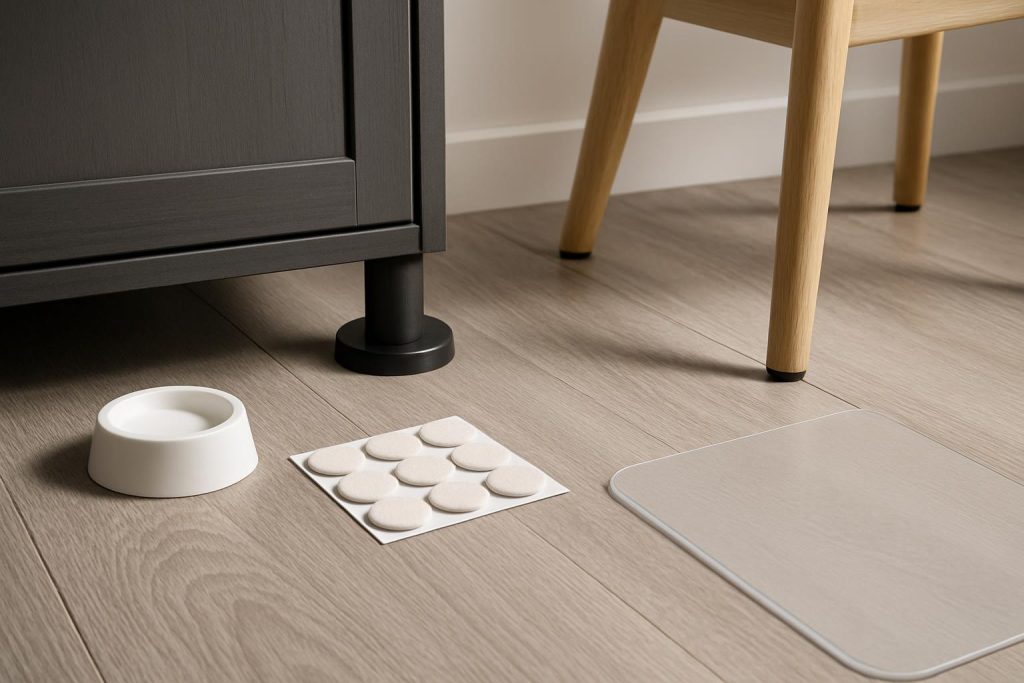
Use wide furniture cups for heavy pieces
For heavy sofas, beds, dressers, bookshelves, and cabinets, I prefer wide furniture cups over tiny felt dots. The wider the cup, the more it spreads the load.
Look for cups labeled safe for vinyl floors. Avoid cheap rubber cups unless the product clearly says they are non-staining and safe for vinyl. Rubber can react with vinyl and leave yellow or brown discoloration, especially in sunny rooms or under heavy furniture.
Use felt pads for chairs and tables
Felt pads work well under dining chairs, stools, small tables, and lightweight furniture. The mistake I made early on was using pads that were too small. A tiny felt dot can still allow pressure to concentrate.
Use the largest felt pad that fits the furniture foot. Check them every few months because felt compresses, collects grit, and sometimes slides off.
Use chair mats under rolling office chairs
Rolling office chairs are hard on vinyl plank. The repeated movement can leave dents, scuffs, and dull tracks. If you work from home, a chair mat is not optional in my opinion.
Choose a mat labeled for hard floors, not carpet. I prefer a smooth-bottom polycarbonate or vinyl-safe mat. Avoid mats with little spikes or grippers meant for carpet.
Put boards down when moving furniture
For moving day, I keep a couple pieces of thin plywood and thick cardboard in the garage. Sliding a fridge, cabinet, or heavy dresser directly across vinyl plank is asking for scratches and dents.
Better options include:
Lift furniture instead of dragging it whenever possible.
Use plywood sheets as a temporary path for appliances.
Use moving blankets folded under furniture, but only for short moves.
Use furniture sliders carefully, and make sure no grit is trapped underneath.
Clean the floor first so dirt does not act like sandpaper.
Check furniture protectors regularly
This is the step people skip. Furniture pads are not “install once and forget forever.” Felt wears down. Adhesive dries out. Dust and pet hair collect around the edges.
I check chair pads every season and replace any that look thin, dirty, or off-center. It takes ten minutes and can save a visible dent or scratch.
What should I put under heavy furniture on vinyl plank?
For heavy furniture, use wide, non-staining, vinyl-safe protectors. The goal is to avoid small pressure points.
Here are the options I have used or researched, along with the trade-offs:
| Protector | Best for | Pros | Watch out for |
|---|---|---|---|
| Felt pads | Dining chairs, light tables, stools | Affordable, easy to apply, reduces scratching | Can compress or peel off; not enough for very heavy furniture with narrow legs |
| Wide furniture cups | Sofas, beds, dressers, cabinets | Spreads weight well and stays in place | Must be vinyl-safe and non-staining |
| Chair mat | Office chairs, craft rooms, study desks | Protects against rolling pressure and scuffs | Use a hard-floor mat, not a carpet mat with spikes |
| Plywood panel | Temporary appliance moving | Excellent weight distribution during moving | Not attractive for everyday use |
| Non-rubber area rug pad | Under rugs and some furniture groupings | Adds protection and reduces shifting | Rubber-backed pads can discolor vinyl |
For bed frames, I like wide cups under each foot. Bed frames can be sneaky because the legs are often metal and narrow. The bed may not move much, but the pressure stays in the same place every day.
For bookshelves and large cabinets, make sure the weight is balanced. A tall bookcase loaded with books can be extremely heavy. If the base has small leveling feet, place vinyl-safe cups beneath them.
For refrigerators and freezers, follow the flooring manufacturer’s guidance. Some floating vinyl floors allow appliances; others warn against anything that pins the floor too tightly. If an appliance must be moved, protect the path with boards.
Can dents in vinyl plank flooring be fixed?
Small dents may become less noticeable after the weight is removed, especially if the vinyl was only mildly compressed. But deep dents usually do not disappear completely.
I tried the “wait and see” approach on my cabinet marks. Two of the dents improved a little after a week. Two stayed visible because the leg had compressed the plank more deeply.
Possible fixes include:
Remove the weight and give it time. Minor compression may relax slightly.
Use gentle warmth with caution. Some homeowners try a hair dryer on low heat to warm the area, then press or roll it gently. This can damage the floor if overheated and may void a warranty.
Hide the mark. A rug, furniture placement, or lighting change can make a shallow dent less obvious.
Replace the damaged plank. This is the cleanest fix for deep dents, especially with click-lock flooring.
I would be careful with internet tricks involving irons, steam, boiling water, or heat guns. Vinyl can warp, discolor, or lose its finish. Heat can also affect adhesive on glue-down plank.
If the floor is new or still under warranty, contact the manufacturer before trying a repair. They may ask for photos, product information, installation details, and proof that the floor was protected properly.
Does furniture leave permanent marks on vinyl plank?
Furniture can leave permanent marks if the pressure is strong enough or lasts long enough. Dents are more likely to become permanent if:
The furniture has small, hard feet.
The item is very heavy.
The floor is a softer WPC or thinner budget plank.
The room gets hot direct sunlight.
The subfloor has low spots or flex.
The furniture sits in the exact same position for years.
Heat matters because vinyl softens slightly in warm conditions. A heavy chair leg in front of a sunny patio door may leave a mark faster than the same chair in a cooler hallway.
Another type of “mark” is discoloration. This is different from a dent. Rubber feet, rubber-backed rugs, certain rug pads, and some dark plastics can stain vinyl. The mark may look yellow, brown, or gray, and it can be very hard to remove.
That is why I avoid rubber-backed mats and mystery furniture cups. I look for wording like “non-staining,” “safe for vinyl,” or “safe for luxury vinyl plank.” If the product packaging only says “protects hardwood,” I do not assume it is safe for vinyl.
Are floating vinyl plank floors more vulnerable under furniture?
Floating vinyl plank floors are designed to move slightly with temperature changes. The planks click together and sit over the subfloor rather than being glued down across the whole room.
Normal furniture is usually fine on floating vinyl plank if the weight is spread out. Sofas, beds, tables, and dressers are common and expected. Problems can happen when heavy objects pin the floor so tightly that it cannot expand and contract.
Examples that may cause trouble include:
Kitchen cabinets installed on top of floating vinyl plank.
Large built-in bookcases fastened through the floor.
Heavy islands placed on top of floating floors without manufacturer approval.
Pool tables, aquariums, or safes with small feet.
This is one area where reading the installation guide really matters. Some brands allow heavy furniture within certain limits. Others warn against permanent fixtures. If you have a safe, piano, aquarium, or large built-in, ask the flooring manufacturer before placing it on the floor.
For very heavy items, you may need to distribute the weight with a platform, use larger floor protectors, or install the item before flooring and trim around it. That is less convenient, but it can prevent buckling, separation, or locked-in planks.
Common mistakes that cause dents and damage
Most vinyl plank dents I have seen were preventable. Here are the mistakes I would avoid after dealing with this in my own home:
Using tiny pads on heavy furniture
Tiny felt pads are better than bare metal, but they may not be enough under a heavy dresser or bed frame. Use wide cups or larger protectors.
Assuming all floor protectors are vinyl-safe
Some products are made for hardwood or tile and may stain vinyl. Rubber is the big one to watch. If the packaging does not say safe for vinyl, choose something else.
Dragging furniture “just a few inches”
This is how scratches and dents happen. Even a small movement can grind dirt into the floor or catch a plank edge.
Ignoring rolling chairs
Office chairs cause repeated pressure in the same area. A hard-floor chair mat is cheaper than replacing planks.
Forgetting about sunlight and heat
Rooms with strong sun exposure can get surprisingly warm. Use blinds, curtains, or UV window film if the floor is heating up daily under heavy furniture.
Installing over a bad subfloor
A vinyl plank floor is only as stable as what is underneath it. Low spots, bumps, debris, or soft underlayment can allow the plank to flex and dent more easily.
My practical prevention checklist for vinyl plank floors
If I were setting up a room with vinyl plank today, this is the checklist I would follow before moving furniture back in:
Clean the floor thoroughly so grit does not get trapped under pads or sliders.
Inspect every furniture leg for metal edges, broken glides, nails, or rough plastic.
Install large felt pads under chairs and light furniture.
Use wide, vinyl-safe cups under beds, sofas, dressers, and cabinets.
Place a hard-floor mat under any rolling office chair.
Avoid rubber-backed rugs and rubber furniture feet unless labeled non-staining for vinyl.
Use plywood or hardboard sheets when moving appliances.
Keep extra planks from the original installation for future repairs.
Check pads every few months, especially under frequently moved chairs.
The most useful habit has been checking furniture feet before setting anything down. New furniture often comes with hard plastic glides that are not friendly to vinyl. Older furniture may have exposed staples, missing caps, or uneven legs.
I also take photos of rooms before moving heavy furniture around. That way, if I later notice a dent, I can tell which piece caused it and fix the source instead of guessing.
What if you have pets, kids, or a busy household?
Vinyl plank is still a good floor for busy homes. I have lived with it through muddy shoes, spilled drinks, pet bowls, and furniture rearranging. Dents are manageable if you plan for them.
For homes with kids, I would pay extra attention to play tables, bunk beds, toy storage units, and rolling desk chairs. Kids tend to shove chairs instead of lifting them, so felt pads wear out faster.
For pets, check under crates, gates, feeding stations, and heavy scratching posts. A crate with thin metal feet can leave marks. Put a vinyl-safe mat underneath, but avoid rubber-backed mats.
For renters, prevention matters even more because dents may affect your deposit. Use protectors from day one and take move-in photos of any existing floor marks.
FAQ: Furniture dents and vinyl plank flooring
Will a couch dent vinyl plank flooring?
A couch can dent vinyl plank if it has small, hard feet or if it is very heavy. Most couches are fine when the weight is spread out with wide, vinyl-safe furniture cups or large felt pads.
Can I put a piano on vinyl plank flooring?
A piano needs extra care because it is very heavy and usually rests on small caster points. Use proper piano caster cups designed to spread weight, and check your flooring manufacturer’s guidelines. For floating floors, very heavy items may restrict floor movement.
Are felt pads safe for vinyl plank?
Felt pads are usually safe and useful, especially under chairs and tables. Choose good-quality pads, use a size large enough for the furniture foot, and replace them when they compress or collect grit.
Are rubber furniture cups safe on vinyl plank?
Rubber can stain vinyl. Only use rubber cups if they are clearly labeled non-staining and safe for vinyl flooring. If you are unsure, choose felt, plastic, or another vinyl-safe protector instead.
Will vinyl plank dents go away on their own?
Minor compression may improve after the weight is removed, but deep dents often stay. If the dent bothers you and the floor is click-lock vinyl plank, replacing the damaged plank may be the best repair.
Can I use furniture sliders on vinyl plank?
You can use sliders carefully, but the floor should be clean first. Grit trapped under a slider can scratch the surface. For very heavy furniture or appliances, plywood sheets are safer.
Do area rugs prevent furniture dents?
Area rugs can help a little, but they may not spread weight enough under narrow furniture legs. Use furniture cups or pads under the legs, even on top of a rug. Make sure the rug backing or rug pad is safe for vinyl.
Is SPC vinyl plank dent-proof?
No. SPC is generally more dent-resistant than softer vinyl plank cores, but sharp or narrow furniture feet can still dent it. Protection is still worth using.
Should heavy furniture go on floating vinyl plank?
Regular furniture is usually acceptable if the weight is distributed. Very heavy or permanent items, such as built-ins, large aquariums, safes, and kitchen islands, need manufacturer guidance because they can restrict the floor’s movement.
The fastest way to protect your floor today
If you are worried about furniture denting your vinyl plank floor, start with the pieces that have the smallest feet and the most weight. Beds, sofas, dressers, bookshelves, office chairs, and metal-framed furniture are the usual suspects.
Put wide, non-staining, vinyl-safe protectors under heavy furniture. Use felt pads under movable chairs. Add a hard-floor mat under rolling chairs. Never drag heavy items directly across the planks.
Vinyl plank flooring can handle real life, but it needs a little help under heavy pressure points. A few inexpensive protectors are much easier to deal with than staring at dents every time the sunlight hits the floor.