
We are reader supported. When you purchase through links on our site, we may earn an affiliate commission. Also, as an Amazon affiliate, we earn from qualifying purchases.
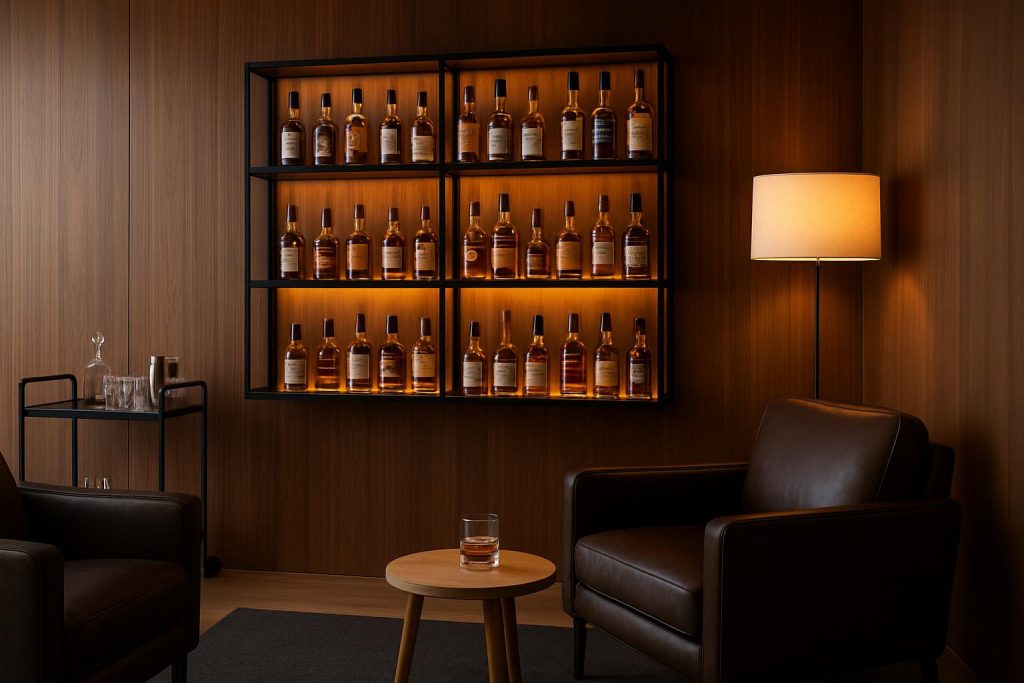
A home whiskey lounge brings focus, calm, and pleasure into a small footprint. You do not need a huge room or a massive budget. You need a clear plan, smart lighting, durable finishes, and a few well chosen tools. Start with the space you already have, then refine step by step.
Plan Your Space
Choose the right location
Pick a spot with low foot traffic and good control over light and sound. A spare room, den, basement corner, or a wide hallway niche can work. Avoid areas with strong cooking odors or direct sun. If you only have a living room corner, use a rug and a low divider to define the zone.
Define purpose and guest count
Decide how you will use the lounge. Solo wind downs, quiet tastings for two, small groups of four, or larger gatherings up to six. Capacity drives seating, table count, storage, and traffic paths. Be honest, then size accordingly.
Measure and set clearances
Map the footprint. Leave at least 90 cm for main walkways. Leave 60 cm behind stools and chairs. For a counter, plan 105 cm to 110 cm height for standing service and 75 cm height for seated tables. Keep 10 cm between bottles on shelves and at least 20 cm from the front edge to reduce knock risks.
Design Style and Mood
Pick a clear style direction
Classic club favors warm wood, leather, and low light. Modern minimal favors clean lines, matte finishes, and hidden storage. Industrial favors metal, brick, and textured surfaces. Choose one direction and keep materials consistent to avoid visual noise.
Color and materials that age well
Use warm neutrals for walls and textiles. Deep greens, charcoals, and nut browns add depth. Select durable surfaces: solid wood or wood veneer with a hard finish, matte metal, sealed stone, and performance fabrics. If your space is humid, avoid unsealed wood and cheap laminates near sinks.
Control sound and echo
Soft surfaces reduce echo and make conversation easy. Add a dense rug, lined curtains, upholstered seating, and books on shelves. If the room is lively, add acoustic panels disguised as art. Keep hard reflective surfaces balanced with soft ones.
Lighting That Flatters Whiskey
Layer your lighting
Use three layers. Ambient for overall mood. Task for pouring and reading labels. Accent to highlight bottles and art. When you layer correctly, the room feels calm and premium.
Choose the right bulbs
Use warm white for ambient at 2200 to 2700 K. Use neutral warm for task at 3000 to 3500 K. Aim for CRI 90 or higher so whiskey color looks true. Avoid harsh downlights over seats. Use wall sconces, shaded lamps, and LED strips under shelves.
Install dimmers and simple control
Put each layer on dimmers. Label switches. A simple preset makes setup fast. Evening mode can be 40 percent ambient, 70 percent task, and 60 percent accent. Adjust by feel.
Furniture Essentials
Bar counter or cart
If you have the space, a fixed counter gives stability and storage. Depth 55 to 65 cm is comfortable. If space is tight, a bar cart with two shelves and locking casters works well. Keep the cart within 1.5 m of seating to reduce trips.
Seating that supports posture
Pick two to four lounge chairs with supportive backs and arms. Seat height 40 to 45 cm. For stools at a 105 cm counter, choose 75 cm seat height. Allow 60 cm between stool centers. Add one or two ottomans for flexible seating.
Tables at the right height
Side tables at 50 to 55 cm height keep glasses stable. Use coasters to protect surfaces. Add one central table only if space allows at least 45 cm clearance around it.
Rug to anchor the zone
Use a low pile rug that resists stains. Size it so front legs of chairs sit on the rug. Choose a pattern that hides minor spills between cleanings.
Storage and Display
Store bottles correctly
Keep whiskey upright to protect the spirit and keep labels intact. Avoid direct sun and temperature swings. Aim for a cool stable zone. For bottles with natural cork, a brief tilt every few months can wet the cork, but return upright for storage. Lock storage if you have children or guests who explore.
Display that is practical
Use deep shelves with a front lip to prevent falls. Position everyday bottles at shoulder to waist height. Keep tall bottles on adjustable shelves. Add LED strips at the front underside to wash light over labels without glare.
Glassware essentials
Start with tulip or Glencairn style glasses for tasting, rocks glasses for sipping with ice, and highballs for long drinks. Plan two to three glasses per guest to avoid washing mid evening. Store glasses upright on a clean shelf or on a bar mat to prevent sliding.
Tools and organization
Keep a jigger, mixing glass, bar spoon, strainer, ice tongs, and a small knife. Add a silicone ice mold for large clear cubes. Use drawer dividers to prevent rattling. Place a drying mat near the sink or a tray with a washable bar mat if you are in a dry zone. Label drawers for fast reset after use.
Layouts for any footprint
Small: one bar cart, two lounge chairs, two side tables, one floor lamp, and a 160 by 230 cm rug. Medium: 120 cm cabinet bar, three to four chairs, a slim console for bottles, two lamps, and a 200 by 300 cm rug. Large: built in back bar with 30 cm deep shelves, four to six seats in two zones, a central table, layered lighting, and concealed storage.
Air, Smell, and Light Control
Ventilation and odor management
Comfort improves with clean air. Open a window or run a quiet fan on low. A HEPA purifier with a carbon filter reduces lingering odors. Avoid strong room sprays that fight with whiskey aromas. If you use candles, keep them unscented and away from bottles and drapes.
Protect from sunlight
Use blackout shades, UV film on windows, or both. Glass doors on cabinets should have UV resistant film. Light fades labels and warms bottles, so block it at the source.
Finishes and Maintenance
Durable surfaces and simple care
Seal wood tops with a hardwax oil or polyurethane finish. Choose stone that is sealed and non porous where possible. Wipe surfaces after each session with a damp microfiber cloth and mild dish soap solution, then dry. Use coasters and trays to contain drips.
Spill response that works
Act fast. On wood, blot, then wipe with a damp cloth and dry. On leather, blot, then wipe with a barely damp cloth, dry, and condition as needed. On rugs, blot with a white cloth, apply cool water, blot again, and repeat until clear. Avoid scrubbing which spreads stains. Empty and rinse sticky tools and glasses before they dry.
Safety you can live with
Use non slip rug pads. Add childproof locks if needed. Anchor tall shelves to studs. Keep an ABC fire extinguisher within reach but out of sight. Check dimmers and wiring for heat buildup. Keep the floor clear of cords and clutter.
Whiskey Service Basics
Temperature, water, and ice
Room temperature showcases most bottles. Offer cool water to open aromas. Use large clear ice for slow dilution. Keep a small water carafe and a clean spoon for measured drops.
Tasting flow and simple menu
Line up bottles from light to rich. Pour small measures to allow repeats. Offer plain water and simple snacks that do not overpower. Nuts, mild crackers, and plain dark chocolate work well. Avoid strong cheese and heavy spices during tastings.
Hosting that feels easy
Set the room before guests arrive. Glasses cleaned and placed, water filled, ice frozen, tools set, coasters out, trash accessible. Greet, seat, and pour at the bar or at a side table. Keep background music low for conversation.
Budget Tiers and Quick Wins
Starter setup
Use a sturdy bar cart, two comfortable chairs, two side tables, one dimmable lamp, a small set of glasses, and a few tools. Add a rug to define the zone. Prioritize lighting and seating comfort first.
Mid tier upgrades
Add a dedicated cabinet with lockable doors, LED shelf lighting, acoustic curtains, and a better chair set. Introduce dimmers on all layers and improve glassware count.
Splurge where it shows
Invest in custom shelving with integrated lighting, premium chairs in real leather, and a solid wood or stone top. Add a whisper quiet air purifier and motorized shades if sunlight is a challenge.
Step by Step Setup Checklist
Plan
Define capacity, measure the room, and choose a style. Decide on fixed bar versus cart. Map lighting points and power.
Build
Install dimmers, mount shelves into studs, apply UV film, and place rug with a pad. Assemble furniture and anchor tall pieces.
Equip
Stock essential glassware and tools. Set up organizers and labels. Prepare ice molds and water carafe.
Dial in
Set lighting presets. Test seating spacing. Run purifier and check airflow. Do a dry run with one pour to confirm reach, stability, and cleanup.
Common Mistakes to Avoid
Too little light control
No dimmers leads to glare or gloom. Add dimmers and warm bulbs to fix this fast.
Overcrowding
Too many chairs or tables kills flow. Keep clearances and scale to your guest count.
Ignoring maintenance
Unsealed wood, no coasters, and no plan for spills equal damage. Seal, protect, and keep cleaning supplies handy.
Heat and sun exposure
Bottles in sun or near heaters degrade. Add shades and move storage to a stable zone.
Conclusion
A home whiskey lounge succeeds when form supports function. Start with location, airflow, and light. Add seating that invites long conversations. Store bottles upright, protect from sun, and keep tools organized. Keep cleaning simple and consistent so the room stays ready. With a clear plan and a few focused upgrades, you can build a lounge that feels refined, runs smoothly, and fits your space.
FAQ
Q: What is the minimum space needed for a home whiskey lounge?
A: A small corner can work with one bar cart, two lounge chairs, two side tables, one floor lamp, and a 160 by 230 cm rug.
Q: What lighting color temperature works best for a whiskey lounge?
A: Use 2200 to 2700 K for ambient light and 3000 to 3500 K for task light, with CRI 90 or higher.
Q: How should I store whiskey bottles at home?
A: Store bottles upright, away from direct sun and temperature swings, in a cool stable zone.
Q: Which glassware do I need to start?
A: Start with tulip glasses for tasting, rocks glasses for ice, and highballs for long drinks, with two to three glasses per guest.
Q: How do I handle spills and stains quickly?
A: Blot immediately, clean wood and leather with a damp cloth then dry, and on rugs use cool water and blot until clear.