
We are reader supported. When you purchase through links on our site, we may earn an affiliate commission. Also, as an Amazon affiliate, we earn from qualifying purchases.
Garden snails show up after rain, leave uneven holes in leaves, and hide under pots by day. If you know what they eat and why they choose certain plants, you can protect your garden, clean up damage faster, and even care for pet snails the right way. This guide keeps it simple. You will learn the foods snails seek, what they avoid, how weather changes their appetite, how to spot feeding early, and what to do next without harsh chemicals. If you keep a pet snail, you will also get a safe feeding plan and cleaning tips that prevent smells and mold.
What Garden Snails Eat at a Glance
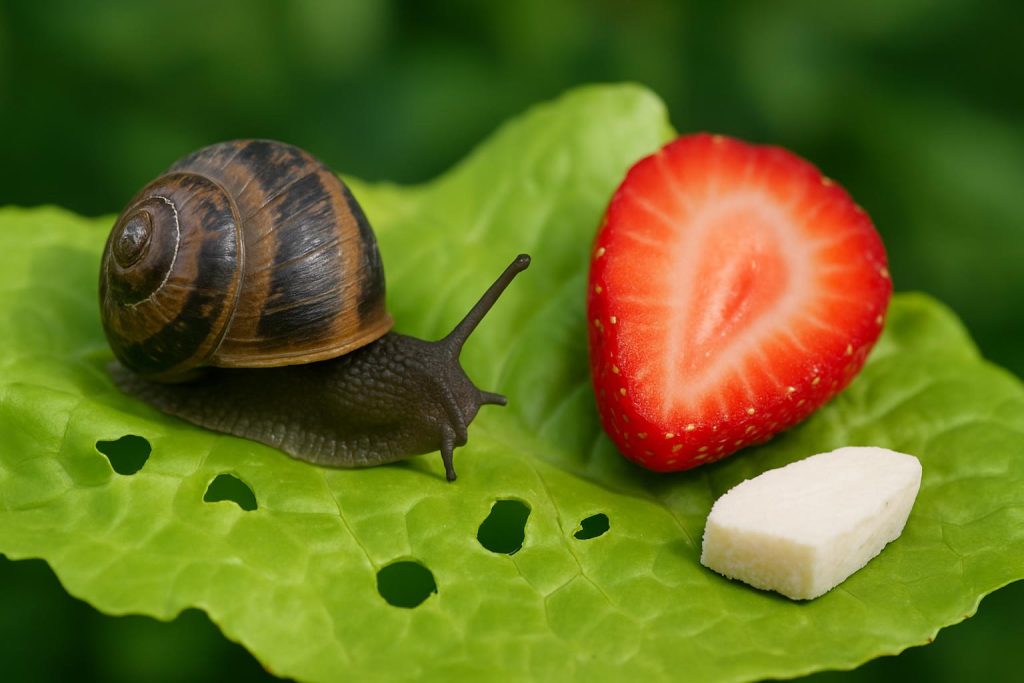
Most garden snails are herbivores that prefer soft, moist, and nutrient-rich plant tissue. They target tender leaves, seedlings, fruit skins, and decaying matter. They will also scrape algae and nibble fungi when leafy options are scarce. Calcium is essential for their shells, so they seek mineral sources when available.
Snails are opportunistic. They choose foods that are easy to rasp with their radula, the tiny toothed tongue they use to scrape surfaces. They avoid dry, tough, or aromatic foliage. They feed mainly at night or after rain when plants are tender and surfaces are slick.
Wild Diet in the Garden
Tender Leaves and Seedlings
New growth is prime snail food. Cotyledons, baby leaves, and soft shoots are easy to rasp and full of moisture. This is why freshly planted seedlings vanish overnight. Leafy greens like lettuce, spinach, chard, and bok choy are frequent targets. Basil, marigold seedlings, and young dahlias also take heavy hits in mild, wet weather.
Fruits and Vegetables, Especially When Ripening
Snails love soft skins and sweet pulp. Strawberries, tomatoes, cucumbers, pumpkins, and melons become vulnerable as they ripen and touch soil or mulch. Snails often start on ground-contact areas where moisture collects. They will also feed on fallen fruit because the skin is already softened.
Flowers and Succulent Stems
Petals and soft stems offer both sugars and water. Snails chew through hostas, delphiniums, lobelia, and viola blooms. They also graze on the succulent growth of young annuals and climbers. Flower buds with thin sepals are at risk before they open.
Algae, Lichens, and Fungi
When green leaves are scarce, snails scrape algae off pots, stones, and fence panels. They nibble lichens on shaded surfaces. They also consume some mushrooms and fungal growth on decaying mulch. These sources help them bridge dry periods or the off-season.
Decaying Plant Matter and Mulch
Snails do not only eat live plants. They feed on soft, decomposing leaves and dead plant tissue in mulch layers. This is convenient for composting but risky if the mulch stays wet and close to vulnerable stems, which draws snails toward live plants.
Calcium Sources for Shell Health
Snails need steady calcium to build and repair shells. They rasp at cuttlebone, crushed eggshells, limestone, and calcium-rich soil. In urban areas, they may graze mineral-rich mortar residue on old brick. Without calcium, shells grow thin and pitted, and snails become more vulnerable.
What Snails Avoid or Rarely Eat
Tough, Hairy, or Aromatic Leaves
Plants with thick cuticles, hairy leaves, or strong scents deter many snails. Examples include rosemary, lavender, sage, thyme, and many succulents with waxy skins. The texture and oils make rasping difficult and unappealing. This is why herb borders sometimes have less damage.
Plants With Bitter Latex or Strong Defenses
Some species produce latex-like sap or bitter compounds when damaged. Poppies and euphorbias exude sap that discourages snails. Brassicas can be hit when tender, but older leaves often resist due to toughness and glucosinolates that reduce feeding.
Dry, Exposed, or Sun-Baked Surfaces
Snails avoid dry leaves and sunlit beds during the day. They lose moisture quickly on hot or windy surfaces. Dry mulch and raised beds with sharp drainage see less activity. This is not about taste but survival.
How Weather and Season Shape Feeding
After Rain and Overnight Peaks
Moisture triggers movement and feeding. After rain or heavy irrigation, snails emerge to feed on softened plant tissue. Nighttime is prime because humidity is higher and predators are fewer. Damage clusters often appear after two or three damp nights in a row.
Heat and Drought Slow Activity
In hot, dry periods, snails hide under boards, pots, dense groundcovers, and shaded rocks. They seal their shells with a thin membrane to conserve water. During these spells, they rely more on decaying matter and algae in cool microhabitats if available.
Cool and Mild Periods Extend Feeding Windows
Spring and fall bring sustained feeding because temperatures are moderate and soil stays moist. Seedlings and ripening fruit overlap in these seasons, making gardens more vulnerable. Plan protective steps before these windows, not after damage shows.
How to Recognize Snail Feeding
Damage Patterns on Leaves and Fruit
Look for irregular holes with smooth edges on tender leaves. On seedlings, entire leaves can disappear, leaving only midribs. On fruit, check the underside that contacts soil or mulch for shallow pits or larger gouges. Snails often leave partially eaten petals scattered below flowers.
Slime Trails and Droppings
Silvery slime lines appear on paving, pots, borders, and leaf surfaces in the morning. Pelleted droppings are dark and small and may collect near feeding sites. Trails often lead to hiding spots under rims of containers, timber edges, or dense groundcover at the bed margin.
Protecting Plants Using Diet Knowledge
Smart Plant Selection and Placement
Place high-value tender plants closer to the house, on benches, or in raised beds where you can monitor them daily. Choose more resilient plants for bed edges and path borders. Use aromatic herbs as buffer zones around tender greens.
Physical Barriers and Copper
Use collars around seedlings made from cut plastic pots or sturdy paper cups with bottoms removed. Press the collar 2 to 3 cm into the soil. Wrap container rims with copper tape that stays clean and continuous. Ensure no leaf bridges cross the barrier. Reapply or clean copper when it tarnishes, as dirt and oxidation reduce its deterrent effect.
Traps and Safe Baits
Place boards, grapefruit halves, or damp cardboard near vulnerable beds in the evening. In the morning, remove the shelter and collect snails for relocation if allowed in your area. If you use baits, choose iron phosphate formulations that are pet-safe when used as directed. Avoid metaldehyde baits, which are hazardous to pets and wildlife.
Watering Strategy and Habitat Reduction
Water early in the morning so foliage dries before nightfall. Avoid overwatering that keeps beds damp overnight. Lift and tidy items that create hideouts, such as slabs on soil, wood offcuts, and stacked trays. Keep mulch a few centimeters away from stems and thin dense groundcovers along edges.
Companion Plants and Decoy Rows
Plant sacrificial rows of highly attractive greens, such as lettuce, at a distance from key crops. Check these decoys at dawn and remove snails. Surround sensitive plants with less palatable herbs. Rotate decoy placement so snails do not establish a permanent colony near your primary beds.
Methods to Avoid
Do not scatter salt in garden beds. It harms soil life and plant roots. Be cautious with coffee grounds as a deterrent. Results vary and thick layers can alter soil pH and water movement. Avoid spraying harsh cleaners outdoors. Focus on dryness, barriers, and safe baits instead.
Feeding Pet Garden Snails Safely
Staple Foods That Work
Offer a base of leafy greens such as romaine, kale, chard, and dandelion leaves. Add cucumber, zucchini, and carrot slices cut thin so snails can rasp them. Provide small portions of apple or pear without seeds. Rotate choices to cover nutrients and prevent picky habits.
Calcium for Strong Shells
Keep a piece of cuttlebone in the enclosure at all times. Replace when heavily scraped. You can also use finely crushed eggshells that have been baked dry and ground into a powder. Sprinkle a light pinch on food a few times a week. Do not overdo it. A constant source the snail can choose is safer than heavy dosing.
Foods to Limit or Avoid
Avoid processed foods, salty snacks, seasoned items, dairy, and meat. Do not feed onion, garlic, or spicy produce. Skip citrus and pineapple because acidity can irritate tissues. Avoid raw rice or pasta because they expand with moisture and are not suitable for rasping. Keep moldy food out of the enclosure.
Feeding Routine and Clean-Up
Feed small amounts daily or every other day, depending on how fast they eat. Remove leftovers within 24 hours to prevent mold and fruit flies. Rinse fresh foods to remove residues. If your snail stops eating, check humidity and temperature first, then offer softer options like cucumber or steamed and cooled carrot.
Cleaning the Enclosure the Right Way
Use warm water and a soft sponge to wipe surfaces. Avoid soaps and chemical cleaners that can harm snails. For tough algae on glass, use a plastic scraper and rinse thoroughly. Let surfaces dry partially before reintroducing the snail to avoid pooling water. Clean bowls and cuttlebone holders weekly. Replace substrate regularly to control odor and microbes.
Compost and Snails
What Snails Eat in a Compost Area
Snails graze on softening vegetable scraps, wilted leaves, and fungal threads in compost. This helps break material down. They prefer the cooler outer zones where moisture is steady. If you see shells near the bin after rain, they are likely feeding on the damp edges.
Managing Snails Around Compost
Keep compost covered and avoid placing bins right next to tender beds. Lift the bin occasionally and remove clusters of snails to relocate to wilder areas if permitted. Maintain a hot core by balancing greens and browns and turning the pile. A hotter pile reduces snail activity and speeds decomposition.
Frequently Asked Questions
Do snails eat grass
They rarely graze mature grass blades. New shoots or freshly seeded lawns are more at risk. In most lawns, slug damage is more common than snail damage. If you see holes in turf overnight, inspect shaded borders and irrigation zones for culprits.
Do snails eat other snails or eggs
Most common garden snails are plant eaters. They may scavenge eggs or carrion in rare cases, especially when food is scarce. Predatory snails exist but are not the usual garden species.
Is beer trapping a good idea
Beer traps attract and drown slugs and snails, but they also draw more from surrounding areas. They require frequent emptying and can harm beneficial beetles. Use targeted shelters and hand removal first. If you try beer traps, place them away from key beds.
Are commercial baits safe for pets
Iron phosphate baits are a safer choice when used as directed. Avoid metaldehyde baits around pets and wildlife. Always read labels and apply sparingly near problem zones, not across entire beds.
Do coffee grounds stop snails
Results vary by garden. Light applications may reduce grazing in some cases, but heavy layers can repel water and affect soil. Use cultural controls first and treat grounds as a soil amendment rather than a primary deterrent.
Practical Garden Plan You Can Start Today
Walk your garden at night or dawn after watering. Note which plants are most tender and which areas stay wet. Add collars to new seedlings and clean the rim of pots before applying copper tape. Move mulch back from stems and lift hiding boards. Place one decoy tray with lettuce leaves five meters from key beds and check it early for removal. If damage persists, add iron phosphate bait along the outer perimeter, not next to the plant stems.
Troubleshooting Common Situations
Seedlings disappearing overnight
Use collars plus a dry buffer zone around each plant. Water in the morning only. Add a raised bench or crate to start seedlings higher off the ground for one to two weeks before transplanting. Harden them off, then install collars for the first ten days in the bed.
Ripe fruit getting chewed underneath
Lift fruit off soil with pot feet, straw frames, or tiles. Harvest as soon as color develops. Clear fallen fruit daily. Reduce evening irrigation around fruiting plants and keep leaves from touching the ground where possible.
Heavy damage in container gardens
Clean pot rims and apply new copper tape in a continuous band. Prune leaves that drape over the rim and touch the ground. Elevate pots on stands to reduce bridging by leaves and mulch. Check trays and keep them dry at night.
Why This Matters for a Clean and Healthy Home Garden
Snail feeding links directly to moisture, clutter, and plant choice. By adjusting watering, tidying hiding spots, and using simple barriers, you reduce damage and keep areas cleaner. You also minimize the need for harsh products that add risk around kids and pets. Clean habits plus selective protection give you the best return with the least effort.
Conclusion
Garden snails eat what is soft, moist, and easy to rasp. They focus on tender leaves, seedlings, ripening fruit touching soil, flowers, algae, fungi, and decaying plant matter. They avoid dry, tough, and aromatic foliage. Their feeding surges at night and after rain and slows during heat and drought. With this understanding, you can place tender plants wisely, use collars and copper, tidy moist hideouts, and deploy safe baits only where needed. If you keep snails, offer leafy greens, calcium sources, and small portions with regular cleanup. Simple steps based on diet and behavior protect your plants, keep your spaces cleaner, and make your garden easier to manage.