
We are reader supported. When you purchase through links on our site, we may earn an affiliate commission. Also, as an Amazon affiliate, we earn from qualifying purchases.
Bad refrigerator odor can ruin appetite, cling to food, and signal hidden mess. The fix is simple when you follow a clear plan. Start by removing the source, then deodorize with the right method, and finish with habits that keep smells from coming back. This guide gives you 12 effective ways to remove odor from your refrigerator, with beginner friendly steps you can do today.
Why refrigerators smell and how to fix it fast
Fridge odor usually comes from spills, expired food, leaky containers, and bacterial growth in warm, damp spots. Odors hide under shelves, inside door gaskets, and in the drip pan. Airflow problems and wrong temperature make it worse. Solve the cause first, then neutralize the remaining smell.
Your fast plan is simple. Empty, clean, deodorize, dry, and reset your fridge for good airflow. If the smell returns, clean the drip pan and drain line. If ice tastes off, clean the freezer and ice bin too.
Quick setup before deodorizing
Power and safety
For a quick wipe and odor absorber, you can keep the fridge running. For a deep clean or if the doors will be open for a long time, unplug it. Keep cords dry and place towels on the floor to catch drips.
Empty and sort
Remove all food. Toss expired items and anything with strong odor leaks. Place what you keep in a cooler with ice packs. Remove shelves, bins, and drawers so you can clean every surface.
Basic wash
Wash shelves, drawers, and interior walls with warm water and a little dish soap. Rinse with clean water. Dry fully with a clean towel. This step removes the grime that traps odor. Now you are ready to deodorize.
12 ways to remove odor from refrigerator
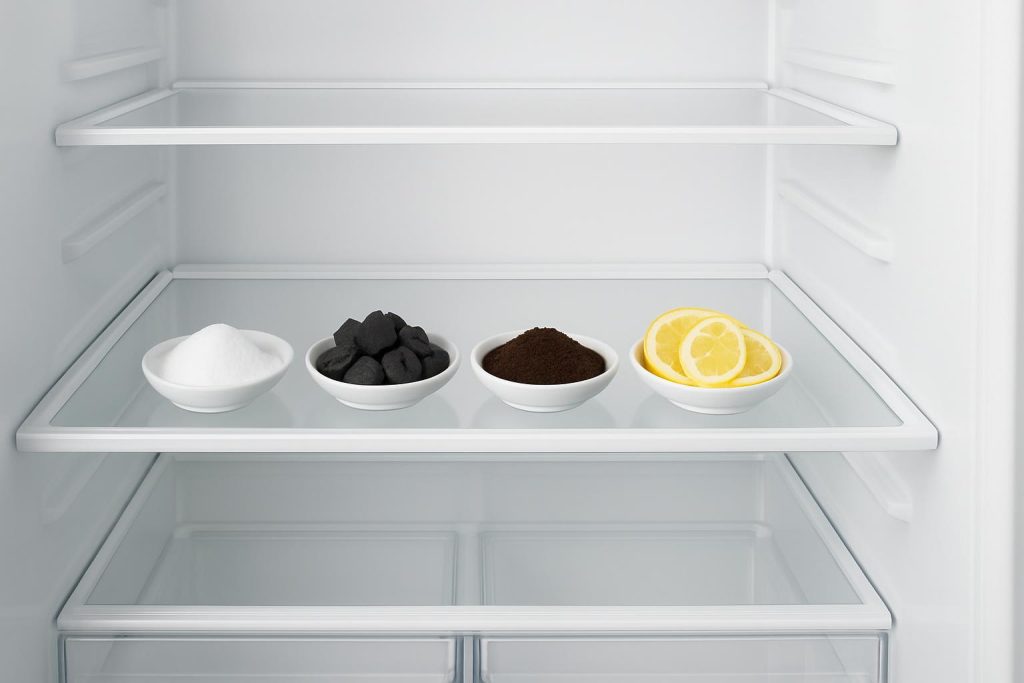
1. Baking soda deep clean and absorber
Mix baking soda with warm water to make a spreadable paste. Apply it to shelves, walls, bins, and especially sticky spots. Let it sit 5 to 10 minutes, then wipe and rinse with clean water. Dry well.
Next, place an open bowl or a shallow dish with about one cup of fresh baking soda on a middle shelf. Close the door and let it absorb odors for 24 to 72 hours. For strong smells, use two dishes on different shelves. Replace the baking soda monthly for maintenance or after any large spill.
2. White vinegar wipe and bowl
Mix equal parts white vinegar and water in a bowl. Wipe the entire interior, including ceiling, walls, floor, shelves, and bins. Pay attention to corners and seams where residue hides. Wipe the door interior and handles too.
For lingering smells, leave a small open bowl of the same vinegar mix on a shelf for 24 hours. Vinegar smell fades quickly and does not contaminate food. This method removes surface odors fast and prepares the fridge for other absorbers.
3. Activated charcoal for stubborn odors
Place 2 to 4 tablespoons of activated charcoal in two or three shallow dishes or breathable sachets. Set them on different shelves and in the door. Close the fridge and let the charcoal work for 24 to 48 hours. For severe odors, leave it up to one week and replace as needed.
Activated charcoal traps odor molecules effectively. You can refresh some types by drying them in the sun, but if the smell is strong, replace with new charcoal.
4. Ground coffee for quick neutralizing
Spread fresh dry coffee grounds in two or three small bowls and place them in the fridge for 24 to 48 hours. Coffee helps neutralize tough food smells. Note that it can leave a mild coffee scent, so discard the grounds after use and air the fridge for an hour if needed.
Do not use wet coffee grounds. Moist grounds can mold and cause new odors.
5. Lemon and citrus refresh
Slice a lemon or orange and place the slices in a shallow bowl on a shelf. Replace daily for 2 to 3 days. You can also wipe interior surfaces with a cloth dampened in water mixed with a little lemon juice after your main clean.
Lemon works best on light odors or as a final freshening step after a deeper deodorizer such as baking soda or charcoal. Wipe any citrus residue so it does not turn sticky.
6. Vanilla extract scent reset
Soak a few cotton balls with pure vanilla extract and place them on a small saucer on a shelf for 12 to 24 hours. This softens lingering smells after a main deodorizing step. Keep vanilla away from uncovered food and remove it once the fridge smells neutral.
Vanilla is not a heavy duty odor remover. Use it to finish the process, not to replace a deep clean.
7. Dry oats or rice moisture absorber
Pour dry uncooked oats or dry uncooked rice into a shallow dish and place it on a shelf for 24 to 48 hours. This helps absorb moisture and mild odors, especially in damp mini fridges and dorm fridges where condensation is common.
Discard the oats or rice after use. If odor persists, switch to baking soda or activated charcoal for stronger performance.
8. Newspaper odor soak
Crumple several sheets of clean newspaper and place them on empty shelves and in drawers. Close the door and leave for 24 hours. Replace with fresh newspaper and repeat for up to 3 days if needed.
Use newspaper only on clean, dry surfaces and keep it away from direct contact with food. This is a low cost helper for mild to moderate smells after the main wash.
9. Clean the drip pan and drain line
Recurring odor often hides in the drip pan or drain system. Most fridges have a small pan under the unit that catches defrost water. Unplug the fridge. Carefully remove the front grille or pull the fridge forward to access the back, depending on your model. Slide out the drip pan if it is removable.
Empty the pan, wash with hot soapy water, then rinse and wipe with the 1 to 1 vinegar mix. Dry fully. Use a turkey baster to flush the interior drain hole inside the fridge with warm water, then a little vinegar. Wipe any slime around the drain opening. Reinstall the pan once dry and plug the fridge back in.
10. Detail the door gaskets and seams
Odors hide in the folds of the door gasket. Dip a soft brush or old toothbrush in warm soapy water and scrub along the entire gasket, including the inner grooves and corners. Wipe with a cloth dampened with clean water, then wipe with the vinegar mix. Dry completely to prevent mildew.
Clean around shelf tracks, screw heads, and plastic seams. Even a thin film in these spots can keep a lingering smell.
11. Deodorize the freezer and ice bin
Ice absorbs odors from the fridge. Empty old ice and wash the ice bin with the 1 to 1 vinegar mix, then rinse and dry. If your ice maker has been off smelling, run and discard the first two batches after cleaning.
Wipe the freezer interior with the vinegar mix. Place a small open dish of baking soda or a small sachet of activated charcoal in the freezer for 24 to 48 hours. This prevents odor transfer back into the fridge section.
12. Air out and reassemble smart
After cleaning, let shelves and bins air out for 30 to 60 minutes. If weather permits, place removable parts in bright shade with good airflow. Keep them dry before reinstalling.
Set the temperature to support freshness. Aim for 37 to 40 F for the fridge and 0 F for the freezer. Do not overcrowd. Leave space around vents for airflow. Store pungent foods in sealed containers. Keep a small open dish of fresh baking soda on a middle shelf for ongoing control, and replace it monthly.
Step by step routine for a fresh fridge all year
Weekly quick care
Wipe spills as soon as they happen. Do a 5 minute scan once a week to toss expired food, wipe the gasket, and check containers are sealed. Top up or replace your baking soda dish if it looks damp or crusty.
Monthly deep refresh
Take out shelves and bins for a full wash. Wipe the interior with the vinegar mix. Replace the baking soda dish. If you notice moisture build up or a faint smell, add a small charcoal sachet for a day.
Seasonal service checks
Every 3 to 4 months, clean the drip pan and flush the drain hole. Empty and wash the ice bin. Confirm temperature is 37 to 40 F in the fridge and 0 F in the freezer. Make sure the door closes tight and the gasket is clean.
Troubleshooting tips
If the smell is still strong after cleaning
Run a two step deodorizing cycle. First, wipe everything with the 1 to 1 vinegar mix. Second, place activated charcoal on multiple shelves for 48 hours. Repeat once if needed.
If the odor keeps returning, clean the drip pan, flush the drain line, and detail the door gaskets. Check the ice bin. These areas are common sources of recurring smells.
If the fridge smells fine but food still tastes off
Check storage habits. Use sealed containers for onions, fish, and cheese. Do not leave cut produce uncovered. Keep airflow open around vents and avoid packing the fridge too full. Confirm temperature is 37 to 40 F. Replace the baking soda dish monthly or switch to activated charcoal for stronger odor control.
Conclusion
Odor free refrigeration is a simple process. Remove sources, wash with mild soap, neutralize with vinegar, and finish with an effective absorber like baking soda or activated charcoal. Detail the hidden spots that often get missed, such as the drip pan, drain line, door gaskets, and the ice bin. Set the right temperature, keep airflow open, and store pungent foods sealed. With these 12 methods and a short monthly routine, your fridge stays clean, fresh, and ready for anything you store.
FAQ
Q: What removes fridge odor the fastest
A: Wipe the interior with a 1 to 1 mix of white vinegar and water for instant surface deodorizing, then place activated charcoal or fresh baking soda inside for 24 to 48 hours to pull out deeper odors.
Q: How long should I leave baking soda or activated charcoal in the fridge
A: Leave baking soda or activated charcoal for 24 to 48 hours for typical odors and up to 72 hours for strong smells; for very stubborn cases, leave charcoal up to one week and replace as needed.
Q: Do I need to unplug the fridge to deodorize
A: Not for a quick wipe and odor absorbers, but unplug for a deep clean or if doors will stay open for a long time, and always unplug before cleaning the drip pan and drain line.
Q: Where should I check if the smell keeps coming back
A: Check and clean the drip pan, flush the interior drain hole and tube, detail the door gaskets, and wash the ice bin in the freezer.
Q: What is the best temperature to prevent odors
A: Set the fridge to 37 to 40 F and the freezer to 0 F, keep airflow open around vents, and avoid overcrowding.