
We are reader supported. When you purchase through links on our site, we may earn an affiliate commission. Also, as an Amazon affiliate, we earn from qualifying purchases.
Clutter steals time, space, and energy. Getting organized returns control to you. This guide gives you ten effective ways to declutter your home with clear steps, lean tools, and habits that stick. Start small, build momentum, and keep progress visible. Each step is designed for beginners, yet strong enough for a full home reset. Work at a steady pace and make each decision once. By the end, you will know exactly what to do next.
1. Map your whole home plan and timeline
Why this comes first
A simple plan prevents decision fatigue. You see the full path and avoid random efforts. A plan replaces guesswork with clear action.
What to plan
List your spaces in order of impact. Start with easy wins like entry, bathroom, or one drawer. Set short sessions of 30 to 60 minutes. Pick a start and finish date. Decide disposal options in advance: donation, recycling, trash, and resale if needed.
How to set priorities
Target high traffic areas first. Focus on rooms that cause daily stress. A tidy entry, clear kitchen surfaces, and a calm bedroom give fast relief and motivation. Put deep storage spaces later, after you build skill.
Tools to prepare
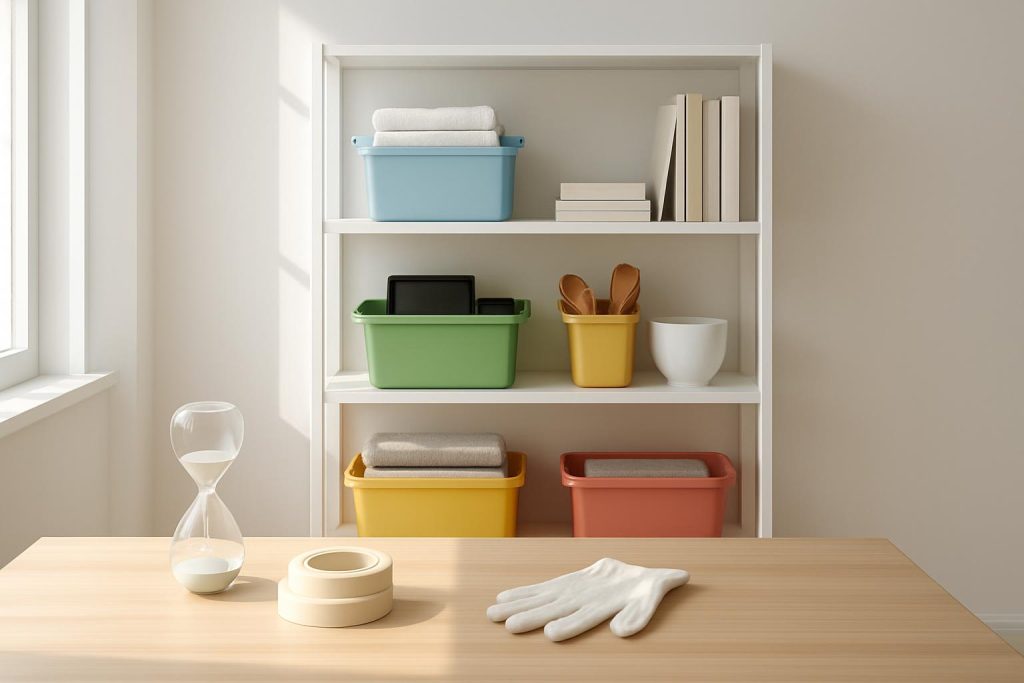
Use four containers for sorting. Prepare labels or masking tape and a marker. Keep trash bags, basic cleaners, and a timer ready. Make a printed checklist for each room to reduce hesitation.
2. Start small and complete one space at a time
The power of completion
Finishing a small zone fully is better than touching many zones halfway. Completion builds momentum and shows fast gains. It also reduces backsliding.
Good first zones
Pick one drawer, one shelf, or the top of a nightstand. Clear your bathroom counter. Empty your handbag or backpack. These give quick wins and make mornings easier.
Session structure
Set a timer for 30 minutes. Work the area from left to right. Do not leave the zone until the timer ends. When time is up, put sorted items in their containers and take out trash. Small wins stack into big results.
3. Sort with a simple keep donate recycle trash system
Why this system works
Four clear categories remove confusion. Each item gets one decision. This reduces rethinking and keeps the pace steady.
How to use it
Pick up each item once. Ask if it is used, needed, and loved. If yes, keep. If it still has life but you do not need it, donate. If it is at end of life and recyclable, recycle. If broken beyond repair or unsafe, trash. Place items directly in the matching container.
Set rules to protect time
Do not create a maybe pile. If a decision feels hard, set a short quarantine box with a date 30 days ahead and set a reminder. If you do not use it by that date, let it go. Use this sparingly. Most items do not need a delay.
Follow through the same day
After each session, empty the recycle and trash. Stage donations by the door or car trunk. Fast exit keeps progress visible and prevents backsliding.
4. Set limits and remove duplicates
Why limits help
Space is a natural limit. Clear limits stop clutter from regrowing. When a container is full, it cues you to edit, not to add more containers.
Practical limits to set
One shelf for baking gear. One bin for sentimental cards. A set number of towels per person. One in and one out for clothes and toys. Choose limits that fit your space, not your wish list.
Remove duplicates first
Keep your best, let go of the rest. Duplicate kitchen tools, pens, cables, water bottles, and beauty items multiply fast. Pick the highest quality or the one you reach for most. Donate extras in good condition.
Seasonal edits
At the start of each season, scan for items that did not get used in the last one. Release them. Limits plus seasonal edits keep your home light.
5. Create zones and assign a home for everything
Why zones matter
Zones group similar items where they are used. This reduces search time and mess. When every item has a home, cleanup is quick and automatic.
Common zones to set
Entry zone for keys, bags, shoes, and mail. Work zone for laptop, chargers, and stationery. Cleaning zone with supplies and cloths. Kid zone with books and toys. Hobby zone with tools and supplies. Keep each zone compact and close to the activity it supports.
One home per item
Do not split categories across the house. Store like with like. All lightbulbs in one bin. All batteries in one box. All tape in one drawer. This stops buying duplicates and saves time.
Label clearly
Labels train habits and help all family members put items back. Use simple words. Place labels on the front and top where possible. Keep the font large and easy to read.
6. Use the right containers, labels, and vertical space
Pick function over looks
Choose containers that fit the shelf and the items. Clear bins help you see content. Opaque bins look clean for visual rest. Use what you have first, then fill gaps with budget options.
Right size, right access
Use shallow bins for small items to avoid stacking layers. Use deep bins for bulk items. Add dividers in drawers to stop items from sliding. Use lazy susans in corners or for oils and sauces. Add risers to double shelf space for cans.
Go vertical
Install hooks for bags and coats. Add over the door racks for pantry or bathroom. Use wall rails for tools or cleaning gear. Add shelf inserts in cabinets. Vertical storage frees surfaces and floors.
Label now, not later
Label each bin after you fill it. Use consistent label style across rooms. This creates a calm, unified look and makes maintenance easier.
7. Build daily and weekly reset routines
Daily five minute reset
Pick a time that sticks, like after dinner. Set a five minute timer. Return items to their homes. Clear the kitchen sink and counter. Empty trash if it is full. Small resets keep mess from growing.
Evening prep for morning calm
Lay out clothes. Stage bags by the door. Charge devices in a fixed spot. Run the dishwasher if needed. A calm morning reduces stress and helps you keep order.
Weekly reset
Pick one hour per week. Scan each room for out of place items. Empty the car and bags. Take donations out of the house. Wipe high touch surfaces. Review upcoming events and pull what you need in advance.
Family or roommate system
Assign jobs by age and skill. Make tasks short and clear. Use a shared checklist on the fridge or a simple app. Praise follow through. Habits grow when everyone knows the plan.
8. Control paper, mail, and digital clutter
Stop paper at the door
Set a mail station near the entry. Open mail standing up. Toss junk mail at once. File what you keep into action folders: To pay, To file, To schedule. Set a weekly time to clear action folders.
Go digital where possible
Switch to e-statements and e-receipts. Scan documents you must keep but do not need in paper. Name files with a simple format: Year Month Day Topic. Store in clear folders by category.
Keep only what you need
Keep tax records as required by your local rules. Keep warranties and manuals only for items you still own. Most manuals are online. Shred anything with personal data.
Device hygiene
Set a monthly 20 minute session to delete unused apps, clear downloads, and back up photos. A tidy digital life reduces mental clutter and protects focus.
9. Streamline closets, drawers, and kitchen storage
Closet edits
Pull clothes by category. Try on items that are uncertain. Keep only what fits, feels good, and suits your current life. Group by type and then by color. Use matching hangers for stability. Add a donate bag inside the closet for quick edits.
Drawer systems
Use dividers for socks, underwear, and accessories. Roll or fold to fit the space. Keep top drawers for daily items. Place seldom used items lower or higher.
Kitchen zones
Create a prep zone near the sink and cutting area. Keep knives, boards, and towels there. Create a cooking zone by the stove for pots, spatulas, and oils. Store plates and cups near the dishwasher for fast unloads. Keep snacks on a middle shelf that is easy to reach.
Pantry order
Decant only if it helps you use items faster. Group by type: breakfast, baking, snacks, cans, grains. Use bins to contain loose items. Place heavy items low and light items high. Add use by dates to the front with a marker.
10. Make items exit fast with a clear outflow system
Create exit points
Set a donation box in a closet or laundry room. Keep it open and easy to access. When it is full, schedule a drop off or pickup within a week. For resale, limit to high value items and set a deadline.
Recycling and safe disposal
Know local rules for electronics, batteries, paint, and chemicals. Create a small bin for these and drop them at safe sites monthly. Keep the schedule on your phone calendar.
Never stall the exit
Move bags to the car the same day. Do not store donations in living areas. A fast exit locks in your decisions and keeps your home clear.
Room by room quick guides
Entry
Add hooks for keys and bags. A small tray for wallet and sunglasses. A shoe rack that fits your household. A basket for outgoing items. Clear the floor daily.
Living room
Limit decor to a few pieces. Use a closed cabinet for media and games. Keep remotes and chargers in a labeled box. Fold blankets and store them in a bin or basket. Clear the coffee table at night.
Bathroom
Discard expired products. Use drawer inserts for daily toiletries. Keep backups in one labeled bin. Add a small caddy for cleaning supplies. Wipe surfaces during the nightly reset.
Bedroom
Nightstands hold only essentials. Under bed storage should be low profile and labeled. Keep laundry bins where you change clothes. Make the bed each morning to signal order.
Time savers and problem solvers
Combat decision fatigue
Use timers and the four category system. Limit sessions to one zone. Play calm background music if it helps focus. Take short breaks to avoid burnout.
Handle sentimental items
Gather them last. Set one memory box per person. Keep the best and photograph the rest. Write a short note on the photo to retain context. This keeps meaning without filling storage.
Kid clutter
Create clear homes: books on a low shelf, toys in open bins, art in a portfolio. Rotate toys every few weeks. Involve kids in a five minute cleanup before bed. Keep systems simple and visible.
Shared spaces
Agree on limits and zones together. Label everything. Review systems monthly and adjust as needed. Respect each person’s zone to reduce conflict.
Maintenance checkpoints
Weekly
Reset rooms, clear mail, empty donation bin, and do a quick fridge scan. Review the plan and pick next week’s zones.
Monthly
Edit one category deeply, such as cleaning supplies or linens. Check seasonal items. Update labels if categories changed.
Quarterly
Review closets and kids items. Purge expired pantry goods and bathroom products. Revisit limits and adjust container sizes if needed.
Annually
Do a full home walk through. Note what works and what breaks down. Refresh high impact spaces first. Replace worn containers and repair simple issues.
Common mistakes to avoid
Buying containers too early
Declutter first, then measure, then buy. Empty space shows what you truly need.
Spreading out
Do not start a new zone until one is complete. Keep all decisions inside the current area.
Keeping for someday
If an item has not been used in a reasonable period and you have no clear plan to use it soon, let it go. Free space supports current goals.
Ignoring exits
Delayed donation piles become new clutter. Schedule exits on the spot.
Simple supply list
Basics
Four sorting bins or boxes, trash bags, recycling bin, labels or tape and marker, timer, microfiber cloths, all purpose cleaner, gloves.
Nice to have
Drawer dividers, clear bins with lids, shelf risers, lazy susans, over the door rack, hooks and command strips, small tool kit for quick fixes.
Conclusion
Decluttering and organizing do not require perfect systems or long weekends. They need a plan, short focused sessions, clear categories, and steady maintenance. Start with a small zone today. Use the four category sort. Set limits that fit your space. Give every item a home. Build daily and weekly resets. Move donations out fast. Repeat these steps and your home will stay clear with less effort over time. Your space will support your life, not compete with it.