
We are reader supported. When you purchase through links on our site, we may earn an affiliate commission. Also, as an Amazon affiliate, we earn from qualifying purchases.
Small kitchens can work harder and look better when you focus on the right moves. This guide gives you 25 clear ideas that you can use in rentals or owned homes, on any budget. The steps build from layout to storage, surfaces, appliances, lighting, and daily habits. Start with what you can do this week. Then layer upgrades that fit your space, time, and budget.
Plan the footprint with intention
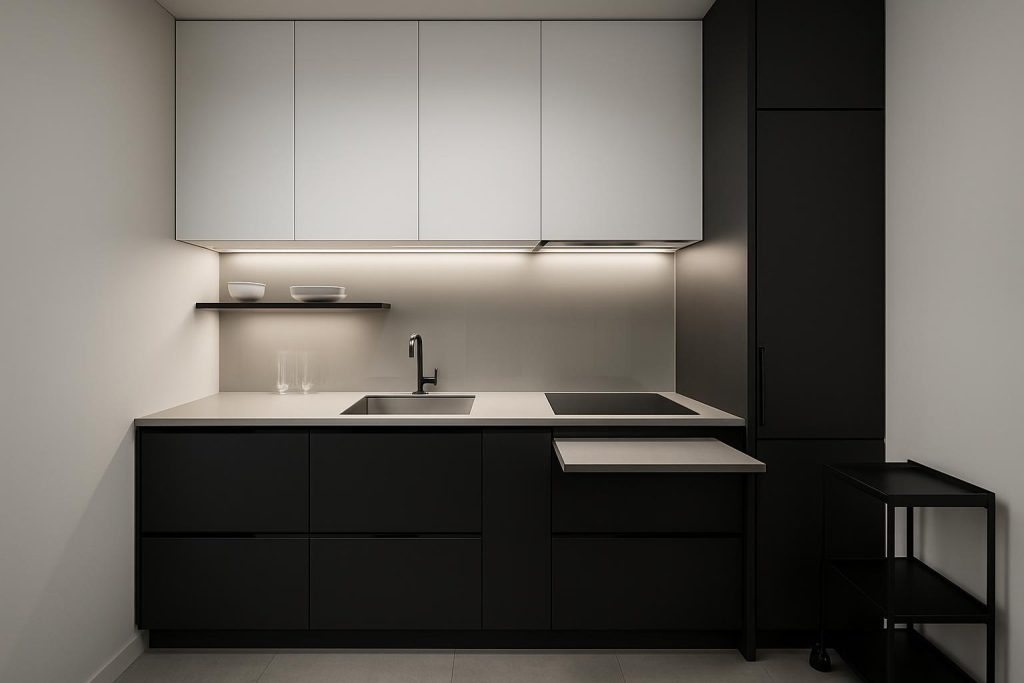
Map a one-wall layout
In the smallest rooms, a one-wall layout keeps everything within reach and frees floor space. Group sink, dishwasher, and trash together. Keep the cooktop and oven near ventilation. Place the fridge at one end to reduce traffic through the work zone. Use tall pantry storage at the opposite end to balance weight and anchor the run.
Use a refined galley plan
A galley with two short, parallel runs works well when the walkway stays clear. Keep appliances and sink on one side when possible so the opposite side can be full counter. Avoid placing the oven and fridge opposite each other. Align drawers and doors so they can open without clashing. Keep the aisle lean but passable.
Set a micro work triangle
Place sink, cooktop, and fridge within a few steps so you can cook without backtracking. Avoid deep corners between these points. If the sink must sit in a corner, add a nearby prep space so you are not turning with a knife in hand. Keep trash and compost close to the prep area to reduce steps and drips.
Right-size cabinet depths
Use slim-depth base cabinets or shallow drawers on at least one run to gain inches in the aisle. Upper cabinets can be reduced in depth to open sightlines and reduce head bumps. In pantries, shallow shelves keep items visible and avoid stacking. Shallow does not mean less useful when each inch is organized with dividers and bins.
Build storage that works harder
Add toe-kick drawers
The space under base cabinets can hold trays, baking sheets, and placemats. Toe-kick drawers are low but long, and they keep flat items from crowding prime drawers. Use soft-close slides so they do not slam. Seal the area well if pests are a concern. Label the edge for easy access during busy cooking.
Build to the ceiling
Full-height cabinets create a tall visual line and add real storage. Use the top shelves for seasonal gear and infrequently used appliances. An upper trim panel or tight scribe blocks dust. If full-height is not possible, add a second short row of cabinets above the main uppers. Keep a slim step stool close and secure it on a hook.
Use open shelves with rules
Open shelves lighten the room and add quick access if you edit what sits there. Keep daily-use items on the lowest shelf. Store one color or a simple material to reduce visual noise. Dust often and avoid overcrowding. If you are unsure, start with one short shelf over the sink or near the stove for oils and spices.
Mount a rail system
Wall rails with hooks hold ladles, measuring cups, mitts, and small pots. A narrow shelf above the rail can hold spice jars. Mount rails close to where you use the items to avoid dripping across the room. Keep the rail line clean and straight. If you rent, use adhesive anchors approved for the wall type.
Use magnetic vertical storage
Magnetic knife strips free a whole drawer and keep blades safe. Magnetic spice tins can live on the side of a fridge if the location is cool and away from heat. Test magnet strength before mounting. Wipe the area often to avoid grime build-up. Keep only what you cook with each week within reach.
Upgrade interiors with pull-outs
Retrofitting pull-out shelves, bins, and trays multiplies what each cabinet can hold. Use full-extension slides so nothing gets lost in the back. Add a pull-out near the stove for oils and vinegar. Use a tall, narrow pull-out for baking trays and cutting boards. Measure clearances so handles and lids do not snag.
Unlock corners with smart hardware
Corner cabinets can be hard to use. Install a lazy susan, blind corner pull-out, or LeMans tray so items glide to you. Store bulk and heavier pieces low and centered on sturdy hardware. Avoid stacking odd sizes that tip. If hardware is not in budget, keep corners for long-term storage with labeled bins.
Store tall items upright
Vertical dividers turn a thin cabinet into a baking station. File cutting boards, trays, and cooling racks upright. Use tension rods inside a base cabinet to add quick dividers. Keep the heaviest items near the bottom for safety. Label the edges so every piece has a parking spot.
Expand your work surface
Install a pull-out or flip-down worktop
A pull-out or flip-down panel adds instant prep space next to the range or sink. Use durable slides and a wipeable surface. Mount an underside support to reduce flex if you plan to knead dough or use heavy appliances. Add a simple latch so it stays closed when not in use. Keep it clear between uses.
Add an over-sink cutting station
An over-sink board creates a sturdy prep zone and frees counter space. Choose a board with a lip so it does not slip. If plumbing allows, add a colander insert for washing produce right in place. Dry the board fully and store it upright to prevent warping. Keep knives and compost within reach.
Roll in a slim island or cart
A narrow cart brings prep space, storage, and serving ability. Choose locking casters for safety. Store knives, towels, and a small trash bin on the cart for mobile prep. Park it against a wall when not in use. Match the cart height to your counters to create one level and reduce wrist strain.
Choose small-space appliances
Choose compact cooking
A 24-inch range or a two-burner cooktop covers most daily cooking. If you often bake, look for an oven with convection for even results. A portable induction hob adds a flexible extra burner when needed. Keep ventilation strong even with compact units to control heat and odors.
Fit a small dishwasher
An 18-inch dishwasher can handle daily dishes without taking the whole base cabinet. Drawers or single-rack units are also options. Choose a model with a short cycle to reduce wait time. If space is too tight, use a compact dish rack that folds away and a wall-mounted soap and sponge station.
Simplify the hood and fridge
A hood insert hidden in a cabinet keeps lines clean and saves headroom. Duct to the exterior if possible for better performance. A counter-depth or panel-ready fridge sits flush and reduces visual bulk. If your household is small, consider a narrower fridge and add a small chest freezer in another room if needed.
Design for visual calm and light
Light, bright, and consistent
Light colors reflect more light and open the room. Choose one or two cabinet finishes and repeat them. Keep counters in a solid or quiet pattern. Use a limited accent color on small items like towels or a single shelf. The fewer changes in color and texture, the bigger the room feels.
Extend surfaces visually
Run the same material from counter to backsplash for a long, clean plane. If the budget allows, match the side panels of tall cabinets to the doors. Use a continuous toe-kick color across base units. Avoid broken lines and heavy trim that chops the room. Keep window treatments simple and minimal.
Layer task lighting
Under-cabinet lights remove shadows from the counter and make the room feel larger. Use bright, neutral-white bulbs for accurate food prep. Add a slim ceiling fixture that spreads light evenly. If you have open shelves, add a small puck light under the lowest shelf to lift that area. Put lights on separate switches for control.
Try a reflective backsplash
Glass, glazed tile, or a stainless panel can bounce light back into the room. Keep grout lines thin and straight. Avoid busy patterns that distract the eye. A reflective surface behind the cooktop or sink brightens high-use zones. Clean often to keep the effect strong.
Streamline hardware and lines
Choose slim handles or integrated edge pulls to reduce visual clutter. Align hardware across drawers and doors for a calm, ordered look. Use thin profiles for shelves and counters where structure allows. Hide small appliances when not in use. Store utensils and bottles off the counter to keep sightlines clear.
Make movement efficient
Fix door swings and clearances
Change hinge sides so doors open away from the workflow. Use sliding, bifold, or flip-up doors on uppers to avoid blocking your face while cooking. In tight spots, swap a swing door for a pocket door if the wall allows. Plan clear floor zones for loading the dishwasher and opening the oven. Keep trash access unobstructed.
Habits that keep the space clear
Keep counters clear with a daily reset
A small kitchen feels crowded faster, so build a fast reset routine. Clear the sink and wipe the counter after the last use each day. Return items to the same labeled places. Edit duplicates monthly and remove what you do not use. Keep a donation box nearby so outgrown tools leave the space quickly.
Conclusion
Small kitchens stay efficient and stylish when every inch has a job and every choice supports clarity. Start with a layout that fits your room. Add storage that brings items to you. Grow your worktop with smart add-ons. Pick compact, capable appliances. Use light, alignment, and simple lines to calm the room. Hold the gains with fast daily habits. Choose three ideas today, and your kitchen can feel larger by the weekend.
25 very small kitchen ideas to maximize space and style
One-wall layout done right
Group sink, dishwasher, and trash together. Keep fridge at an end. Add a tall pantry at the other end for balance. Use continuous counter for a long prep zone. Keep uppers aligned for a clean visual line.
Galley with clear aisle
Place most appliances on one side. Keep the opposite run as full counter. Align doors to avoid collision. Keep the aisle lean but passable. Use slim-depth cabinets if needed.
Micro work triangle
Keep sink, cooktop, and fridge within a few steps. Avoid deep corners between them. Place trash near prep. Keep crossings and backtracking to a minimum. Light this zone well.
Slim-depth cabinets
Use shallow bases or drawers to widen the aisle. Reduce upper depth to open sightlines. In pantries, shallow shelves keep items visible. Add dividers to prevent tipping. Use soft-close hardware.
Toe-kick drawers
Store trays and boards in the base kick space. Use sturdy slides and a smooth front. Seal edges against dust. Label the drawer edge. Keep it for flat, light items.
Ceiling-height storage
Build uppers to the ceiling. Store seasonal gear up high. Add trim to block dust. Keep a safe step stool handy. Use consistent door styles to reduce visual breaks.
Disciplined open shelves
Limit items to daily use and one color family. Keep shelves light and not too deep. Dust often. Avoid heavy stacks. Start with one short shelf near your main prep area.
Wall rails and hooks
Mount rails where you cook. Hang ladles, cups, and mitts. Add a narrow spice shelf above. Use quality anchors. Keep the line neat and balanced.
Magnetic strips and tins
Mount a knife strip near prep, away from heat. Use magnetic tins on a cool fridge side. Test magnet strength. Wipe often to prevent grime. Keep only weekly-use items here.
Pull-out organizers
Install full-extension pull-outs in base cabinets. Add a narrow pull-out for oils. Use bins for snacks and baking supplies. Measure handles and lids to avoid snags. Label front edges for quick finds.
Corner hardware upgrades
Use a lazy susan or blind corner pull-out. Place heavy items low and centered. Choose sturdy hardware with smooth action. If budget is tight, store long-term items in labeled bins. Keep corners tidy.
Vertical dividers
File trays, racks, and boards upright. Use tension rods or fixed dividers. Keep heavy pieces low. Label edges for order. Avoid overfilling so pieces slide out cleanly.
Flip-down or pull-out counter
Add a sturdy panel near the cook zone. Use strong slides and a latch. Choose a wipeable surface. Keep it clear when folded. Check leg or bracket support for heavy tasks.
Over-sink board station
Add a lip for grip and an insert colander if possible. Dry fully after use. Store upright to save space. Keep knives nearby. Use it for quick prep to keep counters open.
Slim rolling cart
Choose locking casters and a matching height. Store core prep tools on board. Park it when not in use. Roll it to the table for serving. Wipe it down after each use.
Compact cooking suite
Pick a 24-inch range or two-burner cooktop. Add a portable induction hob for extra power. Choose convection for even baking. Vent well even with small units. Keep controls easy to reach.
Small dishwasher choice
Use an 18-inch unit or a compact drawer model. Pick a fast cycle for daily loads. If not possible, use a foldable rack and wall-mounted soap station. Keep sink and drying area organized. Reset nightly to avoid pileups.
Hidden hood and flush fridge
Use a hood insert in a cabinet for a clean look. Duct outside if you can. Choose counter-depth or panel-ready for a flush fridge line. Keep the fridge narrow if household size allows. Add overflow freezer space elsewhere only if needed.
Light palette
Use light cabinet colors and quiet counters. Limit accent colors. Repeat materials for continuity. Keep floors simple. Avoid busy patterns that shrink the space.
Continuous planes
Match counter and backsplash where possible. Align seams and edges. Keep toe-kicks one color. Use simple window coverings. Avoid heavy trim and broken lines.
Task and ambient lighting
Install under-cabinet lights for shadow-free prep. Use neutral-white bulbs. Add even ceiling light. Put lights on separate switches. Consider a small puck under the lowest shelf.
Reflective backsplash
Choose glass, glazed tile, or stainless to bounce light. Keep grout thin. Avoid fussy patterns. Clean often. Place reflectivity behind high-use zones.
Streamlined hardware
Use slim pulls or integrated edges. Align handles across fronts. Keep shelf and counter edges thin where structure allows. Hide small appliances when not in use. Clear counters daily.
Smarter door swings
Swap hinge sides to open away from prep. Use sliding, bifold, or flip-up uppers in tight spots. Consider a pocket door for a tight kitchen entry if the wall allows. Maintain clear space for appliances to open. Avoid blocking trash access.
Daily reset routine
End each day with a five-minute reset. Clear sink and counters. Return tools to labeled homes. Edit duplicates monthly. Keep a donation box handy to move extras out.
FAQ
Q: What is the best layout for a very small kitchen?
A: A one-wall or galley layout with a short, obstacle-free work triangle is the most efficient. Keep the sink, cooktop, and fridge within a few steps and avoid deep corners that trap space.
Q: How can I add counter space without a remodel?
A: Use a pull-out or flip-down worktop, an over-sink cutting board station, and a slim rolling cart that matches counter height. Keep each surface clear when not in use to protect the gain.
Q: Which storage upgrades make the biggest impact in a tiny kitchen?
A: Build cabinets to the ceiling, add pull-out organizers, use toe-kick drawers, file trays upright with dividers, and mount wall rails or magnetic strips for daily tools.
Q: Which appliances fit best in a small kitchen?
A: Choose a 24-inch range or a two-burner cooktop, consider an 18-inch dishwasher, pick a counter-depth or panel-ready fridge, use a hood insert, and add a portable induction hob if you need an extra burner.
Q: How do I make a small kitchen look bigger without tearing down walls?
A: Use a light palette, repeat materials for continuous planes, layer under-cabinet and ceiling lighting, try a reflective backsplash, choose slim hardware, and keep counters clear with a daily reset.