
We are reader supported. When you purchase through links on our site, we may earn an affiliate commission. Also, as an Amazon affiliate, we earn from qualifying purchases.
Small spaces can grow more than you think. With a clear plan and a few smart structures, a compact balcony, patio, side yard, or entry can hold fresh food, flowers, and a calm seat. This guide shows how to design a layout that fits your space, your time, and your budget.
You will measure first, map sun and wind, and set one main goal. Then you will pick a layout that matches your shape and access. Next, you will layer height, choose containers and beds that work hard, and set up easy care. Follow the steps and copy the layout recipes to get results fast.
Start With a Clear Plan
Measure and Map Your Space
Measure length and width. Note doors, window swings, stairs, hose bibs, vents, and outlets. Mark anything that cannot move such as gas meters, air units, or storage boxes. Check slope and drainage so water moves away from doors and walls. Draw a simple map on paper with scale. Keep at least one straight path for easy movement and hauling soil or tools.
Track Sun, Wind, and Water
Watch the space at three times in a day and note where sun hits and for how long. Six or more hours is full sun, four to six is part sun, less is shade. Note wind tunnels between buildings and any calm corners. Check water access. A nearby faucet or a short path to a sink saves time. Walls and paving hold heat and can create warm micro zones for heat loving plants. Use this map to place plants where they will thrive.
Set One Main Goal
A compact garden needs focus. Choose one main goal. Fresh herbs and salad. A quiet seat with fragrance. Privacy from a neighbor. A child friendly nook for discovery. Your goal will decide layout, plant types, and structures. Write it at the top of your map to guide every choice.
Choose a Layout That Fits the Shape
Balcony and Patio Zones
Divide the floor into two or three zones. Keep a 24 to 30 inch walkway from the door to seating. Place one anchor element such as a bench planter or a tall pot in a corner. Flank seating with medium containers for color or edibles. Use slim vertical pieces on the wall side to save floor space. Foldable tables or nesting stools free up room when not in use.
Narrow Side Yard
Run a single line of beds or containers along one fence to keep a clear path. Add stepping stones or compact gravel for clean shoes and simple care. Use a tall trellis on the sunny side to lift vines and free ground space. If the strip is wide enough, mirror a second thin bed on the opposite side, but repeat the same plant heights to avoid visual clutter.
Small Square Yard
Break the square into a simple grid. Try two rows of 2 by 3 foot beds with a cross path, or one 4 by 4 foot raised bed with room to walk around. Place a focal pot or obelisk at center to pull the eye up. A diagonal stepping path can make the space feel deeper. Keep plant heights stepped from low at the path to tall at the edges.
Entryway or Front Step
Use slim pieces that do not block the door. Fit a narrow vertical planter or wall pocket for herbs. Add a tall pot by the jamb for a welcoming accent. Use a window box under the sill for flowers or salad greens. Keep the threshold and any steps clear and slip resistant.
Use Layers to Multiply Space
Ground, Mid, and Vertical Layers
Stack plants by height to fit more into the same footprint. Ground layer holds creeping thyme, low lettuce, or strawberries. Mid layer holds bush tomatoes, peppers, compact shrubs, or flowering perennials. Vertical layer carries climbers like peas, beans, cucumbers, or a compact rose on a trellis. Step heights from front to back so each plant gets light and air.
Vertical Structures That Earn Their Keep
Choose a trellis, obelisk, wall grid, cable wires, or a slim arch. Fix hardware into studs or masonry with anchors rated for outdoor use. Keep structures narrow to avoid blocking the walkway. Train one or two vertical crops per support to avoid tangles. In rentals, use freestanding frames set in heavy planters or weighted bases.
Hanging and Railing Planters
Railing planters free floor space and bring herbs to hand. Use brackets rated for the rail type and check weight. Add saucers or liners to catch drips and protect neighbors below. Hanging baskets add color overhead. Coco liners dry fast, so choose drought tolerant plants or use self watering inserts. Place baskets where doors will not bump them.
Containers and Beds That Work Hard
Right Container Sizes
Match pot size to root depth. Most herbs and salads grow well in 6 to 8 inches. Peppers and eggplants prefer 10 to 12 inches. Bush tomatoes and compact cucumbers need 12 to 18 inches or more. Bigger pots dry out slower and give more stable growth. Self watering containers help busy gardeners and reduce daily care.
Lightweight Mix for Pots
Use a peat free or coco coir base mixed with compost and perlite for drainage. A simple blend is two parts coir or potting mix, one part compost, and one part perlite. Add a slow release organic fertilizer at planting. Top with a thin mulch of shredded bark or straw to hold moisture. Refresh the top few inches each season with new compost.
Raised Beds for Small Yards
Raised beds define space and warm up fast. A 4 by 4 foot bed is easy to reach from all sides. A 2 by 6 foot bed fits narrow strips. Height of 10 to 18 inches suits most plants and keeps soil off paving. Fill with a blend of compost, topsoil, and drainage material. Add a bench cap on the bed edge for extra seating.
Smart Plant Choices for Compact Gardens
Edibles That Stay Small
Pick compact varieties. Look for bush tomatoes, dwarf peppers, patio eggplants, and compact cucumbers. Grow cut and come again greens for many harvests in small boxes. Plant herbs you use often such as basil, chives, parsley, mint in its own pot, thyme, and rosemary. Use succession planting so a new batch is ready as one finishes.
Ornamentals With Purpose
Choose plants that earn space across seasons. Long bloomers add color with low fuss. Narrow or columnar forms save footprint. Evergreens hold structure in winter. Fragrant plants near seats increase enjoyment. Mix textures so leaves and flowers read clearly in a small frame.
Multiuse Plants
Grow edible flowers such as nasturtium and calendula that also attract pollinators. Use dwarf grasses or clumping bamboo in a large container for privacy and movement. Add berry shrubs that give fruit and fall color. Favor plants that feed bees and butterflies to support local life.
Simple Layout Recipes You Can Copy
Five Container Balcony Kitchen Garden
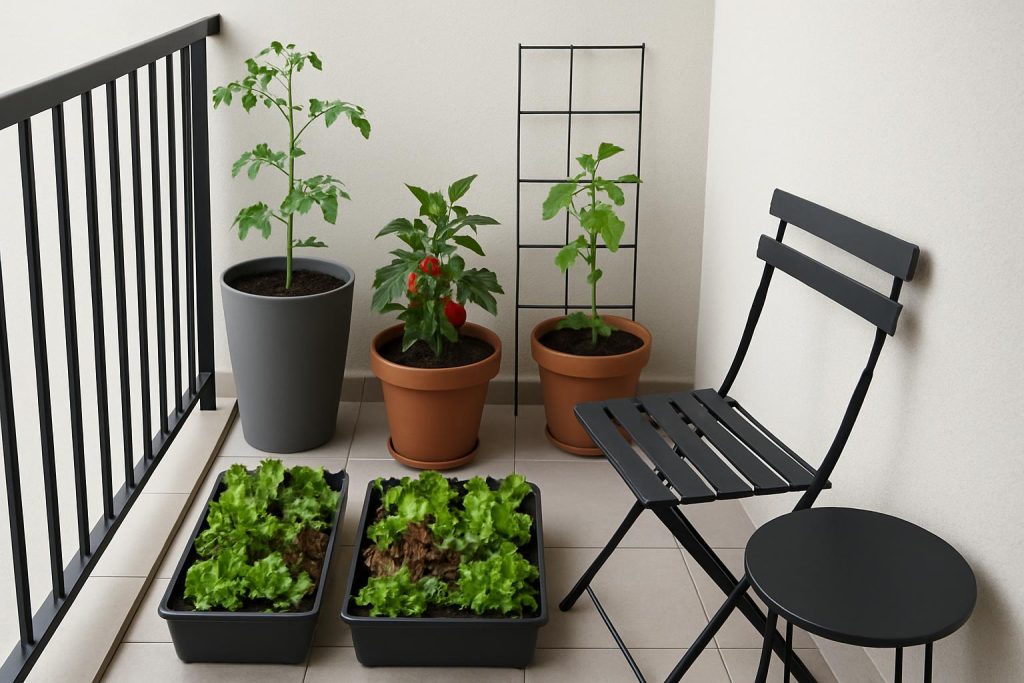
Place one tall pot in the back corner for a small tomato with basil around the base. Set two medium pots along the rail for peppers or bush cucumbers with a slim trellis behind each. Add two shallow boxes near the seat for salad greens and mixed herbs. Keep a 24 to 30 inch walkway clear from the door to the chair. Add a small side table that tucks under when not in use.
Narrow Side Strip Pollinator Border
Lay a straight stepping path against the house. On the fence side, run a 12 to 18 inch deep bed. Plant low growers at the edge, mid bloomers in the center, and a trellis with a light climber at the back. Repeat two or three plant groups down the line for rhythm. Leave room at the end for a small storage box for tools.
Four by Four Square Foot Starter Bed
Divide the bed into sixteen squares. Place one compact tomato on a corner with a stake. Fill two squares with bush beans, two with peppers, four with mixed salad greens, two with carrots or radishes, two with herbs, and one with flowers to attract bees. Leave one square for a rotating crop every few weeks. Add stepping stones at two sides for easy reach.
Pathways, Seating, and Storage
Clear Walk Lines
Protect your path first. Keep at least 24 inches clear, 30 is better if you can. Use flush pavers or decking so pots do not wobble. Keep plant edges soft but trimmed. A clean walk makes watering and harvest fast and safe.
Foldable or Built In Seating
Choose foldable chairs or stools you can hang on a hook when not in use. Build a bench with a planter back to merge seating and greenery. Use bench lids for hidden storage. Keep seats out of the main traffic line so you do not step around them to reach the hose or gate.
Hidden Storage
Mount a slim rack on a wall for hand tools, gloves, and a watering wand. Use a weatherproof cushion box that doubles as a side table. Tuck a shallow bin under a bench for potting mix and fertilizer. Store only what you use often to avoid clutter.
Watering and Care Made Easy
Water Systems for Small Spaces
Use a light hose with a gentle wand for quick, deep watering. Install a small drip kit with a battery timer at the faucet for consistent moisture. Self watering planters buffer heat and travel days. On balconies, set saucers to catch runoff and check building rules before adding any system.
Maintenance Rhythm
Set a simple schedule. Two to three times weekly in warm months, water deeply, deadhead spent blooms, and harvest greens to keep plants producing. Once weekly, trim and tie vines to supports and sweep debris. Once monthly, top dress containers with compost or feed with a gentle fertilizer. A steady rhythm keeps the space tidy and productive with little effort.
Keep Pests Manageable
Inspect leaves top and bottom as you water. Remove pests by hand or prune off small infested parts. Use a mild soap spray when needed. Space plants for airflow and avoid constant leaf wetness. Healthy, unstressed plants resist issues better than crowded ones.
Light, Privacy, and Safety
Outdoor Lighting
Use low glare, warm lights to extend evening use. Place solar stakes at step edges and path turns. Hang a short run of string lights away from door swings. Aim lights down and shield bulbs to protect night sky views. Keep cords and fixtures rated for outdoor use.
Privacy Screens
Place screens where sight lines need it most, not around every edge. A slim lattice with a climber blocks views without feeling heavy. Tall grasses in planters soften edges and move with air. Step screen height so you do not shade your own sun loving crops.
Safety on Balconies
Check weight limits before adding large planters or water features. Use lightweight mixes and avoid waterlogged soil. Secure tall pots against wind with brackets or corner placement. Add saucers to catch water and prevent drips below. Follow building rules for hanging items and rail fixtures.
Seasonal Swaps and Year Round Interest
Spring Setup
Refresh potting mix, clean containers, and set trellises before planting. Start cool season greens and herbs early. Place perennials that provide backbone through the year. Watch late frosts and protect tender plants as needed.
Summer Density
Swap spring greens for heat lovers. Keep mulch on pots to reduce water loss. Train vines often so they do not shade small plants. Harvest often to push new growth and keep beds neat.
Fall Refresh
Pull tired annuals and replant with fall herbs and cool season greens. Add color with hardy flowers suited to your climate. Clean and store warm season supports you will not use in winter. Top up soil in containers after summer shrinkage.
Winter Structure
Rely on evergreens, tidy pots, and simple accents. Use branches or a small obelisk for height. Brush snow from trellises if heavy. Plan upgrades for spring and note what worked well.
Budget and Sustainability
Reuse and Upcycle
Repurpose crates, buckets, or food safe tubs by drilling drainage holes. Line pallets with landscape fabric for vertical pockets and keep them off direct soil when growing edibles. Sand rough edges and seal wood with non toxic finishes. Always confirm materials are safe for food crops.
Buy Less, Multiply More
Divide perennials in spring or fall to fill gaps. Take cuttings from rosemary, mint, thyme, and many ornamentals to create new plants. Swap extras with neighbors. Choose a few quality containers instead of many small ones.
Water and Soil Care
Mulch all containers and beds to reduce watering frequency. Capture rain in a small barrel if allowed and safe to do so. Compost kitchen scraps in a compact worm bin to feed your soil. Healthy soil reduces fertilizer needs and plant stress.
Step by Step Planning Checklist
From Blank Space to Planted
Step 1. Measure the space, mark doors, rails, and faucets, and sketch it to scale. Step 2. Map sun hours, wind, and warm or cool spots. Step 3. Set one main goal to guide choices. Step 4. Pick a layout type that fits your shape and access. Step 5. Choose two or three vertical supports that match your plan. Step 6. Select container sizes and a raised bed if you have ground. Step 7. Build a simple plant list with compact varieties and bloom or harvest across seasons. Step 8. Place seating and storage without blocking the walkway. Step 9. Set up watering that suits your time. Step 10. Plant, mulch, and start a care rhythm.
Conclusion
Small Space, Big Return
A compact garden works when the layout is clear, layers are used well, and care is simple. Measure first, place paths and seats, then stack plants up rather than spread out. Choose containers and supports that solve your limits. With a steady routine, your tiny space will stay productive, tidy, and welcoming all year.
FAQ
Q. How do I start planning a small garden layout
A. Measure and map the space, track sun, wind, and water, and set one main goal before choosing plants and furniture.
Q. What layout works best for a narrow side yard
A. A single run of beds along one fence with a clear stepping stone path, plus a tall trellis to lift plants up. If the strip is wide enough, mirror a second thin bed on the opposite side.
Q. How can I fit more plants on a balcony without clutter
A. Use vertical layers with a slim trellis or wall grid, railing planters, and two or three large containers instead of many small pots. Keep a 24 to 30 inch walkway clear.
Q. What are easy watering options for compact spaces
A. A light hose with a gentle wand, a small drip kit with a battery timer, or self watering planters. Place saucers to catch runoff on balconies.
Q. What is a simple layout I can copy today
A. The five container balcony kitchen garden with one tall pot for a small tomato and basil, two medium pots for peppers or bush cucumbers with a trellis, and two shallow boxes for salad greens and herbs. Keep 24 to 30 inches clear for a chair and movement.