
We are reader supported. When you purchase through links on our site, we may earn an affiliate commission. Also, as an Amazon affiliate, we earn from qualifying purchases.
Small bathrooms can feel tight, but they do not have to look small. With smart color choices, clean lines, better lighting, and thoughtful storage, you can open up the space you already have. This guide gives you clear steps, easy upgrades, and practical decisions so you can see fast results without confusion. Start with small wins, then layer in bigger moves as time and budget allow.
Set a Solid Plan
Measure first
Map your room on paper or a simple app. Note door swings, clearances in front of the toilet and vanity, and how the shower or tub interrupts the floor. Good planning prevents crowding and costly rework.
Choose a focal wall
Pick one wall for visual interest and keep the rest simple. This keeps the eye moving and reduces visual clutter.
Reduce visual breaks
Aim for continuous lines. Fewer seams, fewer color changes, and fewer transitions help the room feel wider and taller.
Use Color To Expand The Room
Go light and low contrast
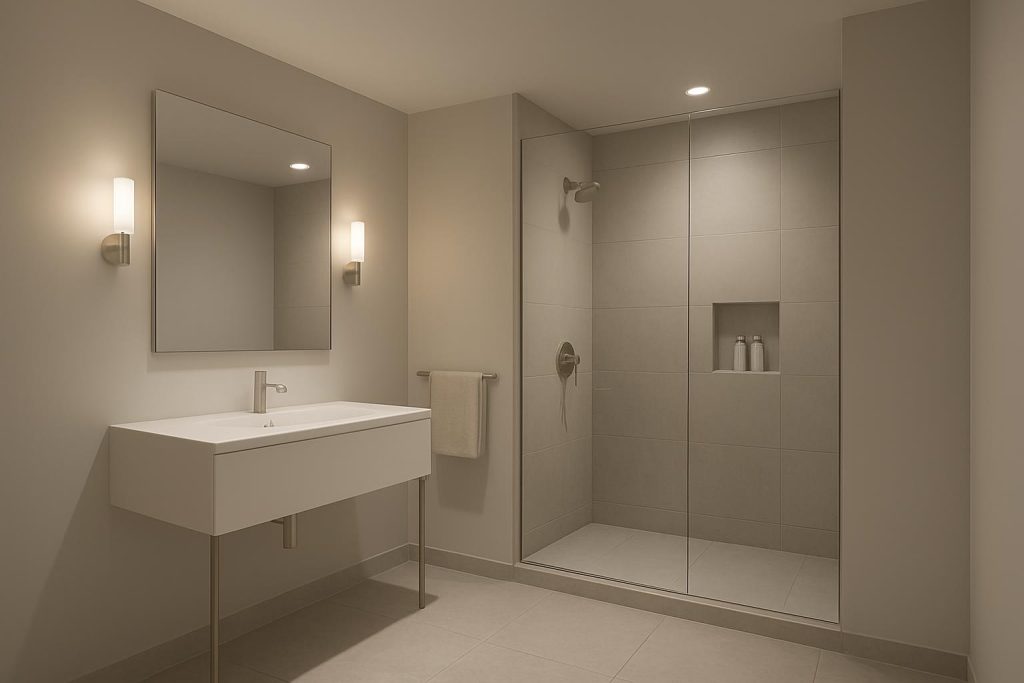
Light neutrals make walls recede. Off white, soft beige, pale gray, or warm greige work well. Keep trim, doors, and ceiling close to the wall color to remove hard edges that stop the eye.
Unify walls and ceiling
Paint the ceiling the same color as the walls or one step lighter. This removes the horizon line and makes the room feel taller.
Match finishes with restraint
Pick two to three finishes for the entire bath. For example, light wall color, light tile, and brushed metal. Too many finishes make the room feel busy and smaller.
Tile And Grout That Stretch Space
Choose larger tiles
Larger formats reduce grout lines and make floors and walls feel unified. On walls, run tiles vertically to boost height or horizontally to widen the room. Keep grout joints thin and match grout color to tile to avoid a grid look.
Continue materials
Use one wall tile throughout the shower and dry areas when possible. If you can, run the same floor tile into the shower for a continuous plane. This one move can visually double the floor area.
Mind the finish
Matte or soft sheen tiles minimize glare in tight spaces. Use slip resistant finishes for floors and smooth finishes for walls to make cleaning easy.
Light It In Layers
Ambient lighting
Install a bright ceiling light that spreads light evenly. Aim for warm neutral light in the 3000K to 4000K range for a natural look that flatters skin tones and tile colors.
Task lighting at the mirror
Mount sconces at eye level on both sides of the mirror or use a backlit mirror. Side lighting removes face shadows and makes grooming easier. Avoid a single overhead light at the mirror that casts harsh shadows.
Controls and quality
Use dimmers for night use. Choose bulbs with high color rendering so whites look clean and colors stay true. Combine reflective surfaces like mirrors and light tiles to spread light further without adding fixtures.
Mirrors And Glass For Depth
Go big on mirrors
Use a mirror as wide as the vanity or wall to wall if possible. Taller and wider mirrors bounce more light and create the feel of added depth. Recess a medicine cabinet if you can to keep storage without adding bulk.
Choose frameless glass
For showers, frameless clear glass removes visual barriers. Keep hardware minimal and finishes simple. Sliding or pivot doors work, but pick the style that needs less space to operate.
Keep reflections clean
Limit open shelving opposite mirrors to avoid clutter reflections. What the mirror reflects becomes part of the view, so make it simple and bright.
Pick Space Saving Fixtures
Wall hung wins
Wall hung vanities and toilets show more floor, which makes the room feel larger and makes cleaning easier. If wall hung is not possible, choose a vanity with open legs or a shallow depth.
Right size the toilet
Choose a round front or compact elongated toilet to save inches. Keep at least 21 inches clear in front for comfort and code compliance in many areas.
Smart sinks and faucets
A corner sink, pedestal sink, or shallow rectangular sink frees floor area. A wall mounted faucet can allow a shallower vanity and gives a cleaner line.
Doors that do not steal space
Consider a pocket door if walls allow. If not, use a door that swings out of the bathroom or switch hinges so it swings against a blank wall, not into fixtures.
Storage That Disappears
Build into walls
Recess medicine cabinets and shower niches between studs. A deep niche in the shower keeps bottles off the floor and off ledges.
Climb the walls
Use tall cabinets or shelving that reaches near the ceiling. Keep lower half of walls clear where possible so the room breathes.
Back of door and vertical spaces
Use back of door racks, slim rolling carts beside the vanity, and narrow towel hooks. Hooks take less width than bars and dry faster if spaced well.
Container discipline
Group small items in matching bins. Decant daily items into simple bottles and limit visible colors. Label the inside of cabinets, not the outside, for a clean look.
Declutter With A Routine
Clear the counters
Leave out only what you use daily. Store backups out of sight. Empty surfaces look larger and clean faster.
Limit duplicates
Keep one open set of products per person. Store excess elsewhere. Fewer items equals fewer visual breaks.
Shower reset
Use a caddy that lifts out or a niche with enough room for only the essentials. After each shower, squeegee glass and wipe fixtures to keep water spots from dulling the room.
Textiles And Patterns That Expand Space
Choose light textiles
Use light colored towels, bath mats, and shower curtains. If you use pattern, pick a soft, low contrast design that does not chop the room into sections.
Go full height
Hang a shower curtain from near the ceiling to the floor. This draws the eye up and looks more tailored. Use a curved rod only if it does not crowd the room; glass often takes less space visually.
Right size the rug
Use one larger bath mat instead of several small ones. A single, generous mat reduces visual breaks on the floor.
Hardware And Lines
Keep profiles slim
Choose thin edge mirrors, narrow trim, and simple pulls. Fewer chunky pieces keep the room calm.
Match metals
Limit metal finishes to one or two. For example, brushed nickel for plumbing and matching hardware for pulls and hooks. Consistency stretches the space.
Simple shower hardware
Use a minimal handle and hinge set on glass. Avoid thick frames that add lines and reduce sight lines.
Ventilation And Dryness Matter
Right size the fan
Pick a quiet fan that suits your room size. Run it during and for at least 15 minutes after showers. A timer switch helps keep air clear.
Keep surfaces dry
Use a squeegee on glass and tile after each use. Dry surfaces reflect more light and stay cleaner, which keeps the room looking larger day to day.
Small Changes With Big Impact
Paint and lights first
Repaint in a light tone. Add a bright ceiling light and proper task lights. Replace busy towels and mats with light, solid ones. Swap busy soap bottles for simple ones.
Mirror upgrade
Install a wide, tall mirror or a recessed medicine cabinet. This single change often makes the room feel wider.
Glass instead of curtain
If budget allows, replace a shower curtain with frameless glass. The room will feel deeper because the sight line continues into the shower area.
Floor And Threshold Choices
Continuous floor plane
If you remodel, consider a curbless shower with a linear drain. When the floor tile runs without a step, the bathroom looks larger and is easier to clean.
Mind transitions
Use a flush transition at the door if possible. Avoid tall thresholds that cut the view and create a trip point.
Avoid These Common Mistakes
Too many finishes and colors
Limit yourself to a tight palette. Every added finish shortens the visual lines and shrinks the room.
High contrast grout
Dark grout with light tile creates a grid that makes walls and floors feel busy. In a small bath, use matching grout instead.
Tiny mosaic overload
Small tiles mean many grout lines. Use them sparingly as accents, not across entire walls and floors.
Overstuffed open shelves
Keep open shelves light and edited. Store bulk items behind doors. What you see every day should be simple and neat.
Short shower curtains
Short curtains cut the room height. Use full height to lift the eye or switch to glass.
Harsh overhead only lighting
Without side lighting, faces look shadowed and the room feels flat. Add sconces or a backlit mirror for balance.
Weekend and Remodel Paths
One day refresh
Paint walls and ceiling in one light color. Replace towels and mat with light, solid textiles. Add a larger mirror. Declutter counters and decant products. Install brighter bulbs.
One weekend upgrade
Add side lighting at the mirror. Install a slim wall shelf or recessed cabinet. Replace a bulky vanity with a wall hung or shallow model. Swap hardware to one matching finish. Hang a full height shower curtain or install a clear shower panel.
Full remodel moves
Run large format tile with matching grout on floors and walls. Choose a curbless shower with frameless glass. Install a wall hung toilet and vanity. Use a pocket door. Recess storage wherever possible. Keep the palette light and unified.
Cleaning For A Bigger Look Every Day
Daily
Wipe the vanity, squeegee glass, and hang towels to dry. Put products away. Clear counters signal space and order.
Weekly
Clean mirrors and fixtures to keep shine. Wash mats and towels to keep colors crisp. Scrub grout lightly to prevent buildup that can darken surfaces.
Budget Priorities
Best low cost wins
Paint, mirror, light bulbs, and textiles. These deliver the biggest visual change for the least money.
Mid range upgrades
Side lighting, frameless glass, shallow or wall hung vanity, and recessed storage. These reduce bulk and increase light flow.
High impact investments
Curbless shower, large format tile, wall mounted fixtures, and a pocket door. These reshape the room lines for a lasting spacious feel.
Conclusion
A small bathroom can look larger with a clear plan and a few focused changes. Use light, low contrast colors. Keep lines continuous with larger tiles and matching grout. Layer ambient and task lighting. Choose big mirrors and frameless glass. Pick compact or wall mounted fixtures. Recess storage and keep surfaces clear. Ventilate well and keep everything dry and clean. Start with easy wins, then build toward larger upgrades as time and budget allow. The result is a bathroom that feels open, calm, and practical every day.
FAQ
Q: What colors make a small bathroom look bigger?
A: Light, low contrast colors like off white, soft beige, pale gray, or warm greige make walls recede. Keep trim, doors, and ceiling close to the wall color to remove hard edges.
Q: Is glass better than a shower curtain for a small bathroom?
A: Yes. Frameless clear glass removes visual barriers and extends the sight line, which makes the room feel deeper. If you use a curtain, hang it from near the ceiling to the floor.
Q: How can I add storage without crowding the room?
A: Recess medicine cabinets and shower niches, use tall cabinets that reach near the ceiling, add back of door racks, and use hooks instead of wide towel bars. Keep counters clear and group small items in matching bins.
Q: What lighting is best for a small bathroom?
A: Use bright ambient lighting and add task lighting at the mirror with sconces at eye level or a backlit mirror. Aim for 3000K to 4000K light and use dimmers for flexibility.
Q: What tile and grout choices help a small bathroom look larger?
A: Choose larger format tiles with thin, matching grout lines. Continue the same tile through the shower and dry areas when possible, and consider a curbless shower to keep the floor plane continuous.