
We are reader supported. When you purchase through links on our site, we may earn an affiliate commission. Also, as an Amazon affiliate, we earn from qualifying purchases.
River rock can turn a high-maintenance yard into a clean, durable, and low-upkeep landscape. It controls weeds when installed correctly, needs no mowing, and handles heavy sun and rain without breaking down. It also looks tidy year-round and pairs well with drought-tolerant plants. This guide shows you how to plan, install, and maintain river rock in a way that stays low maintenance. You will learn how to choose sizes and colors, control weeds, design for drainage, and avoid common mistakes.
Why River Rock Works for Low-Maintenance Yards
River rock is long lasting. It does not rot, blow away, or invite pests. It keeps a clean look with light care, even under tough weather. When set over a good fabric and framed with edging, it blocks most weeds and cuts your yard work to a few minutes a month.
It supports drainage. Rock allows water to move through, which helps in rain-prone areas and around downspouts. It reduces erosion on slopes and keeps soil from splashing onto walls and mulch.
It is fire resistant and wind proof. In hot or windy regions, rock stays put and does not dry out like mulch. In shade, it resists mold better than organic groundcover.
Pick the Right Rock Size and Color
Common sizes and where they fit
Pea size around 3 to 8 millimeters is good for paths and between stepping stones. It compacts a bit under foot but still shifts unless you use a stabilizer or pavers. It also works as a top layer in small beds.
Medium size around 1 to 2 inches is the most versatile. Use it in plant beds, around foundations, and in borders. It is heavy enough to stay put but still easy to rake.
Large size around 3 to 5 inches suits dry creek beds, swales, and high flow drainage. It is also good for slopes that need more weight to resist movement.
Color choices that match your home
Gray and blue tones fit modern homes and cool palettes. Tans and browns match warm brick and stucco. Mixed river tumbled blends look natural and hide dust well. Pick a color that repeats your roof, trim, or driveway so the yard feels tied together.
Plan Coverage, Depth, and Cost
Depth matters. Aim for 2 inches for pea size rock, 3 inches for 1 to 2 inch rock, and 3 to 4 inches for 3 to 5 inch rock. Beds with thick roots or uneven soil may need a touch more to cover fabric fully.
Estimate rock volume with a simple formula. Area in square feet times depth in feet equals cubic feet. Divide by 27 for cubic yards. As a quick guide, 100 square feet at 2 inches needs about 0.62 cubic yards. Many suppliers sell by ton. One ton of river rock often covers about 90 square feet at 2 inches or about 60 square feet at 3 inches. Order 5 to 10 percent extra for settling and cuts.
Keep delivery in mind. Rock is heavy. Plan space for a dump truck or be ready to wheelbarrow from the curb. Protect paved areas with plywood sheets if needed.
Prepare the Site
Clean and grade
Remove weeds, grass, and debris. Rake soil smooth. Aim for a gentle slope away from structures, about 2 percent. Do not trap water against foundations. Compact loose soil with a hand tamper to reduce future settling.
Install edging
Edging stops rock from creeping and keeps lines sharp. Steel or aluminum gives a thin, clean edge. Concrete or paver curbs are more visible and hold better on slopes. Heavy plastic is budget friendly but may heave in freeze zones if not anchored well. Set edging level, stake it every 2 to 3 feet, and align curves before backfilling.
Lay weed barrier the right way
Use a breathable landscape fabric or geotextile, not plastic sheeting. Fabric lets water pass through but blocks sunlight to the soil. Overlap seams by 6 to 8 inches. Pin the fabric every 12 to 18 inches and along edges. Cut an X for each plant rather than a circle so you can fold fabric back snugly. Keep the root flare of trees clear and leave about a 12 inch open ring around trunks.
River Rock Ideas by Area
Front yard curb appeal
Frame the driveway with a narrow river rock band. It catches runoff and keeps tire edges off grass. Add a small rock bed at the mailbox with one or two hardy shrubs and a simple solar light. Keep shapes clean and repeat the same rock color for a cohesive look.
Foundation borders that stay clean
Create a 18 to 24 inch border of medium river rock along foundations. It reduces mud splash, blocks weeds, and gives space for access. Set the bed at 3 inches deep over fabric. Keep siding clear by maintaining soil and rock at least several inches below the bottom edge of the siding.
Pathways you can walk on
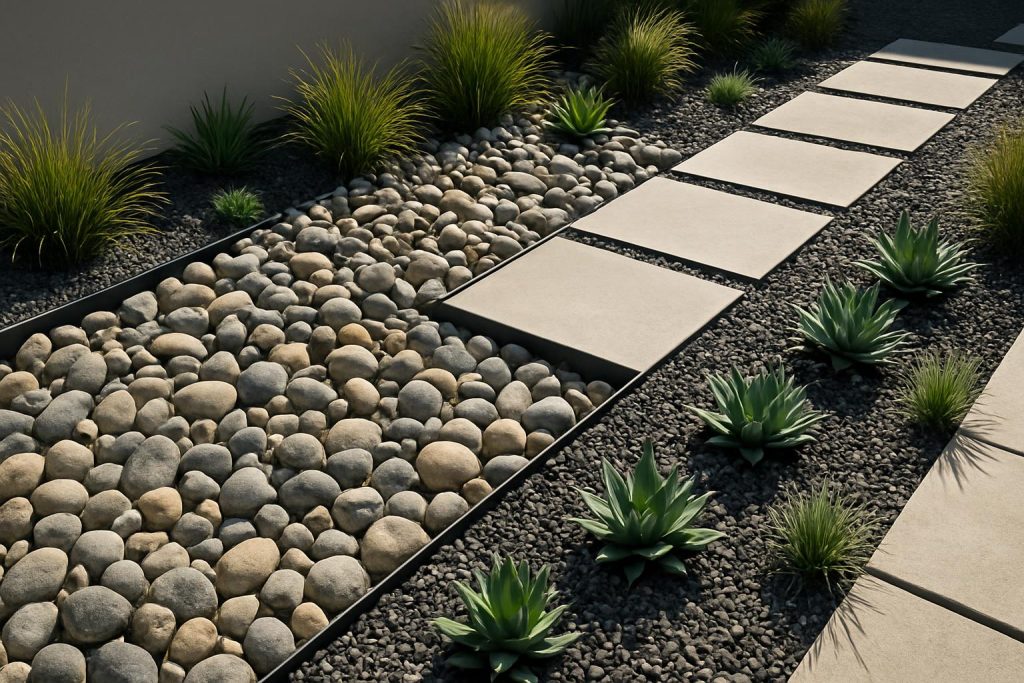
For a stable path, first lay a compacted base of 2 to 3 inches of crushed stone, then top with 1 to 2 inches of pea size rock. Contain the path with edging. If you want firmer footing, add stepping stones or pavers set level with the rock surface. Sweep rock off stones weekly until it settles.
Dry creek bed for drainage
Mark a meandering path where water naturally flows. Excavate 3 to 6 inches deep and 18 to 36 inches wide depending on volume. Line with fabric. Place large 3 to 5 inch rock along the sides and key stones into the soil so they do not roll. Fill the center with medium to small rock. Maintain a subtle 1 to 2 percent slope. Add check stones across the flow every 6 to 10 feet on steeper runs to slow water.
Rain garden and downspout splash zones
Spread medium rock in a pad under downspouts to diffuse water. Extend the pad 3 to 6 feet away from the house if needed. In a rain garden basin, use rock rings around plant clusters to protect the soil surface and slow erosion. Pair with native plants that handle wet to dry cycles.
Xeriscape plant beds
Use medium river rock as the main mulch in full sun beds. Combine with tough plants like ornamental grasses, yucca, sedum, and rosemary. Space plants to allow air flow and growth, then fill gaps with rock to 3 inches deep. Water deeply during establishment, then scale back to occasional watering based on climate.
Around trees and shrubs safely
Keep rock off the trunk and expose the root flare. Leave a 6 to 12 inch gap between rock and trunk. Do not exceed 2 inches of rock over the root zone for young trees. Avoid piling rock higher to hide fabric because that can trap moisture against bark.
Slopes and erosion control
On gentle slopes, medium rock over fabric holds well with proper edging at the base. On steeper slopes, use larger 3 to 5 inch rock and add small terraces or check bands of stone placed across the slope. Key edge stones into the soil to resist sliding. Inspect after big storms and reset loose pieces.
Containers and accent bands
Top dress pots and planters with pea size rock for a finished look and to cut evaporative loss. Use a narrow river rock band to separate lawn from shrub beds where a mower often scalps grass. Keep these accents consistent in color to avoid a busy look.
Combine Rock With Other Materials
Mix river rock with mulch where you want softness and water retention near plant roots. Keep rock near hardscape and mulch near plant bases. Define edges so materials do not blend. Pavers and stepping stones break up large rock areas and create stable routes. Add a few larger boulders as focal points, then repeat the same medium rock around them to tie the scene together.
Simple Step-by-Step Weekend Project
Try a 10 by 4 foot bed around a mailbox or along a walkway. Mark the area with hose or chalk. Remove grass and soil to a depth that allows for 3 inches of rock below surrounding grade. Rake the base smooth and set a slight slope toward the curb or lawn.
Install metal edging along the border and stake it every 2 feet. Lay landscape fabric across the area, overlap seams, and pin it down well. If you plan to add one shrub and two small perennials, cut X openings and fold the flaps in snugly after planting.
Wheel in medium 1 to 2 inch river rock. Spread to an even 3 inch depth with a rake, keeping the surface about half an inch below the top of the edging. Rinse dust off with a gentle spray. After a week, rake lightly to even out any settling. This project needs minimal care afterward beyond pulling the odd weed and blowing off leaves.
Seasonal Care and Quick Fixes
Spend a few minutes each month removing small weeds before they root deep. A light touch with a weeding tool is enough when fabric blocks the roots. Use a leaf blower on a low angle to clear leaves without scattering rock. In spring, check for fabric exposure, top up thin spots, and re-pin edges if needed. River rock does not decompose, so you only add small amounts to fix displacement or to refresh the look every few years.
Safety, Pets, and Accessibility
Choose larger rock if you have pets that chew or swallow objects. Keep walking paths firm with a compacted base or use pavers to support mobility aids. Avoid loose rock for primary walkways that must meet firm footing needs. Keep rock off steps and entries to prevent slips.
Common Mistakes to Avoid
Skipping edging allows rock to creep into lawn and beds, which adds work. Using plastic sheeting blocks drainage and can cause odor and slime in wet spots. Going too shallow exposes fabric and invites weeds. Ignoring slope can push water toward your house. Mixing many rock colors in one yard looks busy and makes maintenance harder.
Conclusion
River rock gives you a clean, low-maintenance landscape when you plan depth, edge the borders, and use breathable fabric. Pick sizes for the task, set slopes that move water away from structures, and keep trunks and pathways clear. With a simple setup and a few minutes of monthly care, your yard will stay neat through all seasons.
FAQ
Q How deep should river rock be in a garden bed
A Use 2 inches for pea size rock, 3 inches for 1 to 2 inch rock, and 3 to 4 inches for 3 to 5 inch rock.
Q Do I need landscape fabric under river rock
A Yes. Use a breathable landscape fabric or geotextile, overlap seams by 6 to 8 inches, and pin it well.
Q What size river rock works best for paths
A Pea size rock around 3 to 8 millimeters works, especially over a compacted base. Add stepping stones for firmer footing.
Q How much river rock do I need for 100 square feet
A At 2 inches deep you need about 0.62 cubic yards. As a quick rule, one ton often covers about 90 square feet at 2 inches.
Q How do I keep weeds out of river rock
A Install breathable fabric, set the right depth, use edging to contain the rock, and pull small weeds monthly before they root deep.