
We are reader supported. When you purchase through links on our site, we may earn an affiliate commission. Also, as an Amazon affiliate, we earn from qualifying purchases.
A master bedroom should help you fall asleep faster and wake up calm. This guide shows you how to plan, furnish, and style a restful retreat with clear steps and beginner friendly choices. You will learn what to buy first, what to skip, and how to maintain a clean, soothing space that stays beautiful with minimal effort.
Start with function, then layer comfort, light control, quiet surfaces, and low maintenance storage. Keep choices simple and repeat materials and colors for a unified look. Small decisions add up to a room that settles your mind every night.
Set Your Goal and Budget
Define how you use the room
Decide if the room is only for sleep or if you also read, dress, or do light stretching there. If you must work in the bedroom, contain it to a small, closed storage zone and keep it out of sight at night.
Prioritize sleep foundations
Spend most of your budget on a supportive mattress, breathable bedding, quality blackout window treatments, and layered lighting with dimmers. These create immediate comfort and better sleep.
Plan purchases in phases
Phase one covers paint, bed and mattress, blackout treatments, and basic lighting. Phase two adds storage furniture, a rug, and a headboard. Phase three finishes with art, plants, and textiles.
Choose a Calming Color Palette
Neutrals and muted tones
Use soft neutrals like warm white, light beige, greige, or muted taupe on walls. These colors lower visual noise and reflect light softly. If you love color, choose dusty blues, sage greens, or muted clay rather than saturated tones.
Accent colors with restraint
Keep to one or two accents repeated in textiles and art. Limit contrast so the eye rests. Reserve bolder color for small decor or the back of a bookshelf, not the entire wall.
Finish matters
Choose matte or eggshell paint for walls to soften glare. Use satin or semi gloss only on trim and doors for durability.
Plan the Layout
Measure and map
Measure the room, doors, windows, and outlets. Aim for clear walkways of at least 75 to 90 centimeters around the bed. Avoid blocking windows, vents, and closets.
Bed placement
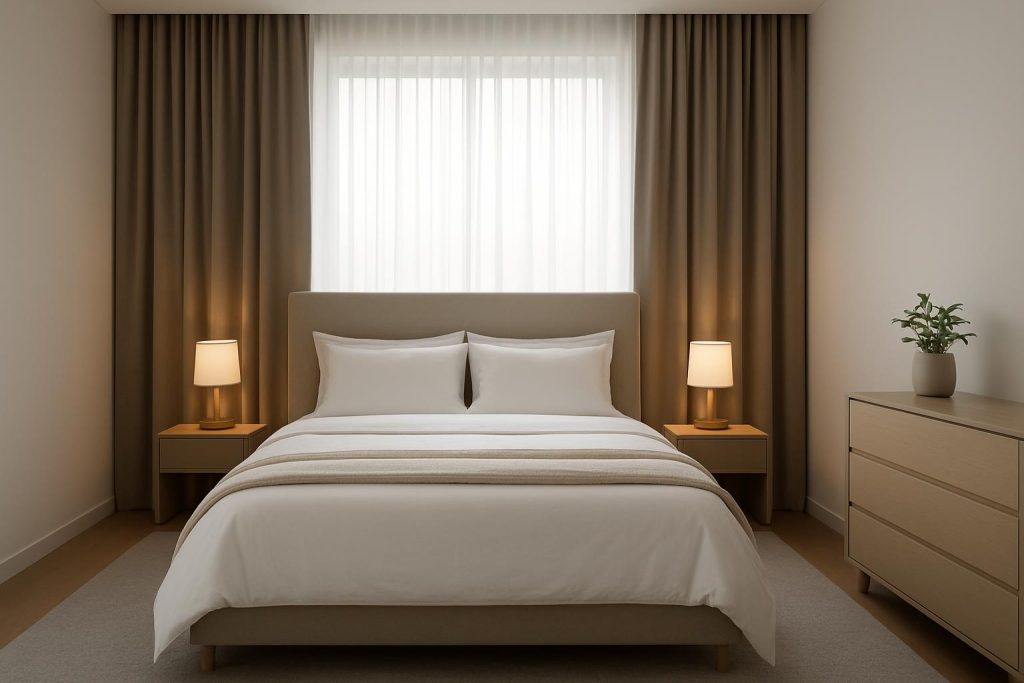
Center the bed on the longest solid wall if possible. Keep at least one side, ideally both, open for nightstands. Avoid placing the bed directly in line with the door to reduce drafts and disturbance.
Functional zones
Create a reading corner with a chair and lamp, a dressing zone near the closet with a mirror, and a small vanity or desk only if needed. Keep zones simple and avoid crowding.
Invest in Sleep Basics
Mattress and pillows
Choose a mattress that supports your sleeping position. Side sleepers often prefer medium to medium soft. Back sleepers often prefer medium to medium firm. Replace pillows when they no longer hold shape or cause neck strain.
Bedding layers
Use breathable fibers like cotton percale, linen, or Tencel for sheets. Add a light quilt or blanket for year round use, and a duvet for colder months. Keep a spare lightweight throw at the foot for flexible layering.
Seasonal swaps
Use percale or linen sheets in warm months and sateen or flannel in cool months. Rotate duvets or inserts by season to maintain comfort without changing the entire set.
Control Light
Blackout and sheers
Install blackout curtains or shades to block early morning light and street glow. Layer with sheers for daytime privacy and soft light. Mount curtains high and wide to make windows feel taller and reduce light leaks.
Lighting plan
Use three layers of light. Ambient overhead lighting, task lights for reading, and accent lights for mood. Choose warm light in the range of 2700 to 3000 Kelvin for evening. Add dimmers to main lights. Use bedside lamps or sconces with focused beams that can dim for reading without lighting the whole room.
Create Quiet and Comfort
Soften surfaces
Sound absorbs into fabric and texture. Use an area rug, lined drapes, an upholstered headboard, and upholstered seating to reduce echo and outside noise.
Seal gaps
Use simple weatherstripping for doors if you hear hallway noise. Add felt pads under furniture to stop rattles and scraping.
Comfortable temperature
Use breathable bedding and a fan or air purifier with low noise settings to keep the room cool and fresh. Avoid heavy layers that trap heat beyond your comfort.
Declutter and Organize
Closet strategy
Edit clothes by season. Keep only current season items hanging and store the rest in labeled bins. Use matching slim hangers for visual calm and more space. Add shelf dividers to keep stacks neat.
Nightstand rules
Keep only essentials on top. Lamp, water, and one book or journal. Use drawer inserts for glasses, charging cables, and small items so the surface stays clear.
Under bed storage
Use low profile bins with lids for off season clothing and spare bedding. Label bins so you can find items fast without pulling everything out.
Furniture That Fits
Scale and proportion
Choose a bed size that still allows comfortable walkways and space for nightstands. If the room is compact, consider a bed with a simple frame or a wall mounted headboard to reduce visual bulk.
Functional pieces
Use a storage bench at the foot of the bed for blankets and pillows. Choose a dresser with deep drawers and smooth glides. Consider a tall chest if you have a small footprint but higher ceilings.
Flooring and Rugs
Rug size and placement
For a queen bed, an area rug that allows coverage under the bed and extends on both sides gives a soft step in the morning. Place the rug starting under the nightstands or slightly below them and extend to the foot of the bed. For narrow rooms, use runners on both sides if a large rug is not practical.
Material choice
Choose wool for durability and softness, cotton flatweave for easy cleaning, or a low pile synthetic blend for allergy sensitive homes. Avoid shag if you want low maintenance.
Walls That Soothe
Art selection
Choose simple, calming art with soft forms and limited color. Place a single large piece or a tidy pair above the headboard. Keep frames consistent to avoid visual clutter.
Headboard impact
An upholstered headboard adds comfort, sound absorption, and a finished look. Choose a simple shape in a neutral fabric that coordinates with your bedding.
Mirrors with purpose
Use a full length mirror near the closet or dresser to expand light and function. Avoid placing mirrors where they reflect the bed directly if it feels distracting.
Texture and Layers
Mix materials
Combine a wood bed frame or nightstands with linen drapes, a wool rug, and cotton bedding. Add a knit throw or a quilt for depth. Keep the palette tight so layers feel relaxing, not busy.
Balance smooth and soft
Pair smooth surfaces like metal lamp bases with soft shades and fabrics. Use matte finishes to avoid glare at night.
Greenery and Air
Low maintenance plants
Choose easy care plants and group them in one or two spots for impact and easy watering. Place a plant on the dresser or in a corner near natural light.
Air quality habits
Open windows when weather allows. Run an air purifier on low in the evening. Wash sheets weekly and duvet covers regularly to reduce dust.
Technology Boundaries
Corral devices
Keep screens out of sight at night. Use a drawer with a charging station or a fabric pouch that closes. Set a shutoff time and charge devices outside the room if possible.
Gentle light at night
Use warm bulbs and dimming. Avoid bright task lights and harsh blue light in the last hour before bed.
Scent and Small Rituals
Soft, consistent scent
Use a diffuser with a gentle, clean scent or a light pillow spray. Ventilate in the morning to reset the air. Avoid heavy fragrances that linger.
Simple nightly routine
Five minute reset each night. Put clothes in a basket, clear nightstands, close curtains, dim lights, and set the temperature. Small steps signal your brain to unwind.
Cleaning and Maintenance
Weekly habits
Wash sheets and pillowcases, dust surfaces with a microfiber cloth, and vacuum rugs and floors. Rotate reading material and clear out extras.
Monthly tasks
Wash duvet covers or blankets, wipe baseboards and window sills, and clean light fixtures. Check plants and trim leaves as needed.
Seasonal refresh
Rotate mattresses if the brand allows, launder curtains or steam them, and reassess storage. Donate what you did not use in the last season.
Budget and DIY Tips
High impact, low cost
Paint walls in a calming neutral. Replace lampshades with larger, fabric shades. Swap hardware on nightstands and dressers for a clean upgrade. Hang curtains high and wide to give height.
Shop smart
Prioritize a supportive mattress and blackout treatments. Buy quality inserts for pillows and duvets, then change covers seasonally for a new look without a full replacement.
Seasonal Refresh Plan
Warm weather
Switch to percale or linen sheets, remove heavy throws, and use a lighter duvet insert. Add a small fan and keep a carafe of water on the nightstand.
Cool weather
Layer a quilt under the duvet, switch to flannel or sateen sheets, and add a wool or knit throw at the foot of the bed. Close drafts around windows and doors.
Putting It All Together
Step by step sequence
Clear the room and edit belongings. Paint the walls. Place the bed and install blackout treatments. Add layered lighting with dimmers. Lay the rug and bring in nightstands and dresser. Make the bed with breathable layers. Add art, a plant, and a chair if space allows. Finish with a five minute nightly reset habit.
Conclusion
A restful master bedroom comes from clear choices and consistent habits. Keep the palette calm, control light, soften sound, and remove clutter. Invest in sleep essentials first, then layer texture and storage that you can maintain easily. With a simple plan and steady upkeep, your bedroom will feel quiet, supportive, and ready for good sleep every night.
FAQ
Q: What color palette works best for a restful master bedroom
A: Use soft neutrals like warm white, light beige, greige, or muted taupe on walls, and add gentle accents such as dusty blues, sage greens, or muted clay. Keep finishes matte or eggshell to soften glare.
Q: How should I position the bed and plan the layout
A: Center the bed on the longest solid wall, keep at least 75 to 90 centimeters of walkway around it, and avoid blocking windows and doors. Create simple zones for reading and dressing without crowding the room.
Q: What window treatments help with better sleep
A: Install blackout curtains or shades to block light and layer with sheers for daytime privacy. Mount curtains high and wide to reduce light leaks and make windows feel taller.
Q: What are simple ways to cut clutter on nightstands and in closets
A: Keep only essentials on nightstands and use drawer inserts for small items. In closets, edit by season, use matching slim hangers, and store off season items in labeled bins.
Q: Which lighting temperatures are restful at night
A: Choose warm light in the range of 2700 to 3000 Kelvin for evening, and use dimmers on main lights and focused bedside lamps for reading.