
We are reader supported. When you purchase through links on our site, we may earn an affiliate commission. Also, as an Amazon affiliate, we earn from qualifying purchases.
Greek yogurt can look smooth one day and a bit chunky the next. That change makes many people wonder if it is still safe to eat. The short answer is that some chunkiness is normal, but other types mean it is time to toss it. This guide explains what textures are expected, what signs point to spoilage, how to fix a texture you do not like, and how to store and organize your fridge to keep yogurt at its best. Simple steps and clear checks will help you decide fast and avoid waste.
What Greek Yogurt Is And How It Should Look
How Greek Yogurt Is Made
Greek yogurt is regular yogurt that has been strained to remove whey, the watery part of milk. This step concentrates the proteins and gives a thicker body and a tangy taste. Some brands add milk solids or stabilizers to control texture, but classic styles rely on straining only.
Expected Texture And Mild Variations
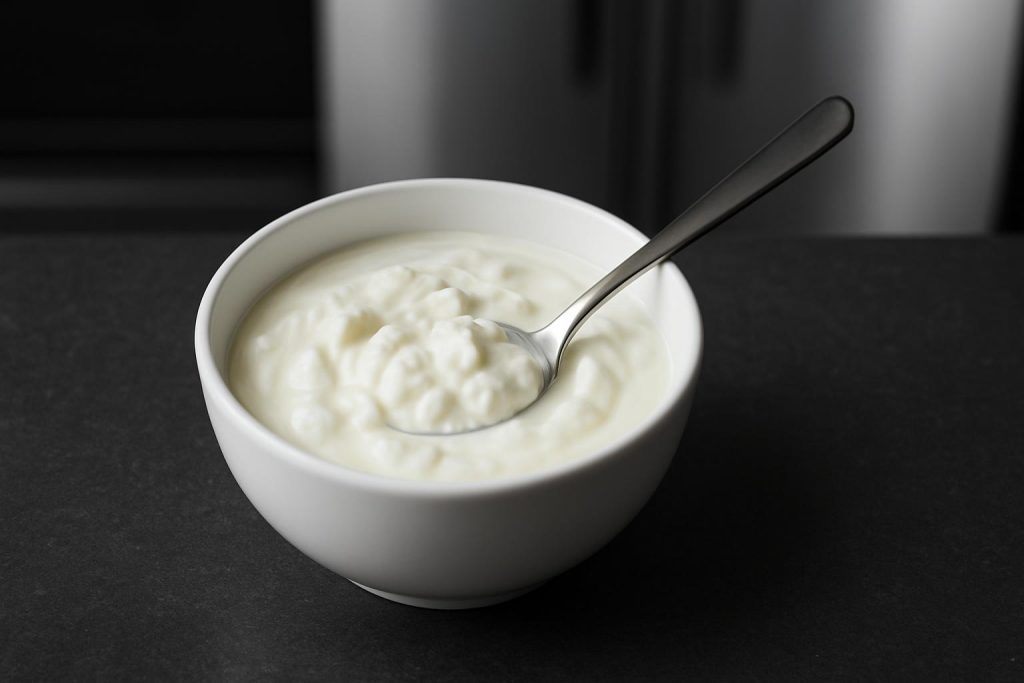
Ideal Greek yogurt looks thick and uniform, with a dense, spoonable body. It may show faint ridges when you drag a spoon through it. Small curds or tiny lumps can appear, especially on the surface or around the edges. A thin layer of clear to pale yellow liquid on top is normal whey separation, not a safety issue.
When Chunkiness Is Normal
Whey Separation And Surface Curds
Whey can pool on top during storage. Stirring it back in will smooth the cup and return some protein and calcium. You may see small curds on the top or sides where the yogurt dried slightly against the lid. These curds are harmless. If the color is white to cream and the smell is clean and tangy, it is fine.
Temperature And Handling Effects
Shifts between cold and slightly warmer temperatures can tighten or relax proteins. Bringing yogurt home in a warm car, then chilling it again, can create a few lumps without spoilage. The same can happen if you leave the cup out on the counter for breakfast, then put it back. Gentle stirring usually corrects it.
Fat Content And Stabilizers
Nonfat Greek yogurt can look more granular than whole milk versions because it lacks fat that helps create a silky mouthfeel. Some brands using only straining show a natural, slightly rustic texture. Brands with stabilizers often look smoother. Chunkiness alone, without other spoilage signs, does not mean it is unsafe.
When Chunkiness Means Trouble
Visual Red Flags
Throw the yogurt out if you see mold in any color, including green, blue, pink, or black, whether on the surface, the lid, or down the sides. Discard it if you see bubbles rising through the yogurt when you have not stirred it. Bubbling can mean active fermentation by yeast or bacteria that should not be there. A separated liquid that looks milky, foamy, or stringy is also a warning sign.
Odor And Taste Clues
Good Greek yogurt smells clean and tangy. If it smells sour in a sharp, vinegary way, or smells yeasty, cheesy, or like alcohol, do not eat it. If the taste is unexpectedly sharp, bitter, or fizzy on the tongue, stop and discard. Never try to save money by eating off yogurt you suspect is spoiled.
Timing And Opened-Container Windows
Unopened Greek yogurt stored at 1 to 4 Celsius or 34 to 40 Fahrenheit often stays safe for one to two weeks beyond the sell by date. Once opened, plan to finish it within five to seven days. If the cup was left out at room temperature for more than two hours, it should be discarded, or for more than one hour if the room is above 32 Celsius or 90 Fahrenheit. These time and temperature ranges reduce risk from bacteria growth.
Simple Tests To Decide Eat Or Toss
Stir Test
Stir the yogurt for 10 to 15 seconds with a clean spoon. Safe yogurt with normal separation or small curds will smooth out fast. If large clumps remain rubbery, or the yogurt breaks into grainy clots and watery liquid, suspect spoilage and toss it.
Spoon Trail Test
Drag a clean spoon across the surface. A normal yogurt will show a clean trail with slight ridges. Spoiled yogurt often looks stringy, foamy, or splits into chalky bits. If unsure, rely on smell and time since opening.
How To Fix Chunky But Safe Yogurt
Quick Smoothing Methods
Whisk the yogurt in its cup with a small whisk or fork for 20 to 30 seconds. This re-distributes whey and breaks small curds. For a family tub, transfer a portion to a clean bowl and whisk only what you will eat to avoid adding bacteria to the main container. If you prefer a very smooth body, blend briefly with an immersion blender, 5 to 10 seconds, to avoid whipping in too much air.
Strain Or Thin As Needed
To thicken a slightly watery yogurt, strain it through a clean coffee filter or two layers of cheesecloth set over a bowl for 15 to 60 minutes in the fridge. To thin and smooth a thick but curdy yogurt, whisk in a tablespoon or two of cold milk per cup until you reach your preferred texture. Add milk slowly to avoid over-thinning.
Use In Recipes To Mask Texture
If the yogurt is safe but not perfectly smooth, use it in smoothies, salad dressings, dips, muffins, or pancakes. Blending and cooking will even out the texture. Add it off heat to soups or sauces to prevent curdling. Temper it first by whisking with a little warm liquid from the pot, then add back while stirring.
Prevent Chunkiness And Spoilage
Smart Shopping And Transport
Pick containers at the back of the dairy shelf where it is colder. Check that the lid is sealed and not domed. Doming can hint at gas build-up from fermentation. Use an insulated bag with an ice pack for the trip home, especially in warm weather, and store it in the fridge right away.
Best Storage Zones In The Fridge
Keep yogurt on a middle shelf toward the back where temperatures are stable. Avoid the door where temperatures swing each time you open it. Maintain fridge temperature at 1 to 4 Celsius or 34 to 40 Fahrenheit. Use a simple fridge thermometer to verify. Do not stack heavy items on top of yogurt cups since pressure can push whey out and disturb texture.
Clean Utensils And Cross-Contamination
Always use a clean spoon to scoop yogurt. Do not double dip. Close the lid tightly after each use. Wipe the rim before closing to limit dried curds and microbial growth. If you add fruit or honey, mix it in the bowl rather than the original tub. This avoids introducing sugars that encourage yeast growth.
Date Labeling And First In First Out
Use a marker to write the open date on the lid. Store older containers in front and newer ones in back. Finish opened cups within five to seven days. If you know you will not finish a large tub in time, portion it into several small, clean containers so you open only what you need each day.
Home Cleaning And Odor Control For Dairy
Clean Spills Fast
Wipe yogurt spills in the fridge with warm water and a few drops of dish soap. Rinse with a cloth dampened in clean water, then dry with a towel. For sticky residue under a shelf lip, use a soft brush or an old toothbrush. Avoid hot water on cold glass shelves to prevent thermal shock. Remove shelves and clean at the sink when possible.
Neutralize Sour Smells
If a spill sat for a while, odors can linger. After cleaning with soapy water, wipe the area with a solution of one tablespoon of baking soda in one cup of warm water. Let it air dry. Place an open box of baking soda in the fridge to absorb odors. Replace it every two to three months. Do not mix baking soda with vinegar and bleach together. Keep it simple and safe.
Launder Cleaning Cloths Properly
Rinse cloths that touched dairy under cool water first to remove proteins, then wash with hot water and detergent. Dry fully to prevent a sour smell. Replace sponges often and allow them to dry between uses.
DIY: Make Greek Yogurt Thicker Or Make Your Own
Strain Store-Bought Yogurt
Line a fine mesh strainer with two layers of cheesecloth or a coffee filter. Set it over a bowl. Add yogurt and cover. Chill and strain for 30 to 120 minutes depending on how thick you want it. Whisk before serving for a smooth finish. Clean tools well after use.
Make Greek Yogurt At Home
Heat milk to about 82 to 85 Celsius or 180 to 185 Fahrenheit, cool to about 43 to 46 Celsius or 110 to 115 Fahrenheit, stir in a yogurt starter, and incubate for 6 to 10 hours at a steady warm temperature. Chill until cold, then strain to Greek thickness. Control texture by straining time. Longer straining means thicker yogurt and fewer loose curds. Keep everything sanitary and use clean jars with tight lids.
Special Cases And Product Variations
Lactose-Free And Plant-Based Yogurt
Lactose-free Greek yogurt behaves like regular dairy yogurt. Expect similar slight separation and small curds. Plant-based Greek style products often use gums or starches. They may split or gel in a different way. Stirring usually fixes it. Follow shorter use windows once opened, three to five days is a safer range, because some plant bases are less stable.
Flavored, Fruit-On-The-Bottom, And Added Mix-Ins
Fruit and sweeteners can cause more whey separation due to sugar drawing out water. This can give a streaky look when you first open the cup. Stir well to combine. If fruit looks fizzy, slimy, or has an off smell, discard the product.
Higher-Risk Groups
Pregnant people, babies, older adults, and those with weakened immunity should be extra careful. Follow the two-hour rule strictly, avoid products close to the end of their window, and discard at the first sign of doubt. Choose pasteurized dairy only.
Frequently Asked Questions
Is the watery layer on top safe
Yes, this is whey. Stir it back in for nutrition, or pour off for a thicker texture. If the liquid is milky, foamy, or smells odd, discard the yogurt.
Can I freeze Greek yogurt
Yes, but expect a grainy texture after thawing. Thaw in the fridge. Whisk well. Use thawed yogurt in smoothies, baking, or cooking rather than eating straight.
Why did my yogurt curdle in hot soup
Direct heat causes proteins to tighten and separate. To prevent this, temper the yogurt by mixing it with some warm soup first, then add back off heat while stirring.
Can I microwave yogurt to warm it
It is better to avoid microwaving. If you must, use low power and short bursts, stirring between bursts, and aim for just cool or room temperature. High heat will curdle it.
What if the lid is puffed up
Do not eat it. A puffed lid can signal gas production inside. Return it to the store or discard it.
Can I salvage yogurt with a small mold spot
No. Mold roots can spread beyond what you see in soft, wet foods. Discard the entire container.
Fridge Organization To Keep Yogurt At Its Best
Use Clear Bins And Labels
Group yogurt cups in a shallow bin on a middle shelf. Label the bin with eat first. Place newer stock behind older stock. Seeing everything at a glance reduces forgotten items and prevents waste.
Control Temperature And Airflow
Do not overpack the fridge. Leave some space around containers for cold air to circulate. Keep yogurt away from raw meat and seafood to prevent drips and odors. Check the door gasket for a tight seal and clean it monthly so the fridge maintains stable cold temperatures.
Plan Portions
If you buy large tubs, portion servings into small lidded jars for the week. This reduces repeated exposure to warm air when opening the big tub and keeps texture consistent. Write the date on each jar.
Troubleshooting At A Glance
Normal Chunkiness
Small curds, thin layer of clear whey, smooths with a quick stir, clean tangy smell. Safe to eat.
Abnormal Chunkiness
Rubbery clumps that do not smooth, foamy or milky liquid, bubbles, off smells, mold. Discard.
Conclusion
Greek yogurt is not always perfectly uniform. A little chunkiness and some whey on top are normal and easy to fix with a quick stir or brief whisk. Problems start when you see mold, bubbles, strong off odors, or clumps that will not smooth. Use clear tests, store it cold and steady, keep utensils clean, and organize your fridge so you finish yogurt within a safe window. With these habits you will waste less, enjoy better texture, and keep your kitchen safe and fresh.