
We are reader supported. When you purchase through links on our site, we may earn an affiliate commission. Also, as an Amazon affiliate, we earn from qualifying purchases.
Want softer laundry but your washer has no fabric softener dispenser. You can still do it cleanly, safely, and without hassles. The key is timing and a few simple tricks. This guide shows you exactly when and how to add fabric softener by hand, how to avoid stains, and what to do on both top load and front load machines. You will also learn safe alternatives and quick fixes for common problems.
Introduction
Fabric softener works during the rinse cycle, not during the main wash. Without a built-in dispenser, you must add it at the right moment and in the right way. Once you know what to look for, the process becomes easy and repeatable. Keep reading for step-by-step methods that fit your washer type and laundry routine.
What Fabric Softener Does and When It Works
Fabric softener coats fibers to reduce friction, static, and stiffness. It helps clothes feel smoother and smell fresher. It also reduces wrinkles and lint. It must be added during the rinse cycle, when detergents and soils have been flushed away. If added during the wash, it binds to dirt and detergent residue, causing spots, reduced cleaning, and wasted product.
Know Your Washer Without a Dispenser
Top Load Agitator Washers
These machines fill, agitate, drain, then refill for the rinse. The rinse fill is easy to spot. You hear draining, then fresh water flows in again. The lid usually opens at any time, so adding fabric softener is straightforward.
Top Load High Efficiency Impeller Washers
These use less water and have a flatter wash plate. The rinse may be shorter and water level lower. Add softener slowly and pre-diluted so it disperses well in the smaller water volume.
Front Load Washers With Locking Doors
The door often locks during cycles. Some models let you pause and open during rinse if water level is low. Others will not unlock. Use the pause method if allowed, or use a softener ball so it releases at the right time without opening the door.
The Core Rule: Add During Rinse, Never During Wash
Add liquid fabric softener when the machine has drained the soapy wash water and has started refilling with clean water for the rinse. This ensures softener contacts clean fabric and is evenly dispersed. Do not add it at the start with detergent unless you use a softener ball designed to release it at the correct time.
Method 1: Manual Pour at the Right Moment
Find the Rinse Cycle Timing
Watch or listen for the machine to drain after the wash action. Then it will start refilling with fresh water. That refill marks the start of the rinse. For many top loaders, rinse agitation starts about 1 to 3 minutes after the refill begins. Add the softener soon after rinse fill begins, while water is flowing or right before agitation starts.
How Much to Use
Standard washers with normal loads typically need 35 to 50 milliliters. High efficiency loads often need 10 to 20 milliliters. For small loads, cut the amount in half. For large or bulky loads, you may use up to 60 milliliters, but start with less and adjust only if needed. Concentrated products vary. Start small and increase slightly if results are not sufficient.
Pre-Dilute to Prevent Stains
Undiluted softener can spot or leave greasy marks, especially on dark items and synthetics. Mix the softener with water before you pour it into the tub. Use one part softener to two parts water for standard washers. Use one part softener to three parts water for high efficiency washers. Stir or shake in a small cup or bottle so the mixture is thin and flows easily.
How to Pour Safely
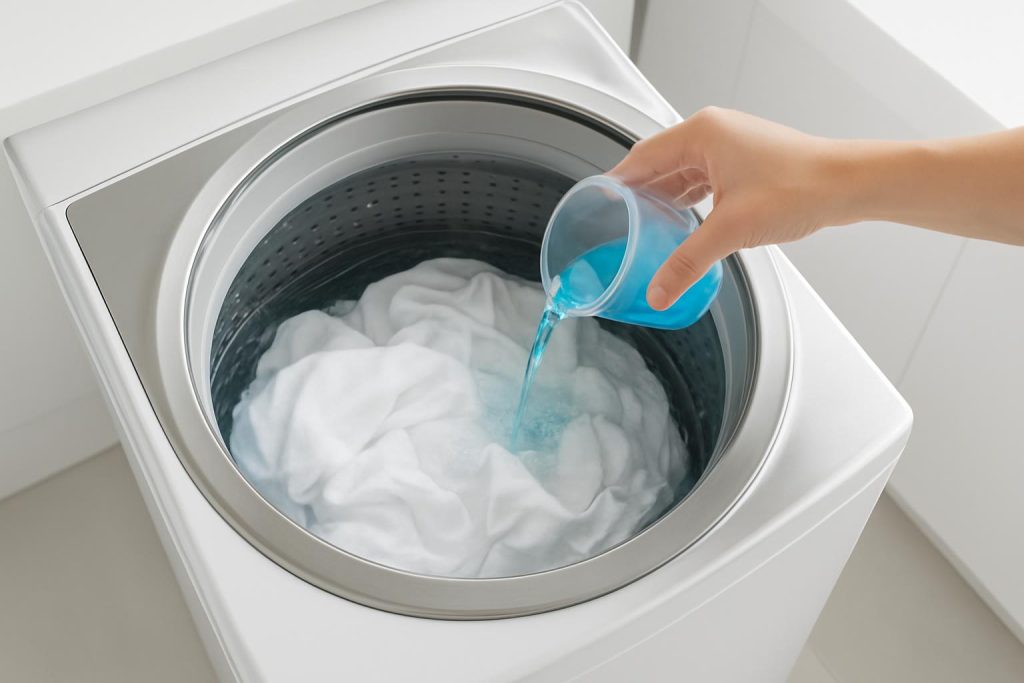
Open the lid, aim for the deep water zone away from clothes, and pour steadily. If the water level is low, pour around the tub edge, not directly onto fabric. Follow with a small cup of warm water to chase the softener in. Close the lid so agitation distributes it quickly. If your washer has a deep rinse option, use it for better dispersion.
What If You Miss the Rinse
If you realize you missed the rinse window, do not pour into the next spin. Pause the machine and run a new rinse cycle. Add your diluted softener at the start of that rinse fill. This avoids spotting and ensures even coverage.
Method 2: Use a Softener Ball
How It Works
A softener ball is a floating dispenser you fill with liquid softener and a little water. You place it on top of the laundry at the start. It stays closed during wash. When the washer spins between wash and rinse, the ball opens and releases softener automatically into the rinse water.
How to Load It Correctly
Fill the ball to the line or with your measured amount plus water to dilute. Snap it shut firmly. Place it on top of the clothes at the start of the cycle. Do not bury it deep under heavy items. After the cycle, retrieve the ball and rinse it.
Pros and Limitations
Pros include hands-off timing, good for front loaders that stay locked, and consistent release. Limitations include less precise dosing for very small HE loads and not ideal for very gentle cycles with minimal spin before rinse. If you use delicate or hand wash cycles that skip the usual spin, manual adding may be better.
Method 3: Pause and Add in Front Loaders
Check If Your Door Can Open
Many front loaders allow pausing and opening only when water level is low. Watch the panel. When the display shows rinse or a water droplet icon at the rinse stage, press pause. Wait for the lock indicator to turn off. If it stays locked, use a softener ball next time.
Safe Way to Add
Open the door slowly to avoid spills. Pour your pre-diluted softener along the inside of the drum, not directly on clothes, and close the door. Resume the cycle. If your machine offers extra rinse, enable it for better distribution.
If Your Door Will Not Unlock
Do not force it. Canceling mid-cycle may drain the water and skip the rinse. Instead, let the cycle continue and then run a separate rinse and spin. Add softener at the start of that rinse using the pause method or a softener ball in the future.
Method 4: Add Using a Rinse Cup or Bottle
If your hands are full during laundry time, pre-mix softener and water in a squeeze bottle labeled for laundry use. Keep it near the washer. When rinse starts, squeeze the mixture into the tub or drum with control, then chase with a little warm water. This reduces mess and makes dosing consistent.
Alternatives When You Cannot Use Liquid Softener
White Vinegar in the Rinse
Plain white distilled vinegar can help reduce stiffness and odors without coating fibers. Use one to two tablespoons for HE washers and up to one quarter cup for standard washers, added at the start of the rinse. Never mix vinegar with chlorine bleach. Add vinegar only in cycles where no bleach is present.
Dryer Sheets or Dryer Balls
If timing the rinse is not practical, use dryer sheets for static reduction or wool dryer balls to soften mechanically. Dryer balls also speed drying by improving airflow. For scent, add a few drops of essential oil to dryer balls and let them dry fully before use. Do not use oils on baby items or flame resistant fabrics.
Fabric Specific Guidance
Skip liquid softener on microfiber cloths, athletic wear, moisture wicking fabrics, and towels when maximum absorbency is needed. Avoid on baby sleepwear or items labeled flame resistant. The coating can reduce performance and safety on these items.
How to Read Your Machine for the Rinse Moment
Visual and Sound Cues
Listen for wash agitation stopping, then draining noises, then the sound of fresh water filling. Watch the timer as it moves from wash to rinse. Some machines show a rinse light or icon. The first minute or two of rinse fill is the ideal time to add softener.
Program Options That Help
Use extra rinse for bulky or mixed loads to improve distribution. Choose a deep rinse or high water rinse in top loaders if available. Avoid eco modes for softener use if they reduce rinse water to a trickle, unless you dilute more and pour slowly.
Dosing Quick Guide
Standard Top Load Washers
Normal load: 35 to 50 milliliters. Large or bulky load: up to 60 milliliters. Pre-dilute one part softener to two parts water. Add during rinse fill and chase with a small cup of water.
High Efficiency Washers
Normal load: 10 to 20 milliliters. Small load: 5 to 10 milliliters. Pre-dilute one part softener to three parts water. Pour slowly at rinse start to prevent pooling.
Hard Water Adjustments
In hard water, static can be worse. Increase dose slightly if needed, but keep dilution ratios and rinse thoroughly. Consider vinegar as a periodic alternative to reduce mineral feel without buildup.
Troubleshooting Common Problems
Spots or Greasy Marks on Clothes
Cause is usually undiluted softener contacting fabric or adding at the wrong time. Fix by pre-diluting properly and pouring into moving or filling rinse water. To remove existing spots, rewash the item with liquid detergent and warm water. Add an oxygen cleaner if needed and avoid softener for that cycle.
Still Static or Rough Feel
Increase dose slightly next time, or enable extra rinse to improve distribution. For synthetic-heavy loads, add dryer sheets or dryer balls in the dryer as a complement. Check that you are adding during rinse, not wash.
Washer Smell or Gunk Buildup
Fabric softener can leave residue over time, especially in cooler water. Run a monthly hot tub clean cycle with a washer cleaner. If you do not have a cleaner, run a hot cycle with one cup of white vinegar added to the tub and no laundry, but never combine with bleach. Wipe the drum and door gasket on front loaders after softener use.
Skin Sensitivity or Strong Fragrance
Use a dye free and fragrance free softener. Reduce the dose and add an extra rinse. Consider vinegar instead of softener for sensitive skin households.
Care and Maintenance Tips
Rinse the Tub After Heavy Softener Use
If you ran several loads with softener, run a short rinse and spin cycle with no clothes to flush residue. This keeps the drum clean and reduces film on the next load.
Monthly Deep Clean
Use the machine’s clean washer cycle or a hot cycle with a washer cleaner tablet. Wipe inside surfaces, especially around the top rim on top loaders and the door seal on front loaders. Keep the lid or door open after use to air dry and reduce odors.
Protecting Towels and Performance Fabrics
Limit or skip softener on towels to maintain absorbency. If towels feel slick and stop soaking water, wash them hot with a small amount of detergent and one cup of vinegar in the wash to strip residue, then rinse well. For athletic wear, avoid softener to keep moisture wicking working properly.
Quick References by Washer Type
Top Load Agitator
Watch for drain after wash, then refill for rinse. Open lid, pour pre-diluted softener into the filling water, chase with a little water, close lid. Easy access makes timing simple.
Top Load High Efficiency
Use a smaller dose and more dilution. Pour slowly as rinse begins. Consider extra rinse or deep rinse to help distribution. A softener ball also works well here.
Front Load
Use pause and add during rinse if the door unlocks. If it does not, use a softener ball at the start of the cycle. Alternatively, plan a separate rinse and spin and add softener at the start of that rinse.
Safety Checks
Keep Chemicals Secure
Store fabric softener and vinegar out of reach of children and pets. Wipe spills immediately. Label any squeeze bottle used for softener clearly for laundry use only.
Never Mix Vinegar With Bleach
Do not add vinegar in any cycle that contains chlorine bleach or bleach residue in the tub. Mixing creates hazardous fumes. Rinse the tub between bleach and vinegar cycles.
Pro Tips for Best Results
Use Warm Water to Chase
A small cup of warm water after pouring softener helps it disperse faster and reduces the chance of spotting, especially in cold rooms or cold water rinses.
Time Saver Strategy
Set a phone timer for when rinse begins based on your washer’s typical timing. For example, if your normal cycle hits rinse at minute 24, set a reminder. Consistent timing makes manual adding effortless.
Load Balance Matters
Overstuffed loads reduce water movement in rinse. Leave some space so clothes can roll. Better movement means better softener distribution and fewer residue issues.
When to Skip Softener Entirely
Items That Should Not Be Softened
Skip softener on microfiber, cleaning cloths, athletic wear, swimwear, down or feather items, flame resistant sleepwear, cloth diapers, and water repellent fabrics. The coating can reduce absorbency, breathability, or safety features.
Laundry for Babies or Sensitive Skin
Use fragrance free products or choose vinegar. Rinse twice to remove residues. Test one item first before applying to a full load.
Conclusion
You can use fabric softener in a washing machine without a dispenser with clean results. Add during the rinse, pre-dilute to avoid stains, and choose a method that fits your washer type. Manual pour, softener ball, or pause and add all work when timed correctly. If liquid softener is not practical, use vinegar in the rinse or switch to dryer solutions. Keep your machine clean, adjust your dose to load size and washer type, and skip softener on fabrics that need absorbency or special care. Follow these steps and your laundry will come out softer, fresher, and free from residue.