
We are reader supported. When you purchase through links on our site, we may earn an affiliate commission. Also, as an Amazon affiliate, we earn from qualifying purchases.
Clean floors make your home look fresh and feel healthier. Mopping the right way saves time and keeps floors in good shape longer. Many people mop with too much water, the wrong cleaner, or a dirty mop. The result is streaks, sticky residue, and dull surfaces. This guide shows a clear method that works on most floors with simple steps you can follow today.
You will learn how to pick the right mop, mix cleaner safely, use efficient motions, and avoid common mistakes. You will also get tips for wood, tile, vinyl, and stone. Start with the basics, then fine tune based on your floor type and level of dirt.
Know Your Floor Type Before You Mop
Tile and Grout
Tile tolerates water, but grout holds soil. Use a neutral pH cleaner for routine cleaning. Avoid harsh acids unless you are removing mineral deposits and have sealed grout. Rinse well to prevent haze.
Vinyl and Luxury Vinyl
Vinyl is durable and water friendly. Use a mild, neutral cleaner. Avoid wax unless your floor needs it. Too much water seeps into seams and can loosen adhesive. Wring your mop well.
Laminate Flooring
Laminates dislike moisture. Use a slightly damp microfiber mop and a laminate-safe cleaner. No standing water. Work in small sections and dry quickly.
Sealed Hardwood
Use minimal water. Choose a hardwood-safe cleaner with a neutral pH. Wring the mop until just damp. Mop with the grain and dry immediately with a clean towel or fan.
Engineered Wood and Bamboo
Treat like sealed hardwood. Avoid soaking. Use a damp microfiber and quick dry time. Check the manufacturer guidance if available.
Sealed Natural Stone
Use a stone-safe, neutral cleaner only. Avoid vinegar, lemon, or acidic products because they etch stone. Check sealer annually and reapply as needed.
Unsealed Stone and Concrete
These surfaces stain easily. Test cleaner in a hidden spot. Keep water to a minimum unless the floor is designed for wet mopping and drains well. Sealing is recommended for easy maintenance.
Cork
Cork is porous and sensitive to moisture. Use a barely damp microfiber and a cork-safe cleaner. Dry fast and avoid strong chemicals.
Choose the Right Tools and Supplies
Mop Types
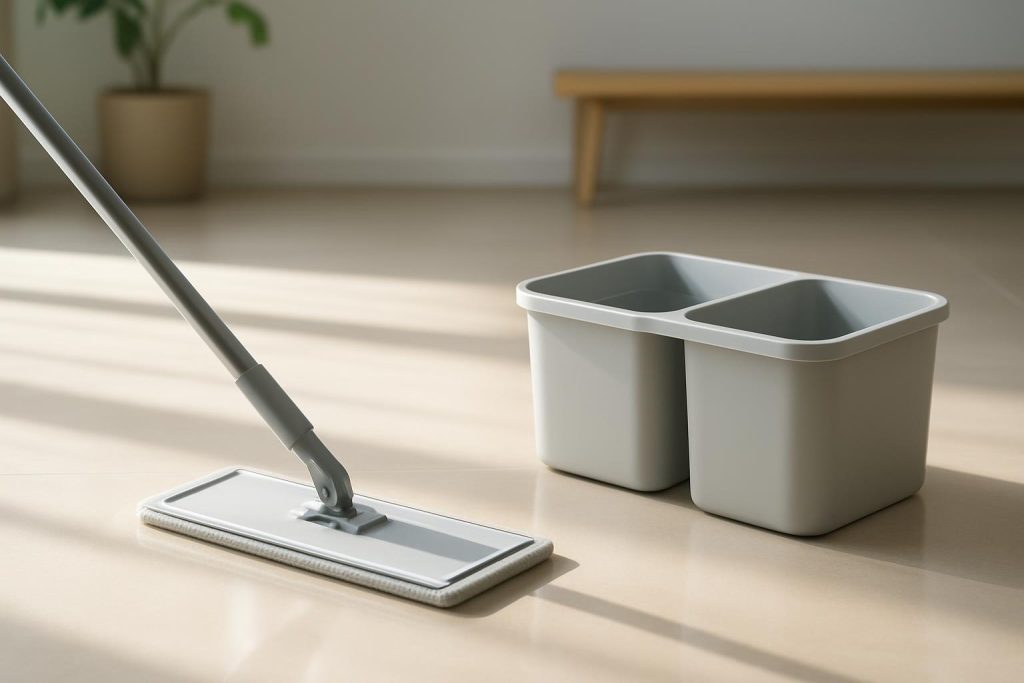
Microfiber flat mop: Best for everyday dirt, quick drying, and fewer streaks. Good for wood, laminate, and vinyl. Use removable pads for easy washing.
String or loop mop: Good for textured tile and grout because it reaches low spots. Requires more wringing and more water control.
Sponge mop: Decent for smooth floors but holds residue if not rinsed thoroughly. Replace sponge heads often.
Spray mop: Fast for maintenance and small spaces. Use a refillable bottle with proper dilution. Avoid overspray near wood baseboards.
Steam mop: Works on many sealed floors but avoid on unsealed wood, some laminates, and waxed surfaces. Always confirm your floor can handle heat and steam.
Bucket Setup
Single bucket: Simple and fine for light soil. Change water often to avoid redepositing dirt.
Two-bucket method: One bucket for cleaning solution, one for rinse water. This keeps the solution cleaner longer and reduces streaks.
Cleaners and Water
Neutral pH cleaner: Safe for most sealed floors and daily use. Follow label dilution.
Specialty cleaner: Use stone-safe or hardwood-safe formulas as needed. Avoid vinegar or bleach on stone and wood.
Water temperature: Warm water lifts grease better. Avoid hot water on wood and delicate floors to reduce risk of warping.
Useful Extras
Soft broom or vacuum with hard floor setting for dry debris removal.
White microfiber cloths for edges, baseboards, and spot drying.
Knee pads or a soft pad for kneeling when scrubbing grout lines.
Prepare the Room Before You Mop
Clear and Protect
Move chairs, rugs, and small items. Put felt pads under furniture legs before moving to avoid scratches. Keep pets and kids out of the work area.
Dry Debris Removal
Sweep or vacuum the entire floor. Focus on corners, under cabinets, and along baseboards. Dry removal prevents mud and streaks when you add water.
Spot Treatment
Pre-treat stuck spots with a small amount of cleaner. Let it dwell for 2 to 3 minutes. Use a non-scratch pad to loosen residue, then wipe with a damp cloth.
Mix and Test Your Solution
Correct Dilution
Read the label and measure. Too much cleaner leaves a film and attracts dirt. Too little cleaner forces more scrubbing. Use clean buckets and clean water.
Test a Small Area
Apply to a hidden corner first. Check for dulling, haze, or color change. If you see issues, switch to a milder product or use only water with a well wrung microfiber.
Disinfecting vs Cleaning
Cleaning removes soil. Disinfecting reduces germs. If you use a disinfectant, confirm it is safe for your floor and follow the required dwell time. After disinfection, rinse if the product requires it to prevent residue.
Core Mopping Techniques That Work
Two-Bucket Method
Dip the mop in the cleaning solution, wring well, mop a small area, then rinse the mop in the rinse bucket and wring again before reloading with solution. This reduces cross contamination and streaks.
Single Bucket With Frequent Water Changes
If you use one bucket, change the water as soon as it looks cloudy. Wring the mop firmly every time to control moisture.
Spray Mop Method
Spray a light mist ahead of the mop. Work in S-shaped strokes. Replace the pad as soon as it looks soiled to avoid spreading dirt.
Steam Mop Method
Vacuum first. Use low to medium steam on sealed surfaces only. Keep the mop moving. Do not park the hot plate in one spot. Avoid steam on waxed, oiled, or unsealed floors.
Master the Motion
Edges First
Start along baseboards and under cabinets. Pull debris toward the center where you can pick it up with the mop pad. Use a damp cloth for tight corners.
S-Pattern for Efficiency
Stand facing the clean area. Move the mop in overlapping S-shaped strokes, leading with the same edge of the mop. This traps debris and avoids pushing dirt around.
Small Sections With Overlap
Work in sections of about one square meter at a time. Overlap each pass by a few centimeters so you do not miss strips. Reload and wring before each new section.
Control Moisture
Wring until the mop is damp, not wet. On wood and laminate, aim for very little moisture. On tile, use slightly more but never leave puddles.
Dwell Time for Stuck Soil
Apply cleaner and wait a minute on greasy or sticky areas. Let the chemistry work. Then scrub lightly and mop it up. Rinse the mop after heavy soil.
Step-by-Step Routine Mopping
Step 1: Clear the floor and prepare your tools. Fill your bucket with the right dilution or ready your spray mop pads.
Step 2: Sweep or vacuum thoroughly. Focus on edges.
Step 3: Start at the farthest corner from the exit. Work toward the door to avoid walking on clean areas.
Step 4: Mop the perimeter first. Use the S-pattern along walls and under appliances if accessible.
Step 5: Mop the main field in small sections. Wring often. Refresh water as needed or change pads when they look dirty.
Step 6: Inspect under good light. Touch up missed spots with a damp cloth.
Step 7: Promote drying. Open windows, turn on a fan, or run the HVAC fan. Keep traffic off until dry.
Drying and Finishing
Airflow Matters
Good airflow prevents streaks and water spots. Use a box fan or ceiling fan to speed dry time, especially on wood and laminate.
Buff for Extra Shine
On smooth floors, buff with a clean, dry microfiber pad after the floor is fully dry. This removes any haze and lifts fine dust.
Foot Traffic Timing
Light traffic is safe after 10 to 20 minutes on tile and vinyl. Wait longer for wood and laminate, especially in humid rooms. Replace furniture and rugs only when fully dry.
How Often Should You Mop
By Room Type
Kitchen: Once or twice weekly, plus quick spot mops after spills.
Bathrooms: Weekly, more often if there is visible residue or hard water drips.
Living areas: Every one to two weeks, depending on traffic and pets.
Entryways: Two to three times per week during wet or muddy seasons.
By Household Factors
More pets and kids mean more frequent mopping. Allergies may call for weekly mopping with a microfiber system and frequent pad changes.
Common Mistakes and How to Fix Them
Using Too Much Cleaner
Result: Sticky film and dullness. Fix: Use correct dilution, rinse with clean water, and buff dry. Next time, use less product or a neutral cleaner.
Mop Too Wet
Result: Streaks, water seepage, swelling on wood and laminate. Fix: Wring more. Swap to microfiber. Increase airflow.
Dirty Water and Pad
Result: Gray film and redeposited dirt. Fix: Change water often. Use the two-bucket method. Replace or wash pads mid-job.
Wrong Cleaner for the Surface
Result: Etching on stone, haze on wood, or loss of finish. Fix: Switch to surface-safe products. Test in a hidden area first.
Skipping the Dry Sweep
Result: Muddy streaks and grit scratches. Fix: Always vacuum or sweep first, especially along edges.
Special Cases and Stubborn Problems
Grout Lines
Apply a neutral cleaner and let it dwell. Agitate with a soft brush. Mop away residue and rinse. Avoid bleach unless needed for stains, and rinse thoroughly after use. Seal grout annually to reduce soil absorption.
Grease and Kitchen Film
Use warm water and a degreasing, floor-safe cleaner. Let it dwell for a minute, then mop with firm pressure. Rinse and dry. Repeat light passes instead of one heavy pass.
Sticky Residue from Spills
Spot treat with a small amount of cleaner and a non-scratch pad. Rinse the area and buff dry. If residue persists, repeat with longer dwell time.
Hard Water or Salt Film
For tile and sealed vinyl, use a neutral cleaner and a microfiber pad. On stubborn spots, use a diluted mineral deposit remover safe for your surface. Avoid acid on natural stone.
Scuff Marks
Rub gently with a clean tennis ball or a white eraser pad designed for floors. Rinse and dry. Test first to ensure no dulling.
Pet Accidents
Blot liquids first. Clean with an enzyme cleaner safe for your floor. Rinse if required. Dry quickly and improve ventilation to remove odor.
Care for Your Mop and Bucket
After Each Use
Rinse the mop head until water runs clear. Wash microfiber pads in warm water with mild detergent. Avoid fabric softeners because they reduce absorbency. Air dry or low heat dry.
Deep Clean and Replace
Sanitize mop heads regularly, especially after bathrooms or pet messes. Replace microfiber pads when the fibers look matted and no longer pick up dirt. Replace string mop heads when they hold odor or fray.
Bucket Hygiene
Rinse and dry buckets after use. Store with lids off to prevent odors. Clean wringers and handles to remove residue.
Safety and Eco Tips
Protect Indoor Air
Choose low odor, neutral cleaners. Ventilate during and after mopping. Store chemicals out of reach of children and pets.
Reduce Waste
Use washable microfiber pads. Measure cleaner to avoid dumping excess. Clean with water only for light maintenance when safe for your floor.
Prevent Slips
Post a simple reminder near the room that the floor is wet. Mop in sections so family members can still move around safely.
Quick Troubleshooting Guide
Streaks After Drying
Cause: Too much product or dirty water. Fix: Rinse with clean water and buff dry. Next time, use correct dilution and change water more often.
Haze on Wood or Laminate
Cause: Product buildup. Fix: Clean with a wood-safe residue remover. Use a barely damp mop next time and avoid heavy product use.
Persistent Odors
Cause: Mop head contamination or trapped moisture. Fix: Wash or replace mop heads. Improve airflow. Treat the area with an enzyme cleaner if biological odor is suspected.
Dull Finish on Vinyl or Tile
Cause: Soap film or wax buildup. Fix: Use a film remover safe for your floor and rinse well. Maintain with a neutral cleaner afterward.
Putting It All Together
Fast Daily Maintenance
Dry dust or vacuum. Spot mop sticky areas with a spray mop and a clean pad. Keep moisture low and pads clean for quick results.
Weekly Deep Clean
Move light furniture. Use the two-bucket method with a neutral cleaner. Mop edges first, then the main floor with the S-pattern. Rinse, increase airflow, and buff dry.
Monthly or Seasonal Tasks
Detail grout lines, edges, and under appliances. Check for finish wear on wood and vinyl. Reseal stone and grout as needed.
Conclusion
Proper mopping is simple when you follow a clear system. Know your floor, choose the right mop, measure cleaner, and control moisture. Work in small sections using an efficient S-pattern. Rinse and change pads often to avoid streaks. Dry fast and buff for a polished finish. With these steps, your floors will stay cleaner, last longer, and look better with less effort. Start with the method in this guide and adjust based on your floor type and daily needs.