
We are reader supported. When you purchase through links on our site, we may earn an affiliate commission. Also, as an Amazon affiliate, we earn from qualifying purchases.
Cooking bacon should be easy, but smoke can turn a simple task into a mess. The good news is that smoke is avoidable. With the right heat, setup, and timing, you can get crisp bacon and a clean, calm kitchen. This guide explains why smoke happens and shows you several low-smoke methods that work in any home kitchen, including ovens, stovetops, air fryers, and microwaves. You will also learn how to choose the best bacon, manage grease, and fix problems fast.
Why Bacon Smokes
What Actually Smokes
Smoke comes from fat that gets too hot, burnt sugar on the bacon, or old residue on your pans and oven walls. When fat hits its smoke point, it breaks down and smokes. If there is sugar in your bacon, it can scorch before the fat finishes rendering. Dirty pans or oven floors also release smoke when heated.
Heat Ranges That Matter
Pork fat begins to smoke around medium to medium-high heat on the stove. In the oven, bacon usually stays cleaner at 325 to 375°F. Above that, rendering speeds up, but so does smoke. The key is steady heat that renders fat slowly, not a blast of high heat.
The Cleanest Method: Oven-Baked Bacon
Why the Oven Works
The oven heats evenly and keeps the bacon away from direct flame. Fat renders slowly and collects in the pan instead of burning on a hot burner. This gives you more control and much less smoke.
Set Up for Low Smoke
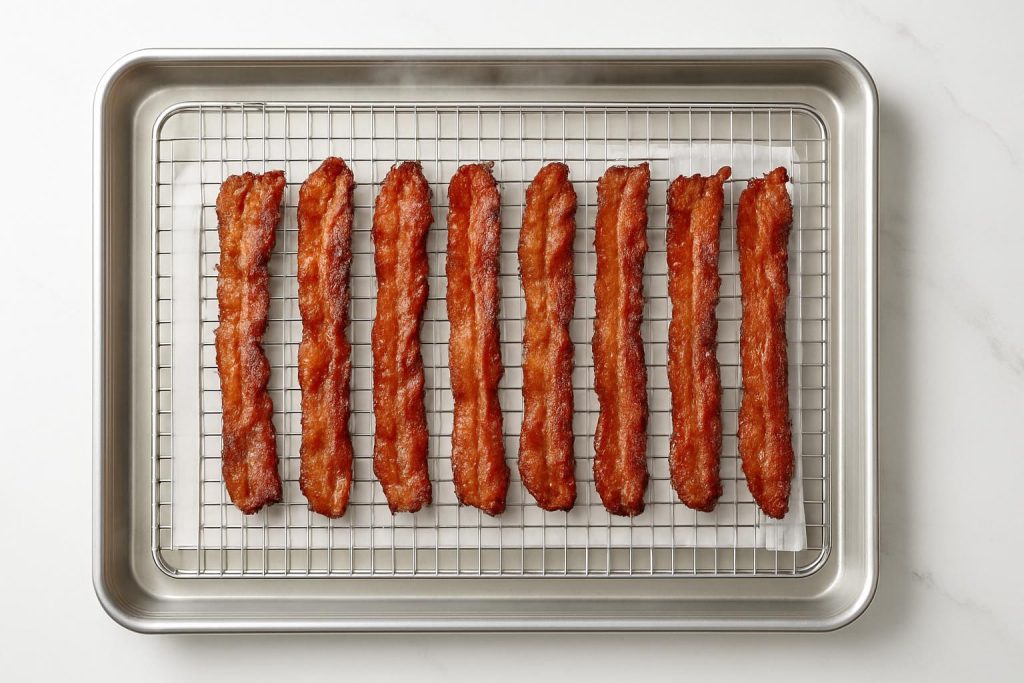
Use a rimmed sheet pan to catch fat. Line it with parchment for easier cleanup. If you want the crispiest result and even less pooling fat, place a wire rack on the pan and set the bacon on the rack. Do not overlap the slices. Leave a little space between strips so the heat can flow.
Best Temperatures and Timing
For standard bacon, bake at 350°F for about 18 to 25 minutes, depending on thickness. Thin bacon cooks faster. Thick-cut bacon needs 22 to 30 minutes. If your bacon has sugar or a sweet cure, drop the oven to 325°F and add a few minutes. This keeps the sugar from burning.
Cold Oven vs Preheated Oven
Starting bacon in a cold oven reduces curl and lets fat render gently. Place the pan in a cold oven, set it to 350°F, and bake until done. Starting in a preheated oven also works well. The difference is minor, but a cold start can be slightly cleaner for thick bacon. Try both and use the one that fits your routine.
Convection Tips
Convection moves air and can crisp faster. If using convection, use 325 to 340°F and start checking several minutes early. Watch closely near the end. Convection can dry and brown fast, which is good for crispness but can also push sugar toward burning if you wait too long.
Pour Off Grease Midway
If there is a lot of fat on the pan, pull the pan out midway and carefully pour grease into a heatproof jar. Less fat on the pan means less chance of smoking, especially near the end. Return the pan and finish baking. Always use oven mitts and pour slowly to avoid spills.
How to Know It Is Done
Bacon goes from perfect to overdone in a minute. Look for uniform browning, edges that are gently curled, and little bubbling from the fat. Remove it slightly before it looks fully crisp. It will firm up as it cools on a paper towel or rack.
Stovetop Bacon With Minimal Smoke
The Water Method
Place bacon in a cold skillet and add just enough water to cover the bottom by a few millimeters. Set heat to medium. The water keeps the skillet below the smoke point while the fat starts to render. When the water evaporates, reduce the heat to medium-low and continue cooking until brown and crisp. This method is quiet, steady, and very low on smoke.
The Cold-Pan, Low-Heat Method
Set bacon in a cold skillet without water. Set heat to low or medium-low. Render the fat slowly. Flip as the first side releases and starts to brown. Allow the fat to pool, then tilt the pan and spoon fat into a jar if it builds up too much. Keep the heat low. If you see wisps of smoke, reduce the heat at once.
Best Pans for Low Smoke
Use a heavy skillet that holds heat evenly. Cast iron works well if the surface is clean and seasoned. Stainless steel is fine with low heat. Nonstick also works and needs less fat to release the bacon, but avoid very high heat. A clean pan matters more than the material. Burnt residue is a smoke trigger.
Managing Splatter and Flips
Use a splatter screen to keep your cooktop clean. It lets steam escape and does not trap smoke like a lid might. Flip bacon only when the first side is set and browning. Constant flipping keeps fat from rendering and can cause tearing and uneven browning.
Air Fryer and Toaster Oven
Air Fryer Setup
Lay bacon in a single layer. If your fryer has a bottom drawer, add a tablespoon of water to the drawer to catch drips and reduce smoke. Set 325 to 340°F. Check at the halfway point and drain any pooled fat from the bottom. Finish until crisp. Lower heat avoids the quick burning that causes smoke in compact fryers.
Toaster Oven Tips
Use a small rimmed tray lined with parchment or foil. Set 325 to 350°F. Toaster ovens are closer to the bacon, so sugar burns faster. Choose unsweetened bacon or lower the heat. Watch closely in the final minutes and pull it as soon as edges brown evenly.
Microwave Option for Zero Smoke
Paper Towel Sandwich
Place two layers of paper towels on a microwave-safe plate. Lay bacon in a single layer. Cover with another layer of towels. Microwave on high for 3 to 6 minutes depending on thickness and microwave power. Check and add 30-second bursts until done. The towels absorb grease and almost eliminate odor and smoke.
Microwave Bacon Tray
Microwave trays that raise the bacon help fat drip away. Use short intervals and check often. This method is fast, clean, and practical for small servings. Texture can be slightly different from pan or oven, but it stays crisp if you do not overcook it.
Choosing the Right Bacon
Thickness and Cut
Thin bacon cooks quickly but can burn fast and smoke if heat is high. Thick-cut bacon renders longer and usually smokes less at the same temperature. For oven baking with minimal smoke, thick-cut is reliable.
Sugar and Additives
Sweet cures brown fast and can scorch. If you want less smoke, choose unsweetened or low-sugar bacon. If you love sweet bacon, reduce the heat and extend the time. Add any glaze in the final minutes only.
Moisture Content
Some bacon has added water. This leads to more spatter and uneven browning. Bacon with less added water renders cleaner. Look for shorter ingredient lists and avoid heavy injections when possible.
Ventilation and Kitchen Setup
Before You Cook
Turn on the range hood on high before you start. If you can, open a window near the stove to create airflow. Keep nearby doors closed so odors do not travel. Clear flammable items from around the cooktop and oven.
During Cooking
Keep the fan on the whole time. If you see wisps of smoke, lower heat or remove the pan briefly. Wipe the cooktop immediately if spills occur, as those can burn and smoke on contact.
Keep Appliances Clean
Old grease on oven floors and racks will smoke even if your bacon does not. Wipe trays after use while warm. For the oven, do a quick wipe-down once cooled if you had splatter. A clean environment means less smoke every time.
Grease Handling and Storage
Pouring Off Fat Safely
Use a heatproof glass jar or metal container. When the pan is off the heat, tilt it and pour slowly. Avoid pouring hot grease into plastic. Never pour grease down the drain. It solidifies and clogs pipes.
Straining and Reuse
If you plan to reuse bacon fat, strain it through a fine mesh or a paper towel while warm to remove browned bits that can smoke the next time. Store covered in the fridge. Clean fat has a higher smoke point and a neutral taste for future cooking.
Disposal
If you are not keeping the fat, let it cool and solidify, then scrape it into the trash. You can also pour it into a disposable container and toss when cool.
Avoid These Common Mistakes
Using Too Much Heat
High heat browns fast but pushes fat past its smoke point. Lower the heat and give the fat time to render. You will get crisp bacon without haze.
Overcrowding the Pan
When strips overlap, heat cannot move and fat pools. This increases the chance of burning and smoke. Cook in batches or use two pans.
Adding Sugar Too Early
Glazes burn early. If glazing, wait until the bacon is mostly rendered and nearly done. Brush on a thin layer and return to the heat for one to three minutes.
Ignoring Dirty Cookware
Burnt bits on pans or racks smoke as soon as they heat up. Start with clean tools. Line pans when possible and wipe while warm after cooking.
Walking Away
Bacon finishes quickly at the end. Stay close in the final minutes so you can pull it before it overcooks and smokes.
Quick Reference: Best Temperatures and Times
Oven
Standard bacon at 350°F takes 18 to 25 minutes. Thick-cut takes 22 to 30 minutes. For sugary bacon, use 325°F and add 2 to 5 minutes.
Stovetop
Use low to medium-low heat. Expect 8 to 15 minutes depending on thickness and method. The water method takes a little longer at first but stays clean and steady.
Air Fryer
Set 325 to 340°F. Cook 8 to 12 minutes depending on thickness and model. Add a little water to the drip tray and drain halfway if needed.
Microwave
Cook 3 to 6 minutes for a few slices, adding short bursts as needed. Use paper towels or a bacon tray to capture grease.
Troubleshooting Smoke in the Moment
If You See Smoke Starting
Reduce heat immediately. Move the pan off the burner for 30 to 60 seconds. Pour off excess fat into a jar. Wipe any burnt bits at the edge of the pan with a folded paper towel held by tongs. Return the pan to a lower heat setting and continue.
For Oven Smoke
Open the oven briefly to vent, then close and lower the temperature by 15 to 25°F. If fat is pooling, pull the pan and pour it off safely. Check that no residue is burning on the oven floor. Finish at the lower temperature and pull just before the bacon looks fully crisp.
When Odor Lingers
Turn on the hood and open a window. Wipe warm grease from surfaces. Simmer a small pot of water with a few lemon peels after you finish to neutralize odors. Keep the space ventilated for several minutes after cooking.
Extra Tips for Consistent Results
Dry the Bacon
Pat bacon lightly with paper towels before cooking. This reduces surface moisture and spatter so fat renders more steadily.
Room for Airflow
In the oven, leave space between strips and avoid stacking pans tightly. In air fryers, do not overlap. Air movement reduces hot spots and burning.
Watch the Final Minute
Pull bacon just before it looks perfect. Carryover heat finishes the crisp. This prevents scorched edges that smoke.
Cleaning Up Without the Smell
While the Pan Is Warm
Wipe lined pans or remove parchment and discard. For unlined pans, pour off fat, then wipe warm grease with paper towels. Wash once the pan cools slightly. Do not shock hot pans with cold water.
Cooktop and Backsplash
Wipe splatter while it is still soft. Use a mild degreaser or warm soapy water. Clean range hood filters regularly because old grease there can smoke next time.
Conclusion
Smoke-free bacon is about control. Choose moderate heat, clean tools, and a setup that manages fat. The oven at 325 to 350°F is the most forgiving method for larger batches. The stovetop works with the water method or a cold-pan, low-heat approach. Air fryers and microwaves offer fast, clean options for small servings. Keep your pans and oven clean, avoid early sugar, do not overcrowd, and drain fat when needed. Follow these steps and you will get crisp bacon and a clear kitchen every time.