
We are reader supported. When you purchase through links on our site, we may earn an affiliate commission. Also, as an Amazon affiliate, we earn from qualifying purchases.
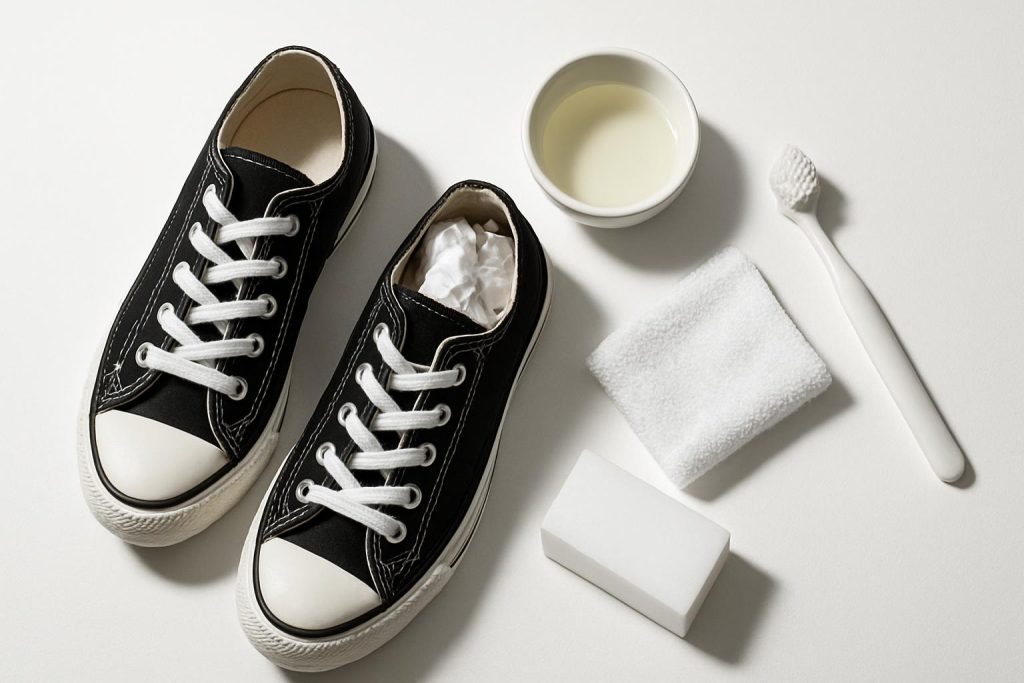
Black canvas shoes are easy to wear but they show dust, salt, and detergent marks fast. Clean them the right way and you keep the color solid, the shape crisp, and the rubber bright. This guide gives you simple steps that work for everyday refresh and for deep cleaning. You will also learn how to prevent fading, rings, and white residue. Keep it simple, keep it safe, and keep them looking new.
What You Need
Soft brush or old toothbrush
Microfiber cloths
Mild liquid laundry detergent or gentle dish soap
White vinegar
Baking soda
Small bowl and measuring spoon
Cold water
Magic eraser or melamine sponge for rubber (optional)
Mesh laundry bag for laces (optional)
Shoe trees or plain paper for stuffing
Before You Start: Color-Safe Checks
1. Test for colorfastness. Mix 1 teaspoon detergent in 1 cup cold water. Dab a hidden spot inside the tongue with the solution using a cotton swab. Blot with a white cloth. If you see dye transfer, stick to very light cleaning and avoid soaking.
2. Remove loose dirt first. Dry soil turns into stains when it gets wet. Knock soles together outside to drop grit, then brush the fabric dry.
3. Work with cold water. Heat lifts dye from black canvas and warps glue. Stay with cold or cool water from start to finish.
Fast Clean for Everyday Dust
When shoes are not stained, a quick routine keeps them sharp and prevents buildup.
1. Dry brush the canvas and seams. Go in short strokes to lift lint and dust from the weave.
2. Wipe with a barely damp microfiber cloth. Lightly moisten with cold water and pass over the entire panel to avoid water rings.
3. Spot the rubber. Use a melamine sponge with a few drops of water to lift scuffs on the toe cap and foxing. Do not rub the canvas with it.
4. Air dry away from sun and heat. Stuff toes to hold shape.
Deep Clean: Hand Wash Method
Set up and remove parts
1. Take out the laces and insoles if they are removable. This allows full access and faster drying.
2. Put laces in a small bowl with cold water and a drop of detergent to soak while you clean the shoes.
Dry brush and vacuum
1. Brush the entire upper, tongue, seams, and around the eyelets.
2. If you have a hand vacuum with a brush tip, vacuum the fabric to pull out embedded dust from the weave.
Mix a safe cleaning solution
In a bowl, combine 2 cups cold water + 1 teaspoon mild liquid detergent. For hard water or to reduce residue on black canvas, add 1 teaspoon white vinegar. Stir gently to avoid excess suds. You want a low-suds mix that rinses clean.
Clean the uppers
1. Dip a microfiber cloth in the solution, wring it well. The cloth should be damp, not dripping.
2. Wipe the entire shoe in sections, working with the grain of the canvas. Keep moving to prevent saturation and rings.
3. For stains, use a toothbrush dipped in the same solution and scrub in small circles with light pressure. Focus only on the spot, then blend the cleaning outward so the area dries evenly.
Clean the rubber soles and toe caps
1. Use the same solution and a toothbrush on the rubber. Scrub the edge grooves and wipe with a clean damp cloth.
2. For stubborn scuffs, use a melamine sponge with minimal water. Work only on rubber. Rinse the rubber with a damp cloth after to remove residue that can look chalky.
Rinse without soaking
1. Rinse your cloth in clean cold water, wring it very well, then wipe the shoes to pull away soap. Repeat until you see no suds transferring to the cloth.
2. Do not hold shoes under running water and do not submerge. Saturation can loosen glue and cause dye migration.
Clean the Laces and Insoles
1. Laces: Rub the soapy laces between your hands, then rinse in cold water until clear. Squeeze water out and lay flat on a towel to dry.
2. Insoles: If removable, wipe both sides with the same cleaning solution. Rinse by wiping with a clean damp cloth. Sprinkle a light dusting of baking soda on the fabric side and let sit 10 minutes, then shake off and air dry fully before reinserting.
Stain Solutions for Black Canvas
Mud and soil
Let mud dry fully. Brush off the crust. Clean with the standard solution. If a brown shadow remains, dab with a mix of 1 cup cold water + 1 teaspoon white vinegar, then wipe with clean water and dry.
Grease and oil
Blot fresh oil with a dry paper towel. Sprinkle baking soda over the spot and press it in. Let sit 15 to 30 minutes, then brush off. Clean with a few drops of dish soap in cold water using a toothbrush. Rinse by wiping with a damp cloth. Repeat once if needed.
Food dye and drink stains
Blot, do not rub. Use the detergent solution with a soft brush. If color lingers, mix 1 cup cold water + 1 tablespoon oxygen bleach labeled color safe, test in a hidden area, then dab the stain lightly and rinse by wiping with clean water. Never use chlorine bleach on black canvas.
Salt marks
Mix 1 cup cold water + 1 tablespoon white vinegar. Dampen a cloth and wipe the salt lines until they lift. Follow with a pass of clean water to remove vinegar scent and air dry.
Paint or tar
For fresh latex paint, blot with cold water on a cloth and use the detergent solution. For dry latex, gently flake off what you can with a plastic card, then clean. For oil-based paint or tar, do not use strong solvents on canvas. Use a small amount of cooking oil on a cotton swab to soften the tar only, lift with a paper towel, then clean with detergent solution and rinse by wiping.
Mold or mildew
Work outside if possible. Brush off spores. Mix equal parts 70 percent isopropyl alcohol and cold water. Lightly dampen a cloth and wipe the affected areas. Follow with the standard cleaning solution, then wipe with clean water. Dry fully in moving air.
Odor Control and Insole Care
Daily airing prevents odor. After wear, pull the tongue up and let shoes breathe for an hour.
For odor, sprinkle 1 to 2 teaspoons baking soda inside each shoe and leave overnight. Tap out powder in the morning. For stronger control, place a small pouch of activated charcoal in each shoe between wears.
If odor persists, remove insoles and clean them as above. Let them dry for 24 hours. Do not heat dry.
Drying Without Fading or Rings
1. Stuff the toe box with plain paper or insert shoe trees. Avoid newspaper ink transfer on light interiors. Replace paper once if it becomes damp.
2. Set shoes in a well-ventilated spot away from sun, radiators, or dryers. Sun can create uneven fade on black canvas and brittle rubber.
3. Speed drying with airflow. A small fan pointed nearby helps. Do not place directly under strong heat.
4. Prevent rings by drying evenly. If you see a water line forming, lightly mist the area with clean water and wipe with a damp cloth to blend, then continue drying.
Restore Shape and Finish
Once dry, brush the canvas lightly to lift the weave and remove any slight stiffness from detergent. Check the ankle opening and tongue folds for creases and press them flat by hand. Re-lace only after shoes are fully dry so moisture does not wick into the laces.
Can You Machine Wash Black Canvas Shoes
Yes, but it is not the safest method for black canvas. Machine wash increases risk of fading, water rings, glue failure, and warping. Hand cleaning is better. If you still choose a machine:
1. Put shoes in a mesh bag. Remove laces and insoles and bag them separately.
2. Use cold water, gentle cycle, low spin, and a small dose of mild detergent. Do not add fabric softener or bleach.
3. Wash with dark towels to cushion and keep the load balanced.
4. Remove immediately and air dry with paper stuffing. Never use a dryer.
Protect: Waterproof and Stain Repellent
Protection reduces cleaning time and prevents white salt marks and water rings.
1. Use a fabric protector spray made for canvas. Test on a hidden spot first.
2. Apply to clean, fully dry shoes. Hold the can a short distance away and lay down a light, even coat. Let dry, then apply a second light coat. Avoid oversaturation.
3. Reapply every 4 to 6 weeks during wet seasons or after any deep clean.
Troubleshooting and Quick Fixes
White residue after drying
This is detergent or mineral residue. Wipe the area with a cloth dampened with a mix of 1 cup distilled water + 1 teaspoon white vinegar. Then wipe with clean distilled water. Air dry. Switch to less detergent and use distilled water if your tap water is hard.
Faded or chalky look
Check for soap film first and remove it as above. If the fabric is truly faded, keep future washes cold, avoid sun drying, and limit scrubbing pressure. A fabric protector can deepen the appearance slightly by evening the surface. If heavy fade bothers you, consult a professional shoe cleaner who can apply a color renew treatment designed for canvas.
Stiff canvas after cleaning
Soap residue causes stiffness. Rinse by wiping with clean water again. After drying, massage the fabric with your hands and brush lightly. Wear them for an hour at home to soften the fibers naturally.
Scuffs on rubber toe caps
Use a melamine sponge with a few drops of water. Rub gently until the mark lifts, then wipe with a damp microfiber to remove any residue. For deep marks, a paste of baking soda and water on a toothbrush can help. Rinse by wiping.
Water rings during drying
Mist the entire panel lightly with clean water and wipe with a damp cloth to even out the moisture. Stuff the shoe and dry with airflow. Rings form when one area is wet and the rest is dry, so aim for even dampness.
Do and Do Not Summary
Do use cold water, mild detergent, and light pressure. Do clean the entire panel to avoid rings. Do air dry with shape support. Do protect with a fabric spray after cleaning.
Do not use chlorine bleach. Do not soak or submerge. Do not machine dry. Do not scrub canvas with a melamine sponge. Do not leave in direct sun for long periods.
Maintenance Schedule
After each wear: Air out for one hour with laces loosened.
Weekly or after visible dirt: Quick dry brush and a damp wipe. Touch up rubber.
Monthly or after stains: Hand clean using the full method above.
Seasonally: Reapply fabric protector, deep clean insoles, and check for seam wear.
Storage Tips
Store in a cool, dry spot away from heaters and windows. Avoid sealed plastic that traps moisture. Use shoe trees or insert paper to keep shape if you rotate pairs. Keep silica gel packets nearby if your closet is humid.
Eco and Sensitive Skin Options
Choose a fragrance free, dye free detergent if you have sensitive skin. Rinse thoroughly by wiping with clean water until no suds remain. Baking soda and white vinegar handle most odor and salt issues and are safe for canvas when used sparingly.
When to Seek Professional Help
If shoes have heavy dye bleeding, deep oil saturation, mold covering more than a small area, or delicate trim that you cannot remove, a professional sneaker cleaner can treat them with tools and products that protect the color and structure.
Conclusion
Black canvas shoes stay sharp when you keep cleaning simple and precise. Brush away dry soil first, clean with a mild cold solution, rinse by wiping instead of soaking, and dry with shape support away from heat and sun. Treat stains with targeted steps, protect the fabric after, and build a short weekly routine. Follow this plan and your black canvas will stay dark, clean, and ready for daily wear without drama or damage.