
We are reader supported. When you purchase through links on our site, we may earn an affiliate commission. Also, as an Amazon affiliate, we earn from qualifying purchases.
Want a clean, fresh dishwasher without vinegar. You can do it with safe, effective alternatives that remove grease, odors, and hard water film. This guide lays out simple methods, step by step, using items you already have or can buy easily. You will learn what to use, how to clean each part, and how to keep results lasting.
Why skip vinegar
Some manufacturers advise against vinegar because strong acids can etch rubber seals, discolor some metals, and dull finishes over time. If your model warns against it, or you prefer to avoid the smell, there are better options. Citric acid, baking soda, peroxide, and dedicated dishwasher cleaners do the job without the risks.
What you need instead
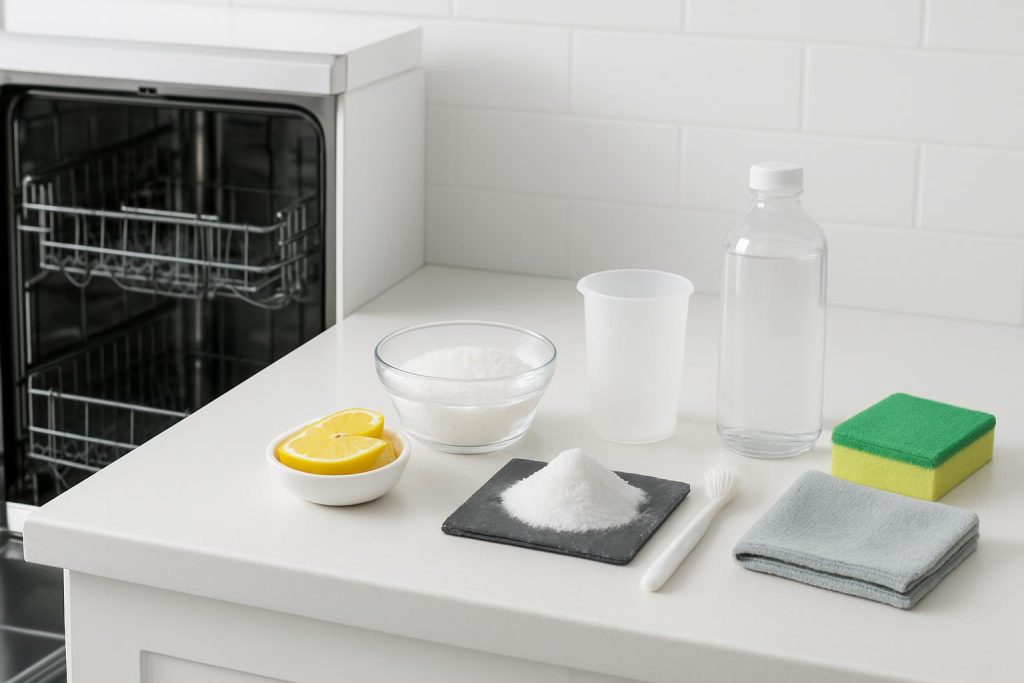
Gather a few basics before you start. Soft dish soap. Baking soda. Citric acid powder or lemon juice. A dishwasher cleaner tablet if you prefer a ready product. Hydrogen peroxide 3 percent. A soft brush or old toothbrush. A non scratch sponge. Microfiber cloths. A toothpick or wooden skewer. A small bowl and measuring cup. Optional rubber gloves.
Quick pre check before any clean
1. Empty the dishwasher fully, including the utensil holder.
2. Run hot water at the kitchen sink until it is hot. This primes the line so your cleaning cycle starts hot.
3. Check the manual for parts that remove, like the filter and spray arms.
4. If you will remove parts or reach into the sump, turn off power at the switch or breaker for safety.
Daily and weekly habits that prevent buildup
1. Scrape plates, but skip heavy pre rinsing. Modern detergents need a little soil to activate enzymes.
2. Open the door after cycles to let steam out. Dry air stops odor and mold growth.
3. Wipe the gasket and door edge weekly to remove grease and detergent film.
4. Keep rinse aid filled. It reduces spots and helps drying.
5. Use a high quality detergent. Tabs or powders with enzymes and a built in rinse aid perform best.
Step by step deep clean without vinegar
Step 1 Clean the filter
1. Remove the lower rack. Find the filter under the lower spray arm. It usually twists out with a quarter turn.
2. Rinse the filter under warm water. Use a soft brush and a drop of dish soap to lift grease. Do not use a metal brush.
3. Check the fine mesh for tears. Replace if damaged, or debris will re enter.
4. Wipe the filter well and set aside.
Step 2 Clear the spray arms
1. Lift off the lower spray arm if removable. Some upper arms also click off.
2. Rinse under warm water. Use a toothpick to clear blocked jets. Push debris back out the way it came.
3. If mineral scale is visible, soak the arms in a warm citric acid solution. Mix 2 tablespoons citric acid in 1 quart warm water for 20 to 30 minutes. Rinse well.
4. Reinstall the arms firmly so they spin freely.
Step 3 Wipe the door gasket and edges
1. Mix a small bowl of warm water and a few drops of dish soap.
2. Dip a cloth and wipe the black or gray rubber gasket all around. Pull back the folds gently to remove hidden grime.
3. For stubborn mildew, spray hydrogen peroxide on the gasket, wait 5 minutes, then wipe dry.
4. Wipe the stainless or plastic door edges and the bottom lip where liquid collects.
Step 4 Clean racks, utensil holder, and detergent parts
1. Remove the utensil holder and any detachable rack inserts. Wash in warm soapy water. Rinse and dry.
2. Check the detergent dispenser. Wipe out caked powder. Make sure the latch moves freely.
3. Look for chipped rack tines. Touch up with dishwasher rack repair paint to prevent rust transfer.
Step 5 Check the drain and sump
1. Look into the sump area under the filter. Remove any food scraps by hand or with a paper towel.
2. If water is standing, bail it out with a cup. Check for clogs around the check valve or drain cover.
3. Do not disassemble the pump unless your manual allows it. If clogs persist, schedule service.
Step 6 Run an empty hot cleaning cycle
Now use one of the cleaning options below. Choose the one that fits your issue and supplies. Always run the hottest cycle available, with sanitize on if offered.
Choose your cleaner for the empty cycle
Option A Dishwasher cleaner tablets
Use a reputable brand tablet or bottle designed for machines. Place as directed. Some go in the dispenser, others sit on the bottom rack. These target grease, odors, and mineral film in one step. This is the simplest option and safe for most models.
Option B Citric acid solution
1. Mix 1 to 2 tablespoons citric acid powder per quart of warm water. For heavy scale, use 1 quarter cup total.
2. Pour the solution into the empty tub or a shallow dishwasher safe bowl on the top rack.
3. Run the hottest cycle. Citric acid dissolves limescale, iron stains, and white film.
4. If scale is severe, run a second cycle with fresh water only to rinse.
Option C Baking soda boost
1. Sprinkle 1 cup baking soda across the bottom of the tub.
2. Run a short hot cycle. Baking soda freshens odors and lifts light residue.
3. For greasy buildup, use this after a citric acid or tablet cycle for a clean scent.
Option D Lemon juice method
1. Fill a dishwasher safe bowl with 1 to 2 cups of lemon juice.
2. Place on the top rack and run a hot cycle. The natural citric acid in lemon cuts scale and odor.
3. Rinse with a quick cycle if needed to remove any sticky residue.
Option E Hydrogen peroxide deodorize
1. Spray the interior lightly with 3 percent hydrogen peroxide. Do not soak electronics or control panels.
2. Let sit 5 to 10 minutes.
3. Run a hot empty cycle. This helps with persistent musty odors and light biofilm.
Odor, mildew, or slime problems
1. Improve drying. After each wash, open the door for 30 minutes to vent steam. If your model has a vented dry or door open feature, use it.
2. Clean the gasket weekly with dish soap, then treat with peroxide. Dry the folds with a towel.
3. Check the drain hose for kinks or low spots that trap water. The hose should loop up under the counter to prevent backflow.
4. Run a citric acid cycle followed by a baking soda cycle. This two step process removes film and deodorizes.
5. If mold persists and your interior is plastic, you can use a diluted bleach cycle as a last resort. Mix 1 tablespoon unscented bleach in 1 quart water, place in a bowl on the top rack, and run a quick hot cycle. Do not use bleach if the interior or racks are stainless steel. Never mix bleach with any other cleaner.
Hard water scale and cloudy glasses
1. Run a citric acid cycle monthly. Use 1 quarter cup powder for heavy scale, then rinse.
2. Keep rinse aid set to a higher level if you see spots. Adjust one notch at a time.
3. If your dishwasher has a built in softener, refill the salt reservoir and set hardness per your water test strip.
4. Load to allow spray coverage. Tilt glasses so water drains freely. Avoid nesting bowls.
5. Choose a detergent with enzymes and a glass care claim. Use the hottest suitable cycle for your items.
Grease and detergent sludge
1. Grease builds when short cycles are overused. Run a long hot cycle weekly.
2. Clean the filter more often if you cook with oils. Every 1 to 2 weeks is common.
3. Use a machine cleaner tablet monthly if grease returns quickly.
Stainless steel and rack care
1. Avoid abrasive powders and steel wool. They scratch stainless and invite rust.
2. For rust colored streaks from iron in water or transferred metal, use a citric acid paste. Mix powder with a few drops of water, apply, wait 5 minutes, then wipe and rinse.
3. If you see orange specks on the tub, they are often from chipped rack tines. Touch up the tines to stop transfer.
4. Wipe stainless interiors dry after deep cleaning to prevent water spots.
Detergent tips that enhance cleaning
1. Use fresh detergent. Old powder clumps and underperforms. Replace opened products every few months.
2. Do not overload the dispenser. One tab or the measured dose is enough.
3. If you switch detergents, test for two weeks before judging results. Water chemistry and load habits affect outcomes.
Safety and what not to do
1. Do not mix cleaners. Never combine bleach with acids or with any other product.
2. Ventilate the kitchen during hot cycles. Steam carries odors and residue.
3. Wear gloves if you have sensitive skin. Citric acid and peroxide can dry skin.
4. Unplug or switch off power when removing internal parts.
5. Do not pressure wash or hose the interior. Water can hit wiring and controls.
Maintenance schedule that works
Daily. Scrape plates, run hot water at the sink before starting, and crack the door open after the cycle for 20 to 30 minutes.
Weekly. Wipe the gasket, door edge, and control area. Check and clean the filter if you cook often.
Monthly. Run a machine cleaner tablet or a citric acid cycle. Inspect spray arms and clear jets.
Quarterly. Deep clean with all steps. Check drain hose routing and racks for chips.
Quick troubleshooting
Smell returns fast. Increase drying time, clean the filter more often, and verify the drain hose has a high loop. Run citric acid then baking soda back to back.
Standing water after cycles. Clean the filter and sump. Check for clogs at the air gap or sink drain. If water still stands, call for service.
Detergent pod not dissolving. Make sure water is hot from the start. Prime at the sink. Do not block the dispenser with tall plates. Switch to powder if needed.
White film on dishes. Increase rinse aid and run a citric acid cycle. Verify water hardness and use softener salt if your model supports it.
Black film on gasket. Clean with dish soap, treat with peroxide, and dry thoroughly. Improve ventilation after washes.
Orange stains. Common with iron in water or rust from racks. Use citric acid and touch up racks.
Beginner friendly deep clean checklist
1. Empty the dishwasher. Prime hot water at the sink.
2. Remove and wash the filter.
3. Clear spray arm holes and reinstall.
4. Wipe gasket and door edges with soapy water. Spot treat with peroxide.
5. Wash racks and utensil holder if needed. Check detergent dispenser.
6. Clear debris from the sump. Reassemble filter.
7. Run the hottest empty cycle with either a cleaner tablet or a citric acid solution.
8. Optionally run a short cycle with baking soda for a fresh finish.
9. Open the door to dry. Refill rinse aid. You are done.
When to call a pro
Call service if you see leaks under the machine, hear grinding from the pump, smell electrical burning, or find repeated standing water after cleaning the filter and drain path. Also call if the control panel fails or breakers trip.
Eco note and water use
A single targeted hot cycle with the right cleaner beats multiple short tries. Use machine cleaners sparingly. Citric acid is effective at low doses. Regular maintenance reduces the need for heavy cleans and saves water and energy.
Conclusion
You do not need vinegar to keep a dishwasher clean. Use citric acid for mineral deposits, baking soda for freshening, peroxide for mildew, and a machine cleaner tablet for convenience. Clean the filter, clear the spray arms, wipe the gasket, and run a hot empty cycle with your chosen cleaner. Keep rinse aid filled, vent after cycles, and follow the simple schedule. With these steps, your dishwasher stays odor free, efficient, and ready for spotless dishes.