
We are reader supported. When you purchase through links on our site, we may earn an affiliate commission. Also, as an Amazon affiliate, we earn from qualifying purchases.
Homesteading garden layout is the difference between a tidy, productive space and a weedy headache. Start small, make clear paths, and group plants by how you use and water them. This guide gives beginner friendly garden layout ideas you can copy today, with exact bed sizes, path widths, plant lists, and a first season plan.
Start With Your Site
Sun, Wind, and Slope
Pick the sunniest spot you have. Most vegetables need 6 to 8 hours of direct sun. Run beds north to south for even light if possible. Note your prevailing wind and use a fence, hedge, or tall crops like corn or sunflowers as a windbreak on the windward edge. Check slope. Gentle slope is fine. On a steep slope, run beds along contour to slow water.
Water Access
Place the garden close to a hose spigot or a water tote. Short hose runs save time. If you plan rain barrels, set them higher than the beds so gravity can feed a soaker hose. Keep all beds within easy reach of a hose without dragging across plants.
Soil Check and Quick Fix
Do a simple drainage test. Dig a 12 inch deep hole, fill with water, and see if it drains in 4 hours. If not, use raised beds. Add 2 to 3 inches of finished compost across the growing area and mulch after planting. Avoid tilling wet soil.
Choose a Beginner Friendly Layout
Simple Row Garden
Use straight rows if your soil drains well and you like tractor or hoe work. Keep rows 30 to 36 inches apart for easy access. Reserve rows for crops that need space like corn, potatoes, and winter squash. This layout is flexible and fast to set up.
Raised Beds Grid
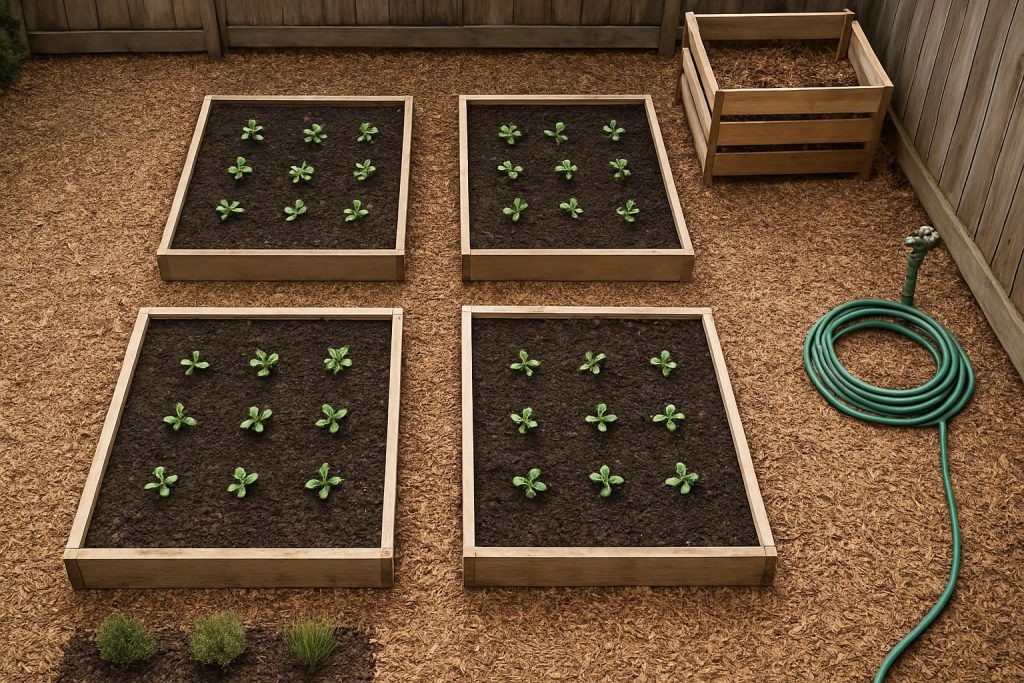
Use rectangular raised beds with consistent sizes and straight paths. Frames keep soil in place and warm faster in spring. This layout is tidy, easy to weed, and ideal for drip or soaker hoses. Choose this if you have heavy soil or want clean edges.
Four Square Rotation
Divide the garden into four equal rectangles. Grow fruiting crops in one, roots in the second, leafy greens in the third, and legumes or compost crops in the fourth. Rotate each year. This layout simplifies planning and reduces pest buildup.
Keyhole Bed for Small Spaces
A keyhole bed is a round or polygon bed with a notch path so you can reach the center. Place a compost basket in the center if you like. Use this if you have a very small yard and want one intensive bed near the kitchen door.
Perimeter Beds With Open Center
Run beds along the fence or property edge and keep the center open. Use the open space for a table, a cold frame, or a portable greenhouse. This layout suits narrow yards and keeps the middle clear for moving soil and tools.
Bed Size, Paths, and Spacing
Bed Dimensions That Work
A 4 foot wide bed lets most adults reach the center from both sides without stepping on the soil. Keep bed length between 8 and 12 feet so you do not walk far to switch sides. For very tight spaces, use 3 foot wide beds.
Path Width and Materials
Make main paths 36 inches wide so a wheelbarrow passes without clipping plants. Make interior paths 18 to 24 inches wide for walking and kneeling. Cover paths with wood chips, coarse mulch, or landscape fabric to block weeds and mud.
Access for Tools and Wheelbarrows
Plan at least one straight path from the gate to the far end of the garden. Avoid dead ends by looping the main path around the beds. Leave space at bed ends to turn a wheelbarrow.
What To Plant First
Easy Annuals
Plant lettuce, bush beans, zucchini, cucumbers, cherry tomatoes, chard, kale, radishes, and herbs like basil and parsley. These crops are forgiving, fast to harvest, and fit in small spaces. Avoid sprawling watermelons and long season cauliflower in year one.
Space Efficient Vertical Crops
Grow peas, pole beans, cucumbers, and indeterminate cherry tomatoes on trellises. Trellises save ground space and improve airflow. Place tall trellises on the north side of beds so they do not shade shorter plants.
Perennials To Anchor the Garden
Add a small herb strip near the kitchen path with thyme, chives, oregano, and sage. Plant rhubarb or asparagus only if you can give them a permanent corner. Use berry shrubs along the fence line where they will not shade annual beds.
Water, Compost, and Storage Placement
Irrigation Layout
Run a main hose along the primary path with T connectors to each bed. Use 1 to 2 soaker hoses per 4 foot bed and secure with landscape staples. Keep connections at bed ends for easy removal. Water early morning to reduce disease.
Compost and Tool Shed
Place the compost within 30 to 50 feet of the beds and as close to the hose spigot or water tote as possible. Keep a covered bin or small shed at the garden edge for pruners, a hand fork, twine, and gloves. Store bulky tools like a rake and hoe on wall hooks to keep paths clear.
Start Size and Placement
Start with 200 to 400 square feet that you can reach on foot in under 30 seconds from your door. Close placement reduces skipped watering and speeds harvests. Expand only after you keep this space tidy for a full season.
Sample 400 Square Foot Layout Plan
Use a 20 by 20 foot area for a compact beginner homestead garden. This plan uses raised beds, a simple rotation, and a clean path loop.
Bed layout. Four beds at 4 by 10 feet each, aligned north to south. Two foot interior paths between beds. A 36 inch perimeter path for the main loop. One 4 foot long trellis on the north edge of the western pair of beds.
Water layout. One main hose along the south edge with a Y splitter. Two soaker hoses per bed with end caps. A simple timer can run daily in summer for 20 to 30 minutes, adjusted for rainfall.
Compost and storage. A two bin pallet compost on the west fence. A small deck box for tools near the gate on the south edge.
Planting plan by bed. Bed 1 fruits. Two indeterminate cherry tomatoes on the trellis, two cucumbers on a short A frame trellis, basil along the front edge. Bed 2 roots. Carrots in three bands, a short row of radishes as markers, beets in blocks. Bed 3 leaves. Lettuce in 12 by 12 inch patches staggered every two weeks, kale and chard on the north side. Bed 4 legumes. Two teepees of pole beans or a full bed of bush beans, with a strip of peas in spring then a late summer sowing of bush beans after peas finish.
Perimeter strip. A 2 foot wide herb strip along the south edge with thyme, oregano, chives, and parsley. A short row of strawberries along the east fence.
Mulch. After planting, add 2 inches of mulch on bare soil to keep moisture and suppress weeds. Keep mulch 2 inches away from plant stems.
Crop Rotation and Succession
Simple Two Year Rotation
Year 1. Bed 1 fruits, bed 2 roots, bed 3 leaves, bed 4 legumes. Year 2. Move fruits to bed 4, roots to bed 1, leaves to bed 2, legumes to bed 3. This keeps heavy feeders from sitting in the same soil and makes planning easy.
Succession Plan
Early spring. Peas, radishes, spinach, and lettuce. Late spring. Beans, cucumbers, zucchini, and tomatoes after frost. Summer. Keep sowing lettuce every 2 weeks in the shadiest bed edge. Late summer. Sow fall carrots and beets 8 to 10 weeks before frost. Early fall. Plant garlic where summer beans were, then mulch. Winter. Cover empty beds with leaves or a light compost layer.
Trellises and Vertical Supports
Use sturdy T posts and cattle panel for a long lasting trellis. For a budget trellis, lash bamboo canes into teepees. Place supports before planting so you do not damage roots later. Keep trellises on the north side of beds to avoid shading shorter crops.
Path Materials and Edging
Use wood chips on main paths for comfort and weed control. Top up once a year. For temporary edges, use salvaged boards or bricks to define beds. Avoid narrow edging that trips feet or traps hoses.
Mulch and Weed Control
Mulch all beds after seedlings establish. Use straw, shredded leaves, or arborist chips on pathways. Hand weed weekly for 15 minutes rather than monthly for hours. A clean path loop and defined bed edges prevent creeping weeds.
Budget and Materials
Low Cost Bed Builds
Use pallet lumber or untreated pine for frames and line the inside with cardboard for a weed barrier. If wood is costly, go frameless by shaping mounded beds 4 feet wide with flat topped surfaces and mulched paths.
Soil and Mulch Sourcing
Mix one third topsoil, one third compost, and one third coarse sand or fine bark for raised beds if native soil is poor. Buy in bulk to save money. Use free municipal mulch or leaves from neighbors to cover paths and beds.
First Season Timeline
Weeks 1 to 2 Planning and Setup
Measure your space, sketch beds and paths, and mark corners with stakes. Install frames or mound beds. Lay main paths and set the hose route. Build compost bins and place tool storage.
Weeks 3 to 6 Planting Cool Season Crops
Plant peas, spinach, radishes, and lettuce as soon as soil can be worked. Set trellises. Mulch paths. Keep soil moist with soaker hoses on a timer if needed.
After Last Frost Warm Season Planting
Plant bush beans, cucumbers, zucchini, and cherry tomatoes. Tuck basil along tomato edges. Start a second sowing of lettuce in partial shade. Water deeply two to three times a week depending on heat and mulch depth.
Mid Season Maintenance
Weed weekly, top up mulch, and prune lower tomato leaves for airflow. Harvest often to keep plants producing. Replant empty spots with quick crops like radishes or more bush beans.
Late Season and Bed Reset
Plant fall carrots and beets by late summer. Pull spent plants and add compost to their beds. Plant garlic in early fall and mulch. Cover any bare soil with leaves for winter protection.
Common Mistakes to Avoid
Starting too big and burning out. Skipping mulch and losing soil moisture. Making paths too narrow and bumping plants with tools. Planting tall crops on the south side and shading everything. Putting the garden far from water and doors.
Maintenance Habits That Keep Work Low
Walk the garden daily for five minutes. Pull small weeds before they seed. Harvest as soon as crops ripen. Check hose fittings for leaks once a week. Add compost every time a bed empties. Keep tools in the garden so you do not waste steps.
Safety and Longevity
Use food safe materials for beds and trellises. Wear gloves when handling compost and mulch. Lift with your legs when moving soil. Store hoses and tools off the ground to prevent tripping. Set a reminder to winterize hoses before freezing weather.
Conclusion
Keep your first homestead garden small, reachable, and simple. Use consistent bed sizes, wide paths, and clear water lines. Choose forgiving crops and trellis what climbs. Rotate beds yearly, mulch well, and place compost and storage within easy reach. Build the habit of short, regular maintenance. With this layout approach, your garden stays organized, productive, and ready to expand next season.
FAQ
Q: How big should a beginner homestead garden be
A: Start with 200 to 400 square feet that you can reach on foot in under 30 seconds from your door.
Q: What bed width works best for most people
A: A 4 foot wide bed lets most adults reach the center from both sides without stepping on the soil.
Q: How wide should main paths be
A: Make main paths 36 inches wide so a wheelbarrow passes without clipping plants.
Q: Where should compost and water go
A: Place the compost within 30 to 50 feet of the beds and as close to the hose spigot or water tote as possible.
Q: Which crops are easiest for beginners
A: Plant lettuce, bush beans, zucchini, cucumbers, cherry tomatoes, chard, kale, radishes, and herbs like basil and parsley.