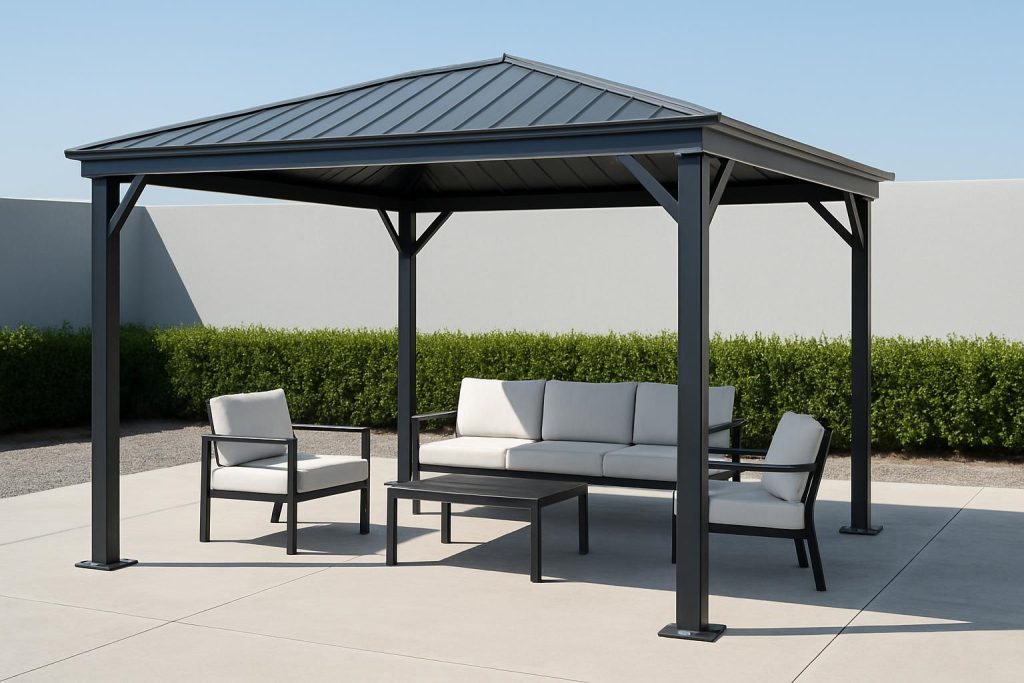
4 Best Gazebo for Concrete Patio (2026 Durable Outdoor Picks)

4 Best Gazebo for Concrete Patio (2026 Durable Outdoor Picks)

We are reader supported. When you purchase through links on our site, we may earn an affiliate commission. Also, as an Amazon affiliate, we earn from qualifying purchases.

Picking a gazebo for a concrete patio is different from picking one for grass or pavers. You want a frame that anchors cleanly to concrete, a roof that handles wind and rain, and parts that resist rust. You also want an installation plan that does not crack your slab. Below are four durable outdoor picks that have held up well across seasons, with clear notes on anchoring, care, and what to expect. If you are setting a permanent outdoor room on concrete in 2026, start here.

What matters most for a concrete patio

Concrete is stable but unforgiving. A good concrete-ready gazebo has sturdy base plates with enough surface area, corrosion-resistant fasteners, and a roof design that does not trap uplift. It should also have a continuous gutter or drip edge to keep water away from post bases and slab joints.

Quick selection guide

  • Choose a rust-resistant frame: powder-coated aluminum or treated cedar with a quality finish
  • Prefer galvanized steel hardtop roofs for year-round use and snow load
  • Look for wide base plates with through-holes for 3 or 4 anchors per post
  • Pick a vented or double roof to reduce wind uplift and heat buildup
  • Confirm you have at least 4 in thick, sound concrete where posts will sit
  • Plan anchor sizes before delivery: common are 3/8 in or 1/2 in wedge anchors
  • Mind drainage: integrated gutters keep water off the slab and away from post bases

Top 4 gazebos for a concrete patio in 2026

1. Kozyard Alexander Hardtop Aluminum Gazebo with Galvanized Steel Roof

The Kozyard Alexander is a staple among permanent hardtop gazebos. It combines a powder-coated aluminum frame with a galvanized steel roof and full-length curtains and netting. It comes in common patio sizes like 10 x 12 and 12 x 12, which fit most concrete layouts without crowding furniture or door swing paths.

On concrete, the Alexander benefits from robust base plates with multiple anchor holes. The roof panels interlock tightly, and the ridge vent helps reduce uplift while letting hot air escape. Its integrated gutter directs water to the corners, which reduces splash-back and staining on your slab.

Why it helps: The galvanized steel roof and rigid frame feel planted once anchored, and the guttering prevents water from pooling along the posts on concrete. It holds curtains and netting on separate tracks, which keeps bugs out while maintaining airflow.

Best for: Year-round patios that see wind, rain, and sun. Good choice if you want to keep it up through winter and you plan to anchor with proper wedge anchors.

Potential downsides: Assembly takes time and space. You need two to three people to lift and position roof sections safely. The dark roof can run warm in direct sun at midday, though the vent helps. Shipping boxes are heavy.

I think the Alexander offers one of the most balanced packages for concrete. The base plates are forgiving to position, there is room for four anchors per post, and the gutter keeps post bases dry. Once I set it, the structure felt solid with minimal roof chatter in gusts.

Concrete setup tips:

  • Use 3/8 in x 3 in or 1/2 in x 3.75 to 4.25 in wedge anchors if your slab is at least 4 in thick
  • Shim under base plates to level before final tightening so the doors and tracks glide smoothly
  • Seal around anchor holes with exterior-grade polyurethane to keep water out of the concrete

2. PURPLE LEAF Hardtop Gazebo with Galvanized Steel Double Roof

PURPLE LEAF’s hardtop line is known for a ventilated double roof. That design moves hot air out and softens wind loads, which helps on open slabs. The aluminum frame resists corrosion, and the galvanized steel panels handle rain and snow well. Many variants include both curtains and netting and discrete rails to keep fabric running smoothly.

On concrete, the broad post plates are simple to anchor. The unit drains along roof edges into channels that direct water to corners, then off the slab. The double roof makes the interior feel cooler than single-layer panels under the same sun.

Why it helps: The double roof reduces heat buildup and allows gusts to vent, which matters on exposed concrete patios. The frame is rigid with good cross-bracing, so once anchored you get little sway.

Best for: Hot or sunny climates where heat management is important. Also good if your concrete patio is a bit windy and you want a roof that breathes.

Potential downsides: More parts and fasteners mean more assembly time. Price runs higher than single-roof models. As with most steel roofs, rain noise is present, though the double layer helps.

I think this is the most comfortable pick for summer use on a slab. Under the double roof, temperature swings are milder, and airflow stays steady even with curtains drawn. The base plates accepted 1/2 in anchors without fuss, and the structure felt confident after tightening to spec.

Concrete setup tips:

  • Dry-fit all posts and measure diagonals for squareness before drilling
  • Keep posts at least 4 in from slab edges to maintain anchor edge distance
  • Use a vacuum while drilling to control dust and keep holes clean for better anchor hold

3. Sojag Messina Galvanized Steel Roof Sun Shelter

The Sojag Messina pairs a powder-coated aluminum frame with a robust galvanized steel roof. It includes a rail system for nets and optional curtains, and it is designed for permanent installation. The roof panels have a tight overlap that keeps water out while maintaining a clean look.

On concrete, the Messina’s base plates are straightforward to anchor. The frame rigidity is good for the weight class, and corrosion resistance is strong, which makes it a practical choice near coastal areas. The finish holds up under regular cleaning, and the netting track feels smooth after a careful, level installation.

Why it helps: It is a dependable, year-round hardtop with corrosion-resistant parts and simple anchor points. The roof sheds water cleanly, which keeps drips off door thresholds and high-traffic patio zones.

Best for: Mid-size concrete patios where you want full-time coverage without heavy maintenance. Suitable when you prefer a clean, modern look and predictable assembly.

Potential downsides: Posts are slimmer than some premium models, so anchoring and bracing during assembly matters. Plan for a full day with two people. Packaging is dense and benefits from careful unboxing.

I think the Messina offers strong value. It feels lighter than the fattest-frame options, but with proper 3/8 in or 1/2 in wedge anchors and attention to level, it stays quiet in wind and drains predictably in heavy rain.

Concrete setup tips:

  • Mark and drill one post at a time, set temporary bolts, then square the frame before drilling the rest
  • Use stainless or hot-dip galvanized washers with your anchors for long-term corrosion resistance
  • After final torque, run a thin bead of sealant around each base plate perimeter to keep wash water out

4. Yardistry 12 x 12 Cedar Gazebo with Aluminum Roof

Yardistry’s cedar gazebo brings a warm, architectural look with an aluminum roof for durability. Pre-cut, pre-drilled lumber speeds assembly, and the included hardware and brackets are designed for surface mounting to concrete. The aluminum roof panels shed water well and resist corrosion.

On a concrete patio, the wood-to-concrete interface needs a bit more planning. The supplied surface-mount brackets help, but you should seal cut ends and maintain finish. With the right fasteners, the structure feels planted and quiet. The overhang gives good eave protection, which helps keep rain splash away from your slab.

Why it helps: It delivers a finished-room look with solid shade and good drainage, and it is designed with surface-mount brackets that suit concrete. The aluminum roof avoids rust and holds up in all seasons.

Best for: Patios where appearance matters as much as function. If you want a natural wood structure that still anchors cleanly to concrete, this is the pick.

Potential downsides: Wood needs periodic sealing to look its best. Assembly is involved and benefits from three pairs of hands. Heavier parts demand careful staging to avoid bumping and scratching the slab.

I think Yardistry is worth it if you want a room-like feel. On concrete, I seal around every bracket and anchor hole, keep posts slightly elevated with brackets, and refresh the cedar finish on a schedule. Do that, and it holds up very well.

Concrete setup tips:

  • Use 1/2 in wedge anchors where the slab is 4 in or thicker and in good condition
  • Add a cap of polyurethane sealant under each bracket to limit water wicking
  • Maintain at least 4 in edge distance from slab borders to reduce crack risk

How to anchor a gazebo to a concrete patio safely

Tools and hardware

  • Hammer drill with carbide masonry bit sized to your anchors
  • Wedge anchors, commonly 3/8 in x 3 in or 1/2 in x 3.75 to 4.25 in
  • Torque wrench and appropriate sockets
  • Vacuum or compressed air to clean holes
  • Non-shrink grout shims or stainless steel shims to level bases
  • Exterior-grade polyurethane sealant
  • Protective eyewear, hearing protection, gloves

Step-by-step

  1. Lay out and square the frame. Measure diagonals to confirm equal lengths.
  2. Mark base plate holes. Keep at least 4 in from slab edges and joints.
  3. Drill at slow to medium speed. Clear dust frequently to prevent overheating and to keep holes clean.
  4. Vacuum the holes. Clean holes increase anchor grip and reduce spin.
  5. Set the anchors. Tap them to proper embed depth. Install washers and nuts finger-tight first.
  6. Level posts with shims. Check plumb on all sides before torqueing.
  7. Tighten to manufacturer torque if stated. If not, snug plus a quarter turn is a safe approach for wedge anchors.
  8. Seal around holes and base plate perimeter. This keeps wash water and rain out of the concrete.

Common mistakes to avoid:

  • Drilling too close to slab edges, which can cause cracks
  • Skipping hole cleaning, which reduces anchor holding strength
  • Over-tightening before the frame is square and level, which can twist doors and tracks
  • Leaving unsealed holes that allow water intrusion and freeze damage

Sizing and placement on concrete

  • Leave at least 3 ft of clear walking space on each side you plan to use
  • Check door and slider swings so they do not hit posts or curtains
  • Mind gutters and eaves to keep drips away from thresholds
  • Keep posts off slab control joints when possible to avoid drilling into weak spots
  • Confirm overhead clearances if near eaves, lights, or branches

Care and cleaning on a slab

  • Monthly: hose dust off the roof, wipe posts with mild soap and water, check anchor tightness
  • Seasonal: clear gutters, inspect sealant around base plates, touch up finish on scratches
  • Winter: brush snow off roofs promptly; do not let ice block gutters or down edges
  • Curtains and nets: wash per label and dry fully before re-hanging to avoid mildew

For aluminum frames and galvanized steel roofs, use non-abrasive cleaners. Avoid harsh acids or strong alkalis. For cedar, use a penetrating exterior wood sealer once a year in sunny climates and every 18 to 24 months in milder regions.

Assembly time and help

Expect a full day for two to three people for most hardtop gazebos. Larger cedar units can take a weekend. Stage parts by step, protect your slab with moving blankets, and use two ladders to support roof panels during placement. A torque wrench and a patient pace reduce squeaks and improve durability.

Conclusion

If you want a permanent outdoor room on a concrete patio, pick a gazebo with a rust-resistant frame, a galvanized steel or aluminum roof, and solid base plates. The Kozyard Alexander balances price and strength for all-season use. The PURPLE LEAF double roof runs cooler and vents gusts on exposed slabs. The Sojag Messina is a dependable mid-size choice with clean lines and strong corrosion resistance. The Yardistry cedar gazebo delivers a refined look with an aluminum roof and concrete-friendly brackets. Anchor them correctly with the right wedge anchors, keep water out of the holes, and your structure will feel planted and quiet for years.

FAQ

Q: What size anchors should I use to secure a gazebo to concrete

A: Common choices are 3/8 in x 3 in or 1/2 in x 3.75 to 4.25 in wedge anchors, as long as your slab is at least 4 in thick and in good condition.

Q: Do I need to seal holes after anchoring a gazebo to concrete

A: Yes, seal around anchor holes and base plate perimeters with exterior-grade polyurethane to keep water out of the concrete.

Q: Which gazebo is best for hot climates on a concrete patio

A: The PURPLE LEAF hardtop with a ventilated double roof runs cooler and vents gusts, making it a strong pick for hot or sunny patios.

Q: Can drilling anchors damage my concrete patio

A: It can if you drill too close to slab edges or skip hole cleaning; keep at least 4 in from edges and vacuum dust for a strong, clean hold.

Q: How much help and time do I need to assemble a hardtop gazebo

A: Plan a full day with two to three people for most hardtop gazebos, while larger cedar units can take a weekend.

Leave a Comment

Your email address will not be published. Required fields are marked *