
We are reader supported. When you purchase through links on our site, we may earn an affiliate commission. Also, as an Amazon affiliate, we earn from qualifying purchases.
Your front yard sets the tone for your whole home. A simple, well planned flower bed can shift the look from plain to polished without a full renovation. This guide gives you 20 front flower bed ideas with clear steps, plant suggestions, and smart shortcuts. You will also learn design rules that always work, installation basics, and maintenance that fits a normal schedule. Start small if you need to. The right plan keeps the work manageable and the results strong.
Before You Start
Measure the length and depth of your target area. Note doors, windows, utilities, and downspouts. A bed depth of 3 to 6 feet suits most facades. Deeper beds allow better layering and fewer plants crammed against the wall.
Check sun and shade. Full sun is 6 or more hours of direct sun. Part sun is 3 to 5 hours. Shade is less than 3 hours or bright indirect light. Choose plants that match the light you have, not the light you want.
Test drainage by digging a small hole and filling it with water. If water sits after 4 hours, improve drainage with compost and coarse material, or choose plants that tolerate wet soil.
Set a simple budget. Decide where to spend and where to save. Spend on soil prep, edging, and a few evergreen anchors. Save by buying smaller plant sizes and dividing perennials over time.
Design Rules That Always Work
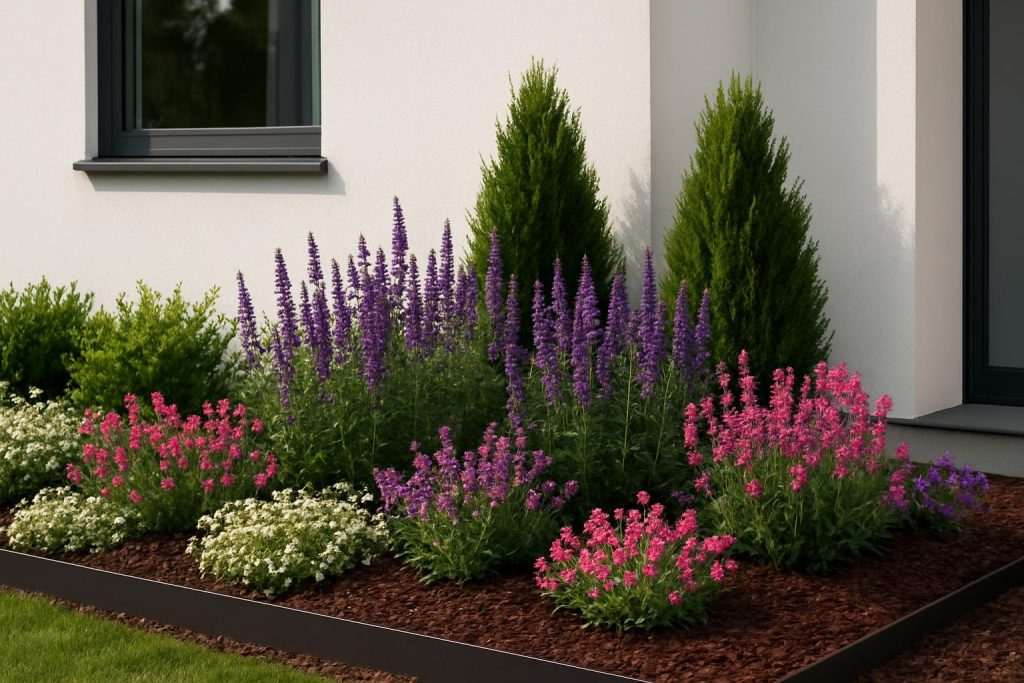
Work in layers. Place tallest plants at the back near the house, medium plants in the middle, and low growers or groundcovers at the front edge.
Use repetition. Repeat three to five plants across the bed to create rhythm. Avoid one of everything.
Limit the palette. Pick two to three main flower colors plus green foliage. Add a neutral like white if needed.
Mind scale. Plants should not block windows or sit too low under tall siding. Mature sizes matter more than nursery tags on day one.
Plan for all seasons. Combine spring bulbs, summer bloomers, fall color, and at least one evergreen for winter structure.
Mulch 2 to 3 inches deep, keeping mulch off stems and siding.
Water new plantings deeply every 2 to 3 days for the first two weeks, then weekly as needed to keep soil evenly moist.
Steel or aluminum edging gives the cleanest look with low maintenance.
20 Front Flower Bed Ideas
1. Symmetrical Entry Bed With Evergreens and Annual Color
Create symmetry on both sides of your front door. Use matching evergreen shrubs near the corners, such as boxwood or dwarf holly. Fill the middle with seasonal color like petunias, begonias, or pansies depending on climate. Add a narrow strip of low groundcover at the edge for definition.
Why it works. Symmetry calms visual noise and frames the entry. Evergreens hold the shape year round while annuals rotate by season for flexible color.
2. Layered Foundation Planting in Thirds
Divide the bed depth into three equal bands. Use tall shrubs at the back, mid perennials in the middle, and short edging plants upfront. For sun, try back: dwarf arborvitae; middle: salvia, daylily; front: thyme or compact sedum. For shade, try back: inkberry holly; middle: hosta, astilbe; front: sweet woodruff.
This simple rule prevents flat, one row beds and improves coverage fast.
3. Color Echo Bed That Matches the Front Door
Pick one accent color on your house, such as the door or shutters. Echo that color in blooms and foliage. If the door is red, use red geraniums, red daylilies, or heuchera with burgundy leaves. Keep other colors neutral to avoid clutter.
The color echo ties house and landscape into one clean look.
4. Modern Monochrome With Grasses
Use one color family with texture doing the heavy lifting. Combine grasses like feather reed grass, blue fescue, and dwarf fountain grass with white flowering accents. Keep lines straight and spacing even. Add dark mulch or gravel for contrast.
Low maintenance and strong structure suit modern homes and simple facades.
5. Native and Pollinator Friendly Mix
Choose regional natives that handle your soil and climate. For sun, consider coneflower, black eyed Susan, bee balm, and switchgrass. Add a small native evergreen anchor. Avoid pesticides. Leave stems in winter for habitat, then cut back in early spring.
This bed supports bees and butterflies while reducing water and fertilizer needs.
6. Drought Tolerant Gravel Bed
Amend soil with sand and fine gravel, then top dress with decorative gravel. Plant drought tough choices like lavender, catmint, yarrow, and low sedum. Keep spacing generous. Use steel edging to hold gravel in place.
Water to establish, then reduce to infrequent deep watering. Great for full sun and hot sites.
7. Shade Friendly Hosta and Fern Layer
Under an overhang or north side, layer ferns at the back, medium hostas in the center, and low groundcovers like liriope or pachysandra at the front. Add a few white flowering astilbes for seasonal brightness.
Mix leaf sizes and textures to avoid a flat look. Use dark mulch for contrast.
8. White at Night Bed for Evening Curb Appeal
Use white or pale flowers and silver foliage that reflect low light. Try white impatiens, white salvia, Shasta daisies, lambs ear, and dusty miller. Add path lights to accent edges.
This bed reads clean in daylight and remains visible after sunset.
9. Four Season Structure With Conifers
Anchor the bed with three to five dwarf conifers such as dwarf Alberta spruce, globe arborvitae, or mugo pine. Fill gaps with perennials for summer color and bulbs for spring. Leave space for growth to avoid crowding.
The conifers hold the look in winter and cut down on replanting.
10. Raised Stone Bed for Slopes and Focus
Use stone or block to raise the bed 8 to 12 inches. Add well draining soil mix. Plant a simple palette like boxwood, hardy geranium, and low roses, or for shade, Japanese forest grass and hellebores.
A raised edge improves visibility from the street and handles uneven grades.
11. Soft Curved Bed With a Flowing Edge
Lay a garden hose to shape a gentle S curve away from the foundation. Cut the edge clean and maintain it. Curves add movement and allow deeper planting pockets for transitions between heights.
Repeat groups along the curve to keep order, such as three lavender, then three salvia, then three catmint.
12. Boxwood Parterre With Seasonal Infill
Outline simple geometric shapes with low boxwood. Inside each shape, plant one seasonal theme each year. Spring bulbs, summer annuals, or fall asters keep the look fresh while the evergreen lines stay constant.
Prune boxwood lightly once or twice a year for crisp edges.
13. Window Box and Bed Combo
Match a window box above with a mirrored palette below. Use trailing plants such as bacopa or ivy in the box and repeat colors on the ground with compact perennials and annuals.
Keep irrigation in mind. Add a water reservoir insert or plan for easy access to the boxes.
14. Pathway Ribbon Bed Along the Walk
Run a narrow bed, 18 to 24 inches wide, along one side of the front walkway. Use tidy, low plants that do not flop. For sun try dwarf lavender, dianthus, or creeping thyme. For shade use ajuga, heuchera, or dwarf hosta.
This creates a guided line to the door without visual bulk.
15. Corner Anchor Bed at the Driveway
Build a triangular bed at the driveway corner. Use one taller focal shrub like a dwarf crape myrtle or hydrangea, then three to five mid perennials, and low edging plants. Angle the tallest point inward to the house to draw the eye.
Keep sightlines clear for safety by choosing compact varieties.
16. Mailbox Micro Bed
Create a 3 to 4 foot circle or square around the mailbox with steel edging. Add a small upright grass, a compact rose or coneflower, and groundcover at the base. Mulch cleanly.
This is a fast weekend upgrade with strong curb impact for low cost.
17. Rain Garden Bed at a Downspout
Direct a downspout to a shallow basin 4 to 6 inches deep, lined with amended soil. Plant moisture tolerant natives like blue flag iris, Joe Pye weed, and switchgrass. Use river rock at inflow to slow water.
Manage runoff and add seasonal bloom at the same time.
18. Lighting Integrated Bed
Install low voltage path lights along the front edge and one to two spotlights for focal shrubs. Keep wiring under mulch. Choose warm white LEDs for a natural tone.
Lighting extends visual time and highlights form even when flowers are not in peak bloom.
19. Quick Swap Annual Strip
Dedicate the front 12 inches of the bed to easy seasonal changes. In spring, plant pansies and tulips. In summer, switch to petunias or vinca. In fall, add mums and ornamental cabbage. The back structure remains stable.
This gives constant change without reworking the whole bed.
20. Small Space Vertical Trellis Bed
Use a flat trellis or obelisk near the wall with a compact climber like clematis or star jasmine. Underplant with low mounding perennials and annuals. Keep spacing tight to avoid messy gaps.
Vertical interest makes a narrow bed look complete and layered.
Planting Examples by Sun and Shade
Sunny classic mix. Back: dwarf arborvitae. Middle: salvia, daylily, coneflower. Front: thyme, compact sedum. Seasonal color: petunia or verbena.
Modern sun mix. Back: feather reed grass. Middle: Russian sage, catmint. Front: blue fescue, lambs ear. Seasonal color: white gaura.
Shade mix. Back: inkberry holly. Middle: hosta, astilbe, hellebore. Front: sweet woodruff, liriope. Seasonal color: white impatiens.
Drought sun mix. Back: dwarf juniper. Middle: lavender, yarrow, agastache. Front: ice plant, sedum. Top dress with gravel.
Installation Basics
Outline the bed with a hose or marking paint. Step back and adjust curves or lines until the bed fits the house scale.
Remove sod to a depth of 2 inches. Avoid tilling near foundations or tree roots. Spread 2 to 3 inches of compost and work it into the top 6 inches with a fork where possible.
Set plants in their pots and check spacing by mature width. Keep shrubs off the foundation by at least 18 inches for airflow and access.
Dig holes twice as wide as the root ball and as deep. Set plants so the crown is level with the soil. Backfill, firm gently, and water to settle air pockets.
Install edging now while soil is workable. Steel or aluminum edging gives the cleanest look with low maintenance.
Mulch 2 to 3 inches deep, keeping mulch off stems and siding. Form a shallow dish around each plant to catch water during the first weeks.
Water new plantings deeply every 2 to 3 days for the first two weeks, then weekly as needed to keep soil evenly moist.
Maintenance Made Simple
Water on a schedule that matches weather and soil. Deep, less frequent watering builds strong roots. Check soil moisture with your finger 2 inches down. Adjust as seasons change.
Fertilize lightly. Use compost in spring and a balanced slow release fertilizer for heavy bloomers if growth looks weak.
Deadhead spent blooms to extend flowering on plants like salvia, daylily, and coneflower. Shear annuals midseason to refresh growth.
Prune shrubs after bloom or in late winter based on species. Avoid constant light shearing that causes dense tips and bare centers.
Top up mulch each spring to maintain a 2 to 3 inch layer. Pull weeds while small to prevent deep roots.
Inspect for pests and disease weekly. Remove affected leaves and improve airflow. Choose resistant varieties and avoid overhead watering late in the day.
Budget Tips
Buy smaller container sizes for shrubs and perennials. They catch up within one to two seasons at a fraction of the cost.
Divide perennials like hosta, daylily, and coneflower in spring or fall to expand coverage for free.
Start annuals and easy perennials from seed in trays or direct sow after frost for large areas of color.
Phase your plan. Install edging and evergreens first. Add perennials next season. Fill gaps with annuals in year one.
Reuse stone, brick, and containers. Consistent materials make a budget bed look intentional.
Conclusion
Curb appeal grows from clear structure, repeatable patterns, and plants that fit your conditions. Pick one of the 20 ideas that matches your sun, style, and budget. Keep layers simple, repeat a short list of plants, and plan for all seasons. With the right prep and a steady routine, your front flower bed will look good on day one and mature with low stress year after year.
FAQ
Q: What is the simplest way to plan a front flower bed?
A: Measure the bed, map sun and shade, pick two to three colors, layer tall to short, and repeat three to five reliable plants.
Q: How deep should mulch be in a front bed?
A: Mulch 2 to 3 inches deep, keeping mulch off stems and siding.
Q: How often should I water a new front flower bed?
A: Water new plantings deeply every 2 to 3 days for the first two weeks, then weekly as needed to keep soil evenly moist.
Q: What edging gives the cleanest look with low maintenance?
A: Steel or aluminum edging gives the cleanest look with low maintenance.
Q: How do I keep color going in all seasons?
A: Combine spring bulbs, summer perennials, fall asters or mums, and at least one evergreen for winter structure.