
We are reader supported. When you purchase through links on our site, we may earn an affiliate commission. Also, as an Amazon affiliate, we earn from qualifying purchases.
Ready to set up a kids bedroom that looks great, works hard, and stays tidy without stress. This guide gives you a clear plan you can follow today. You will learn how to pick colors, set up zones, add smart storage, and keep it clean. You will also see quick weekend steps and room recipes you can copy. Keep going for simple tips that save money and time.
Start With A Simple Plan
Begin with clear goals. Decide what must happen in the room. Sleep, study, play, and get ready. Write these on a small list. This keeps every choice focused.
Measure the room. Note wall lengths, window size, and door swing. Measure the bed and dresser you own. This prevents buying items that do not fit.
Declutter before you design. Remove clothes that do not fit and toys not used. You will design storage based on what stays. This step saves money because you do not buy space for items you do not need.
Set a budget and a simple timeline. Plan one weekend for layout, paint or decals, and basic storage. Style details can come next week.
Set Up Smart Zones
Sleep Zone
Place the bed on a wall with solid support and away from the door path. Add a headboard or a painted panel to define it. Use a mattress that fits the bed frame snugly. Add a guard rail if needed for younger kids. Keep only a small nightstand here to avoid clutter.
Choose breathable bedding. Cotton or a soft microfiber duvet is easy to wash. Keep an extra set of sheets in a bin under the bed for fast changes.
Study Zone
Use a desk that fits your child and the room. A 90 to 110 cm wide desk works for most kids. Pick a chair with good back support and adjust the seat height so feet rest flat or on a small footrest. Add a desk lamp with a warm bulb for focus.
Manage cords so they do not hang. Use clips on the back of the desk. Keep only daily supplies on top. Store extra paper and art tools in a small drawer unit or a rolling cart next to the desk.
Play Zone
Leave floor space open. Put a low shelf or open bins against a wall. Use a soft, low pile rug or washable play mat here. Keep puzzle pieces and sets in zipper pouches or lidded boxes inside one bin.
Try toy rotation to cut mess. Keep half the toys in a closet bin. Swap them every few weeks. This makes the room feel new without buying more.
Get Ready Zone
Place hooks near the door for jackets and backpacks at kid height. Keep a laundry hamper within reach. Use a shallow tray or small dish for hair ties, watches, or glasses on the dresser. Lay out clothes the night before to speed up mornings.
Choose A Calm Color Base And Fun Accents
Use a calm base color for most walls. Soft white, warm beige, or light gray makes the room feel larger and restful. Add color with bedding, art, rugs, and pillows. This keeps the look fresh without repainting.
If you rent, use peel and stick decals or wallpaper on one wall. Choose patterns that can grow with your child. Simple stripes, stars, dots, or geometric shapes work for many ages.
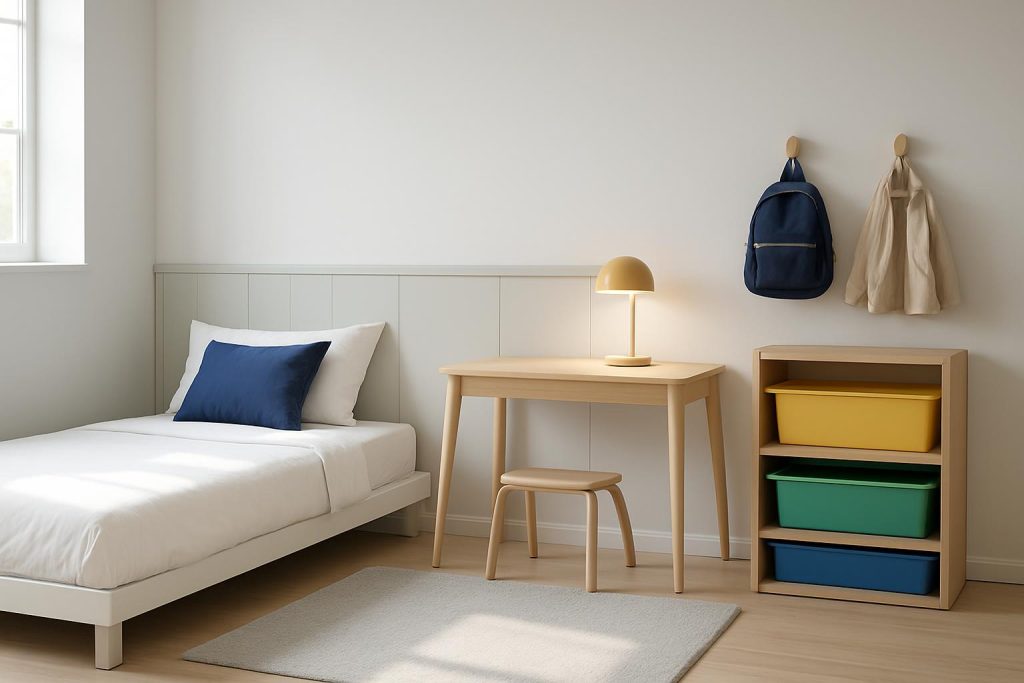
Keep one accent color strong and repeat it in three places. For example, a navy pillow, a navy stripe rug, and navy storage bins. This keeps the room balanced and easy on the eyes.
Furniture That Grows With Your Child
Pick a bed that fits the room now and later. A twin with a trundle helps for sleepovers. A loft bed opens floor space for a desk or play zone under it, but use only if your child is ready and follow safety rules for guard rails and ladder use.
Use a sturdy dresser with deep drawers. Add a small wardrobe if the closet is short on space. Choose adjustable shelves for books and bins so you can change heights as needs change.
Look for rounded edges and smooth finishes. Anchor tall furniture to the wall with proper hardware. This prevents tipping and keeps kids safe when they climb or pull drawers.
Storage That Kids Can Use
Under Bed And Vertical Space
Use flat bins under the bed for off season clothes, extra bedding, or bulky toys. Label each bin on the short side so you can see it when you pull it out. Add bed risers only if the frame allows and remains stable.
Go vertical where floor space is tight. Use wall shelves up high for display and keepsakes. Keep daily items on lower shelves within reach. Over door organizers can hold shoes, accessories, or craft supplies.
Closet Made Simple
Add a second hanging rod to double space for short clothes. Use slim hangers so clothes slide less. Add a small set of drawers or cubes on the closet floor for socks, underwear, and swimwear.
Sort shoes by use. Daily pairs near the front on a low rack. Special shoes in a labeled box up high. Keep one bin for next size up so you can swap fast when your child grows.
Open Bins For Toys And Books
Use open bins without lids for toys you use daily. Kids put items back faster when the path is simple. Use front facing book racks to show covers. This invites reading and helps kids pick books on their own.
Label bins with words and simple images if your child is learning to read. Keep labels at kid height. This builds habit and cuts cleanup time.
Art, Collections, And Keepsakes
Hang a wire with clips or a cork strip to display art. Rotate weekly so the wall stays fresh. Keep a memory box on a high shelf for special items you want to keep safe.
Lighting For Function And Sleep
Plan three layers. Use a bright ceiling light for general use. Add a desk or reading lamp for tasks. Add a soft night light for comfort.
Pick warm white bulbs around 2700 to 3000K. This supports calm evenings. Use blackout curtains to block outside light for better sleep. If you need a night light, choose a dim, warm one, and place it low.
Use timer plugs for string lights or lamps so they turn off on their own. Keep cords away from beds and play areas. Use cord covers if needed.
Textiles That Work Hard
Choose bedding that is easy to wash and dries fast. Keep two sets per bed. Store the spare set under the bed or in the closet so changes are quick after spills or accidents.
Pick a rug that is low pile or washable. High pile holds more dust and is harder to clean. Use a rug pad to stop sliding and protect floors.
Use blackout curtains or a lined shade to control light. Add simple tie backs so kids can open them during the day to let in natural light.
Decor That Kids Help Create
Let your child choose a few accent items. This can be pillowcases, a poster, or a small lamp. Keep big pieces simple so the room can grow with them. Swap smaller items when tastes change.
Try easy DIY projects. Paint a simple headboard shape on the wall. Make a name sign with wooden letters. Create a photo or art grid with washi tape so you can change images without nails.
Add a growth chart on a tall wall or door frame. Mark dates together. Create an achievement shelf for awards, models, or collections. This builds pride and keeps surfaces tidy.
Safety And Durability First
Anchor all tall furniture. Use proper wall anchors for your wall type. Follow the kit instructions and check them monthly. Keep heavy items on lower shelves.
Use cordless window coverings when possible. Cover outlets with tamper resistant plates. Add non slip pads under rugs. Keep climbable furniture away from windows.
Choose low VOC paint for better air quality. Check hardware on beds, drawers, and shelves twice a year and tighten if needed.
Small Rooms And Shared Rooms
In small rooms, keep the center open. Place the bed lengthwise against a wall. Use slim furniture and avoid deep pieces that choke floor space.
For shared rooms, zone each side with color or patterns. Use matching base furniture for a calm look. Give each child a personal bin, shelf, and hook. Add a small curtain panel on a bunk or loft for privacy if it is safe and does not block airflow.
Use a long dresser instead of two small ones to save space. Label drawers by child so mornings are smooth.
Budget And Renter Friendly Moves
Spend first on what changes daily life. A good mattress, blackouts, and storage you can reach make the biggest impact. Save decor for last and buy slowly.
Use peel and stick decals or wallpaper for wow without damage. Use removable hooks and strips for art and organizers. Choose a bed frame with space under it to gain storage without new furniture.
Shop secondhand for solid wood pieces and repaint with a durable finish. Swap pillowcases, art prints, and a small rug to refresh the room each season without a full redo.
Cleaning And Upkeep Made Easy
Do a daily 10 minute reset. Put toys in bins, return books to racks, and lay out clothes for tomorrow. Play cleanup music to make it fun and fast.
Follow a simple weekly plan. Wash bedding, wipe desk surfaces, sanitize handles and light switches, and vacuum or mop the floor. Check the trash and empty it. Dust shelves from top to bottom to avoid rework.
Do a monthly edit. Rotate toys, move out broken items, and donate what your child has outgrown. Check furniture anchors and tighten loose screws. Wash curtains or vacuum them if not washable.
Handle common stains fast. Blot spills on bedding, then wash with a gentle cycle. For rugs, blot first, then clean with a mild solution suited to the rug material. Always test a small hidden area before full cleaning.
Step By Step Setup In One Weekend
Day one morning. Declutter and sort by keep, donate, and trash. Move out items that do not belong in the room. Clean floors and wipe surfaces.
Day one afternoon. Plan the layout with tape on the floor. Place the bed, dresser, and desk. Leave open play space. If you plan paint or decals, do them now so they dry overnight.
Day two morning. Build furniture and anchor tall pieces. Install shelves and hooks. Add blackout curtains and adjust rod height.
Day two afternoon. Add storage bins, labels, and the rug. Make the bed with the new set. Set up the desk lamp and manage cords. Hang art and the name sign or growth chart.
Day two evening. Walk your child through each zone. Show where things live. Practice the nightly reset together. Take a photo of each area so you can reset fast later.
Example Room Recipes
Calm Study Nook For Early Grades
Use a small desk with a drawer and a pegboard above it for supplies. Add a warm desk lamp and a soft chair cushion. Place a narrow bookshelf beside the desk for workbooks and readers. Keep a simple timer on the desk to build focus habits.
Play Heavy Room For Preschool
Use a washable play mat in the center. Place low open bins along one wall and front facing book racks on another. Hang two hooks at child height for costumes. Keep a calm nap corner with a simple floor cushion and a small blanket.
Tween Refresh On A Budget
Swap the duvet cover and add two pillowcases in a bold but simple color. String lights on a timer around the desk wall. Add a cork strip above the bed for photos and notes. Bring in a rolling cart for art and tech, so it can slide away when not in use.
Conclusion
A great kids bedroom is simple, safe, and built for daily life. Start with a calm base and add accents your child loves. Use zones to guide layout and habits. Pick storage that kids can reach and use. Keep cleaning easy with a short daily reset and a small weekly plan. Involve your child in choices and setup. This builds ownership and keeps the room working as they grow.
FAQ
Q: How do I start planning a kids bedroom without wasting money
A: Begin with goals, measure the room, and declutter before you buy. Set a budget and plan one weekend for layout and basic storage. This focus prevents buying items that do not fit or help.
Q: What colors work best for a calm kids room
A: Use a calm base like soft white, warm beige, or light gray. Add one or two accent colors through bedding, art, and rugs. Keep the big pieces simple so the room can grow with your child.
Q: How can I add storage in a small kids bedroom
A: Use under bed bins, wall shelves, and over door organizers. Add a second closet rod and low drawers for small items. Choose open bins for daily toys and front facing racks for books.
Q: What lighting helps kids sleep better
A: Use warm white bulbs around 2700 to 3000K, add blackout curtains, and keep a dim night light low if needed. Set lamps or string lights on timers so they turn off on their own.
Q: How do I keep the room tidy each week
A: Do a 10 minute daily reset, then a weekly routine of washing bedding, wiping desks, sanitizing handles, and vacuuming. Do a monthly edit to rotate toys, donate outgrown items, and check anchors and hardware.