
We are reader supported. When you purchase through links on our site, we may earn an affiliate commission. Also, as an Amazon affiliate, we earn from qualifying purchases.
Concrobium Mold Control is one of the most talked about mold products in home cleaning and DIY. Many homeowners want a clear answer. Does it work, when should you use it, and how do you get the best results. This review gives you an honest, beginner friendly guide based on practical use, remediation standards, and the limits you need to know before you buy.
Introduction
Mold is a symptom of moisture. Any product is only as effective as your moisture control. Concrobium Mold Control aims to eliminate active mold, inhibit regrowth, and do it without bleach, harsh fumes, or strong odors. It has a loyal following because it is simple to use, versatile on many surfaces, and safer than many traditional options. It is not magic. It requires proper prep, correct application, and realistic expectations. Read this review first so you do it right the first time.
What Concrobium Mold Control Is
Concrobium Mold Control is a water based solution that controls mold growth on surfaces. It does not contain bleach or ammonia. It kills mold mechanically as it dries and leaves behind a barrier that helps prevent new growth. It is registered for use to control mold and is widely used by homeowners, landlords, and remediation pros for non structural jobs and maintenance prevention.
How It Works
The active salts in the formula create conditions that crush and dehydrate mold spores as the film dries. After drying, the residual barrier makes the surface less hospitable for mold to return. This is different from oxidizers like bleach or hydrogen peroxide that whiten stains by chemical action. Because the mechanism is physical, there are no strong fumes and it is low odor.
Where It Shines
Use it for bathrooms, basements, closets, window sills, finished wood, drywall surfaces that are not crumbling, subfloors after minor leaks, HVAC closets, attics after roof leaks that have been repaired, boat cabins, RVs, and storage areas. It is also useful as a preventive coating in damp prone zones after a thorough dry out. For landlords, it helps during turnover to keep minor spots from returning.
What It Does Not Do
It does not remove deep stains on porous materials. It does not repair water damage. It does not fix high humidity, leaks, or condensation. It is not a replacement for cutting out moldy drywall or insulation that is saturated or crumbling. It is not a magic fog that cleans a dirty home without prep. If you expect stain bleaching, you will be disappointed. Pair it with cleaning and, if needed, a separate stain remover.
Real World Performance
On non porous and semi porous surfaces, users report strong results when the product is applied generously and allowed to dry undisturbed. Mold odor drops after a full dry, and visible surface mold wipes away more easily after the first pass. On bare wood, results are good for light to moderate growth, especially when combined with HEPA vacuuming and physical cleaning. On heavy growth that penetrates deeply into porous materials, performance is mixed unless you remove and replace the affected material.
Ease of Use
The product is beginner friendly. It comes ready to use. You can apply with a hand trigger sprayer, garden sprayer, sponge, cloth, paint brush, or a cold fogger. No mixing. No strong fumes. Cleanup is simple with water. The film dries clear on most surfaces. On dark glossy finishes, a faint residue may show and can be buffed off. This ease is why it is popular for quick maintenance and for tenants who want something less harsh than bleach.
Application Step by Step
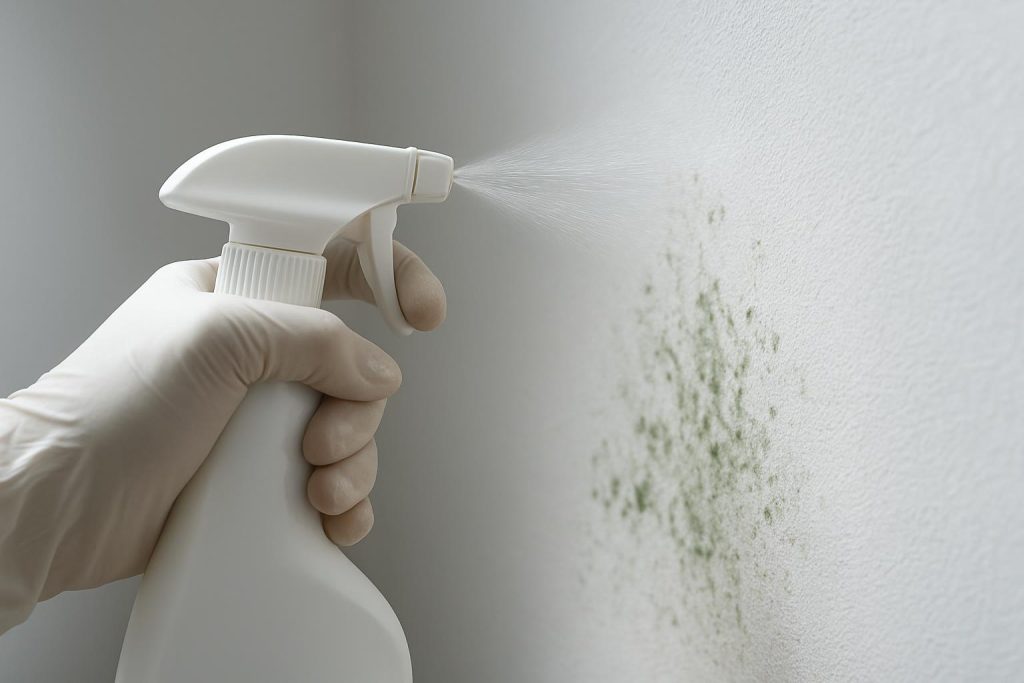
First, fix the moisture source. Stop the leak, improve drainage, seal the exterior, or improve ventilation. Then dry the area with airflow and a dehumidifier until surfaces are no longer damp. Next, put on gloves, eye protection, and a respirator if you expect heavy growth or if you plan to fog. Lightly HEPA vacuum loose debris and dust without brushing mold into the air. Spray Concrobium Mold Control to wet the surface evenly until it is damp, not dripping. Let it dry fully. For visible residue or remaining debris, wipe or scrub with a damp cloth or soft brush, then reapply a light coat and let dry as a preventive step. For wood framing, apply two coats with full dry time between coats.
Dry Time and Coverage
At normal room conditions, expect about one to three hours to dry to the touch. High humidity slows drying. Coverage varies by surface type and method. A gallon can cover around 800 to 1100 square feet as a light mist, less when soaking rough or porous materials. For heavy growth, plan for more product since the first coat saturates and binds dust. Do not rush the drying process. The drying step is part of how the product works.
Using a Fogger
Fogging is useful for large areas and for reaching cracks and crevices. Only use a ULV cold fogger. Mask smoke detectors and protect electronics or delicate finishes. Remove pets and people from the area. Pre clean heavy dust. Fog a light even mist until you reach a just damp condition on surfaces. Leave the area closed while it dries. After drying, open windows or run ventilation. Fogging is a supplement to targeted cleaning, not a replacement.
Odor and Indoor Air Quality
The product has very low odor. There are no harsh fumes in normal use. This is a key advantage in small bathrooms, closets, and occupied homes. Still, always ventilate during application and drying. If you fog, wait for complete dry before reentry. People with chemical sensitivities generally tolerate it better than bleach based products.
Surface Compatibility
Safe for most painted drywall, tile, grout, sealed stone, sealed wood, vinyl, plastic, metal, concrete, and unfinished framing lumber. Test first on natural stone, raw hardwoods, stained furniture, and dark high gloss finishes to check for film or spotting. On fabrics, test an inconspicuous area. On leather and delicate upholstery, use caution and consult a specialist.
Stain Removal Expectations
Concrobium Mold Control does not bleach. After killing and cleaning, some stains may remain, especially on grout, raw wood, and unsealed drywall paper. For stains, you can follow with a separate product designed to lift discoloration, like oxygen based cleaners or a dedicated mold stain remover. Always reapply a light coat of Concrobium after stain treatment to restore the preventive barrier.
Safety and PPE
Wear gloves and eye protection. Use a respirator if you are disturbing mold or fogging. Avoid breathing spray mist. Keep children and pets away until the area is dry. Do not mix with other chemicals. Store upright in a cool, dry place. Dispose of rags and debris in sealed bags. If you are dealing with a large infestation or occupants with respiratory issues, consult a professional.
Comparing to Bleach and Other Products
Bleach can whiten stains fast but does not penetrate porous materials well and produces fumes. Hydrogen peroxide based cleaners oxidize stains and disinfect but can lighten color and may etch some surfaces. Botanical cleaners use plant based actives and are good for those avoiding synthetic chemicals, but some have strong scents. Concrobium Mold Control stands out for low odor, broad surface safety, and ease of prevention after cleaning. For a complete approach, many DIY users pair Concrobium for control and prevention with a separate stain remover when needed.
Cost and Value
The price per gallon is higher than basic bleach or peroxide but competitive with specialty mold products. Because it is ready to use and low odor, it saves time and PPE costs for small jobs. For ongoing maintenance in bathrooms and basements, the preventive barrier adds value by reducing repeat cleanings. For large scale replacements or heavy infestations, the main cost will be demolition and drying equipment, not chemicals, so keep budget focus on fixing moisture.
Common Mistakes
Skipping the moisture fix leads to quick regrowth. Light misting and then wiping immediately defeats the dry action. Over scrubbing before the first application can spread spores. Applying on a wet surface dilutes the product. Expecting stain removal is another mistake. Not ventilating during fogging is unsafe. Neglecting a second preventive coat is a missed opportunity in risk areas.
Troubleshooting Results
If mold odor persists after drying, recheck for hidden moisture in walls, under flooring, or inside cabinets. Use a moisture meter or call a pro. If a white film shows on dark surfaces, buff with a clean damp cloth after it dries, then apply a lighter coat. If spots return in a week, humidity is likely too high. Keep indoor relative humidity near 45 to 50 percent with a dehumidifier and airflow. If wood feels rough or furry after treatment, you may have dead hyphae on the surface. HEPA vacuum and wipe, then recoat.
Maintenance and Prevention
After remediation, control humidity and condensation. Use exhaust fans in baths and kitchens. Keep furniture slightly off exterior walls to allow airflow. Insulate cold pipes and reduce thermal bridges. Run a dehumidifier in basements and crawl spaces. Once a month, inspect known problem areas and spot treat with a light coat of Concrobium if you see early signs. Prevention is easier than another deep clean.
Storage and Shelf Life
Store at room temperature. Do not allow to freeze. Keep the cap tight. If your sprayer clogs, rinse with warm water. Shake gently before use if the product has sat for a long time. Most users can finish a jug within a season of projects. Buy what you can use in a year to keep performance consistent.
When to Call a Professional
Call a pro if the affected area is larger than a few square feet across multiple rooms, if structural materials are saturated, if there is sewage contamination, if HVAC systems are impacted, or if household members have asthma or immune concerns. Professionals can isolate, HEPA filter, remove contaminated materials, and dry the structure to standards. You can still use Concrobium as part of a pro guided plan for control and prevention.
Who Will Benefit Most
Homeowners handling small to moderate mold patches after minor leaks will benefit. Landlords and property managers will find it useful for turnovers and prevention. Boat and RV owners like the low odor and residue control. Allergy sensitive households prefer the lack of harsh fumes. DIYers who value a simple process and low risk of surface damage will also appreciate it.
Sample Use Cases
Bathroom ceiling with light mold spots after poor ventilation. Clean dust, spray, let dry, wipe, recoat, and install a stronger exhaust fan. Basement corner with mild wall growth after a spill. Dehumidify, scrub loose debris, spray to saturation, dry, wipe, and reapply. Attic sheathing with light surface growth after a past roof leak. Fix roof, improve ventilation, HEPA vacuum lightly, spray two coats with full dry time, and monitor humidity.
Pros
Low odor and no harsh fumes. Broad surface compatibility. Easy application and ready to use. Preventive barrier after cleaning. Works well as part of a system with ventilation and dehumidification. Good for maintenance and touch ups.
Cons
Does not bleach stains. Requires full dry time to be effective. Film may be visible on dark glossy finishes. Not a solution for heavy structural infestations. Cost per gallon is higher than basic household chemicals.
Alternatives to Consider
Hydrogen peroxide based cleaners for stain lifting on light colored grout and caulk. Thymol based botanical cleaners for those wanting plant derived ingredients. Dedicated mold stain removers for severe discoloration after treatment. Professional grade encapsulants for sealing raw wood after remediation in attics or crawl spaces. Each option has tradeoffs in odor, safety, and surface impact.
Best Practices for Beginners
Always start with moisture control. Ventilate and protect yourself. Apply generously and let it dry fully before wiping. Reapply a light coat as a barrier. Address stains with a separate product if needed. Keep humidity down to prevent return. Document before and after with photos so you can track progress. Small habits create big gains in mold prevention.
Frequently Asked Questions
Will it remove black mold. It kills surface mold, including black mold species, when applied and dried correctly. Stains may remain and require separate treatment. Can I use it on grout. Yes, but stains often need a separate cleaner. Is it safe around pets. Keep pets away during application and until dry. Can I paint over it. Yes, after it dries. For best results, clean residue and use a primer suited for the surface. Will one coat be enough. For light growth, often yes. For porous materials or prevention, two coats are better.
Verdict
Concrobium Mold Control earns its positive reputation when used correctly. It excels as a low odor, surface safe solution for killing mold and preventing regrowth after you fix moisture. It does not bleach stains, and it will not solve structural moisture problems. As part of a clear plan that includes drying, cleaning, and humidity control, it delivers consistent results and makes maintenance easier.
Conclusion
If you want a straightforward mold control product that is easy to apply and safe on most household surfaces, Concrobium Mold Control is a strong pick. Use it to control active growth, then rely on proper ventilation and humidity control to keep mold from coming back. Manage expectations about stains, give the product time to dry, and apply a preventive coat in risk areas. With those steps, you will get the performance you expect and a cleaner, healthier home.