
We are reader supported. When you purchase through links on our site, we may earn an affiliate commission. Also, as an Amazon affiliate, we earn from qualifying purchases.
You found only dishwasher pods in the cabinet and the laundry basket is full. It feels tempting to toss a pod into the washer and hope for the best. Do not do it. Using dishwasher pods for laundry can damage clothes, stress your washing machine, and irritate skin. The risks are real and the benefits are few. This guide explains why they are not interchangeable, what can go wrong, and what to do instead if you run out of laundry detergent.
Quick answer
No. Do not use dishwasher pods in your washing machine or for handwashing clothes. Dishwasher formulas are built for hard surfaces, high heat, and specific food soils. Clothing fibers and washing machines need a very different chemistry. Even if one load seems fine, repeated use can cause problems you will notice later.
Dishwasher pods vs. laundry detergent
Different soils, different chemistry
Dishwasher pods target baked-on food, grease, and mineral film on glass and metal. They rely on strong alkalinity, enzymes designed for food residues, and rinse aids that sheet water off hard surfaces. Laundry detergent targets body oils, sweat, skin cells, outdoor dirt, and dye transfer. It must lift soil from fibers, keep it suspended, and rinse clean without leaving harsh residues on skin. These needs are not the same. A product optimized for plates and pans will not treat cotton, wool, or elastics kindly.
Alkalinity and builders
Dishwasher pods often use higher alkalinity and builders like sodium carbonate or silicates. This helps strip food and neutralize acids in tomato sauces and coffee. On fabrics, higher alkalinity can be harsh. It can weaken delicate proteins in wool and silk, fade dyes, and degrade elastic over time. Laundry detergents balance pH for fibers and dyes, and they include agents to protect colors and materials.
Suds and fabric penetration
Dishwasher products are very low sudsing and include anti-foaming agents meant for spray arms and pumps. Laundry detergents for high efficiency washers are also low sudsing, but they still use surfactants tuned to work through fabric weaves. Dishwasher anti-foams can fight against the agitation and flushing that laundry cycles need. The result can be poor soil removal, uneven cleaning, and residue trapped in fabrics.
Bleaches and activators
Many dishwasher pods contain oxygen bleach and bleach activators formulated for high temperatures to target coffee and tea stains on cups. Laundry bleach systems are tuned for textile safety and can work in a range of wash temperatures. A bleach package meant for dishes may push fabric dyes and finishing treatments too hard, especially in warm or hot cycles.
Rinse aids and additives
Dishwasher formulas often include rinse aids to prevent water spots on glass. On fabric, those wetting agents can create streaks, tacky feel, or a dull finish on dark items. They were never tested for wear comfort, breathability, or colorfastness on textiles.
Film dissolution and water temperature
Pods use water soluble films that dissolve at temperatures and flow patterns expected in their intended machine. Dishwasher pods are designed for spray action and often hotter water. Laundry cycles, especially cold and quick cycles, may not fully dissolve the film. That can leave globs in the dispenser, on clothes, or in the drain path.
What can go wrong in your washing machine
Undissolved gunk and clogs
Dishwasher pod film and powder can clump in cooler water and short cycles. Those clumps collect in the detergent drawer, door gasket folds, or drain filter. You may see slimy residue, a sour smell, or error codes over time. Cleaning that out is tedious and sometimes requires a service call.
Sensors and coatings
Washing machines have sensors for water level and suds detection. Residues not meant for washers can coat sensors and alter readings. The washer may extend cycles, drain repeatedly, or fail to spin well. Over months this can mean higher water and energy use.
Seals, hoses, and metal parts
Higher alkalinity and certain builders are fine on stainless racks and dishwasher interiors but not ideal for rubber seals and some washer alloys. Repeated exposure can dry out elastomers and contribute to odor and micro cracking. You might not notice until a small leak appears.
Void of warranty
Manufacturers expect laundry detergent only. Using other cleaners can void parts of a warranty. If a tech finds dishwasher detergent residue, you may pay for repairs.
What can go wrong with your clothes
Color fading and patchy results
Dishwasher bleach systems and high alkalinity can strip dyes faster than laundry detergent. Dark and bright items may look dull after even a few washes. Because the chemistry is not tuned for fibers, the fade can be uneven. You may see light spots or streaks, especially on synthetics.
Weakened fibers and elastics
Protein-based fibers like wool and silk do not handle strong alkalinity well. Dishwasher chemistry can roughen the surface, cause felting, or thin the fibers. Elastics in activewear and underwear can lose stretch faster. Seams may wave or lose recovery.
Harsh feel and residue
Rinse aids and anti-foams left in fabric can make items feel stiff, squeaky, or oddly slick. Towels may repel water. Bedding may feel tacky or cause warm skin to itch.
Skin irritation
Any residue not designed for textiles can sit against skin for hours. Sensitive skin may react with redness or itch, especially in snug garments and bedding. Fragrance systems in dishwasher products are not selected for textile wear and may be more persistent.
Safety and chemistry concerns
Unknown interactions in the drum
Laundry routines often include oxygen bleach, chlorine bleach, fabric softener, vinegar, or boosters. Dishwasher pods were not tested with those combinations in a washing machine. Reactive ingredients can interact, reduce cleaning, set stains, or create fumes in a closed space. Keep chemistry boring in the laundry room and use only products made for laundry.
Hot water risks
Dishwasher pods expect higher water temperatures. In a washer on hot, the reaction may be too aggressive for certain dyes and finishes. In a washer on cold, the film may not dissolve well. Either way, it is a mismatch.
But I did it once and nothing bad happened
One load may look okay. Hidden damage and buildup happen slowly. Elastics lose recovery load after load. Dark colors fade, towels lose absorbency, and a sour smell creeps in as residue feeds microbes. The machine may start draining extra or leaving lint on clothes. By the time issues are obvious, the fix can be expensive.
What to do if you run out of laundry detergent
Best immediate options
Run a water-only cycle for lightly worn items. Modern washers agitate well and can remove some body salts and light soil. Choose warm water if the fabric allows, and add an extra rinse.
Use oxygen bleach powder labeled color safe. Add 1 to 2 tablespoons for a small HE load or 2 to 4 tablespoons for a standard top loader. Dissolve it in warm water before adding if your machine starts very cold. Oxygen bleach boosts cleaning and deodorizes without harsh residues.
Use baking soda as a deodorizer, not a cleaner. Add 1 to 2 tablespoons to the drum for an HE load. It helps reduce odors but will not replace detergent for dirty items.
Use borax as a booster only if you already have a little laundry detergent on the fabric from pretreating. Without detergent, borax alone does little to lift soil. If you choose to use it, keep amounts small, about 1 to 2 tablespoons in an HE washer, and dissolve it in warm water first.
Safe handwashing alternatives
For a small emergency load, handwash in a basin with a mild liquid dish soap. Use 1 teaspoon per gallon of warm water. Swish gently, soak 10 to 15 minutes, and rinse until water runs clear. Do not use dish soap in a washing machine. The suds can overflow and cause damage.
For delicates, a small amount of unscented body wash or gentle shampoo can work in a pinch. Use a pea-sized amount in a sink of cool water. Agitate by hand and rinse very well.
Quick pre-treat and soak
Spot treat stains with a little hand soap worked in with a soft brush or your fingers. Rinse, then soak the whole item in warm water with oxygen bleach if color safe. For whites, a mix of 1 part 3 percent hydrogen peroxide to 3 parts water can help on fresh stains. Test on an inside seam first.
Drying tips after emergency washing
Press out water with a towel instead of wringing to protect fibers. Air dry flat for knits and delicates. For wovens, hang in a well ventilated space and smooth seams by hand to reduce wrinkles.
How to use laundry pods correctly
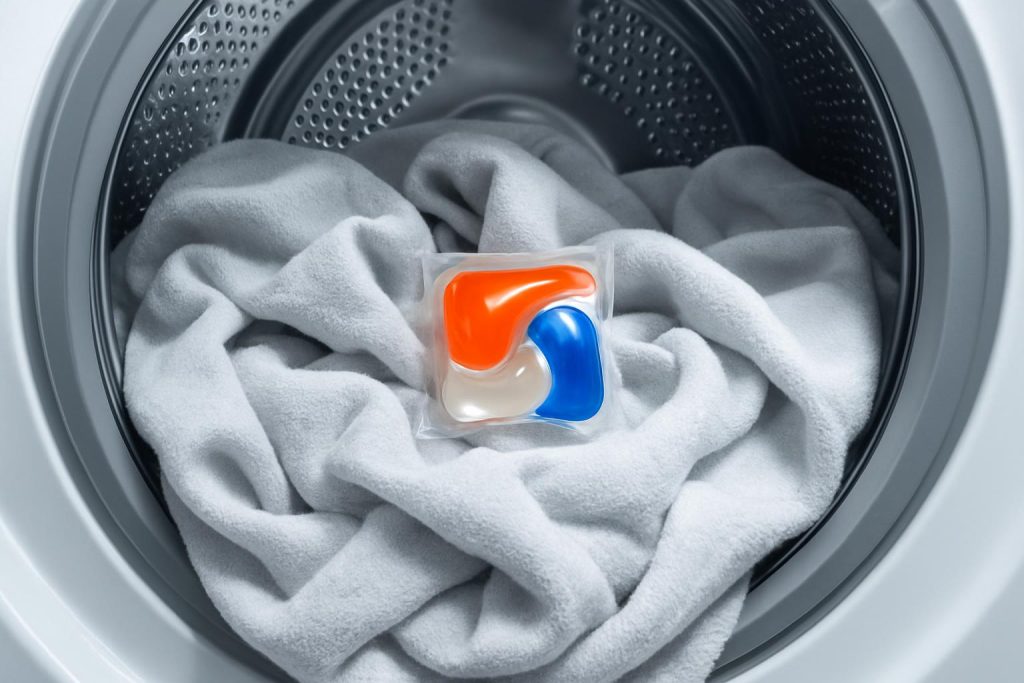
If you prefer pods, use laundry pods only. Place the pod at the bottom of the empty drum before adding clothes. Do not put pods in the dispenser drawer. For cold washes, choose pods labeled for cold water so the film dissolves fully. Do not cut pods open. Store pods in a dry, safe container out of reach of children and pets.
Common questions
Can I use dishwasher powder in a washing machine
No. Same issues as pods. Wrong chemistry, wrong dissolution profile, and risks to fabrics and machine parts.
Can I handwash clothes with a dishwasher pod
No. The alkalinity and additives are too aggressive for fabrics and skin during handwashing. Use a tiny amount of mild liquid dish soap in a basin instead and rinse very well.
Can I use laundry detergent in a dishwasher
No. Laundry detergent can create heavy suds, flood the dishwasher, and leave film on dishes. Only use products made for dishwashers.
What if my clothes already went through with a dishwasher pod
Run an immediate rewash with proper laundry detergent and an extra rinse. Check the detergent drawer, gasket, and drain filter for residue. Wipe away any clumps. Air dry items if you notice any stiffness or odor, then wash again if needed.
Will one time use cause permanent damage
Often no, but it depends on fabric and water temperature. Delicates, darks, and elastic items are at higher risk. Rewash promptly and avoid repeating the mistake.
Environmental notes
Both laundry pods and dishwasher pods often use water soluble films. The issue here is not only about films but about using the right chemistry for the job so you do not need to rewash. Rewashing wastes water and energy. Choose the correct product and dose to get a clean result the first time.
Practical checklist
Never do this
Do not use dishwasher pods in the washing machine. Do not mix dishwasher detergents with laundry bleach or vinegar in the washer. Do not handwash clothes with a dishwasher pod.
Do this instead
Use laundry detergent or laundry pods only. If out of detergent, try a water-only cycle for lightly soiled items, or handwash with a tiny amount of mild liquid dish soap in a basin, or use oxygen bleach as a booster for color safe items. Rinse extra and air dry.
Conclusion
Dishwasher pods are for dishes. Laundry detergents are for clothes. The chemistries are different and the stakes are high. Using dishwasher pods in laundry risks color loss, fabric damage, residue on skin, and trouble for your washing machine. If you run out of laundry detergent, choose safe stopgaps like handwashing with a small amount of mild dish soap in a basin, oxygen bleach for soaking, and water-only cycles for lightly worn items. Stock a reliable laundry detergent again as soon as you can. Your clothes will last longer, your washer will stay healthier, and your laundry will look and feel clean without surprises.