
We are reader supported. When you purchase through links on our site, we may earn an affiliate commission. Also, as an Amazon affiliate, we earn from qualifying purchases.
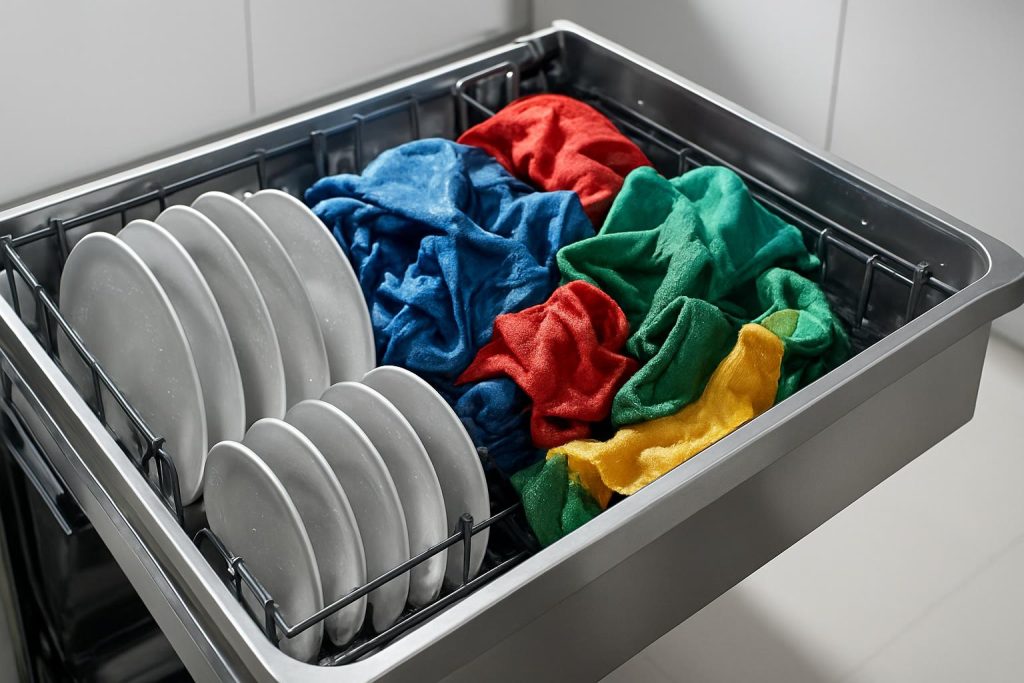
You are not the first person to wonder if a dishwasher can stand in for a washing machine. Maybe your washer broke, you are short on time, or you are in a small apartment with limited appliances. The idea is tempting. Load a few shirts next to the plates, press start, and hope for the best. Before you try it, read on. The differences between the two machines are bigger than they look, and the results are not what most people expect.
Quick answer
No, you should not use a dishwasher as a washing machine. Dishwashers are engineered for hard, non-porous kitchenware and food soils. Clothes need different water movement, detergent chemistry, rinsing, and lint handling. Using a dishwasher for laundry risks damage to clothes, contamination of your dishware, clogs, odors, and appliance failure.
Why dishwashers and washing machines work differently
Water volume and flow
Washing machines flood and drain the drum multiple times. They move a large volume of water through fabrics so soils lift and rinse away. Dishwashers recirculate a relatively small pool of water through spray arms. The water volume is optimized for hard items that do not absorb water. Clothes need bulk water to flush detergents and soil out of fibers. A dishwasher does not deliver that.
Mechanical action and agitation
Washing machines agitate or tumble to flex fabrics and release dirt. This movement matters more than most people think. Dishwashers use directional spray to blast stuck food off rigid surfaces. Fabrics flop and trap water in folds. Spray alone cannot knead dirt out of cloth. The result is poor cleaning and heavy residue left behind.
Detergent chemistry
Laundry detergent is designed to foam low, suspend soils, protect dyes, and rinse from fibers. It often includes enzymes that target protein and starch at moderate temperatures. Dishwasher detergent is highly alkaline and often contains bleach or oxygen boosters, rinse aids, and anti-foaming agents that are safe on glass and steel but harsh on textiles and dyes. It is not designed for skin contact and can leave chemical residue in fabric.
Temperature and heat profile
Many dishwashers heat water to very high temperatures and sometimes boost heat in a sanitize cycle. That heat is great for plates and cutting boards. It can shrink, warp, or delaminate fabrics, elastics, and glues in apparel. A washing machine keeps temperatures compatible with textile care labels and varies agitation to match.
Filtration, lint, and soil handling
Washing machines expect lint, hair, and fiber shedding. They route it to a drain and trap, and the volume is high on some fabrics. Dishwashers have fine screens that expect small food bits. Lint mats those screens, clogs spray arms, and settles in the sump. The result is poor cleaning, odors, and pump strain.
Soil types and hygiene standards
Dishwashers are built to remove grease, starch, and cooked food residue from non-porous surfaces. Laundry soils include body oils, skin cells, dyes, mud, and detergents that need suspension and full rinsing. Even if a dishwasher dislodged some of that, it redistributes the mix onto the interior and spray arms. That is a hygiene problem for items that later touch your mouth.
What actually happens if you wash clothes in a dishwasher
Colors fade and fabrics weaken
Highly alkaline dishwasher detergents and oxygen boosters can strip dyes and weaken fibers. Elastics and spandex lose stretch. Prints crack or peel faster. Heat intensifies both effects.
Residue stays in fabric and rubs on skin
Because dishwashers recirculate a small water pool, surfactants and alkalinity stay high throughout the cycle. Without full-drain rinse cycles tailored for fabric, residue remains in the weave. That residue can irritate skin and make clothing feel stiff or filmy.
Lint spreads and clogs the machine
Fabrics shed fibers. These fibers stick to the filter, wrap spray arms, and collect in the sump. Water flow weakens and cleaning performance drops. A clogged sump can damage the pump and cause leaks or error codes.
Hardware damage on both sides
Buttons, zippers, hooks, and rivets can chip racks, gouge the inner liner, and scratch glassware that shares the wash. Conversely, rack tines and cutlery baskets can snag threads and cause runs and holes in garments.
Hygiene risks for your dishes
Clothes carry body soils, lotion residues, and microbes. Running fabrics through a dishwasher contaminates the interior and filter with these soils. Later dish cycles can re-aerosolize and redeposit the load onto cups and plates. Even a hot cycle does not fully solve redeposition if the machine is clogged with lint and residue.
Odors and persistent film
Trapped lint and residue in the filter and sump produce sour smells. A cloudy film can appear on glassware after the fact because surfactants and organic soils are now part of the recirculated wash pool. You may need multiple deep-clean cycles to undo this.
Leaks, stalls, and warranty issues
Spray arms jam with fibers and slow or stop. Seals can be stressed by lint and debris at the door edge. Pumps run hotter when the sump is choked. Manufacturers can deny warranty coverage when misuse is documented. Landlords may pass repair costs to you.
What about small or tough items
Kitchen textiles such as dishcloths and sponges
Some people toss dishcloths or sponges into the dishwasher. It can look convenient, but it is not reliable for textiles. The fabric sheds lint and retains detergent residue that later touches your hands and cookware. Machine-wash or boil cloths in a pot dedicated to laundry sanitation if you have no washer. Use the dishwasher only for non-porous items such as silicone trivets or scrub brush heads that are labeled dishwasher safe.
Shoes, hats, and specialty gear
Do not run fabric hats, canvas shoes, or sports braces in a dishwasher. Glues soften, fabrics warp, and metal hardware rusts. Hand wash with mild laundry detergent and air dry away from direct heat. For structured caps, use a cap frame and cold hand wash, then reshape and air dry.
Baby items and cloth diapers
Never put cloth diapers or baby clothing in a dishwasher. The soil type and hygiene requirements are strict. Hand wash or use a proper washing machine cycle. Hard plastic feeding accessories that are labeled dishwasher safe are fine in the top rack. Cloth items are not.
If you already tried it, here is how to recover your dishwasher
Step 1. Remove all racks and the lower filter. Pull out any visible lint, threads, or fabric pieces by hand. Inspect spray arm holes and clear them with a soft brush or toothpick.
Step 2. Vacuum or wipe the sump area where water collects. Remove debris sitting at the pump inlet. Be gentle to avoid damaging seals and impellers.
Step 3. Run an empty hot cycle with a cup of white vinegar in a dishwasher safe container on the top rack. This helps break film and odors. When done, rinse the tub surfaces with warm water.
Step 4. Wipe the door gasket and folds with a mild bleach solution. Mix one tablespoon of unscented household bleach in four cups of water. Apply to a cloth, wipe the gasket, then wipe again with clean water to remove residue. Never apply vinegar and bleach at the same time. Rinse well between products.
Step 5. Run an empty hot cycle with a dishwasher cleaner or a tablespoon of dishwasher detergent in the dispenser to flush the system.
Step 6. Inspect after cleaning. If odors persist or spray arms still sputter, remove and soak the spray arms in warm soapy water, rinse, and reinstall. If performance is still poor, call for service before leaks or pump damage worsen.
Better options when you do not have a washing machine
Efficient hand washing method
Use a sink, tub, or bucket. Fill with warm water and add a small amount of laundry detergent. Submerge garments and agitate by hand for several minutes. Focus on high soil areas like underarms and cuffs. Soak ten to twenty minutes. Drain, refill with clean water, and rinse until water runs clear. For faster drying, press water out without wringing to protect fibers. Roll garments in a clean towel and press to remove extra moisture. Hang to dry with good air flow.
Portable washers and spinners
Compact electric washers and manual washers are affordable and small-space friendly. A separate spin dryer extracts much more water than hand pressing. This pair is a strong upgrade over hand washing with far less strain and time.
Laundromat and shared laundry tips
Bundle laundry into larger, less frequent trips. Pre-treat stains at home so you can use shorter cycles. Bring mesh bags for delicates. Plan drying time by load type. Quick-dry synthetics can air dry on a rack at home to save quarters.
Travel or dorm strategy
Use a five-gallon bucket with a tight lid as an off-grid agitator. Add water and detergent, seal, and shake or rock for several minutes. Drain and rinse twice. Clip a travel clothesline above a shower or near a window and use hangers to speed drying with air circulation.
Stain control to reduce full washes
Spot treat with a bit of laundry detergent and water as soon as a stain happens. Dab, do not rub, to avoid spreading. Air out lightly worn garments to reduce odor. Targeted care delays the need for a full wash.
Water, energy, and results compared
Modern dishwashers often use around 3 to 6 gallons of water per cycle. That number looks efficient, but most of it is recirculated. Soils and chemicals concentrate in the bath without the deep rinsing fabrics need. Washing machines use more water overall but drain and refill to remove soils. They also move fabric against water and drum surfaces to force soil release.
Energy use in dishwashers leans on heating small volumes of water to high temperatures and sometimes heated drying. High heat is rough on textiles. Laundry machines heat water only to the level that fabric and detergent demand, and airflow dryers are tuned for textiles. Line drying is energy free and gentle when an outdoor or indoor rack is available.
Even if you ran multiple dishwasher cycles trying to rinse clothing, you would use more time and energy than a standard wash, and you would still risk residue, fabric wear, and appliance damage.
Common myths debunked
The sanitize cycle makes it safe for clothes
Higher heat does not fix fundamental differences in water volume, agitation, and detergent chemistry. Heat can also shrink and degrade fabrics. Sanitize modes are designed for non-porous items.
Dishwasher pods are gentle because they look similar to laundry pods
Dishwasher pods are not formulated for fabric. They are more alkaline and can include bleach or additives that damage fibers and dyes. Residual chemicals in clothing can irritate skin.
Small items like socks will be fine in the cutlery basket
Small items shed lint and can escape and jam spray arms or the drain. They will come out poorly rinsed and may cause lingering appliance odors and performance loss.
If you are desperate, what is the least bad move
Do not run any fabric with dishwasher detergent. If you ignore that, at minimum avoid mixing with dishes, use a rinse only cycle with plain water, and place items in a fine mesh laundry bag on the top rack to reduce tangling. Expect poor results and plan to deep clean the dishwasher after. This is not recommended and remains a risk to both fabrics and appliance.
Protecting your appliances and your health
Read care labels on clothing and textiles. They exist to match fabric to temperature, agitation, and detergent type. Keep laundry tasks in laundry equipment or use the hand washing alternatives above. Reserve the dishwasher for items that are hard, non-porous, and labeled dishwasher safe. This protects your dishes, your machine, and your home from preventable repairs.
Conclusion
Using a dishwasher as a washing machine looks like a clever shortcut. In practice it produces underwashed clothes, leaves chemical residue in fabrics, spreads lint into your dishwasher, and risks odors, clogs, and damage. The technical differences between the machines are decisive. If your washer is unavailable, rely on proper hand washing, a compact portable unit, or a laundromat. If you already tried the dishwasher route, clean and sanitize the machine as outlined before you run dishes again. Keep each appliance doing the job it was built to do and your clothes, dishes, and budget will all be better off.