
We are reader supported. When you purchase through links on our site, we may earn an affiliate commission. Also, as an Amazon affiliate, we earn from qualifying purchases.
Boho living rooms balance comfort, personality, and easy layering. The goal is a space that feels lived in, warm, and welcoming. This guide shows how to plan, shop, and style a cozy and eclectic boho living room without stress. You will learn color choices, furniture picks, textile layering, storage that looks good, and tips for cleaning and upkeep. Start small, add layers over time, and let the room tell your story.
What Is Boho Style In A Living Room
Core principles
Boho style blends natural materials, global influences, handcrafted items, and layered textiles. It favors a collected look over matched sets. You will see relaxed seating, tactile fabrics, and plants. The palette leans earthy with a few rich accents. The goal is comfort, character, and ease.
Common mistakes to avoid
Avoid buying matching furniture sets. Skip overstuffing with too many small trinkets. Limit your accent colors to keep the room calm. Use non-slip pads under layered rugs. Keep traffic paths clear. Choose washable textiles so cleaning stays simple.
Plan Your Boho Living Room
Define function zones
Decide how you will use the room. Typical zones include conversation seating, reading corner, media area, and plant or art display. Map the main pathway from door to sofa to other rooms and keep it clutter free. Each zone needs a seat, a surface for a cup and book, and lighting.
Measure and create a quick floor plan
Measure room length, width, window placement, door swings, and outlets. Note the focal wall. Sketch a simple plan on paper. Place the largest piece first, usually the sofa. Add chairs, tables, and storage. Leave at least 75 to 90 cm for walkways. This step prevents crowding and costly returns.
Budget tiers
Starter budget: keep your existing sofa, add two rugs, three to five pillows with removable covers, two throws, a floor lamp, a plant trio, and a thrifted side table. Mid budget: add a neutral sofa or slipcover, media console with cane or rattan detail, two accent chairs, curtains, and a gallery wall. High budget: upgrade to solid wood pieces, artisan rugs, statement lighting, and custom window treatments.
Build Your Color Palette
Earthy base with focused accents
Use an earthy base for walls and large pieces. Try warm white, sand, oatmeal, clay, or soft taupe. Add two or three accent colors like terracotta, olive, mustard, indigo, or rust. Tie accents across textiles, art, and accessories to unify the space.
Paint and wall treatments
Matte or eggshell finishes give a relaxed look and hide wall texture. If you rent, use removable wallpaper on one wall or large-scale fabric wall hangings to add pattern without paint. Natural limewash can add soft depth in owned homes.
Anchor With Furniture
Sofa and seating mix
Pick a comfortable sofa in a neutral tone. Linen blend, cotton canvas, or performance fabric works well. Add character with one vintage chair or a rattan lounge chair. Mix textures and heights to keep the look dynamic but grounded.
Coffee and side tables
Choose a coffee table that suits your layout. Round or oval pieces help flow in small rooms. Wood, rattan, or metal with patina fit the style. Add at least one side table near every seat for function. Nested tables are flexible in tight quarters.
Storage that doubles as decor
Use a low media console or credenza with cane doors, wood slats, or woven fronts. Add baskets under consoles and side tables for remotes, blankets, and toys. Consider a ladder shelf or wall-mounted ledges for books and plants.
Layer Textiles For Warmth
Rugs that define zones
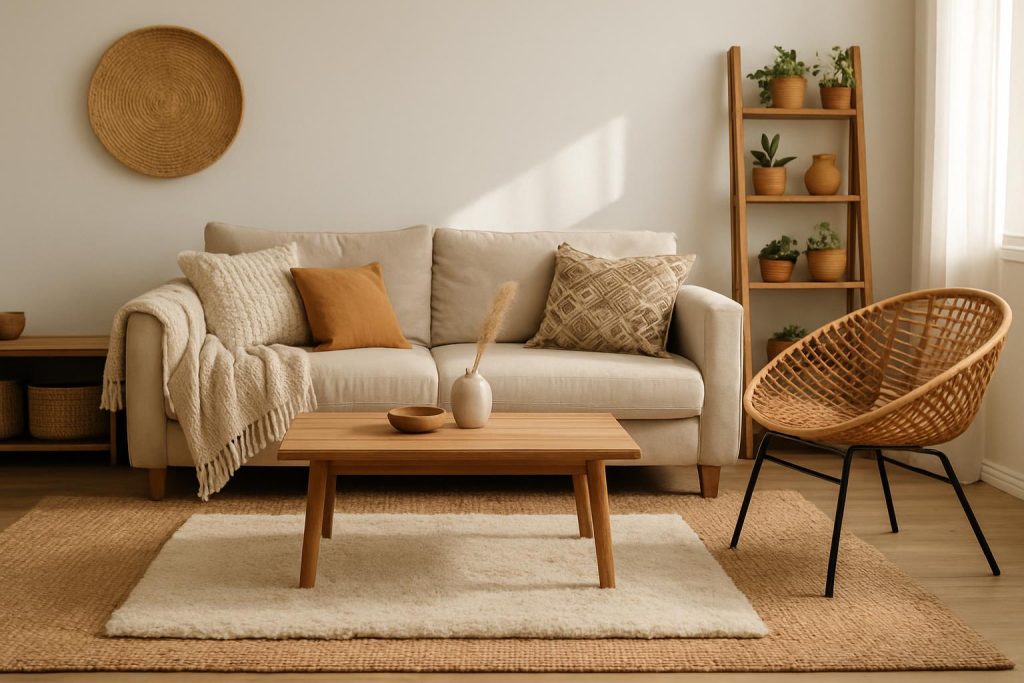
Start with a large flatweave or jute rug as a base. Layer a smaller plush or patterned rug on top to add color and softness. Keep edges aligned or offset slightly to mark zones. Use non-slip underlays to prevent movement and reduce tripping hazards.
Throws and pillows
Mix textures like cotton, wool, linen, and velvet. Blend solids with small-scale patterns and a few bolder prints. Use removable, washable covers for easy cleaning. Vary pillow sizes and shapes for a relaxed, tailored look.
Curtains and window softness
Hang light-filtering linen or cotton curtains to soften light. Mount the rod high and wide to make windows feel larger. If privacy is needed, layer sheer panels under heavier curtains. Choose natural tones or subtle patterns that echo your accent colors.
Add Natural Elements
Plants and simple care
Plants add life, texture, and a calming mood. Start with three to five easy plants like pothos, snake plant, or ZZ plant. Group by light needs near windows. Use saucers to protect floors. Rotate pots monthly for even growth. Dust leaves during regular cleaning so they can breathe.
Natural materials to ground the room
Bring in rattan, cane, jute, seagrass, bamboo, wood, clay, and stone. Balance rough textures with smooth surfaces. A woven bench, wood stools, and clay pots create depth without visual noise.
Lighting For A Cozy Atmosphere
Layered lighting plan
Use three layers. Ambient lighting from a ceiling fixture or paper lantern gives overall glow. Task lighting from a floor lamp near the sofa or a reading chair supports activities. Accent lighting from table lamps, LED string lights, and candles sets the mood. Choose warm bulbs around 2700K for a relaxed feel. Add dimmers if possible to shift from day to night.
Art And Objects With Meaning
Build a balanced gallery wall
Plan one focal wall. Combine framed prints, woven baskets, textiles, and a mirror for light bounce. Keep spacing even. Use paper templates to test layouts before hanging. Echo your accent colors within the art mix.
Handmade pieces and travel finds
Show a few handcrafted items like pottery, carved wood, or handwoven textiles. Mix in travel finds with a story. Avoid clutter by grouping on trays, shelves, or inside a display cabinet.
Small Spaces And Rentals
Small room strategies
Choose compact seating and armless chairs to save space. Use nesting tables instead of a large coffee table. Hang curtains high to lift the eye. Use mirrors to reflect light. Keep the palette tight and edit accessories.
Rent friendly upgrades
Use removable wallpaper or decals on a feature wall. Add oversized art to cover large areas of blank wall. Layer rugs over basic carpet. Use freestanding shelves for storage and display. Swap in woven or linen lampshades with warm bulbs. Use adhesive hooks for hanging plants and light art pieces.
Pets And Kids Friendly Boho
Pick performance fabrics, slipcovers, and washable pillow covers. Choose low pile rugs or indoor outdoor rugs that clean easily. Place baskets for quick toy cleanups. Anchor furniture to walls if needed. Keep plants that are non-toxic to pets and kids.
Cleaning And Maintenance
Textile care
Vacuum rugs weekly with a brushless attachment to protect fibers. Shake out smaller rugs outdoors. Wash pillow covers and throws according to fabric instructions, usually on gentle with mild detergent. Rotate cushions and rugs every two to three months for even wear.
Plant upkeep and surface care
Dust leaves weekly with a soft cloth. Water based on plant type and season. Protect wood with coasters and trays. Wipe rattan and cane with a dry cloth and deep clean with a lightly damp cloth followed by thorough drying.
Monthly refresh routine
Edit accessories once a month. Remove what you do not love, then restyle shelves and tables. Fluff pillows, refold throws, and trim plant leaves. Check non-slip pads and rug alignment. This keeps the room organized and inviting.
Sustainable And Budget Tips
Thrift and upcycle
Shop secondhand for solid wood tables, woven baskets, and ceramic pots. Refinish or oil wood to revive it. Replace knobs with brass or wood pulls to update thrifted pieces. Wash textiles before use and allow to air dry.
Materials to look for
Prefer natural fibers like cotton, linen, wool, jute, and hemp. Choose wood over veneers when possible. Look for OEKO TEX or GOTS labels on textiles when budget allows. Opt for LED bulbs to save energy and reduce heat.
Weekend Makeover Plan
Day 1 plan
Clear the room and clean surfaces. Paint or install removable wallpaper on the feature wall. Lay the base rug and place the sofa. Add the coffee table and main storage. Hang curtains. Set up the overhead light and one floor lamp.
Day 2 plan
Layer the second rug. Add pillows and throws. Place side tables and table lamps. Style shelves with books, baskets, and a few objects. Hang art or build the gallery wall using paper templates. Add plants with saucers and adjust placement for light. Do a final edit to remove anything that crowds the layout.
Sample Shopping Checklist
Neutral sofa or slipcover. Two rugs in different textures. Two accent chairs or one chair and a pouf. Coffee table and two side tables. Media console with hidden storage. Linen or cotton curtains and a sturdy rod. Floor lamp and two table lamps with warm bulbs. LED string lights or a paper lantern. Three to five pillow covers and two throws. Baskets for storage. Planters with saucers and easy care plants. Art frames, mirror, and hanging hardware. Non-slip rug pads and felt pads for furniture feet.
Common Pitfalls And Fixes
Too many patterns: keep one large pattern, one medium, and two small. Too many colors: limit to two or three accents and repeat them. Cluttered surfaces: use trays to group items and leave clear space for function. Dark corners: add a lamp or reflective mirror. Slippery rugs: use non-slip underlays and check alignment monthly.
Conclusion
A cozy and eclectic boho living room grows through thoughtful layers. Start with a neutral base and a clear layout. Add character with textured rugs, natural materials, meaningful art, and plants. Choose lighting that supports both tasks and mood. Keep maintenance simple with washable textiles and monthly refreshes. Build the room step by step and let it evolve with you.
FAQ
Q: How do I start a boho living room on a small budget?
A: Keep your existing sofa, add two layered rugs with non-slip pads, bring in three to five washable pillow covers and two throws, add a floor lamp with a warm bulb, group a trio of easy plants in simple planters, and thrift a side table or storage basket to hold remotes and blankets.
Q: What colors work best for a cozy boho palette?
A: Use an earthy base like warm white, sand, oatmeal, clay, or soft taupe, then add two or three accents such as terracotta, olive, mustard, indigo, or rust. Repeat accents across textiles, art, and small decor to keep the room unified.
Q: How can I layer rugs without tripping hazards?
A: Start with a large flatweave or jute rug, place a smaller plush or patterned rug on top, use non-slip underlays, align edges or offset them slightly to define zones, and keep edges out of main walkways.
Q: What lighting should I use for a relaxed boho vibe?
A: Use ambient lighting from a ceiling fixture or paper lantern, task lighting from a floor or table lamp, and accent lighting from table lamps, LED string lights, and candles, all with warm bulbs around 2700K. Add dimmers if possible to shift from day to night.
Q: How can I make a small rental feel boho without paint?
A: Use removable wallpaper or decals on one wall, hang oversized art, layer rugs over basic carpet, add freestanding shelves for storage and display, swap in woven or linen lampshades with warm bulbs, and use adhesive hooks for hanging plants and light art pieces.