
We are reader supported. When you purchase through links on our site, we may earn an affiliate commission. Also, as an Amazon affiliate, we earn from qualifying purchases.
High places collect dust fast and are easy to ignore. The right vacuum turns that risky balancing act into a quick, safe routine. If you pick a model that is light, well balanced, and built with the right tools, you can clean crown molding, ceiling fans, vents, beams, and tall shelves without straining your arms or climbing too high. This guide breaks down what matters and reviews four vacuums that make overhead cleaning simple and effective.
What matters for high places
Weight and balance. Overhead cleaning is all about control. A vacuum under about 7 pounds with a balanced wand reduces fatigue. A lighter head on the end of the wand also helps you steer precisely along ledges and fan blades.
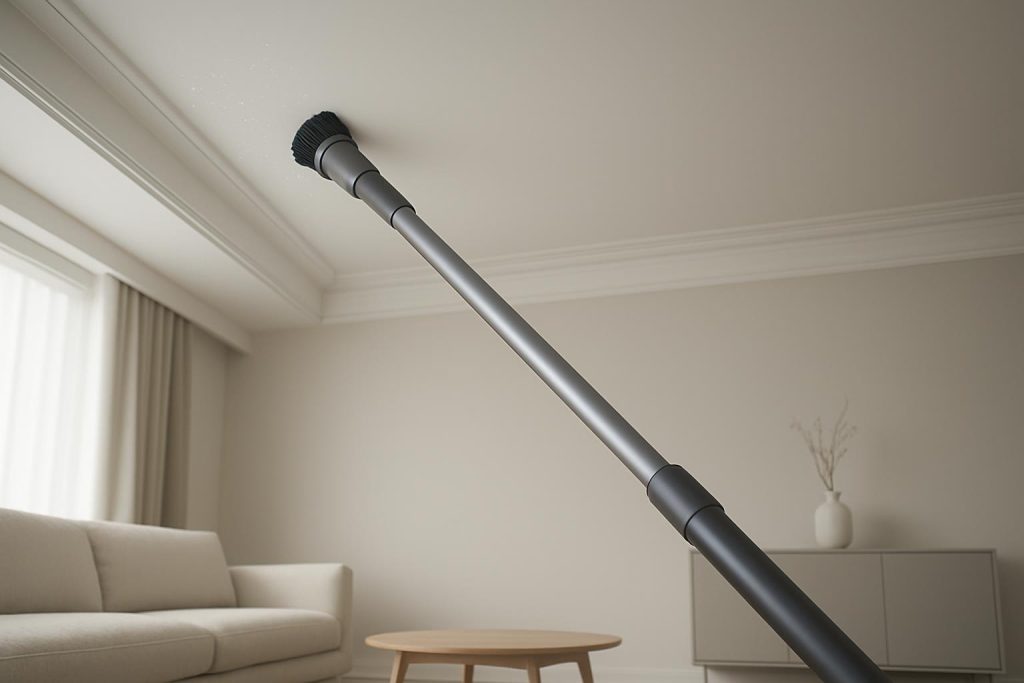
Reach and tools. Look for a long rigid wand for stability, a soft dusting brush for ledges and blinds, a narrow crevice tool for vents, and a pivoting or angled adapter if the brand offers one. A flexible hose option is excellent for awkward corners since it lets you keep most of the weight low while guiding only the nozzle overhead.
Suction and filtration. Strong suction lifts fine dust that settles on high surfaces. Sealed filtration reduces the chance that dust escapes back into the room. For overhead work, non-motorized tools usually outperform powered brush heads, since you want gentle dusting with direct suction, not aggressive agitation.
Cordless vs corded. Cordless is easier to move around and safer when you are near steps or a stool. Corded gives unlimited runtime for large jobs and steady power. Both work well for high places if the weight and tools are right.
Safety and technique. Keep your stance stable. Work from the top down to avoid re-dusting clean areas. Stand slightly to the side so falling dust misses you. Use two hands on the wand for control when needed. Do not overreach; move your feet instead of leaning.
The 4 best vacuum cleaners for reaching high places
Dyson V15 Detect
Why it helps. The V15 delivers powerful suction in a body that is still comfortable to lift overhead. The long rigid wand and precise tools make it easy to run along crown molding, beams, and curtain rods. The laser hard floor head is not for ceilings, but it reveals fine dust on shelves and ledges, which is a helpful cue for visual cleanup. The whole-machine filtration keeps fine dust in the bin, not in your air.
Notable features for overhead cleaning. The soft dusting brush is gentle on paint and wood trim. The crevice tool slides into vent grilles and tight ceiling corners. The combination tool is handy for quick switches between a narrow nozzle and a brushing action. The battery status readout helps you pace your high-area routine without guessing.
Real-world use. I think the V15 feels balanced enough overhead if you keep your movements controlled. For tall bookshelves and cabinet tops, Eco or Auto mode is plenty; you rarely need Boost above your head. The wand locks positively, so you can steer along edges without flex. On fan blades, a soft brush pass in one direction followed by a crevice pass along the trailing edge clears the residue efficiently.
Best for. Homes with mixed floors and lots of trim detail. Allergy-sensitive households that want sealed filtration while dusting elevated areas.
Potential downsides. The price is high. Holding a trigger during long overhead sessions can tire your hand. With the motor at the handle, you will still feel some top-end weight over time; short sessions are more comfortable.
Setup tips. Start in Eco or Auto to keep the head steady. Use the soft dusting brush first to loosen fine dust and prevent scuffs, then follow with the crevice tool for edges and vents. Keep the bin below shoulder level when you detach tools to avoid accidental spills.
Maintenance notes. Empty the bin often when doing overhead work so you do not exceed the max fill line. Rinse filters as directed and let them dry fully to maintain suction and keep fine dust trapped.
Shark Rocket Ultra-Light Corded HV302
Why it helps. This corded stick is light in the hand and holds steady on long reaches. Constant power means you can clean every room’s high edges and never think about battery life. The motor near the handle keeps the head end light, which is a plus when you are guiding a nozzle along ceilings and around light fixtures.
Notable features for overhead cleaning. The long wand gives you solid reach without wobble. The crevice tool tracks along vents and tight corners. The dusting brush is good for blinds, moldings, and tops of frames. Since the brushroll is not involved in overhead work, you can keep the floor head off and run only the wand with a non-motorized tool for less weight.
Real-world use. I think the HV302 shines when you have a lot of high trim or beams to clean in one go. The cord can be managed with the built-in clip, and the light head makes it easy to control angles without overcorrecting. Dust on ceiling corners lifts well with a gentle brush pass followed by a crevice pass. It also works well for high stairwell edges where you want steady power without pausing.
Best for. Long sessions, older homes with extensive molding, and anyone who prefers predictable corded power for overhead detail work.
Potential downsides. You have to manage a cord around ladders or stools. Filtration is not as tight as premium sealed systems, so be steady with your strokes to avoid stirring dust. Noise is present, especially in tight stairwells.
Setup tips. Loop a bit of slack of the cord over your shoulder so it does not tug. Choose the dusting brush first on painted trim. Use the crevice tool along the line where wall meets ceiling to collect cobweb anchors without smearing them.
Maintenance notes. Tap filters gently and wash per the manual to keep airflow high. Inspect the wand connection points so they seat firmly before overhead passes.
Tineco Pure One S11
Why it helps. The S11 is light, easy to steer, and smart about power. Its auto-adjust suction focuses on what is in front of the nozzle, which saves battery during overhead dusting where you do not need max power all the time. The wand is rigid and the tool set covers most high tasks.
Notable features for overhead cleaning. The soft dusting brush is kind on finishes and collects the fine layer that settles on cabinet tops and curtain rods. The long crevice tool is slim and reaches inside air vents. The real-time status display helps you pace your route so you can finish high areas in one pass.
Real-world use. I think the S11’s balance makes it comfortable for ceiling corners and tall shelves. The dirt-detection system is useful; you can see when an area is clean without reworking the same edge. For studio apartments and smaller homes, the battery runtime is plenty for a complete high dusting loop if you stick to non-motorized tools.
Best for. Small to mid-size homes where you want a lightweight cordless for daily maintenance and periodic high-area dusting with minimal strain.
Potential downsides. The dust bin is modest, so plan quick empties during heavy cobweb jobs. Replacement batteries and filters can add cost over time. Suction is strong for daily use but not as intense as top-tier flagship models; for high areas, that is usually fine.
Setup tips. Use Auto mode for most overhead jobs. Start with the soft brush on ledges, then detail with the crevice tool. Keep your arms close to your body to reduce fatigue, and make short, controlled strokes.
Maintenance notes. Clean sensors and filters as instructed so Auto mode stays responsive. Empty promptly after overhead work to avoid a puff of dust when opening the bin.
Black+Decker 20V Max Flex Handheld with Hose
Why it helps. The Flex uses a long, flexible hose so you do not have to lift a stick vacuum overhead. You keep the main unit near waist level or on a stable surface and guide only the nozzle up high. This reduces arm strain and is excellent for vents, blinds, shelves, and tight corners.
Notable features for overhead cleaning. The narrow nozzle with a flip-up brush handles trim and ledges. A small pet hair or turbo brush helps on fabric shades and lampshades at low speed, though for most overhead jobs the standard tools are better. The hose gives you accurate control around light fixtures and inside return grilles.
Real-world use. I think this is the easiest way to clean very awkward spots. For tall kitchen cabinets, I set the unit on the counter, extend the hose, and sweep the top edges with the brush. For ceiling vents, the hose lets me approach straight on without twisting my wrist. It is also convenient for car interiors and closets, making it a versatile secondary tool.
Best for. Apartments, dorms, and any home that wants a lightweight, flexible option for high dusting without lifting a full stick vac.
Potential downsides. It is not a floor vacuum, so you still need something else for large areas. The bin is small. The sound is higher pitched than many sticks. Runtime is fine for spot dusting but not suited for whole-home floor cleaning.
Setup tips. Place the unit on a stable surface or hold it at your side, then guide the hose with your other hand. Use the brush on painted trim to avoid marks. Empty the bin before and after high dusting so you do not blow settled dust when opening it.
Maintenance notes. Tap the filter and wash per guidance to keep suction steady. Check the hose for kinks and store it loosely coiled to preserve flexibility.
How to choose the right one for your home
If you want the strongest all-rounder. Choose Dyson V15 Detect. It offers high suction, excellent filtration, and precise tools. It is the most capable for mixed floors and high detail if you are comfortable with the trigger and the investment.
If you have long sessions and lots of trim. Choose Shark Rocket HV302. Unlimited runtime and a light head make it reliable for deep overhead rounds without battery planning.
If you need light and smart control. Choose Tineco Pure One S11. It is easy to steer, adjusts power on the fly, and is comfortable for regular high dusting in smaller to mid-size homes.
If you want the easiest overhead reach with minimal lift. Choose Black+Decker 20V Max Flex with hose. It handles awkward angles and vents with less strain by keeping the weight low.
Attach the right tool. For vents, use a crevice tool. For shelves, blinds, and moldings, use a soft dusting brush. For fabric shades, a small upholstery or pet brush on low suction helps. Avoid powered floor heads overhead; they are heavier and not necessary.
Mind your technique. Work top down, stand slightly aside, and take short strokes. If you feel your shoulders lifting toward your ears, lower your arms and reset your stance. Clean little and often; that is easier than a marathon dust day.
Conclusion
Reaching high places is easy if your vacuum is light, stable, and equipped with the right tools. Dyson V15 Detect leads for overall power and filtration. Shark Rocket HV302 delivers steady corded reach for long rounds. Tineco Pure One S11 balances weight and smart control for daily maintenance. Black+Decker 20V Max Flex uses a hose to remove most of the lift and targets awkward angles with ease. Pick the one that fits your home size, your cleaning style, and your comfort with cords or batteries. Use soft brushes, long crevice tools, and good technique, and those high edges will stay clean with far less effort.
FAQ
Q: What type of vacuum is easiest for cleaning ceilings and crown molding
A: A lightweight stick with a long rigid wand and a soft dusting brush works best. A compact hose vacuum like the Black+Decker Flex is also very easy because you keep the weight low and guide only the nozzle overhead.
Q: Which model here has the strongest overall cleaning for mixed floors and high spots
A: Dyson V15 Detect stands out for high suction, precise tools, and sealed filtration, making it the strongest all-rounder for both floors and elevated areas.
Q: I have a lot of high areas to clean in one go. Should I choose corded or cordless
A: Corded makes sense for long sessions because you get unlimited runtime and steady power. Shark Rocket HV302 is a solid pick for this use.
Q: What attachments should I use for air vents, ceiling fans, and ledges
A: Use a crevice tool for vents and tight corners, a soft dusting brush for ledges and blinds, and a gentle pass on fan blades. Non-motorized tools are usually best overhead.
Q: How do I reduce arm and neck strain while vacuuming overhead
A: Keep the tool light, use two hands on the wand when needed, make short strokes, and stand slightly aside so dust falls past you. A hose-based model like the Black+Decker Flex also reduces strain by keeping most of the weight low.