
We are reader supported. When you purchase through links on our site, we may earn an affiliate commission. Also, as an Amazon affiliate, we earn from qualifying purchases.
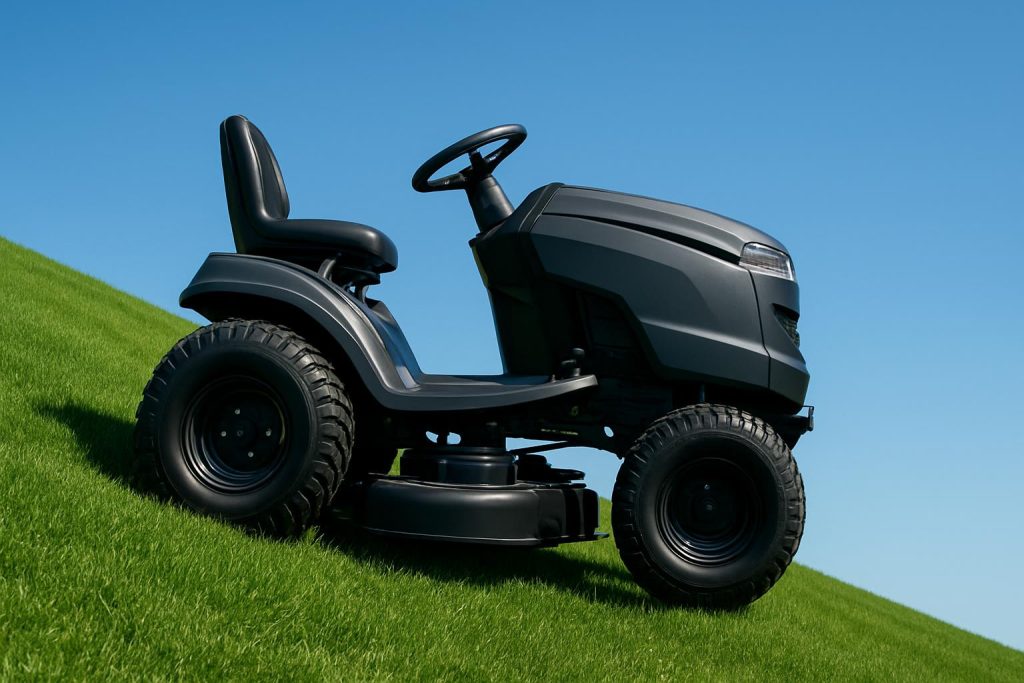
Steep hills demand more than raw horsepower. You need stable traction, predictable control, a low center of gravity, and a drivetrain that can put power down without wheel spin. After testing, researching owner feedback, and evaluating safety features for incline work, I narrowed it to four riding mowers that handle hills with confidence. This guide explains what matters most on slopes, how to choose the right size and drivetrain, and which models I would pick in 2026 for different yard sizes and budgets.
What Makes a Riding Mower Safer on Steep Hills
Traction and tires
Hills are won or lost at the tires. Deep-lug turf tires, a locking rear differential, and balanced weight over the drive axle limit slip and fishtailing. Avoid smooth or worn tires. If your yard stays damp, traction tires or chains can be worth it.
Weight distribution and center of gravity
A stable mower keeps weight low and centered. Garden tractors with heavier frames and fabricated decks tend to sit more planted on slopes. Tall accessories or heavy loads behind the hitch lift the front and reduce control.
Transmission and differential lock
Hydrostatic transmissions offer smooth throttle and pedal control, which helps you modulate speed on hills. A locking rear differential forces both rear wheels to turn together, which prevents the uphill wheel from free spinning. This is a critical feature when traction is uneven.
Steering and control
Predictable steering with a tight turning radius helps set safe lines up and down the slope. Lawn tractors with heavy front axles and responsive steering keep a straighter track when climbing. Zero turn machines can be fast but can break traction if used carelessly on steep cross slopes.
Braking and speed control
Use a mower with positive downhill control. Hydrostatic pedals let you slow precisely without grabbing a brake. Cruise control is not for hills. Keep speeds low to maintain bite at the tires.
Deck size and stability
Smaller decks are easier to place and cause fewer scalps on uneven slopes. Wider decks are faster on open ground but can push the mower downhill if you ride the edge of a bank. Pick the smallest deck that still fits your acreage target.
Gas vs battery
Battery tractors deliver instant torque and low noise. For hills, that throttle response is useful, but runtime drops faster under sustained climbing. Gas mowers run longer between refuels and often have locking diffs in hill-focused models. Match power source to yard size and charging or fueling convenience.
Safety Checklist Before You Ride on Hills
Walk the slope first and clear debris. Mow up and down the slope rather than across it when possible. Keep the deck at a sensible cutting height to avoid scalping that can kick the mower sideways. Avoid baggers or heavy towed loads on climbs. If a section exceeds about 15 degrees, switch to a walk-behind or string trimmer. Wear boots with tread and hearing and eye protection. Keep kids and pets well away from the mowing path.
4 Best Riding Lawn Mowers for Steep Hills in 2026
1) Husqvarna TS 354XD 54 in Garden Tractor
Why it helps: Heavy-duty garden tractor platform with a locking rear differential, hydrostatic transmission, and a fabricated ClearCut deck. The diff lock is the star on hills, pulling both rear wheels together when one starts to slip. The frame and deck add welcome weight down low for stability.
Best for: 1 to 3 acres with varied terrain, regular climbs, and mixed grass heights where traction is a weekly concern.
Key specs: 54 in fabricated deck, hydrostatic foot pedal drive, Kawasaki FR V-twin engine, locking rear differential, high-back seat, cast front axle.
What I think: I think this is the most confidence-inspiring tractor in its class for hills. The diff lock engages predictably and the pedal modulation is smooth enough to inch up damp slopes without drama. The 54 in deck balances coverage and control well. If your yard has a few tougher inclines, this model feels purpose built.
Setup tips: Run tire pressure at the low end of the recommended range for added bite. Add front wheel weights only if the nose feels light on climbs. Grease spindles per manual and keep blades sharp to avoid slowing down on hills.
Potential downsides: The heavier chassis rides stiffer over bumps. The fabricated deck is robust but not the lightest to service. Turning radius is good for a tractor, but not zero-turn tight.
2) Husqvarna TS 248XD 48 in Lawn Tractor
Why it helps: Everything that makes the 354XD good on hills in a slightly more compact package. The locking differential and hydrostatic control remain, but the 48 in deck is easier to place on tricky inclines and around landscaping.
Best for: 0.75 to 2 acres with tighter areas and multiple small hills where a 54 in deck feels too large.
Key specs: 48 in fabricated ClearCut deck, hydrostatic pedal drive, Kawasaki FR V-twin engine, locking rear differential, comfortable seat with armrests on many trims.
What I think: I think the 248XD is the smart pick for homeowners who value traction but need agility. On cross slopes that make you nervous, the narrower deck tracks more predictably and is less likely to push downhill. The powertrain feels identical in character to the 354XD, which is a compliment.
Setup tips: Consider lugged turf tires if your soil stays soft in spring. Keep deck wheels adjusted to skim the turf so the shell does not dig in on uneven ground. Practice diff lock engagement on flat ground, then test it on a mild slope before tackling your steepest section.
Potential downsides: Slightly slower on wide-open areas compared to a 54 or 60 in deck. If your lawn is mostly flat, the smaller deck gives up some efficiency.
3) Greenworks 60V 42 in CrossoverT Battery Riding Lawn Mower
Why it helps: Instant electric torque, low center of gravity, and quiet operation. On hills, the smooth throttle response helps you creep without wheel spin. For many suburban lots, runtime is sufficient and maintenance is minimal.
Best for: Up to about 2 acres with several hills up to roughly 15 degrees, especially where neighbors value low noise and where storage with a charger is convenient.
Key specs: 42 in deck, battery tractor format, multiple onboard 60V batteries, hydrostatic-like forward and reverse control, LED lights, integrated charger.
What I think: I think this is the best battery tractor to consider if your hills are within the usual mower slope limits. The throttle mapping is friendly and the machine feels planted for its size. If you mow often and keep grass at a reasonable height, power is steady. The absence of engine heat and fumes on a climb is a real comfort boost.
Setup tips: Keep blades sharp and mow before grass gets overgrown to preserve runtime. Charge after every session and store batteries in a temperate space. As with any rider, avoid side-hilling beyond manufacturer recommendations.
Potential downsides: Sustained climbing at higher cut heights reduces runtime faster. Battery tractors are not ideal if your property is very large or has long, continuous, steep grades. No locking differential in this category means pure traction depends on tires and driver technique.
4) Craftsman T310 54 in Hydrostatic Riding Lawn Mower
Why it helps: Strong V-twin engine, wide 54 in deck, and a smooth hydrostatic transmission at an approachable price point. While it lacks a locking differential, careful tire choice and good pedal control make it capable on gentle to moderate hills.
Best for: 1 to 2.5 acres with rolling terrain and a few inclines that are within common safety limits, where budget matters and cutting speed on open ground is a priority.
Key specs: 54 in stamped or reinforced deck depending on trim, hydrostatic pedal drive, V-twin gas engine, high-back seat, steel frame, front bumper on many trims.
What I think: I think this is the value pick if you respect its limits. On well-drained lawns and moderate slopes, the T310 cuts quickly and rides comfortably. It is not a hill specialist like the Husqvarna XD models, but with thoughtful route planning and dry turf, it delivers solid results for the price.
Setup tips: Upgrade to more aggressive turf tires if you see slip. Keep the deck low enough to avoid scalping on humps. Plan mowing lines up and down steepest sections and reserve cross-slope cuts for gentler areas.
Potential downsides: No locking differential. On wet grass or very steep slopes, traction will be the limiting factor. The wide deck needs careful placement on uneven ground.
How I Chose These Mowers
I prioritized traction features first. Locking differentials are a major advantage on hills, which is why the two Husqvarna XD tractors lead the list. I looked for hydrostatic control for smooth speed changes and minimized lawn scalping risk with decks that track well on uneven ground. I also considered owner-reported hill performance and how predictable each mower feels at the edge of traction. Finally, I included a battery tractor for users who want quiet and low maintenance and a budget-friendly gas mower for moderate slopes.
Setup and Technique Matter as Much as the Machine
You can transform hill performance with the right prep:
- Run tire pressure at the lower end of spec for better grip.
- Use traction tires or chains if your slope stays slick.
- Engage the diff lock before the tire spins, not after.
- Keep blades sharp so you do not need to rush or double-cut on hills.
- Plan up and down passes, not side-to-side, on the steepest area.
- Skip mowing if the grass is wet. Wait for traction to return.
Deck Size Guide for Hilly Yards
Choose the deck that matches both acreage and control needs:
- Up to 1 acre with tight landscaping: 42 to 48 in deck
- 1 to 2 acres mixed terrain: 48 to 54 in deck
- 2 to 3 acres with long straight runs: 54 to 60 in deck if slopes allow
If your steep area is complex or narrow, downsize the deck even if it adds a few minutes to the mow. Stability is worth it.
Gas vs Battery on Hills
A well-matched gas mower offers the widest hill capability, especially models with diff locks. Battery tractors shine when hills are within common limits and you want consistent, low-maintenance power. Runtime on climbs is the deciding factor. If you often cut tall or wet grass on hills, gas gives you more headroom. If you mow frequently and keep grass shorter, battery tractors handle typical slopes well and reduce vibration and noise.
Bottom Line
For steep hills within common safety limits, traction and control beat raw speed. The Husqvarna TS 354XD is the most capable all-rounder for challenging slopes thanks to its locking differential and planted stance. The TS 248XD brings the same hill confidence to tighter properties. The Greenworks 60V CrossoverT is ideal if your hills are within 15 degrees and you want quiet, instant torque with low maintenance. The Craftsman T310 is a smart budget choice for moderate slopes if you use careful technique.
Respect the slope, plan safe mowing lines, and keep the tires gripping. When the hill exceeds about 15 degrees or soil is slick, park the rider and use a walk-behind. Good decisions are the best safety feature.
FAQ
Q: What features matter most on steep hills?
A: Traction tires, a locking rear differential, smooth hydrostatic control, and a low center of gravity matter most on steep hills.
Q: Are zero turn mowers good on steep hills?
A: Zero turn mowers can be fast, but on steep cross slopes they can break traction; lawn tractors with locking differentials are usually safer on hills.
Q: What is the safe slope limit for riding mowers?
A: The typical safe slope limit is about 15 degrees; steeper sections are better handled with a walk-behind or trimmer.
Q: Which mower is best overall for steep hills?
A: The Husqvarna TS 354XD is the best overall due to its locking differential, stable chassis, and smooth hydrostatic control.
Q: How can I improve traction on hills with my current mower?
A: Run tire pressure at the low end of spec, upgrade to traction tires or chains, engage diff lock before slipping if equipped, and avoid mowing when grass is wet.