
We are reader supported. When you purchase through links on our site, we may earn an affiliate commission. Also, as an Amazon affiliate, we earn from qualifying purchases.
If you own a concrete pool, you need an automatic cleaner that can handle a rough surface, heavy debris, and long seasons of use. This guide shows you what matters, how to choose fast, and which models stand out right now. Keep reading if you want fewer hours skimming and scrubbing, and a pool that actually looks clean at the waterline.
Why concrete pools need the right cleaner
Concrete surface needs real scrubbing
Concrete, plaster, and exposed aggregate surfaces hold onto algae and fine dust. You need a cleaner with strong active brushes or high-pressure jets that can break that grip. Passive gliding is not enough on concrete.
Traction matters on rough walls
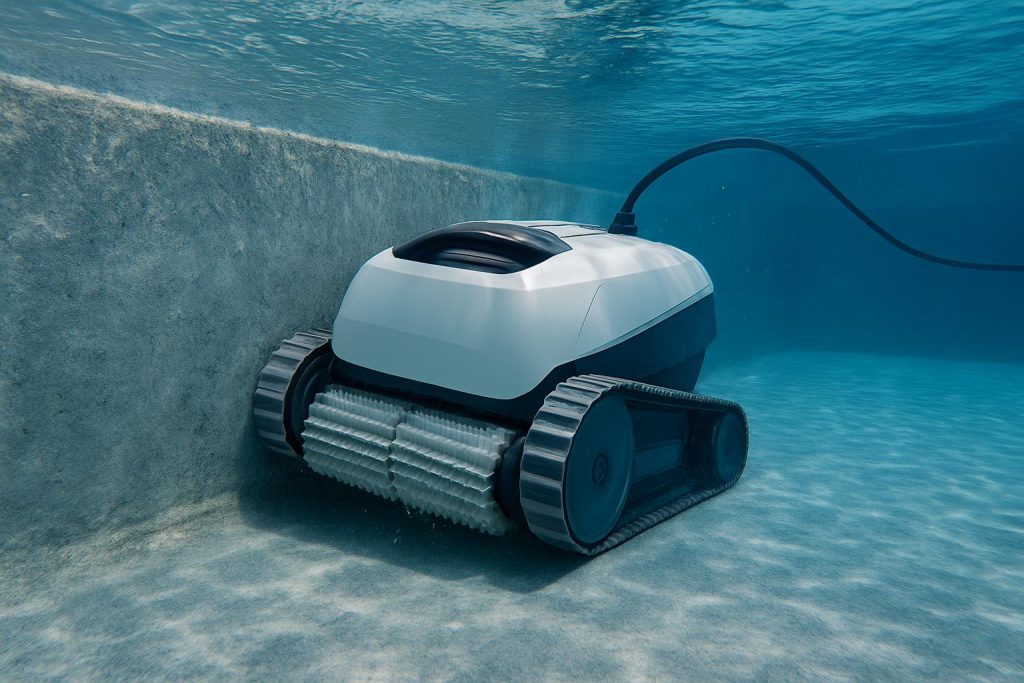
Rubber tracks or wide wheels with reliable gearing help a cleaner climb and hold on. Tracks tend to grip better on concrete, especially on deeper slopes and the deep end wall.
Filtration must match your debris
Concrete pools often collect both fine plaster dust and larger leaves. A good cleaner offers two filter options or a large debris bag plus a fine filter basket. If your pool sits under trees, capacity and leaf handling matter.
Coverage must include the waterline
The waterline is where sunscreen and biofilm build up. A cleaner that scrubs floor, walls, and the waterline will keep the pool looking clean longer and reduce manual brushing.
Energy use differs by type
Robotic cleaners use a low-voltage motor and are typically the most energy efficient. Pressure-side cleaners use a booster pump and cost more to run. Suction-side cleaners use your filtration pump and sit in between on energy cost, but they add load to your filter system.
Pool size and shape define reach
Match cable or hose length to the farthest point of your pool with at least a small buffer. For complex shapes with benches and sun shelves, look for smart navigation and strong wall performance.
Top picks for concrete pools
Best overall robotic cleaner for concrete pools: Dolphin Premier
The Dolphin Premier balances strong scrubbing, smart navigation, and durable build that suits rough concrete surfaces. Dual active brushes agitate algae on plaster and pebble finishes, and tracked drive helps it climb and hold to walls. It covers floor, walls, and waterline with steady contact. Interchangeable filter options handle both fine dust and larger leaves. This model suits mid to large in-ground concrete pools and is a strong choice if you want deep cleaning without babysitting.
Reasons to choose it include reliable traction on concrete, effective waterline scrubbing, and flexible filtration for mixed debris. Reasons to skip it include a higher price and a heavier lift out of the water. If you want maximum hands-off performance and a cleaner that can keep up with a rough surface, the Premier is worth it.
Best value robotic: Dolphin Nautilus CC Plus
The Nautilus CC Plus hits a sweet spot on cost and cleaning power. It includes dual brushes and good wall climbing on most concrete pools. It runs a straightforward cleaning cycle, handles fine dust with its cartridge filters, and has a cable long enough for many residential pools. It is simple to use and easy to clean after each cycle.
Choose it if you want a reliable robotic at a midrange price and can live without app controls. Skip it if your pool collects very heavy leaves week after week or if you expect advanced mapping and spot cleaning features.
Best for heavy leaves and large debris: Polaris 3900 Sport pressure-side
If your concrete pool sits under shedding trees, the Polaris 3900 Sport moves a lot of water and pushes leaves into a large-capacity bag before they reach your filter. Its pressure jets and rugged wheels make it strong on rough surfaces, and it can run daily in peak leaf season. It requires a dedicated pressure line and a booster pump, which adds to install and energy cost.
Choose it for heavy leaf loads and constant debris. Skip it if you do not have a booster pump line or if you want fine dust removal in one pass. Many owners pair a pressure-side cleaner for leaf season with occasional manual brushing or a separate fine filter pass.
Best suction-side budget pick: Hayward PoolCleaner
The Hayward PoolCleaner, in two-wheel or four-wheel versions, is a durable suction-side cleaner that handles concrete reliably. Its self-adjusting turbine vanes keep it moving on variable flow, and the tire treads grip rough surfaces. The two-wheel version suits smaller pools with simpler shapes, and the four-wheel version suits larger or deeper pools where extra stability helps.
Choose it if you want a simple, cost-effective cleaner that runs off the existing pump. Skip it if you need waterline scrubbing, app control, or the ability to capture ultra-fine dust in one cycle. Keep your filter and pump baskets clean to maintain performance.
Best cordless robotic convenience: Aiper Seagull Pro
The Aiper Seagull Pro offers cordless operation, which keeps tangles out of the picture and speeds setup. It is useful for routine maintenance on concrete pools, collects fine to medium debris, and climbs walls in many pools. Battery runtime limits coverage in very large pools, and wall scrubbing power is lighter than top corded robots.
Choose it if you prioritize quick deployment and no cable management. Skip it if you need aggressive waterline scrubbing or long runtime for large pools.
Quick pick advice by pool and debris type
For plaster with visible algae or biofilm
Pick a robotic with active brushes and verified wall and waterline coverage. The Dolphin Premier and Nautilus CC Plus fit this need. Expect better control of that stubborn ring at the waterline.
For pools under trees with constant leaves
Pick a pressure-side cleaner like the Polaris 3900 Sport for large debris capacity. Consider running it during leaf drops and supplement with a fine filter pass when needed.
For tight budgets and simple shapes
Pick a suction-side unit like the Hayward PoolCleaner. Accept that you will brush the waterline and steps as needed.
Buying guide for concrete pool cleaners
Brush type and scrubbing force
Active spinning brushes are a must on concrete. Look for dual brushes or high-speed front brushes. For exposed aggregate finishes, soft PVC or rubberized brushes protect the surface while still dislodging algae. Avoid metal bristles.
Drive system and climbing
Tracked drive offers better grip on rough plaster and deeper slopes. If you choose wheels, look for wide tires with good tread and steady gearing. Confirm the cleaner can climb and scrub the waterline if you want less manual work.
Filtration configuration
Concrete pools produce fine dust that passes through coarse screens. Choose a robot with a fine filter basket or swappable cartridges. If you also handle acorns and stringy leaves, ensure there is a large debris option or a wide intake that will not clog easily.
Cable or hose length and swivel
Measure the farthest point of the pool from the power source or skimmer. Add extra length for routing. A swivel on a robotic cable reduces tangles, which protects motors and preserves coverage.
Pool shape, steps, and shelves
Complex shapes demand smart navigation and consistent traction. Few cleaners handle sun shelves and steps perfectly. Expect to brush steps occasionally no matter which cleaner you buy.
Energy and total cost of ownership
Robotics cost more upfront but use less power per cycle and reduce load on your filtration system. Pressure-side cleaners move debris to a bag and keep leaves out of filters but need a booster pump. Suction-side cleaners are inexpensive but rely on your filter and pump to move everything, which can increase backwashing or filter cleanings.
Maintenance and parts availability
Choose a brand with accessible filters, brushes, belts, and tracks. Easy access saves time during mid-season cleanouts. Check for local service or clear DIY guides and parts availability.
Setup tips by cleaner type
Robotic setup
Place the power supply at least a few feet from the water. Unspool only the cable length you need to reach all corners. Submerge the robot and purge air by tilting it until bubbles stop. Select the fine filter when dust is visible and the larger basket when leaves are thick. Rinse the filter after every run to keep flow high.
Pressure-side setup
Confirm a working booster pump and a dedicated pressure line. Install the debris bag with the seam facing the correct direction to prevent blowouts. Adjust the sweep tail to avoid spraying decks. Set the wheel RPM within the manufacturer range for best wall contact and coverage. Check the bag during heavy leaf days and empty before it is overfull.
Suction-side setup
Start with a clean pump basket and filter. Set hose length to reach the farthest point with one extra hose section. Adjust flow using the regulator to achieve proper wheel or foot pad motion. Use a vacuum plate at the skimmer or connect to a dedicated suction port. Expect best performance when the main drain is partially closed to direct more suction to the cleaner.
Care and maintenance that extends lifespan
After each use
Rinse filter baskets, bags, and brushes with fresh water. Inspect the intake for twigs or stones. Untwist and stretch the cable on robotic units on the deck so it relaxes straight.
Monthly checks
Check brushes and tracks for wear. Clean the impeller on robots if fine grit reduces flow. Inspect hose floats and swivels on pressure and suction cleaners. Replace worn tires or tracks before they slip on concrete.
Seasonal storage
Do not store a robot wet or in direct sun. Remove the cleaner from the pool during shock treatments. In winter, clean and dry the unit fully, then store indoors. Coil the cable loosely in large loops.
Troubleshooting quick fixes
Cleaner will not climb walls
Clean the filter or bag to restore flow. Check brush wear. Reduce excess cable or hose drag. For suction-side units, increase flow slightly and ensure proper tire tread.
Poor coverage or repeating the same path
Straighten and untwist the cable. Move the power supply to a more central location. For robots, reset the cycle and start in a different part of the pool. For pressure and suction units, confirm proper hose length and weight placement.
Getting stuck on main drains or raised features
Install a main drain cover with an anti-vortex design if compatible. For suction-side cleaners, add a hose weight or adjust floats. For robots, verify the intake height and remove obstructions.
Concrete specific tips
Balance scrubbing and surface care
Use active brushes for algae control, but replace worn brushes to avoid scuffing. For fresh plaster cures, consult your builder before running a robot. Keep calcium scale under control to avoid rough patches that trap dirt.
Control the waterline
Run waterline-capable robots at least once or twice per week during warm months. Supplement with a manual brush on the waterline after sunscreen-heavy days if needed. Cleaner waterline equals fewer full pool cleans later.
Conclusion
Concrete pools demand stronger scrubbing, better traction, and flexible filtration. If you want a deep clean with minimal oversight, a robotic like the Dolphin Premier is the most complete choice for concrete. If you want strong value without complex controls, the Dolphin Nautilus CC Plus delivers steady results. For heavy leaves, the Polaris 3900 Sport keeps big debris out of your filter. If you want a budget route, the Hayward PoolCleaner is dependable and simple. Cordless models like the Aiper Seagull Pro cut setup time and are handy for routine maintenance.
Decide based on your debris profile, pool size, and how much time you want to spend on setup and maintenance. Match brush type, traction, and filtration to a rough surface. Keep filters clean, maintain wear parts, and your cleaner will keep your concrete pool clear, including the waterline.
FAQ
Q: What type of automatic cleaner is best for most concrete pools
A: A robotic cleaner with active brushes and tracked drive is best for most concrete pools because it scrubs floor, walls, and the waterline while using less energy than pressure-side options.
Q: Which cleaner should I choose for heavy leaves in a concrete pool
A: Choose a pressure-side cleaner like the Polaris 3900 Sport for heavy leaves, since it moves large debris into a big bag and keeps it out of your filter.
Q: What is the best value robotic cleaner for concrete pools
A: The Dolphin Nautilus CC Plus is the best value robotic for concrete pools because it balances cost, scrubbing, and wall climbing without complex setup.
Q: Do suction-side cleaners work well on concrete
A: Yes, suction-side cleaners like the Hayward PoolCleaner work on concrete, but they do not scrub the waterline and rely on your filtration system to remove fine dust.
Q: How do I improve wall climbing on a concrete pool cleaner
A: Clean or replace filters, check brush and tire wear, reduce cable or hose drag, and adjust flow within the recommended range to improve wall climbing on a concrete pool cleaner.