
We are reader supported. When you purchase through links on our site, we may earn an affiliate commission. Also, as an Amazon affiliate, we earn from qualifying purchases.
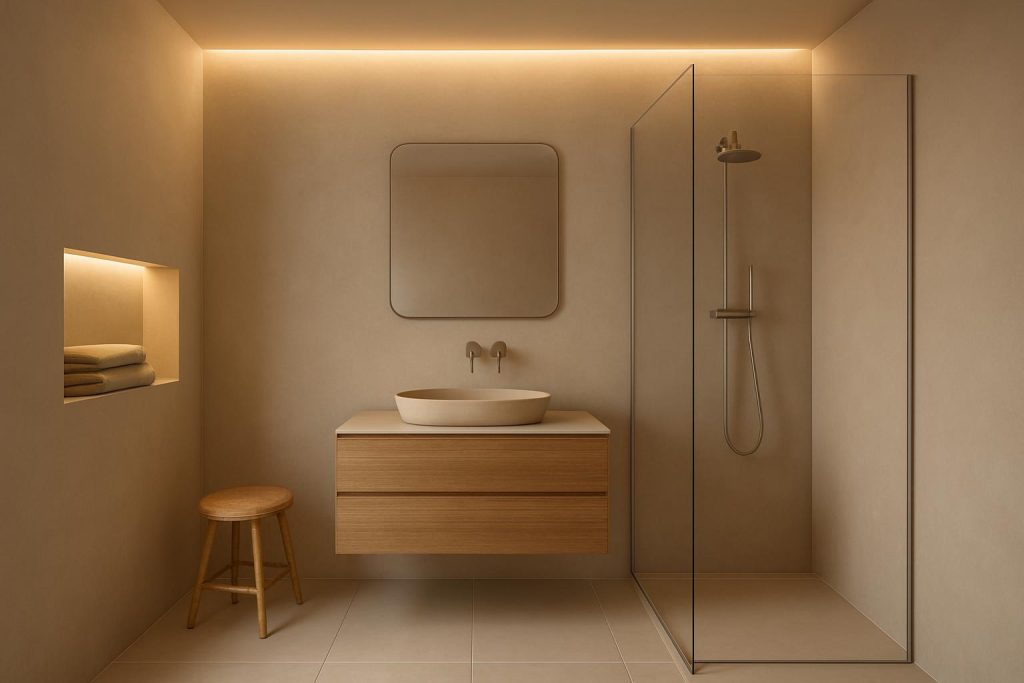
Beige can turn a small bathroom into a calm, spa-like retreat. It softens hard edges, blends with many materials, and reflects light without glare. When layered with the right textures, lighting, and smart storage, beige delivers a clean and restful look. This guide breaks the process into clear steps you can follow, from selecting the right paint to planning lighting, choosing materials, and organizing for daily ease.
Plan the Beige Palette
Pick the right undertone
Beige comes in warm, neutral, and cool undertones. Warm beige leans golden or creamy and pairs well with wood and brass. Cool beige leans gray and suits chrome and stone. Study your fixed elements first: floor tile, countertop, tub, and shower. Choose a beige that complements these surfaces so everything feels intentional. Test two to three samples on the wall and look at them in daylight and in evening light to confirm the match.
Keep light reflectance in mind. For a small bathroom, aim for beige with a light to mid-light reflectance level so the room stays bright without feeling stark. If in doubt, select a soft neutral beige that is not too yellow or too gray. This gives you more flexibility with accessories and metal finishes.
Build a two to three tone scheme
Use a main beige for walls, a slightly lighter beige for the ceiling, and a subtle deeper beige for accents such as a vanity, linen cabinet, or niche. This small shift in tones adds depth without cluttering the eye. If you prefer tile on the walls, keep grout within one to two shades of the tile color. The space will read as larger and calmer.
Choose practical paint sheens
Use eggshell or satin on walls for wipeability. Use satin or semi-gloss on trim for durability. Keep the ceiling flat or matte to avoid glare. Pick moisture-resistant paint or add a bonding primer in humid spaces to prevent peeling. A consistent sheen plan keeps the beige palette unified and easy to maintain.
Make a Small Bathroom Look Bigger
Carry color onto the ceiling
Use the same main beige on walls and a slightly lighter beige on the ceiling. This reduces contrast lines and helps the eye travel upward. The room will feel taller and more continuous, especially over showers and tubs.
Use large-format tile wisely
Large-format tiles reduce grout lines and calm the look. Run wall tiles vertically to draw the eye up. Lay floor tiles in a straight set or gentle offset to keep lines clean. Avoid heavy patterns on multiple surfaces at once. Pick a tile edge with minimal bevel for a smoother, modern look.
Match grout to tile
Match grout closely to the tile color. High-contrast grout can make a small room feel busy. Use a stain-resistant grout or a sealer to keep the look fresh. Where possible, align grout joints between wall and floor to avoid visual clutter.
Use clear glass and thin profiles
Swap a shower curtain for clear tempered glass. A frameless or minimal-frame panel increases sightlines and makes the room feel bigger. Choose thin-profile shelves, towel bars, and mirror frames so the beige backdrop stays dominant.
Texture and Materials for Spa Calm
Layer natural textures
Beige pairs well with organic materials. Add a wood-look vanity, bamboo stool, woven basket, or linen shower curtain. Stay within the same warm or cool family you selected for your beige. Vary textures while keeping colors restrained so the room feels rich but not busy.
Bring in stone and stone-look
Use travertine, limestone-look porcelain, or quartz with soft veining. Keep veining subtle and low contrast. Use one primary stone-look surface and let it lead. Repeat that tone in smaller accents like a soap dish or tray to link the scheme.
Choose soft textiles
Invest in plush beige or off-white towels, a quick-dry bath mat, and a waffle or linen curtain if you do not use glass. Limit patterns. Keep towels rolled or folded neatly. Textiles are easy to refresh and will define the spa mood every day.
Select warm metal accents
Brushed nickel, champagne bronze, and satin brass work well with beige. Pick one metal for plumbing and hardware to avoid a patchwork look. If you mix, keep one finish dominant and the other minimal. Matte black can add crisp contrast if used sparingly, such as on a single mirror frame or hook.
Lighting Layers that Flatter Beige
Set the right color temperature
Use warm white lamps around 2700–3000K. This range keeps beige creamy and skin tones natural. Choose high color rendering with CRI 90 or higher for accurate colors. Avoid cool lamps that can make beige look dull or gray.
Build three layers of light
Ambient: a low-glare ceiling light or slim LED downlights provide general light. Task: a pair of vertical sconces at face height or an LED mirror gives shadow-free grooming light. Accent: a small recessed light over a niche, plant, or art adds depth. Position switches so you can use each layer on its own.
Add dimmers and moisture-safe fixtures
Install dimmers to shift from bright morning light to soft evening light. Choose damp or wet rated fixtures for showers and near tubs. Seal trims and gaskets to limit vapor infiltration and extend the life of your lamps and drivers.
Storage that Disappears
Recess and reflect
Use recessed wall niches in the shower for bottles. Install a mirrored medicine cabinet above the sink to store daily items. A mirror front hides clutter and bounces light. Choose a cabinet that is as wide as your vanity or pair two narrow units over a double sink.
Float and lighten
A floating vanity shows more floor and makes the room feel larger. Choose slab or simple Shaker doors with integrated pulls. Add an open shelf for rolled towels to keep the look airy. Use matching baskets for small items so the palette stays calm.
Practice a simple declutter routine
Limit daily-use items on the counter to three or fewer. Store backups in bins inside the vanity. Label bins by category such as skincare or hair tools. Do a ten-minute reset weekly. A clean surface is the fastest way to reinforce the spa feel.
Layout Tricks for Small Bathrooms
Free up swing space
Use a pocket door or swing-clear hinges to reduce door conflicts. Mount towel hooks on the back of the door only if they do not block movement. Keep pathways clear so every step feels easy and safe.
Choose wall-mounted fixtures
A wall-hung toilet and a floating vanity show more floor and create an open look. A linear shower drain allows for a single slope and larger floor tile, which reduces cuts and grout lines. If code allows, center the shower drain to align tiles and keep lines clean.
Go curbless where possible
A curbless shower with clear glass creates visual continuity from wall to wall. Use a slightly textured floor tile for slip resistance. Continue the same tile into the shower to avoid breaks. Seal transitions to prevent water migration.
Budget-Friendly Updates
Paint first
Paint is the highest impact, lowest cost change. Prime glossy tile if you plan to paint it, or limit paint to walls and ceiling for speed. Patch holes, caulk gaps, and sand lightly before painting to get crisp lines. Fresh beige walls reset the entire space.
Swap hardware and textiles
Update cabinet pulls, towel bars, and hooks to a single finish such as brushed nickel or champagne bronze. Add a new shower curtain, towels, and bath mat in soft neutrals. Keep patterns minimal to let beige lead. Replace a busy mirror with a simple frameless or thin-frame style.
Use peel-and-stick and refinish small areas
Peel-and-stick tiles or vinyl can refresh a backsplash or a small accent wall. Use them sparingly to avoid seams in wet zones. Regrout or refresh grout color with a grout colorant. Replace old caulk and clean glass with a squeegee for a like-new finish.
Scent, Sound, and Comfort Add-ons
Simple aromatherapy
Use a reed diffuser, a single essential oil on shower steam, or a soy candle. Keep scents light and consistent with the calm palette. Store items in a tray to avoid clutter.
Quiet comfort features
Install a quiet exhaust fan to reduce humidity and noise. Add soft-close hinges and slides to avoid slamming. Use a teak or bamboo bath caddy for function without visual weight. These small touches support daily comfort.
Greenery that thrives
Add one humidity-friendly plant such as a fern, pothos, or snake plant. Use a simple pot in a beige or stone tone. Place it where it gets indirect light and does not block storage or pathways.
Cleaning and Maintenance
Care for beige materials
Wipe water spots from glass and metal to keep finishes even. Use pH-neutral cleaners on stone and stone-look surfaces. Avoid abrasive pads on glossy tile or fixtures. Test cleaners in a hidden spot before full use.
Prevent moisture issues
Run the exhaust fan during showers and for 20 minutes after. Squeegee shower glass after each use to reduce spotting and mildew. Seal grout annually or as directed by the product. Keep airflow clear by not blocking vents with towels or baskets.
Follow a weekly quick-clean
Wipe the vanity, faucet, and mirror. Disinfect high-touch points such as pulls and switches. Shake out the bath mat and launder towels. Empty bins and reset trays. Small consistent steps keep the spa feel intact.
Putting It All Together
Step-by-step plan
Start with a palette decision. Select your main beige, a lighter ceiling beige, and a slightly deeper accent beige. Confirm undertones with your existing tile and countertop. Next, paint walls and ceiling. Patch and caulk for a crisp finish.
Update lighting with warm white lamps at 2700–3000K and CRI 90 or higher. Add dimmers and set up ambient, task, and accent layers. Install a clear glass shower panel if space allows.
Address storage with a mirrored cabinet and a floating vanity. Add recessed niches or slim shelves. Choose unified hardware and keep surfaces clear.
Refresh textiles and small decor. Bring in soft towels, a neutral mat, and one or two natural textures. Add a plant and a simple scent. Finish with a weekly maintenance routine so the room stays serene without constant work.
Common Mistakes to Avoid
Too many beiges
Using many similar but clashing beiges can look messy. Limit your palette to two or three related tones. Test samples side by side to confirm harmony.
Ignoring undertones
Pairing a pink-beige with a yellow-beige creates discord. Match undertones to your fixed elements and metal finishes before you commit.
Harsh or cool lighting
Cool lamps can wash out beige and skin tones. Stick to warm white and high color rendering. Balance layers and add dimmers for control.
Busy patterns and high contrast grout
Too many patterns shrink a small room. Keep grout close to tile color. Choose one feature surface and let it lead.
Cluttered counters
Visual clutter kills the spa mood. Store daily items out of sight, use trays to contain what remains, and reset weekly.
Conclusion
A spa-like beige bathroom is about restraint, texture, and light. Start with a simple palette in two to three tones. Make the room feel bigger with continuous color, clear glass, and large-format tile. Layer warm, high-quality lighting. Hide storage in mirrors and niches and keep counters clear. Add soft textiles, one natural accent, and a steady maintenance routine. These steps work in small spaces and deliver a calm, welcoming result you can enjoy every day.
FAQ
Q: How do I choose the right beige for a small bathroom
A: Match the beige undertone to your fixed elements, test two to three samples in daylight and evening light, aim for a light to mid-light reflectance level, and keep the palette to two or three related tones.
Q: What lighting makes beige look spa-like
A: Use warm white around 2700–3000K with CRI 90 or higher, build ambient, task, and accent layers, and add dimmers to shift from bright morning light to softer evening light.
Q: How can I make a small beige bathroom look bigger
A: Carry the wall color onto a slightly lighter ceiling, use large-format tiles with matching grout, choose clear glass for the shower, and favor floating or wall-mounted fixtures to show more floor.
Q: What budget updates have the most impact
A: Paint walls and ceiling, swap hardware to a single finish, refresh grout and caulk, add soft neutral textiles, and use peel-and-stick in small low-splash zones.
Q: How do I keep a beige bathroom clean and mold-free
A: Run a quiet exhaust fan during and after showers, squeegee glass after use, use pH-neutral cleaners, seal grout on schedule, and follow a quick weekly reset.