
We are reader supported. When you purchase through links on our site, we may earn an affiliate commission. Also, as an Amazon affiliate, we earn from qualifying purchases.
Above ground pools can change a plain yard into a clean, fun, and low stress hangout. You can set one up fast, style it to match your home, and keep it tidy with simple routines. This guide shows you clear steps from planning and prep to design, storage, safety, and upkeep. Start small, build smart, and upgrade as you go.
Plan First
Measure and map your space
Measure the full area you can use. Mark the pool footprint with stakes and string. Add at least 3 feet around the pool for safe access and maintenance. Plan clear paths from the door to the pool, pump, and storage. Note sun and shade across the day so you can place seating and shade in the right spots.
Check access and utilities
Confirm you can carry panels, liners, sand, and deck lumber into the yard. Mark all sprinkler lines. Call utility locate before you dig or set posts. Keep the pool and posts clear of septic systems and leach fields.
Permits, codes, and HOA
Many areas need a permit for pools over 24 inches deep. Most codes require a barrier, self closing gates, and safe electrical. Some HOAs limit height, color, and deck size. Check these before you buy. This avoids rework and fines.
Choose the Right Above Ground Pool
Shapes and sizes that fit
Round pools fit small yards and leave more walking space. Oval pools work in narrow yards and along fences. Choose a size that leaves a clear path all around and space for a deck or seating. Measure again after you pick a model.
Frame and liner basics
Steel frames are strong and budget friendly. Resin frames resist rust in coastal or wet areas. Hybrid frames mix both. A thicker liner lasts longer and feels better underfoot. Look for a good skimmer opening and sturdy legs.
Pump, filter, and power needs
A sand filter is low maintenance. A cartridge filter is compact and easy to swap. A variable speed pump saves power and runs quiet. Place equipment on a level pad near a safe, grounded outlet with a weather rated cover. Keep hoses short to improve flow.
Site Prep and Leveling
Tools you need
Shovel, rake, wheelbarrow, long level or laser level, tamper or plate compactor, utility knife, landscape fabric, crushed stone or masonry sand, and pavers if your frame has legs. You also need a garden hose and a broom.
Step by step leveling
Strip sod and organic soil until you reach firm ground. Do not build up low spots with loose dirt. Instead, lower high spots until the whole area is flat. Check level in many directions. Take your time here. A level base prevents stress on the frame and liner.
Base layers that last
Lay geotextile fabric to block weeds. Add 4 to 6 inches of compactable crushed stone or masonry sand. Wet lightly and tamp in thin lifts until firm. Place concrete pavers under each frame leg so each leg sits on solid support. Add a foam or pad under the liner for comfort and protection.
Drainage and splash management
Grade soil so water flows away from the pool and house. Add a shallow swale or channel along the high side. Use river rock or gravel under the return line and downspout areas to break splash and stop mud. Keep mulch away from the pool wall.
Decks, Steps, and Safety
Deck options
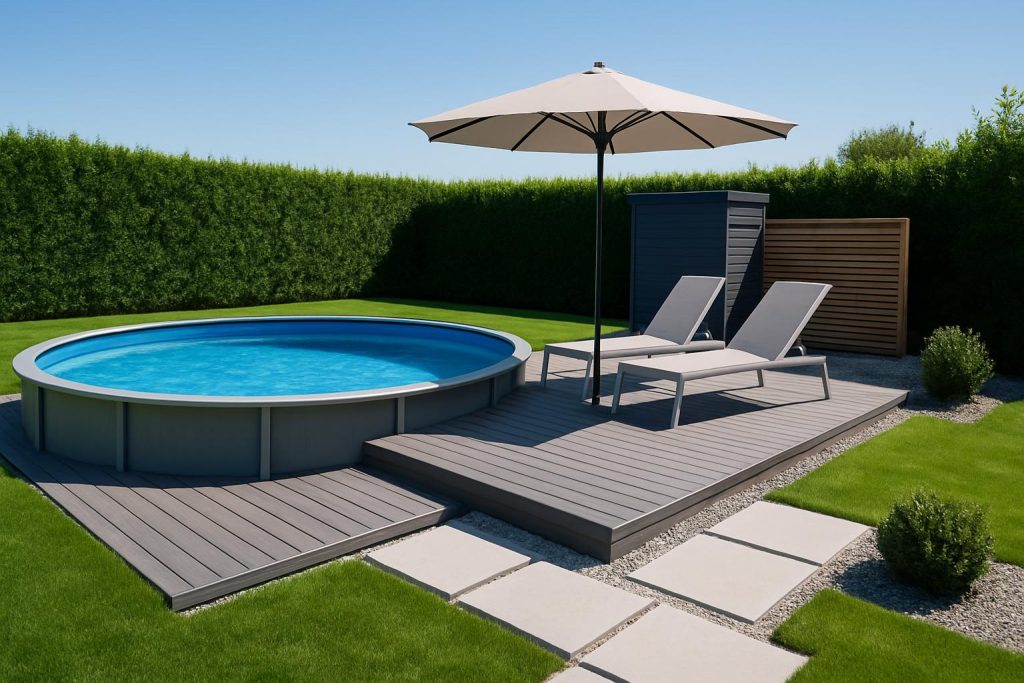
A wrap deck at coping height makes entry easy and helps the pool look built in. A small landing deck with stairs is a fast upgrade and cheaper. Composite boards resist water. Pressure treated lumber is budget friendly. Set posts on concrete footings below frost line.
Secure steps and gates
Use lockable A frame steps or one inside ladder with a gated deck. Add a handrail and a non slip tread on every step. Keep a rescue hook and a ring near the entry.
Railings and fencing
Follow local barrier rules. Add railings on all deck edges and around stairs. Close all gaps that a small child could climb. Use self closing, self latching gates. Keep furniture away from fence lines to prevent climbing.
Non slip surfaces
Add grip tape on ladder rungs. Use non slip deck coatings or textured boards. Place rubber or cork mats on landing zones. Keep algae off with regular cleaning.
Landscaping That Works
Low mess planting
Pick plants that drop little leaf litter. Use grasses, evergreens, and compact shrubs. Avoid thorny or sappy plants near paths. Keep plant beds at least 2 feet from the pool wall to allow access.
Privacy screens
Use slatted screens, lattice with fast growers, or bamboo look panels. Stagger panels to block views but let air flow. Leave service space near pumps and valves.
Hardscape edges
Use pavers or gravel as a clean edge around the pool. This cuts mud and weeds and gives a tidy line for mowing. Add stepping stones to the pump and skimmer to keep shoes clean.
Shade solutions
Add a cantilever umbrella, a shade sail with proper anchors, or a small pergola over the deck. Place shade so it does not drop leaves into the water. Check wind exposure and secure all anchors.
Storage and Organization
Pool shed zones
Divide storage into cleaning tools, chemicals, toys, and safety. Keep chemicals off the floor and away from heat and light. Store liquids low and powders high. Keep absorbent and a bucket ready for spills.
Wall and vertical storage
Hang poles and nets on wall hooks. Use a hose reel for vacuum and backwash hoses. Label bins for goggles, floats, and games. Keep a small hand vacuum or rechargeable vac in a dry dock.
Wet gear drying
Add a fold down rack for towels and suits. Use a perforated box for wet pool shoes. Place a boot tray near the door. This keeps the house cleaner.
Lighting and Night Use
Low voltage and solar
Install 12 volt path lights along routes. Use solar step lights on stairs and deck edges. Add a battery lantern in the seating zone for quick use. Aim lights down to cut glare on water.
String lights and path lights
Run outdoor rated string lights between posts or a pergola. Keep clearance over the pool and follow electrical clearances. Space path lights so pools and steps are easy to see without harsh spots.
Electrical safety
Use GFCI protection on all pool circuits. Keep cords off the deck and away from splash zones. Do not run extension cords to pumps or heaters. Hire a licensed pro if you add new circuits.
Heating, Covers, and Season Extension
Solar covers and reels
A solar cover cuts heat loss and evaporation. A reel makes solo handling easy. Cover the pool at night and on windy days. Store the cover in shade to extend life.
Heat pumps and solar mats
Heat pumps are efficient in mild weather and hold steady temps. Solar mats are budget friendly and work best in full sun. Run water through solar mats in daytime only. Use unions and valves to bypass when not in use.
Wind breaks
Even a low fence or hedge can raise water comfort. Place wind breaks on the prevailing wind side. Combine with a cover to lock in gains.
Water Care Simplified
Filtration schedule
Run the filter 8 to 12 hours per day in summer. Aim for one to two full turnovers daily. Clean or backwash when pressure rises 8 to 10 psi over clean pressure or flow slows.
Test and balance basics
Test water 2 to 3 times per week. Keep free chlorine at 1 to 3 ppm. Keep pH between 7.2 and 7.8. Adjust alkalinity and calcium per your liner and local water. Add chemicals in small steps and retest.
Clear water routine
Shock weekly in heavy use or after storms. Brush walls and floor once per week. Vacuum weekly or as needed. Empty skimmer and pump baskets often. Keep the cover and deck clean to reduce debris load.
Cleaning Routines That Stick
Daily five minute tasks
Skim leaves. Check the skimmer basket. Scan for drips and wet spots near fittings. Straighten hoses and tidy toys.
Weekly deep clean
Brush all surfaces. Vacuum slowly. Backwash or clean cartridges if needed. Wipe the waterline. Rinse steps and mats. Inspect ladders, rails, and gate latches.
Seasonal open and close
At opening, check level and base, inspect liner seams, tighten clamps, and lube o rings. At closing, clean well, balance water, lower water per your climate and cover type, and secure the cover. Store hoses and tools dry.
Budget Ideas With Big Impact
Under 100 quick wins
Add a solar cover. Install a towel hook rail. Put down stepping stones to the pump. Hang a mesh bag for toys. Add a battery motion light by the steps.
Weekend DIY projects
Build a small landing deck with two posts and a stair kit. Wrap the pool base with gravel and a steel edge. Add a slatted privacy screen. Create a hose and pole rack from scrap lumber.
Save on chemicals
Keep the cover on to cut chlorine use. Run the pump during the warmest part of the day for better filter performance. Rinse swimsuits to reduce lotions in the water. Keep pH in range to make chlorine more effective.
Style Upgrades
Color palette
Pick two to three colors and repeat them. Match deck stain to fence. Use neutral cushions with one accent color. Choose planters that match hardware tones.
Furniture layout
Place seating in shade paths. Leave a 36 inch walking lane. Put a side table by each chair for drinks and sunscreen. Add a storage bench near the entry ladder.
Sound and scent
Use a small outdoor speaker at low volume. Plant low scent herbs like rosemary away from the skimmer. Avoid strong fragrance near water to reduce bugs.
Common Mistakes to Avoid
Do not place the pool on soft fill or ungraded soil. Do not skip pavers under frame legs. Do not push decking tight to the pool wall without an access gap. Do not run extension cords to pumps or lights. Do not plant messy trees near the water. Do not block access to the pump and skimmer.
Project Timeline Cheat Sheet
Week 1 plan and permits. Week 2 site prep, base, and delivery. Week 3 assembly and fill. Week 4 deck, steps, and lighting. Ongoing weekly cleaning and small upgrades. Adjust timing for weather and ground conditions.
Conclusion
A clean plan, a level base, and simple routines are the core of a great above ground pool setup. Build safe access, add storage, and keep water care simple. Layer in shade, screens, and lighting for comfort. Start with the must haves and add style as time and budget allow. Your backyard will feel organized, low stress, and ready for use every day.
FAQ
Q: What is the best base for an above ground pool
A: Use geotextile fabric topped with 4 to 6 inches of compacted crushed stone or masonry sand. Set concrete pavers under each frame leg, tamp all layers, and grade soil so water flows away from the pool.
Q: How do I make an above ground pool look built in
A: Add a wrap deck at coping height, skirt the base with gravel and clean edging, use privacy screens and raised beds, keep a tight color palette, hide equipment with a vented box, and keep edges clean with pavers.
Q: How can I heat my above ground pool affordably
A: Use a solar cover nightly, add solar mats in full sun, run water through mats only in daytime, and block wind with a fence or hedge to hold heat.
Q: What maintenance schedule keeps water clear
A: Run the filter 8 to 12 hours daily, test water 2 to 3 times per week, keep free chlorine at 1 to 3 ppm and pH at 7.2 to 7.8, brush and vacuum weekly, shock weekly in heavy use or after storms, and clean filters when pressure rises.
Q: Do I need a permit for an above ground pool
A: Often yes if the pool is over 24 inches deep, and most areas require a barrier, self closing gates, and safe electrical. Check local code and HOA rules before you buy and call utility locate before digging.