
We are reader supported. When you purchase through links on our site, we may earn an affiliate commission. Also, as an Amazon affiliate, we earn from qualifying purchases.
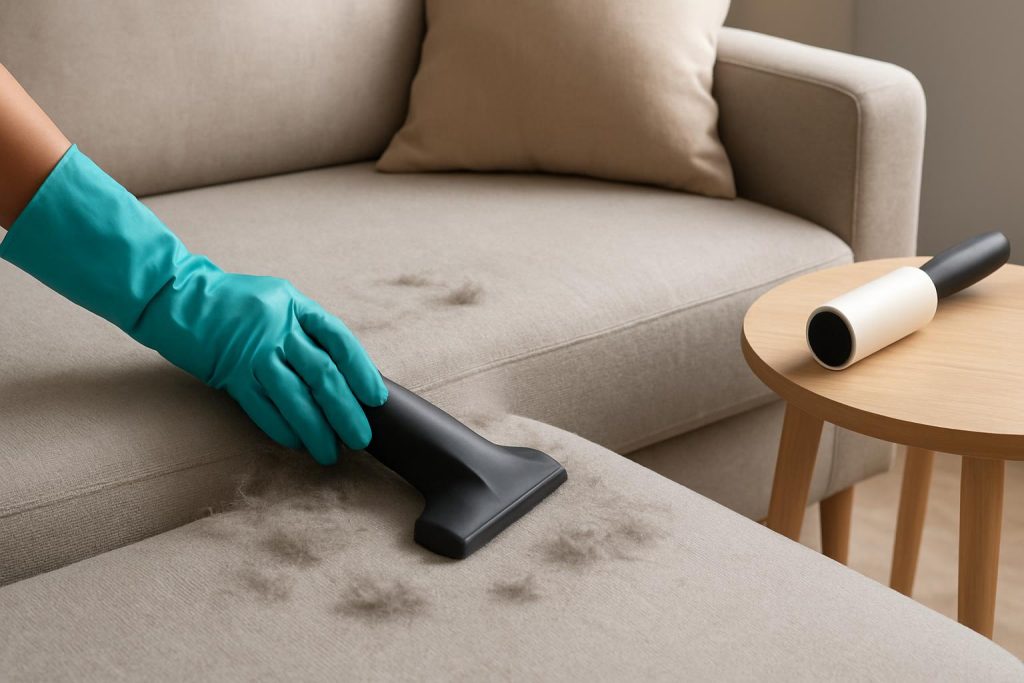
If you need pet hair off furniture fast, start with this: put on a slightly damp rubber glove, run your hand over the fabric in short strokes, gather the hair into clumps, then vacuum it up. For most couches, chairs, cushions, and upholstered headboards, this simple method works better than a regular vacuum pass by itself.
I learned that the hard way after living with a shedding dog and a long-haired cat who both believe the sofa is their personal property. I tried vacuuming more, buying sticky rollers in bulk, and brushing hair off with my hand. Some of it worked, but only for five minutes. The real trick is using the right tool for the type of furniture and removing the hair before it gets pushed deeper into the weave.
For a quick clean, use a rubber glove, upholstery brush, lint roller, or vacuum with a motorized pet hair attachment. For a deeper clean, loosen the hair first, then vacuum slowly in overlapping passes. For leather or faux leather, skip the rough tools and use a microfiber cloth instead.
What is the fastest way to remove pet hair from furniture?
The fastest method for most fabric furniture is the damp rubber glove method. It is cheap, gentle, and surprisingly effective.
How to do it
- Put on a clean rubber dishwashing glove.
- Lightly dampen the palm and fingers. The glove should not be dripping wet.
- Wipe the furniture in short strokes, moving in one direction.
- Pick up the clumps of hair by hand or vacuum them away.
- Repeat on cushions, arms, backrests, and seams.
The slight moisture and rubbery texture create enough grip to pull hair from the surface of the fabric. This works especially well on microfiber, woven upholstery, and fabric dining chairs.
A dry rubber glove can also work, especially on delicate fabrics where you do not want any moisture. I usually start dry and add a tiny bit of water only if the hair is stubborn.
Which pet hair removal method should I use for my furniture?
Not every tool is right for every surface. A stiff brush that works well on a tough couch can scratch leather or snag a loose weave. Here is a practical comparison of the methods I have found most useful at home.
| Method | Best For | Pros | Watch Out For |
|---|---|---|---|
| Damp rubber glove | Fabric couches, chairs, cushions | Cheap, fast, reusable, good for clumping hair | Too much water can dampen upholstery |
| Vacuum with pet attachment | Deep cleaning fabric furniture | Removes hair, dander, crumbs, and dust | Weak suction or the wrong attachment may just push hair around |
| Lint roller | Small areas, throw pillows, last-minute touch-ups | Quick and easy | Uses many sheets on large furniture |
| Reusable pet hair roller | Couches, beds, car seats | No sticky refills, good for frequent use | Less effective in tight seams and corners |
| Microfiber cloth | Leather, faux leather, smooth surfaces | Gentle and safe for delicate finishes | Does not pull embedded hair from fabric |
| Upholstery brush | Durable woven fabric | Loosens trapped hair before vacuuming | Can rough up delicate upholstery if used aggressively |
| Squeegee | Flat fabric surfaces and rugs | Excellent grip, inexpensive | Awkward on curved cushions and seams |
If I only have five minutes before someone comes over, I use a reusable pet hair roller on the main seating areas and a damp glove around the arms and cushion edges. If I am doing a proper weekly clean, I loosen the hair first with a glove or brush, then vacuum.
How do you remove pet hair from a fabric couch?
Fabric couches hold onto hair because pet fur works its way into the weave. Vacuuming alone often misses the hair that is stuck at an angle or tangled into the fabric. That is why the best approach is a two-step process: loosen first, then remove.
Step-by-step fabric couch method
- Remove loose items. Take off blankets, throw pillows, and cushion covers if they are removable.
- Start with a dry pass. Use your hand, a dry rubber glove, or a pet hair roller to collect surface hair.
- Loosen embedded hair. Use a slightly damp rubber glove, upholstery brush, or squeegee.
- Vacuum slowly. Use the upholstery attachment or motorized pet tool if your vacuum has one.
- Get into seams. Use a crevice tool along cushion edges, piping, and corners.
- Finish with a lint roller. This catches the last visible hairs, especially on darker fabric.
Slow vacuuming matters. I used to rush over the couch the same way I vacuumed the floor, and it barely made a difference. Upholstery needs slower passes because the suction needs time to lift hair, dander, and grit from the fabric.
If the couch has removable cushion covers, check the care label before washing. Some covers shrink, fade, or become difficult to put back on if washed incorrectly. If the label says dry clean only, do not toss it in the washer just because it has dog hair on it.
How do you get pet hair off leather or faux leather furniture?
Leather and faux leather are usually easier to clean than fabric because hair sits on the surface instead of embedding itself. The main risk is scratching the finish or using too much moisture.
For leather furniture, use a dry or barely damp microfiber cloth. Wipe in smooth strokes and collect the hair into one area. Then vacuum it with a soft brush attachment or pick it up with the cloth.
Safe method for leather
- Use a soft microfiber cloth, not a stiff brush.
- Avoid sticky rollers on cracked, peeling, or delicate leather finishes.
- Do not use a wet sponge or soak the surface.
- Vacuum with a soft brush attachment if needed.
- Use leather cleaner or conditioner only if recommended by the furniture manufacturer.
On faux leather, the same basic method works. Be careful with older faux leather that is peeling or flaking. Sticky tools can pull at damaged areas, and rough scrubbing may make the surface worse.
What removes stubborn pet hair stuck in upholstery?
Stubborn pet hair usually needs friction before suction. This is especially true with short, stiff hairs from breeds like Labradors, pugs, beagles, and some terriers. Those little hairs can lodge into fabric like tiny needles.
For stubborn hair, try one of these methods before vacuuming:
- Rubber squeegee: Drag it across flat upholstered areas to pull hair into rows.
- Pet hair stone: Useful on tough fabrics, but test first because it can be abrasive.
- Velvet lint brush: Good for regular maintenance and less wasteful than disposable tape rollers.
- Upholstery brush: Helps lift hair from woven fabric before vacuuming.
- Reusable roller: Works well for large surfaces when used in firm, repeated strokes.
One common mistake is pressing too hard. More pressure does not always remove more hair. On some fabrics, it pushes hair deeper or makes the surface look fuzzy. Use firm but controlled strokes, and test rough tools on a hidden spot first.
Another mistake is using packing tape on delicate fabric. I have done it in a pinch, and it can work, but strong adhesive may leave residue or pull fibers. If you use tape, choose a lower-tack option and avoid velvet, silk, antique upholstery, or anything already worn.
Can you use a vacuum to remove pet hair from furniture?
Yes, but the attachment matters. A regular floor head is usually too bulky for furniture and may not create good contact with the upholstery. The best vacuum tools for pet hair are:
- Motorized upholstery tool: Best for embedded hair on fabric furniture.
- Rubberized pet hair attachment: Helps grip hair while suction removes it.
- Crevice tool: Essential for seams, corners, and between cushions.
- Soft brush attachment: Best for leather or delicate surfaces.
If your vacuum has a filter, keep it clean. Pet hair, dander, and dust can clog filters quickly, reducing suction. I notice a huge difference after emptying the canister and washing or replacing the filter according to the manufacturer’s instructions.
For households with allergies, a vacuum with a sealed system and HEPA filter can help reduce airborne dander. It will not solve every allergy issue, but it can make furniture cleaning more effective and less sneezy.
How do you remove pet hair from couch cushions and pillows?
Cushions and pillows need a lighter touch because they shift around and often have textured or decorative fabrics. Start by checking whether the covers are removable and washable.
For removable covers
- Shake them outside first to remove loose hair.
- Use a lint roller or rubber glove before washing.
- Wash according to the care label.
- Add an extra rinse if the fabric traps detergent or dander.
- Clean the washer filter or drum afterward if there is a lot of hair.
Removing hair before washing is important. If you put hair-covered covers straight into the washer, much of that hair can stick to the fabric, collect in the machine, or transfer to the next load. I learned this after washing a black hoodie after dog blankets. Bad idea.
For non-removable cushions
- Use a rubber glove or reusable roller on the surface.
- Vacuum both sides if possible.
- Use the crevice tool around seams and buttons.
- Let cushions air out if they smell like pets.
Be careful with decorative pillows that have embroidery, fringe, beading, or loose threads. A sticky roller or brush can catch and pull those details.
Do dryer sheets or fabric softener help remove pet hair?
Dryer sheets can help reduce static, which makes pet hair easier to release from some fabrics. A lightly used dryer sheet wiped over furniture may pick up a small amount of hair and calm static cling.
That said, dryer sheets are not my first choice for furniture. They can leave a residue, and some pets are sensitive to fragrances. If you use them, avoid rubbing them on surfaces your pet licks or chews.
For washable pet blankets or slipcovers, dryer balls can help knock loose hair during the drying cycle. I still recommend removing as much hair as possible before washing. The washer and dryer are helpers, not magic hair removers.
What mistakes make pet hair harder to remove?
A few habits can make the problem worse without you realizing it.
- Vacuuming too quickly: Fast passes miss embedded hair.
- Using too much water: Damp tools should be barely wet, not soaked.
- Scrubbing delicate fabric: Rough brushing can pill, fuzz, or snag upholstery.
- Washing hairy covers immediately: Hair can spread through the washer and stick harder.
- Ignoring seams: Hair collects heavily in cushion cracks and piping.
- Waiting too long: The longer pets lie on the furniture, the deeper hair gets pressed in.
The biggest change in my house was cleaning the favorite pet spots more often. A quick two-minute pass every couple of days is easier than a full rescue mission after two weeks.
How can you prevent pet hair from taking over the furniture?
You cannot stop shedding completely, but you can reduce how much hair ends up embedded in your furniture.
Use washable covers or throws
A washable blanket over your pet’s favorite sofa spot saves a lot of work. Choose a tightly woven fabric because loose knits trap hair. I keep one blanket on the couch that is “the dog blanket,” and I wash it separately from clothes.
Brush your pet regularly
Brushing removes loose hair before it lands on furniture. The right brush depends on your pet’s coat type, so choose carefully. A deshedding tool can be great for some dogs but too harsh for others if overused.
If your pet suddenly starts shedding much more than normal, has bald patches, irritated skin, or constant itching, it is worth calling your vet. Furniture cleaning will not fix a skin, allergy, or nutrition issue.
Keep a pet hair tool near the couch
This sounds too simple, but it works. If the roller or glove is in a closet, I put off cleaning. If it is in the side table drawer, I use it while watching TV.
Train pets to use one spot
Some pets are willing to use a designated blanket, cushion, or bed. Others have strong opinions. Even partial success helps. If your pet always curls up in the same corner, protecting that area is much easier than cleaning the whole couch every day.
What if someone with allergies is coming over?
Pet hair itself is not the only issue. Dander, saliva proteins, and dust can cling to furniture too. If an allergic guest is coming, start cleaning earlier rather than five minutes before they arrive.
Here is the routine I use before allergic family members visit:
- Wash pet blankets, throws, and removable covers if safe to do so.
- Vacuum furniture slowly with an upholstery tool.
- Use a damp microfiber cloth on hard surfaces near the seating area.
- Run an air purifier if you have one.
- Keep pets off the cleaned furniture until the guest leaves.
- Open windows briefly if weather and outdoor air quality allow.
No cleaning routine can guarantee an allergy-free room, especially in a home with pets, but removing hair and dander from furniture can make the space more comfortable.
FAQ: Removing pet hair from furniture
What is the best homemade pet hair remover for furniture?
A damp rubber glove is the best homemade option I have used. A clean squeegee also works well on flat fabric surfaces. Both create friction that gathers hair into clumps so you can remove it easily.
Will a lint roller damage furniture?
Usually no, but be careful on delicate, old, peeling, or textured materials. Sticky rollers can pull loose fibers, damage fragile trim, or leave adhesive behind if the roller is poor quality. Test a hidden area first.
How do I get dog hair out of couch seams?
Use a crevice vacuum tool first. If hair is packed into the seam, loosen it with a dry toothbrush, upholstery brush, or the edge of a rubber glove, then vacuum again. Avoid sharp tools that could cut the fabric.
Does spraying furniture with water help remove pet hair?
A small amount of moisture can help, but spraying furniture directly is risky. Too much water can leave marks, encourage odors, or affect cushion filling. Dampen the glove or cloth instead of soaking the upholstery.
Can I use a pumice stone on my couch?
A pet hair stone or pumice-style tool can work on sturdy upholstery, but it may damage delicate fabric. Always test it on a hidden spot. I would not use it on velvet, leather, silk, loose weaves, or anything expensive without checking the manufacturer’s care instructions.
Why does pet hair stick to my couch so badly?
Static, fabric texture, and pressure all play a role. Soft woven fabrics and microfiber can grip hair tightly. Pets lying in the same spot also press hair deeper into the fibers, making it harder to vacuum away.
How often should I remove pet hair from furniture?
For heavy shedders, a quick clean every two or three days keeps hair from building up. For lighter shedding, once a week may be enough. Cleaning high-use spots more often makes the job much easier.
Are reusable pet hair rollers worth it?
They can be worth it if you clean furniture often. They reduce waste and work well on large fabric surfaces. They are less useful for tight corners, seams, and very textured fabric, so I still keep a rubber glove and vacuum tool around.
The simple routine that works best in a real home
The most reliable routine I have found is simple: protect the favorite pet spot, loosen hair with a rubber tool, vacuum slowly, and touch up with a roller. You do not need a cabinet full of gadgets, but you do need the right method for the surface.
For fabric furniture, use friction before suction. For leather, keep it gentle with microfiber. For stubborn hair, work in small sections and clean seams carefully. And if the furniture is delicate or expensive, test every tool in a hidden area before going all in.
Pet hair is part of sharing a home with animals, but it does not have to cover every seat in the house. A few minutes of regular cleaning beats a long battle with a fur-covered couch every time.