
We are reader supported. When you purchase through links on our site, we may earn an affiliate commission. Also, as an Amazon affiliate, we earn from qualifying purchases.
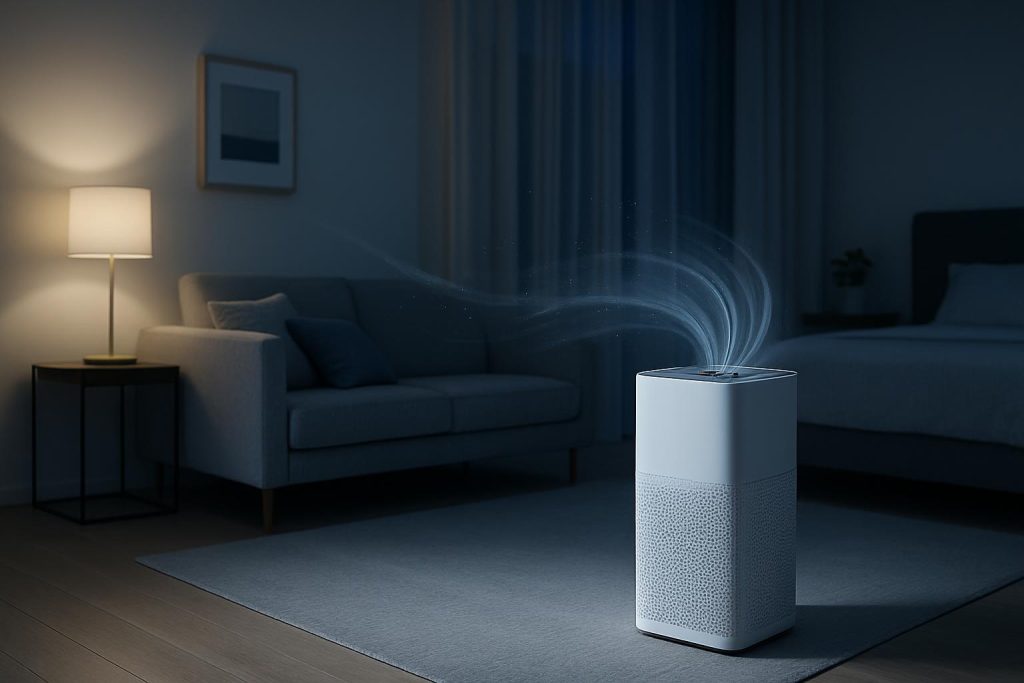
Yes, you can run an air purifier all day, and in most homes, that is actually the best way to use it.
I learned this the slightly annoying way. I bought my first air purifier during a bad pollen season, ran it for a few hours in the evening, and wondered why my bedroom still felt dusty by morning. After reading the manual, checking clean air delivery rates, and paying attention to how quickly dust and odors came back, I realized the purifier was not meant to “catch up” once a day. It works better when it runs continuously at a low or moderate speed.
For most HEPA air purifiers, running 24 hours a day is safe, efficient, and more effective than turning the unit on only after you notice dust, smoke, pet odor, or allergy symptoms. The main exceptions are ozone-generating air cleaners, poorly maintained units, damaged cords, or models not designed for continuous use.
The short version: if you have a standard HEPA air purifier from a reputable brand, keep it running. Use auto mode or a low fan setting during normal conditions, then increase the speed during cooking, cleaning, wildfire smoke, high pollen days, or after guests leave.
Is it safe to leave an air purifier on all day?
For a normal mechanical air purifier with a HEPA filter and activated carbon filter, yes, it is generally safe to leave it on all day and all night.
Most modern air purifiers are built for continuous operation. The fan motor is designed to run for long periods, similar to a refrigerator fan, bathroom exhaust fan, or HVAC blower. Many units even include auto mode, sleep mode, and filter-life tracking because manufacturers expect people to use them continuously.
That said, I would not treat every “air cleaner” the same. The safest type for everyday home use is a purifier that relies on physical filtration:
- Pre-filter for hair, lint, and larger dust
- True HEPA filter for fine particles such as pollen, smoke particles, dust, and pet dander
- Activated carbon filter for some odors and gases
The type I avoid for all-day use is anything that intentionally produces ozone. Ozone can irritate the lungs and is especially concerning for children, older adults, people with asthma, and pets. Some ionizers and “fresh air” machines can also create ozone as a byproduct, so I always look for a CARB-compliant model if I am buying a purifier in the United States.
Before leaving any unit running unattended, I also check a few basic safety points:
- The power cord is not frayed, pinched, or under a rug.
- The purifier is plugged directly into a wall outlet, not an overloaded extension cord.
- The air intake and outlet are not blocked by curtains, furniture, or bedding.
- The filter is installed correctly and not wrapped in plastic.
- The unit sits on a flat, stable surface where pets or kids will not knock it over.
One very common mistake is forgetting to remove the plastic wrapping from a new filter. I have seen this happen more than once, and the purifier will run, but it will barely clean the air and may strain the motor.
Should an air purifier run continuously or only when the air seems bad?
An air purifier works best when it runs continuously, because indoor air is always changing.
Dust does not appear once and then politely wait for the purifier to turn on. Pet dander, cooking particles, pollen from clothing, fibers from bedding, and particles from outside air keep entering the room. Even walking across a carpet can stir settled particles back into the air.
Running the purifier for only an hour or two can help, but it usually does not keep the room consistently clean. I noticed this most in the bedroom. If I ran the purifier only before bed, the room smelled fresher at first, but I still woke up congested. Once I started leaving it on low overnight, the difference was much more noticeable.
Continuous use is especially helpful if you are dealing with:
- Allergies or asthma
- Pets that shed or track in pollen
- Wildfire smoke or outdoor pollution
- Dusty roads, construction, or nearby traffic
- Mold concerns after moisture problems have been fixed
- Cooking odors or smoke from a fireplace
- Shared living spaces with frequent visitors
There are times when running it only part of the day is reasonable. For example, if you use a purifier in a guest room that sits empty most of the week, you can run it a few hours before someone sleeps there. If you only use a small office during work hours, running it while you are in the room may be enough.
For bedrooms, nurseries, living rooms, and pet areas, all-day use usually gives the best results.
How much electricity does an air purifier use if it runs 24/7?
This was my biggest hesitation at first. I did not want cleaner air at the cost of a surprise electric bill.
The good news is that most residential air purifiers do not use a huge amount of electricity, especially on low or auto mode. Small units may use 10 to 30 watts on low. Medium room units often use 20 to 60 watts. Large purifiers on high can use more, sometimes 80 to 100 watts or above, but most people do not need to run high speed all day.
Here is a simple example using an electricity rate of $0.17 per kilowatt-hour. Your local rate may be higher or lower.
| Purifier Power Use | Typical Setting | Approx. Daily Cost | Approx. Monthly Cost |
|---|---|---|---|
| 15 watts | Low / sleep mode | $0.06 | $1.84 |
| 35 watts | Medium / auto mode | $0.14 | $4.28 |
| 60 watts | Higher fan speed | $0.24 | $7.34 |
| 100 watts | Large unit on high | $0.41 | $12.24 |
To calculate your own cost, use this formula:
Watts ÷ 1,000 × hours used × electricity rate = cost
For example, a 40-watt purifier running 24 hours at $0.17 per kWh:
40 ÷ 1,000 × 24 × 0.17 = about $0.16 per day
The bigger ongoing cost is usually filter replacement, not electricity. If your air is dusty, smoky, or full of pet hair, filters may clog faster. Still, I would rather replace filters on schedule than breathe the particles they are catching.
Will running an air purifier all day wear it out faster?
Running an air purifier all day will use the fan motor and filters more than occasional use, but that does not mean it is bad for the unit.
Most decent purifiers are made to run continuously. In fact, frequent starting and stopping is not necessarily better for small motors. A steady low speed is often an easier workload than repeatedly running the machine on high to clean a room after the air has already become stale or polluted.
The filters are the part that will wear out in a practical sense. They collect particles until airflow is reduced and cleaning performance drops. If you run the purifier all day, you should expect to replace filters according to the manufacturer’s schedule, or sooner in tough conditions.
Filter life can be shorter if you have:
- Multiple pets
- Heavy dust
- Wildfire smoke exposure
- Indoor smoking or vaping
- Open windows during pollen season
- Recent remodeling, drywall sanding, or construction dust
One trade-off is worth being honest about: running a purifier continuously means you will probably spend more on replacement filters than someone who uses theirs casually. But casual use may not solve the problem that made you buy the purifier in the first place.
I clean the washable pre-filter on my main purifier every couple of weeks because we have pets. That simple habit keeps larger debris out of the HEPA filter and helps the unit maintain airflow. If your model has a vacuumable or washable pre-filter, do not skip it.
What is the best setting for running an air purifier all day?
The best everyday setting is usually auto mode or low to medium fan speed.
High speed cleans air faster, but it is louder and uses more power. Low speed is quiet and efficient, but it may not move enough air in a large room or during heavy pollution. Auto mode can be convenient because the purifier adjusts fan speed based on its sensor, though the sensor may not detect every pollutant equally well.
For example, many built-in sensors are good at detecting fine particles from smoke or dust, but they may not respond strongly to gases or odors. If you cook something smoky, burn toast, or clean with a strong-smelling product, the purifier may not always react the way you expect unless it has a suitable gas sensor.
Here is how I usually think about settings at home:
| Situation | Suggested Setting | Why It Helps |
|---|---|---|
| Normal day at home | Auto or low | Keeps air moving quietly without using much power |
| Sleeping | Sleep mode or low | Reduces noise and light while still filtering air |
| Cooking odors or light smoke | Medium or high for 30–60 minutes | Clears particles faster after a pollution spike |
| Wildfire smoke or bad outdoor air | Medium or high as tolerated | More air changes are needed during heavy particle pollution |
| Vacuuming or dusting | Medium or high during and after cleaning | Captures particles stirred up by cleaning |
| Empty room with low concern | Low or timer mode | Saves energy while maintaining some filtration |
If the purifier is too loud, many people turn it off completely. A better solution is to size up. A larger purifier running on low is often quieter and more effective than a small purifier struggling on high.
Can you sleep with an air purifier on all night?
Yes, you can sleep with an air purifier on all night, and the bedroom is one of the best places to use one continuously.
We spend a lot of time breathing bedroom air. Bedding collects dust mites, skin flakes, pet dander, and pollen from hair and clothing. If you keep windows open, outdoor pollen and pollution can also settle in the room.
For sleep, I recommend:
- Use sleep mode or the lowest setting that still gives good airflow.
- Dim or cover bright indicator lights if they bother you.
- Place the unit a few feet from the bed, not blowing directly into your face.
- Keep the intake away from curtains and bedding.
- Change or clean filters on schedule so the unit does not become noisy or weak.
Some people dislike the fan sound, while others find it works like white noise. I fall into the second group. The steady hum helps mask street noise, but I know not everyone likes that. If noise bothers you, check the decibel rating before buying, and look for a purifier that can clean your room on a lower speed.
For babies, children, or anyone with asthma or breathing issues, use a HEPA purifier without ozone. Avoid ozone generators in occupied rooms.
Should you leave an air purifier on when you are not home?
In many cases, yes, leaving a HEPA air purifier on while you are away is fine. It can keep the air cleaner so you do not come home to a room full of dust, pet odor, or pollen.
I usually leave ours on low when we are out for the day. If outdoor air quality is bad, I may leave it on medium. During wildfire smoke events, keeping the purifier running while the house is closed up can make a real difference by the time you return.
There are a few times I would turn it off before leaving:
- The purifier is old, damaged, overheating, or making unusual noises.
- The cord or plug feels warm.
- The unit has been knocked over recently or exposed to water.
- You are using an ozone generator or questionable ionizing device.
- You will be gone for an extended trip and do not need continuous filtration.
If you travel for a week or more, you can turn the purifier off to save power and filter life, then run it on high for a while when you return. For everyday errands or work hours, continuous low operation is usually more practical.
Do air purifiers work better with windows open or closed?
Air purifiers work best with windows and doors closed, especially during pollen season, smoke events, or high outdoor pollution.
An open window keeps bringing in new particles. The purifier may still help near where it is placed, but it has to work against a constant stream of outdoor air. This is one reason people sometimes think their purifier “doesn’t work.” The machine is cleaning, but the room is being refilled with pollen, smoke, or dust faster than the purifier can remove it.
That does not mean you can never open windows. Fresh air can be useful when outdoor air quality is good, especially after cooking, painting, or using cleaning products. But if your goal is to reduce allergens or smoke indoors, close the windows and let the purifier recirculate the room air.
My usual approach is simple:
- If pollen, smoke, or pollution is high outside, keep windows closed and run the purifier.
- If the air outside is clean and the house feels stale, ventilate briefly, then close up and filter.
- If cooking creates smoke, use the range hood first, then let the purifier help with leftover particles and odor.
An air purifier is not a substitute for proper ventilation in every situation. If there is a gas leak, carbon monoxide risk, strong chemical exposure, or major smoke event inside the home, you need to remove the source and ventilate safely. A purifier cannot make dangerous air safe by itself.
Where should you place an air purifier if it runs all day?
Placement matters more than many people realize. I made the mistake of tucking my first purifier into a corner because it looked neater there. It ran constantly, but the room did not feel much better. Once I moved it into a more open spot, airflow improved right away.
For all-day use, place the purifier where air can move freely around it.
Good placement tips:
- Keep at least a foot or two of clearance around the intake and outlet.
- Place it in the room where you spend the most time.
- Keep it near the source of the problem when practical, such as a litter box area or smoky kitchen doorway.
- Avoid hiding it behind furniture.
- Do not place it directly against a wall unless the manual says that is acceptable.
- Keep it away from moisture, such as next to a shower or humidifier mist.
If you have one purifier and want cleaner air at night, put it in the bedroom while you sleep. During the day, move it to the living room or home office if needed. That is not as convenient as owning multiple units, but it works better than leaving a single purifier in a hallway and hoping it cleans the whole house.
Most portable air purifiers are designed to clean one room, not an entire home. Open floor plans can help air mix, but walls, doors, and furniture reduce effectiveness.
How do you know if your air purifier is sized correctly?
A purifier that is too small may run all day and still not keep up. This is one of the biggest reasons people feel disappointed.
Look for the CADR rating, which stands for Clean Air Delivery Rate. It tells you how much filtered air the purifier can deliver. Higher CADR generally means faster cleaning for a larger room.
Manufacturers often list a maximum room size, but those numbers can be optimistic. I prefer to look for a unit that can provide multiple air changes per hour in the actual room. For allergies, smoke, or pets, more air changes are better.
Signs your purifier may be undersized include:
- It needs to run on high all the time to make a difference.
- Dust and odors return quickly.
- The air quality sensor stays elevated for long periods.
- The room is larger than the purifier’s recommended coverage.
- You feel improvement only when sitting very close to the unit.
If you are choosing between two sizes, I would usually pick the larger one, assuming filter cost and noise are acceptable. A bigger purifier on low is often more pleasant than a smaller purifier roaring away all day.
Can running an air purifier all day cause problems?
A properly chosen and maintained HEPA purifier should not cause problems for most homes, but a few issues can come up.
Dry air
Air purifiers do not remove moisture like a dehumidifier, so they do not directly dry the air. The moving air can make a room feel a little drier, especially in winter, but it is not actually pulling water out of the room. If your air is dry, use a hygrometer and consider a humidifier, while keeping humidity around 30% to 50% to avoid mold and dust mite problems.
Noise
Noise is the most common daily annoyance. If the purifier is too loud, try a lower setting, move it farther from your bed or desk, or choose a larger, quieter model.
Filter neglect
A dirty filter reduces airflow and can make the purifier louder. It also wastes energy. Replace filters on schedule and clean the pre-filter if your model allows it.
Ozone exposure
Ozone-generating devices are not the same as HEPA purifiers. I would not run an ozone generator in an occupied home. Be careful with products that use phrases like “activated oxygen,” “fresh air technology,” or heavy ionization claims.
False sense of security
An air purifier helps reduce airborne particles, but it does not fix the source of pollution. If you have mold growth, water damage, pest droppings, a smoking problem, or poor ventilation, address the source. Filtration is helpful, not magic.
My practical all-day air purifier routine
After trying different schedules, this is the routine that has worked best in my house:
- Bedroom: Runs every night on sleep mode or low.
- Living room: Runs during the day on auto mode.
- Cooking: Range hood first, purifier on medium or high afterward if needed.
- Cleaning days: Purifier on higher speed while vacuuming and dusting.
- High pollen days: Windows closed, purifier running continuously.
- Filter care: Pre-filter checked every couple of weeks, main filter replaced according to the indicator and visual condition.
The biggest lesson for me was that air purification is more like temperature control than a one-time cleanup. You do not heat your house for ten minutes and expect it to stay warm all day. Clean air works the same way. A steady, quiet setting usually beats occasional blasts on high.
FAQ about running an air purifier all day
Can I run my air purifier 24 hours a day?
Yes, if it is a standard HEPA air purifier in good condition. Most are designed for continuous use. Use low, auto, or sleep mode for normal operation, and increase the fan speed when air quality gets worse.
Is it expensive to leave an air purifier on all day?
Usually not. Many air purifiers cost only a few dollars per month to run on low or medium speed. Larger units on high will cost more. Filter replacement is often the bigger long-term expense.
Should I turn off my air purifier at night?
No, not unless the noise bothers you or the unit is unsafe. Nighttime is a great time to run an air purifier because you spend hours breathing the same bedroom air.
Can an air purifier overheat if left on?
A quality purifier should not overheat during normal use. Turn it off if you notice a burning smell, unusual heat, strange noises, flickering power, or a damaged cord. Keep vents clear and replace clogged filters.
Should I use auto mode all day?
Auto mode is a good choice for everyday use. Just remember that sensors are not perfect. During cooking, wildfire smoke, cleaning, or obvious odors, you may want to manually raise the fan speed.
Does running an air purifier all day remove dust completely?
No air purifier removes dust completely. It captures airborne dust that passes through the filter, but dust on surfaces still needs cleaning. Good filtration can reduce how much dust settles, but it will not eliminate housework.
Can I run an air purifier with a humidifier?
Yes, but keep them separated. Do not let humidifier mist blow directly into the purifier, because moisture can dampen the filter. Keep indoor humidity around 30% to 50% for comfort and to reduce mold risk.
Is an ionizer safe to run all day?
Some ionizers produce little ozone, while others can produce more. I prefer leaving the ionizer feature off unless the unit is certified to meet strict ozone safety limits. For all-day use, HEPA filtration without ozone is the safer choice.
How long should I run an air purifier after cooking?
Run your range hood during cooking first. Afterward, run the air purifier on medium or high for 30 to 60 minutes, or longer if smoke or odors remain. A carbon filter helps with some odors, while the HEPA filter captures fine particles.
Can one air purifier clean the whole house?
Most portable air purifiers are made for one room. A single unit may help in a small open apartment, but it will not clean closed bedrooms or distant rooms well. For whole-home coverage, use multiple room units or consider HVAC filtration upgrades.
The simplest answer for most homes
If you own a good HEPA air purifier, running it all day is usually the right move. Keep it on low, auto, or sleep mode for steady filtration, and use higher speeds when pollution increases.
Just make sure the purifier is the right size for the room, the filters are clean, and the unit does not produce ozone. That combination gives you the best balance of cleaner air, reasonable energy use, manageable noise, and safe everyday operation.