
We are reader supported. When you purchase through links on our site, we may earn an affiliate commission. Also, as an Amazon affiliate, we earn from qualifying purchases.
Can you wash pillows with bed sheets?
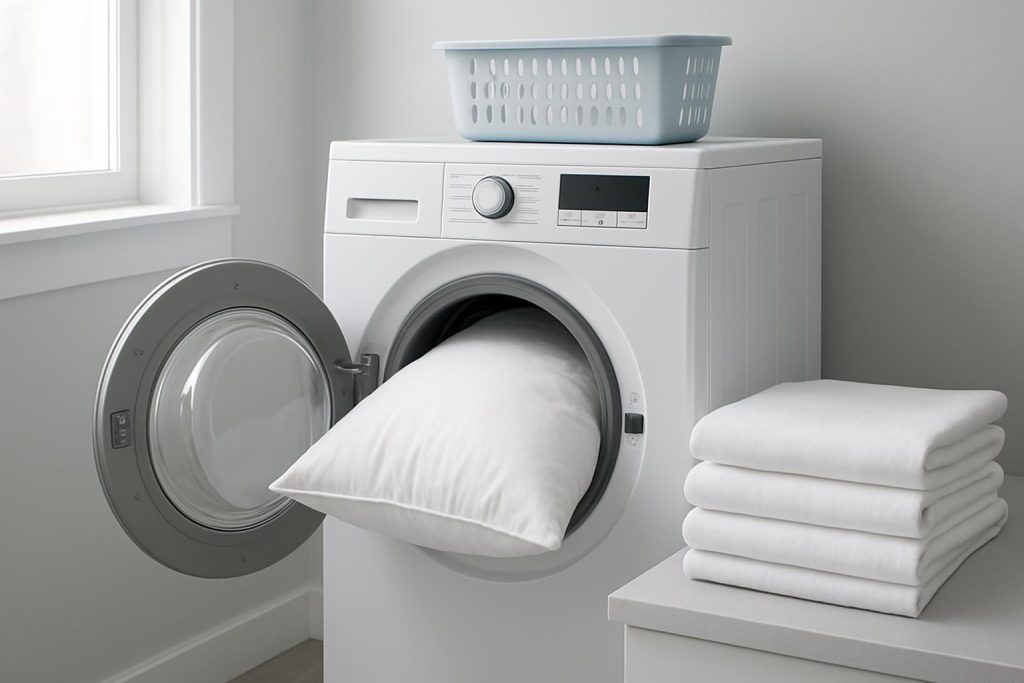
Yes, you can wash some pillows with bed sheets, but I usually do not recommend it. The better answer for most homes is: wash pillowcases and sheets together, but wash the actual pillows separately.
I learned this the annoying way after tossing two bed pillows in with a fitted sheet and flat sheet. The sheets twisted around the pillows like a sling, the washer thumped through the spin cycle, and one pillow came out still soapy in the middle. It looked clean, but it took forever to dry and smelled slightly musty two days later.
The main problem is not that pillows and sheets “can’t touch.” It’s that they wash and dry very differently. Sheets need room to move freely. Pillows need water to pass through the filling and then need a long, thorough dry. Mixing them often leads to poor cleaning, washer imbalance, and damp pillow centers.
If you are in a hurry, here is the safest rule:
Pillowcases, shams, and sheets: wash together if the colors and fabrics are compatible.
Whole pillows: wash separately, ideally two at a time to balance the machine.
Memory foam or latex pillows: do not machine wash unless the care label clearly says you can.
Down, feather, and polyester pillows: many can be machine washed, but they need careful drying.
Why washing pillows with sheets usually causes problems
Sheets are large, thin, and prone to wrapping around other items. Pillows are bulky and absorb a lot of water. That combination can turn a normal bedding load into a tangled, heavy lump.
Here are the issues I have run into, and the ones appliance repair guides and pillow care labels commonly warn about:
The pillows may not rinse well. A pillow can trap detergent inside the filling, especially if sheets are wrapped tightly around it.
The washer can go off balance. Wet pillows are heavy. Add twisted sheets, and the drum may bang, stop, or fail to spin properly.
The sheets may not get clean. Sheets need space to circulate. If the load is packed, body oils and detergent residue can remain.
Drying takes much longer. Sheets dry quickly; pillows do not. If you dry them together, the sheets may be dry while the pillows are still damp inside.
Damp pillows can smell musty. This is the biggest risk. A pillow that feels dry on the outside may still hold moisture in the center.
That last point is the one I care about most. A poorly dried pillow can develop a sour smell, and in some cases mildew. Once that smell gets into the filling, it can be hard to fully remove.
Which pillows can go in the washing machine?
Before putting any pillow in the washer, check the care tag. I know that sounds like the standard boring advice, but pillow materials vary a lot. Two pillows that look almost identical on the bed can require completely different cleaning methods.
Here is a practical guide:
Pillow type | Can it be machine washed? | Best cleaning method | Can you wash it with sheets? |
|---|---|---|---|
Polyester / fiberfill | Usually yes | Gentle cycle, warm water, mild detergent, extra rinse | Not ideal; wash with another pillow instead |
Down | Usually yes, if tag allows | Gentle cycle, mild detergent made for down if possible, low heat drying | No; it needs space and careful drying |
Feather | Often yes, if tag allows | Gentle cycle, minimal detergent, long dry with dryer balls | No; feathers clump if not rinsed and dried well |
Memory foam | Usually no | Spot clean and air dry; wash removable cover | No |
Latex foam | Usually no | Spot clean only unless the label says otherwise | No |
Buckwheat hull | No | Remove hulls, wash only the cover, dry hulls in sun if needed | No |
Decorative pillows | Sometimes | Check trim, seams, fabric, and filling before washing | Usually no |
The biggest “do not machine wash” category is foam. Memory foam and latex can tear, crumble, or become waterlogged in a washer. Even if the foam survives, it can take so long to dry that odor becomes a real concern.
How to wash pillows the right way
If your pillow label says machine washing is allowed, wash the pillows on their own or with another pillow of similar size. This keeps the washer balanced without trapping everything in sheets.
Step-by-step method for washable pillows
Remove pillowcases and protectors. Wash those with your sheets.
Check seams and stains. If a seam is opening, repair it first. A washer full of loose pillow filling is not a fun cleanup.
Wash two pillows together. Place one on each side of the drum if you have a top-loader with an agitator. In a front-loader, place them side by side.
Use a small amount of mild liquid detergent. Too much detergent is a common mistake. Pillows hold suds more than sheets do.
Choose a gentle cycle. Warm water is often fine for polyester, down, and feather pillows if the label allows it.
Add an extra rinse. This helps remove detergent trapped inside the pillow.
Run an extra spin if needed. Less water in the pillow means faster, safer drying.
I use less detergent for pillows than I use for a load of sheets. A tablespoon or two is often enough in a high-efficiency machine. More soap does not mean cleaner pillows; it often means crunchy, sticky, or flat pillows.
How to dry pillows without ruining them
Drying is where people get into trouble. Washing pillows is only half the job. A pillow must be dry all the way through before it goes back on the bed.
For polyester, down, and feather pillows, I usually use low heat and dryer balls. Clean tennis balls in white socks also work, though they can be noisy. The goal is to keep the filling moving so it does not clump.
Tips for drying pillows safely
Use low or medium heat, not high heat. High heat can damage filling, shrink covers, or create a cooked smell in down and feathers.
Pause and fluff every 30 minutes. Pull the pillows out, shake them, and break up any clumps by hand.
Dry longer than you think. A pillow can feel dry outside while still damp inside.
Smell the pillow before using it. Any sour or damp smell means it needs more drying time.
Let it air out afterward. I like to leave freshly dried pillows on a drying rack for an extra hour if I have time.
Down and feather pillows can take a long time. I have had feather pillows need more than one dryer cycle, plus extra air drying. That is normal. Rushing this step is how pillows end up smelling worse after washing than before.
Can you wash pillowcases with bed sheets?
Yes. Pillowcases are usually fine to wash with sheets, and that is how I do my regular bedding laundry.
Pillowcases collect facial oil, hair products, sweat, and drool, so they often need washing as often as sheets, sometimes more often. If someone in the house has acne-prone skin, allergies, or oily hair, washing pillowcases every few days can make a noticeable difference.
Just sort them the same way you would sort clothes:
Wash whites with whites if you use hot water or oxygen bleach.
Keep dark sheets separate from light pillowcases to avoid color transfer.
Do not overload the washer. Sheets need room to unfold and move.
Skip heavy towels in the same load. Towels create lint and dry more slowly.
If your pillowcases are silk or satin, use cooler water and a gentle detergent, or wash them separately in a mesh laundry bag. Cotton pillowcases are much easier and can usually handle the same wash cycle as cotton sheets.
What if I only have time for one bedding load?
If you are trying to freshen the bed quickly, wash the sheets and pillowcases first. That gives you the biggest comfort and hygiene improvement in the shortest amount of time.
Whole pillows do not need washing as often as sheets. In a normal household, pillowcases are the first line of defense. Pillow protectors help even more because they keep sweat, skin oils, and dust mites from reaching the pillow filling.
For a fast refresh, try this:
Wash sheets, pillowcases, and duvet cover if needed.
Put pillows in the dryer on an air-only or low-heat setting for 15 to 20 minutes if the care label allows.
Add dryer balls to fluff them.
Air pillows near a sunny window or outside in dry weather.
Replace pillow protectors if they are stained, yellowed, or no longer zip well.
This is what I do between deeper pillow cleanings. It removes some dust and stale odor without soaking the pillow.
How often should you wash pillows and sheets?
Sheets and pillowcases need washing much more often than the pillows themselves.
Bedding item | Typical washing schedule | Wash sooner if… |
|---|---|---|
Sheets | Once a week | You sweat heavily, sleep with pets, or have been sick |
Pillowcases | Once a week, or every few days for oily skin/hair | You use heavy hair products or notice facial breakouts |
Pillow protectors | Every 2 to 4 weeks | They look stained or smell stale |
Washable pillows | Every 3 to 6 months | They smell, have stains, or were exposed to illness |
Foam pillows | Spot clean as needed; wash cover regularly | There is a spill or odor on the surface |
Households are different. If you sleep hot, live in a humid climate, have allergies, or let the dog claim half the bed, you may need to wash bedding more often. If a guest pillow sits in a closet and gets used twice a year, it probably needs airing out more than frequent washing.
Common mistakes to avoid
Most pillow washing problems come from overloading, using too much detergent, or not drying long enough. These sound small, but they make a big difference.
Using too much detergent
Pillows are thick. Detergent can get trapped inside and leave residue. That residue can attract more dirt and make the pillow feel stiff. Use less than you would for a regular load and choose an extra rinse.
Washing one pillow by itself
One wet pillow can throw the washer off balance, especially in a top-loading machine. Two pillows usually balance better. If you only have one washable pillow, add another similar washable pillow or a few small, lightweight items only if the washer still has room to move freely.
Adding sheets to “fill the load”
This is tempting, but it often backfires. Sheets wrap around pillows and stop proper rinsing. If you need balance, another pillow is better than a sheet set.
Putting foam pillows in the washer
Memory foam and latex do not behave like regular pillow fill. The washer’s agitation can break the foam apart. Water can also stay trapped deep inside. Wash the removable cover and spot clean the foam instead.
Assuming dry outside means dry inside
This is the mistake that causes musty pillows. Press the pillow firmly, smell it, and feel for cool damp spots. If you have any doubt, keep drying on low heat or air dry longer.
When washing pillows with sheets might be okay
There are a few situations where mixing a pillow with sheets may work, but I would treat this as the exception, not the routine.
It may be okay if:
The pillow is small and washable, such as a travel pillow with polyester fill.
You have a large-capacity front-loading washer.
The sheets are lightweight, not bulky flannel or heavy cotton.
The washer is not crowded.
You plan to dry the pillow separately afterward.
Even then, I would not add a full sheet set with multiple pillows. If the load looks packed before water even enters the machine, it is too full.
For standard bed pillows, washing them separately gives better results. The pillows rinse better, the sheets wash better, and the dryer process is easier to control.
What about allergies, dust mites, and germs?
If you searched this because someone has allergies, asthma, or has been sick, cleaning bedding the right way matters. Sheets and pillowcases touch your skin every night, so washing those weekly is a good habit.
For dust mites, hot water can help if the fabric care label allows it. Many cotton sheets can handle warm or hot water, but some fabrics shrink or fade. Pillow protectors are especially useful because they create a washable barrier over the pillow.
If someone has been ill, wash pillowcases, sheets, and protectors promptly. For the pillow itself, follow the care label. A washable polyester pillow may be fine in the machine. A foam pillow may need careful surface cleaning and fresh air instead.
Do not use harsh disinfectants on pillows unless the label allows it. Bleach can damage pillow filling and leave strong odors. For many bedding loads, a proper wash cycle, enough detergent, and thorough drying are more useful than adding aggressive chemicals.
My practical laundry routine for pillows and sheets
After a few bad laundry days, this is the routine I stick with at home:
Weekly: wash sheets and pillowcases together.
Every few weeks: wash pillow protectors with sheets or towels, depending on fabric.
Every few months: wash two machine-washable pillows together on a gentle cycle.
As needed: spot clean foam pillows and wash their covers.
After washing pillows: dry slowly, fluff often, and do a smell check before putting cases back on.
This routine keeps the bed fresh without creating giant tangled loads. It also protects the pillows, which is worth it if you have spent money on a good one.
FAQ: Washing pillows and bed sheets together
Can I wash pillows and sheets together in a front-loading washer?
You can, but it is still not my first choice. Front-loaders handle bulky items better than many top-loaders, yet sheets can still wrap around pillows. If you try it, keep the load small and dry the pillows separately.
Can I wash two pillows with a fitted sheet?
I would avoid it. Fitted sheets are especially good at trapping other items because of the elastic corners. They can twist around pillows and prevent proper rinsing and spinning.
Should I wash pillows with hot water?
Only if the care label allows it. Hot water can help with allergens and oils, but it can also shrink covers or damage some fillings. Warm water with an extra rinse is a safer choice for many washable pillows.
Can I put pillows in the dryer with sheets?
It is better to dry them separately. Sheets dry much faster and can wrap around pillows, slowing the drying process. Pillows need low heat, dryer balls, and frequent fluffing.
Why does my pillow smell bad after washing?
The most common reason is trapped moisture. The pillow may not have dried fully inside. Another cause is leftover detergent in the filling. Run an extra rinse next time and dry the pillow longer on low heat.
Can I wash pillows with towels instead of sheets?
Towels are not a great match either. They are heavy, rougher on fabrics, and create lint. If you need to balance pillows, wash two pillows together rather than adding towels.
How do I wash a memory foam pillow?
Remove and wash the cover if the label allows. For the foam, spot clean with a small amount of mild detergent and water, then blot with a clean damp cloth. Let it air dry completely before covering it again. Do not soak it or put it in the washer.
How do I know if my pillow is too old to wash?
If the pillow stays lumpy, smells bad after proper cleaning, has yellow stains that do not improve, or no longer supports your head and neck, replacement may be better than washing. Washing can freshen a pillow, but it cannot restore worn-out filling.
Is it safe to wash down pillows at home?
Many down pillows can be washed at home, but check the label first. Use a gentle cycle, mild detergent, and a long low-heat dry with dryer balls. If the pillow is expensive or has delicate stitching, professional cleaning may be the safer route.
The best answer for a cleaner bed
Wash sheets and pillowcases together, but give whole pillows their own load. That simple split prevents tangling, improves rinsing, and makes it much easier to dry pillows properly.
If your pillow is washable, clean two at a time on a gentle cycle with a small amount of detergent and an extra rinse. If it is memory foam, latex, or buckwheat, skip the washer and clean only the cover or surface as recommended.
The goal is not just to get bedding wet and soapy. The goal is clean sheets, fully rinsed pillows, and no damp filling hiding in the middle. That is the difference between a bed that smells fresh tonight and one that smells musty by the weekend.