
We are reader supported. When you purchase through links on our site, we may earn an affiliate commission. Also, as an Amazon affiliate, we earn from qualifying purchases.
If the outside of your pots and pans looks brown, sticky, or dull, you can fix it without harsh tools or complicated products. This guide shows you exactly how to clean the outside safely for stainless steel, nonstick, cast iron, enameled, aluminum, hard anodized, and copper. You will learn fast daily care, deeper methods for cooked-on grease, and how to avoid scratches or damage. Start with a quick material check, then follow the steps that match your pan and the level of buildup you see.
Safety and prep basics
Work on a cool pan. Unplug removable handles if your cookware has them. Protect your sink with a soft mat if the pan is heavy. Open a window for ventilation if you use a cleaner with a scent. Wear gloves if you have sensitive skin. Do not mix products. Do not use oven cleaner on cookware. Test any new method on a small hidden area first.
Tools and cleaners at a glance
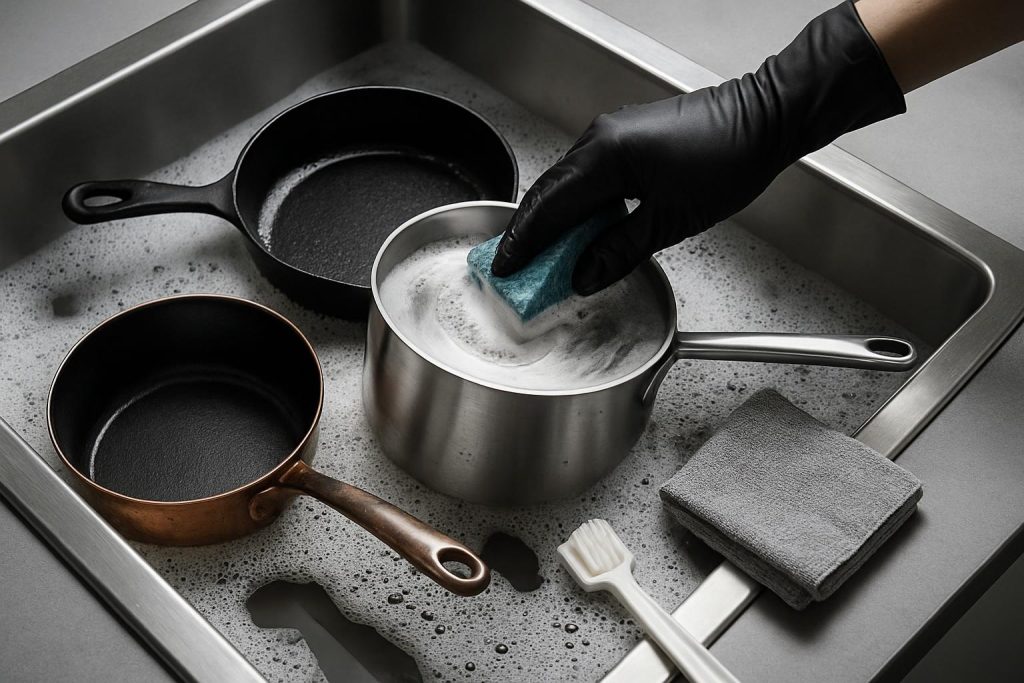
Basic kit: warm water, degreasing dish soap, baking soda, distilled white vinegar, non scratch sponge, soft microfiber cloths, nylon brush or old toothbrush, plastic scraper.
Optional for heavy buildup: powdered non abrasive cleanser suited for cookware, such as a feldspar or oxalic based cleanser used as directed; hydrogen peroxide 3 percent for stainless steel paste; fine non scratch scrub pad for cookware. Avoid steel wool and metal scrapers on coated or enamel surfaces.
Quick material check
Stainless steel exteriors
Handles baking soda paste, non abrasive cleansers, and hydrogen peroxide paste. Avoid steel wool that can haze the surface. Vinegar is safe for spots and hard water marks.
Nonstick coated exteriors
Use mild soap, warm water, and a soft sponge. Baking soda paste can help briefly for grease, then rinse well. Avoid abrasives, bleach, and high pH cleaners. Avoid oven cleaner.
Cast iron exteriors
Treat the outside like the inside. No soaking. No vinegar. Use salt and a drop of oil to scrub, then rinse, dry, and apply a very thin coat of oil. Heat to set the oil.
Enameled cast iron exteriors
Use dish soap and baking soda paste. A plastic scraper removes drips. Avoid metal pads. A melamine sponge is mildly abrasive and should be used sparingly and gently.
Aluminum and hard anodized exteriors
Use mild soap and warm water. Baking soda paste for grease is fine with light pressure. Avoid vinegar on bare aluminum that can dull the surface. Avoid bleach, oven cleaner, and harsh alkaline detergents. Hand wash is best for long life.
Copper exteriors
Use lemon and salt or a copper cleaner. Rinse and dry well. Do not use rough abrasives that leave scratches.
Daily clean in 3 minutes
Rinse the outside with warm water to soften grease.
Apply a few drops of dish soap to a damp sponge. Wipe the outside from rim to base. Do not forget the handle bases and the rolled rim where spills collect.
Rinse with warm water until slickness is gone.
Dry immediately with a soft cloth to prevent spots. For stainless, buff dry to avoid streaks.
Light stains and water spots
For stainless steel, enamel, hard anodized, and nonstick exteriors, mix a 1 to 1 solution of distilled white vinegar and water. Wipe the outside, then rinse and dry. This removes mineral spots and light film.
For all materials except cast iron and bare aluminum, make a thin baking soda paste with water. Spread a small amount on stains, wait 5 to 10 minutes, then rub gently with a soft sponge. Rinse and dry. For cast iron, do not use vinegar or long water exposure. For bare aluminum, skip vinegar and use only mild soap or baking soda paste and light pressure.
Break down cooked on grease
Work over a lined sink. Rinse the outside with hot water to warm the residue.
Coat the outside with a thick baking soda paste. For greasy spots, add a few drops of dish soap on top of the paste. Spread evenly.
Let the paste sit 15 to 30 minutes. Keep it damp with a few drops of water if it dries.
Scrub with a non scratch pad in small circles. Use a nylon brush along seams and around the base ring. Reapply paste to stubborn patches and repeat.
Rinse with warm water and inspect. Repeat as needed. Dry well.
Stainless steel deep clean
For rainbow heat tint or dull film, wet the outside and sprinkle a cookware safe powdered cleanser. Make a loose slurry and rub with the grain of the steel using light pressure. Rinse and buff dry.
For carbonized spots, mix baking soda with a small amount of 3 percent hydrogen peroxide to form a spreadable paste. Apply, wait 10 to 20 minutes, then scrub gently. Rinse thoroughly and dry. Repeat if needed.
Finish by buffing with a clean, slightly damp microfiber cloth, then a dry cloth. A streak free finish tells you residue is gone.
Copper exteriors
Cut a lemon and dip the cut side into table salt. Rub the copper in sections until tarnish lifts. Reapply salt as needed.
Rinse with warm water and wash lightly with dish soap to remove acid and salt. Rinse again and dry immediately to prevent spots.
For heavy tarnish, use a dedicated copper cleaner as directed by the label. Avoid rough pads that scratch.
Cast iron exteriors
Wipe loose residue with a dry cloth. Sprinkle coarse salt on the outside. Add a few drops of neutral oil. Scrub with a stiff non metal brush until residue lifts.
Rinse briefly with warm water and wipe dry at once. Place the pan over low heat to evaporate moisture.
While warm, rub a pea sized amount of oil over the outside. Heat the pan on low for 5 to 10 minutes or place in a warm oven to set the oil. Wipe off any excess after cooling. This maintains the seasoning and resists future buildup.
Enameled exteriors
Wash with warm water and dish soap. For stuck drips or browned areas, spread a baking soda paste and wait 15 minutes. Use a plastic scraper to lift residue.
Rinse and repeat if needed. Use a melamine sponge only for short, gentle passes on glossy enamel. Dry with a soft cloth.
Hard anodized and nonstick exteriors
Clean with warm water, dish soap, and a soft sponge. For greasy film, use a baking soda paste for 10 to 15 minutes, then scrub gently and rinse well.
Avoid bleach, oven cleaner, harsh alkaline detergents, and abrasive powders. Prolonged dishwasher use can dull or stain exteriors, so hand wash if you want to keep the finish looking new.
Bottoms, rims, and hardware
The rim and base ring collect burnt spills. Use a toothbrush or nylon brush with dish soap to loosen buildup. A plastic scraper lifts ridge lines on stainless and enamel. Avoid metal blades on coated or anodized exteriors.
Clean around handle bases and rivets with the corner of a sponge or the tip of a brush. Rinse thoroughly to remove trapped paste and grime. Dry these areas well to prevent water marks or rust around exposed rivets.
Odor and smoke film on the outside
For stainless, enamel, hard anodized, and nonstick exteriors, wipe with a 1 to 1 vinegar and water solution to cut odor and smoke residue. Rinse and dry. Do not use vinegar on cast iron. Skip vinegar on bare aluminum to avoid dulling.
Drying and finishing steps
Always dry by hand. Start with a clean towel, then switch to a dry microfiber for a final buff. Buffing removes fine streaks and helps you spot missed areas.
For cast iron, finish with a very thin coat of oil on the outside and set with gentle heat. For stainless, a final dry buff keeps the shine even. For copper, dry immediately to avoid fresh spots.
Prevention habits that work
Use moderate heat. High flames that lick the sides bake grease onto the exterior.
Wipe exterior spills right away with a damp cloth if it is safe to handle. Do this before the residue bakes on.
Match burner size to pan size so flames or heat do not rise up the sides.
Avoid aerosol cooking sprays on the outside. They can leave a sticky film.
Hand wash anodized and nonstick exteriors to preserve the finish. Dry fully after every wash.
Troubleshooting and limits
Some color changes are normal. Stainless can show rainbow heat tint. Copper will patina. Enamel can discolor near the base after heavy use. Clean for hygiene and safety, then accept a little honest wear.
If a coating blisters, peels, or softens, stop and contact the manufacturer. Do not use harsh chemicals to force results. If scrubbing creates scratches or dull spots, change to a gentler method and reduce pressure.
Weekend reset routine
Line the sink. Rinse each pot and pan with hot water. Apply baking soda paste to all exteriors with visible film. Let them sit while you clean the first piece.
Scrub the first pan, focusing on rims, base rings, and handle bases. Rinse and set on a towel. Move to the next pan. Repeat until all are clean.
Finish by drying and buffing each piece. Re season cast iron exteriors. Polish copper if needed. Put everything away dry so no new spots form.
Conclusion
Clean exteriors last longer, heat more evenly, and look better on the stove. Start with soap and warm water. Step up to baking soda paste for grease. Use material specific methods for stainless, copper, cast iron, enamel, anodized, and nonstick. Dry and buff every time. With the right steps and a few good habits, the outside of your pots and pans stays clean without damage or extra effort.
FAQ
Q: What is the fastest way to clean the outside of a pan after cooking
A: Rinse with warm water, wash the outside with a few drops of dish soap on a soft sponge from rim to base, rinse well, and dry with a soft cloth.
Q: How do I remove brown baked on grease from stainless steel exteriors
A: Apply a thick baking soda paste for 15 to 30 minutes, scrub with a non scratch pad, then for stubborn spots use a cookware safe powdered cleanser or a baking soda and hydrogen peroxide paste, rinse, and buff dry.
Q: Can I use vinegar on cast iron or aluminum exteriors
A: Do not use vinegar on cast iron, and skip vinegar on bare aluminum to avoid dulling.
Q: How do I clean the outside of enameled cast iron without scratches
A: Use warm water and dish soap, apply baking soda paste for stuck drips, lift residue with a plastic scraper, rinse, and dry.
Q: What should I avoid on hard anodized or nonstick exteriors
A: Avoid bleach, oven cleaner, harsh alkaline detergents, and abrasive powders, and hand wash for best results.