
We are reader supported. When you purchase through links on our site, we may earn an affiliate commission. Also, as an Amazon affiliate, we earn from qualifying purchases.
You can make a room look aesthetic without spending much. Start with what you own, fix the layout, add simple color, and layer texture and light. This guide gives you 20 cheap ideas that work in rentals and small spaces. Follow the steps in order so every change builds on the last and your money goes further.
Plan Your Aesthetic and Budget
Set a clear goal. Decide what you need the room to do first. Sleep, study, relax, host friends. This guides every choice.
The cheapest way is to declutter, deep clean, and rearrange furniture for better flow before you buy anything.
Pick a spending cap and split it. Save most for high impact items like paint, bedding, and lighting. Use the rest for small decor and tools.
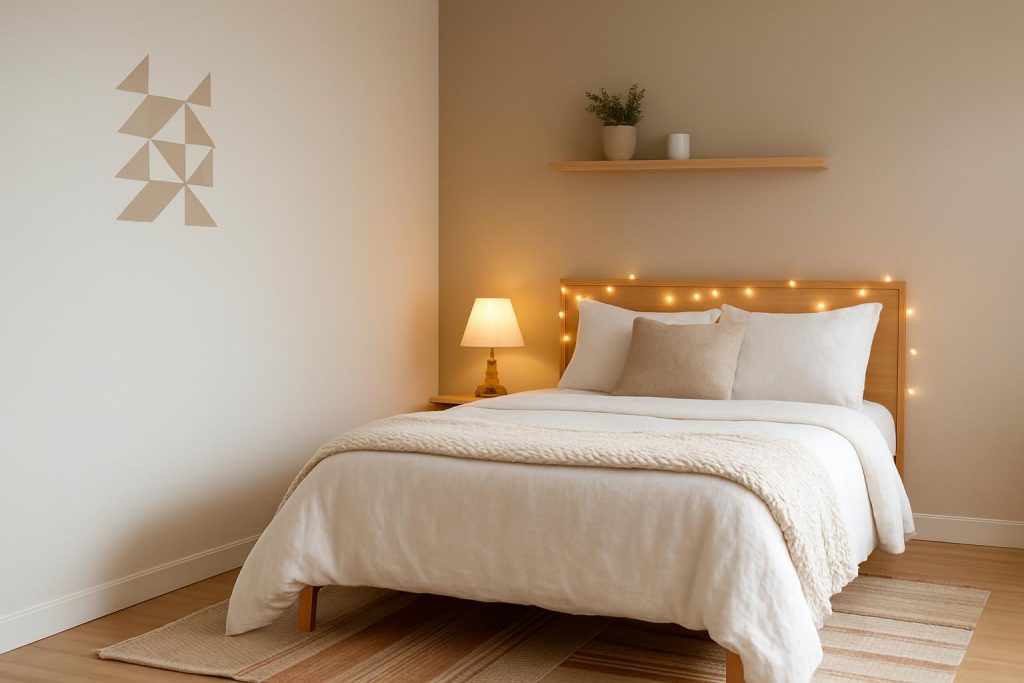
Light, low-contrast colors like soft beige, warm white, or pale gray make small rooms feel calmer and bigger.
Measure your space, note outlets and windows, and list quick wins. A clean floor, a clear desk, and a fresh pillow cover change how the room feels fast.
Walls and Color
Walls are the biggest canvas. Small moves here can change the whole mood. Use paint, peel-and-stick decals, and a gallery wall of thrifted frames and printed photos.
Idea 1: Quick repaint with a calm base
Choose an affordable paint in a warm white or soft beige. One gallon can cover most small rooms. Patch holes, tape edges, and do two thin coats. A neutral base gives you freedom to add color in textiles and art. If you rent, ask for the same color or a close match so it is easy to restore.
Idea 2: Accent wall or color block
If a full repaint is not possible, do one wall behind the bed or desk in a muted tone. Or try a half wall color block with painter tape. This adds depth and anchors furniture without clutter. Keep contrasts gentle so the room feels airy.
Idea 3: Peel-and-stick decals or wallpaper
Use removable patterns to add texture fast. Try a small zone like a headboard area or entry wall. Cut pieces cleanly and align patterns at eye level. Save scraps for drawer liners so the look repeats around the room.
Idea 4: DIY gallery wall for personality
Thrift frames in mixed sizes and spray paint them one tone for unity. Print black-and-white photos, quotes you type yourself, or simple line art. Lay frames on the floor first to plan spacing, then hang with paper templates or removable strips. Keep a steady gap between frames for a calm grid.
Idea 5: Pinboard or washi grid for changeable art
Cut cork tiles or use a fabric-covered board. Pin postcards, sketches, and to-do lists. Or use washi tape to make a grid on the wall and slot in prints. This keeps art flexible and low-cost.
Lighting That Flatters
Good light makes any style look intentional. Layer three light sources: warm string lights, a thrifted lamp with an LED bulb, and candles or a soft night light.
Idea 6: String lights with gentle glow
Pick warm white lights and drape them along a curtain rod, headboard, or shelf edge. Avoid harsh cool tones. Use adhesive hooks to guide the line and hide cords along trim. A small dimmer can stretch usefulness from evening to night.
Idea 7: Thrifted lamp with LED bulb
Find a solid lamp base at a thrift store and clean it well. Add a fresh shade and a warm LED bulb. Place the lamp where you read or work. Aim light onto walls, not straight into eyes, to soften shadows.
Idea 8: Candlelight or soft night light
Tea lights in safe holders or a soft night light add a calm layer. Use a tray to group candles and protect surfaces. If open flame is not allowed, use LED candles with a timer. Place them where they bounce off a wall or mirror.
Textiles That Transform
Textiles change color, comfort, and sound in one step. They also hide flaws you cannot fix right now.
Idea 9: Bedding refresh with a simple cover
Choose a solid duvet cover or quilt in your base color. Add one textured throw at the end of the bed. Wash linens on a warm cycle so they feel fresh. A neat bed is the fastest visual upgrade in a bedroom.
Idea 10: Throw pillows with removable covers
Buy inserts once and rotate covers seasonally. Mix one pattern, one texture, and one solid. Keep the palette tight so the look stays calm. Store extra covers flat to save space.
Idea 11: Layer a rug to zone the room
If the floor is cold or loud, add a rug. A flat woven base is easy to clean and cheap. If budgets are tight, layer two small rugs side by side under the bed or desk. Use rug tape to stop slips.
Idea 12: Curtains hung high and wide
Hang rods closer to the ceiling and extend them wider than the window. This makes windows look taller and lets in more light. If rods are pricey, use a spray-painted conduit pipe and simple brackets. Choose blackout or light-filtering based on your sleep needs.
Furniture and Storage Upgrades
Work with what you have. Small changes to layout and finish can make old pieces feel new.
Idea 13: Rearrange for flow and function
Place the largest piece first. In a bedroom, anchor the bed so you can walk on both sides if possible. Keep pathways clear and surfaces easy to reach. Move the desk near natural light if you study or work often. Test a few layouts before settling.
Idea 14: Paint and hardware refresh
Sand lightly, wipe down, and use a bonding primer on glossy pieces. Paint in a satin finish for durability. Swap knobs and pulls for a quick style shift. Choose one metal tone and repeat it across lamps, frames, and hooks.
Idea 15: Contact paper or vinyl wrap
Cover a beat-up desk, nightstand top, or closet shelf with wood grain or stone-look vinyl. Cut slightly larger than needed and trim edges cleanly after application. Use a squeegee to avoid bubbles. This is renter friendly and cheap to replace.
Idea 16: Simple floating shelves
Use sturdy brackets and a cut board from the hardware store. Paint or stain the board to match your palette. Mount into studs or use proper anchors. Style with books, a plant, and one decor piece per shelf to avoid clutter.
Idea 17: Under-bed storage and baskets
Use low bins with lids for off-season clothes, extra bedding, or craft supplies. Add a bed skirt or long duvet to hide them. Place matching baskets on shelves to group small items. Label the front so you can find things fast.
Idea 18: Cable management and power control
Mount a power strip under the desk and run cords along furniture edges with clips. Shorten excess length with velcro ties. Hide routers or hubs in a ventilated basket. Clean lines make the room look calmer at once.
Personal Touches and Greenery
Bring in life and story without clutter. Choose a few items you love and repeat materials for unity.
Idea 19: Plants on a budget
Start with easy plants like pothos, snake plant, or a cutting from a friend. Propagate in water to grow more for free. Use thrifted pots or wrap nursery pots in jute or fabric. Group plants in odd numbers so they read as one display.
Idea 20: Mirrors to bounce light
Thrift a mirror and clean it well. Hang opposite a window or lamp to double the light. Check angles so it reflects something simple, not clutter. A full-length mirror behind a door saves space.
Style Rules That Keep Costs Down
Set constraints before you shop. They protect your budget and guide choices.
Limit your palette to two main colors and one accent, repeat textures, and give every item a home.
Repeat materials like wood, linen, and black metal so the look feels cohesive. Buy slower and only if the item fits a clear need and your palette. If an item comes in and you already have a similar one, let the old one go.
Maintain the Look
Make a weekly reset routine. Clear surfaces, fluff pillows, water plants, and vacuum high traffic zones. Wipe mirrors and lamps so they reflect more light. Return items to the same basket or drawer each time. Small habits keep the room aesthetic with almost no cost.
Conclusion
You do not need a big budget to build an aesthetic room. Start with a clean base, choose a calm palette, and layer light, textiles, and small DIY upgrades. Use these 20 ideas step by step and focus on impact. When you repeat colors and textures and give each item a home, your room will look styled and stay easy to live in.
FAQ
Q: What is the cheapest way to make a room look aesthetic
A: The cheapest way is to declutter, deep clean, and rearrange furniture for better flow before you buy anything.
Q: How can I decorate walls on a budget
A: Use paint, peel-and-stick decals, and a gallery wall of thrifted frames and printed photos.
Q: How do I set up good lighting without spending much
A: Layer three light sources: warm string lights, a thrifted lamp with an LED bulb, and candles or a soft night light.
Q: What colors are safe for a small room
A: Light, low-contrast colors like soft beige, warm white, or pale gray make small rooms feel calmer and bigger.
Q: How do I keep decor from looking messy
A: Limit your palette to two main colors and one accent, repeat textures, and give every item a home.