
We are reader supported. When you purchase through links on our site, we may earn an affiliate commission. Also, as an Amazon affiliate, we earn from qualifying purchases.
A shed can look like a finished garden feature, not a leftover box. With a simple plan, a few smart materials, and plants that fit your light and climate, you can transform the area around your shed and lift the whole backyard. This guide walks you through planning, building clean edges, planting, adding vertical structure, lighting, and seasonal care. Follow the steps in order or pick the parts that fit your space and budget.
Plan the Area Around Your Shed
Assess the Shed and Site
Start with what you have. Note sun and shade across the day, wind direction, slopes, and drainage after rain. Check the shed condition, door swing, windows, and access paths you already use. Look for utilities, downspouts, and vents you must keep clear. Take clear photos from all sides to help you plan.
Set a Clear Purpose
Decide how you will use the shed zone. Common goals include easy access to tools, a tidy potting area, a quiet seating corner, or storage that blends into the garden. Your purpose decides the width of paths, the type of plants, and whether you need screens or work surfaces.
Measure and Map
Measure the shed footprint and at least 4 to 6 feet out on all sides you plan to landscape. Sketch a simple map with doors and windows marked. Plan a clear main path at least 36 inches wide to the door. Leave at least 12 to 18 inches between plants and shed walls to allow airflow, painting, and repairs.
Create Clean Edges and Foundations
Define Borders
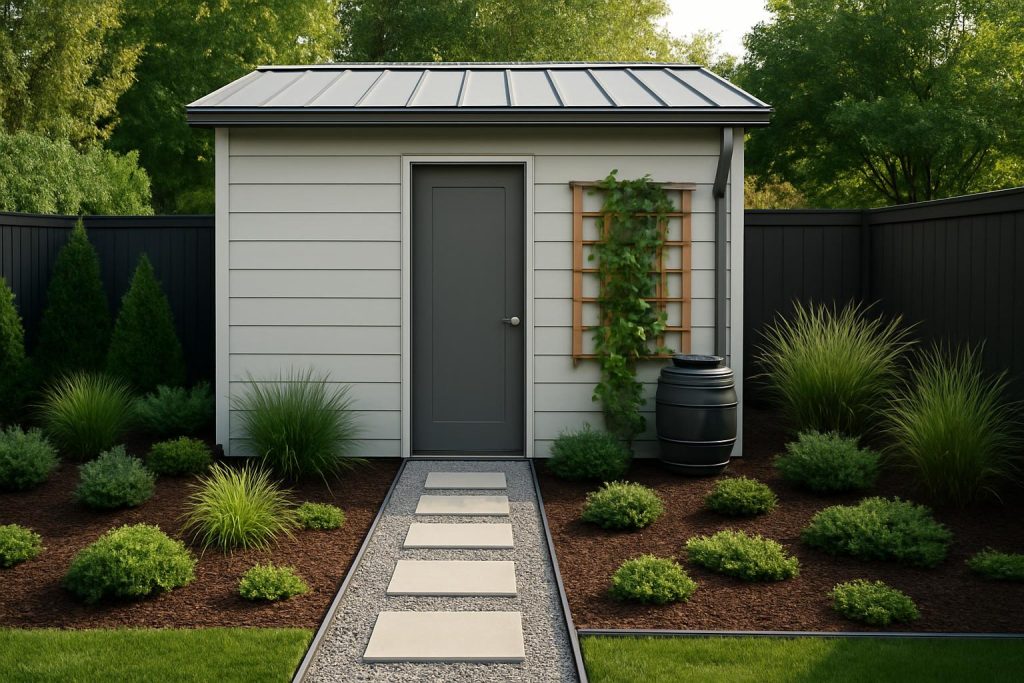
Crisp edges make a shed area look finished. Use no-dig plastic edging, steel edging, or paver stones to outline beds and paths. Keep curves gentle to avoid fussy cuts. Edging keeps mulch or gravel in place and grass out of beds.
Install a Simple Gravel or Mulch Bed
A perimeter bed around the shed controls mud and reduces rot. Remove grass, rake flat, and lay landscape fabric if you want to suppress weeds. Add 2 to 3 inches of crushed gravel or shredded mulch. Aim for a 12 to 24 inch wide strip along walls, wider on the side with the door. Keep material under window drip lines to catch runoff.
Add a Stepping Path
Build a solid, dry path to the door. Mark the route, remove sod, and level the soil. Spread a 2 inch compacted base of gravel. Set pavers or stepping stones flush with the final grade so you can roll a wheelbarrow. Maintain a slight slope away from the shed for drainage.
Planting Ideas That Work With Any Shed
Right Plant, Right Place Basics
Match plant needs to your light and soil. Choose sun lovers for south and west sides, and shade tolerant plants for north sides or under trees. Group plants with similar water needs. Keep mature heights in mind so doors and windows stay clear.
Layered Planting Plan
Use three layers for a tidy, full look. Place evergreen or compact shrubs at the back to give structure year round. Add medium perennials or small grasses in the middle for color and texture. Finish with low groundcovers at the front to soften edges. Stagger plants rather than making tight straight lines.
Low Maintenance Picks
Pick plants that do not need frequent pruning and tolerate your soil. Favor disease resistant shrubs, long blooming perennials, and clumping grasses. Use groundcovers to reduce weeding near the shed base. Repeat a few plant types to avoid a busy look.
Edibles Around a Shed
Use the sunny side for herbs and compact edibles. Plant thyme, oregano, rosemary, chives, or strawberries along the edge for easy harvest. Train a dwarf fruit tree or berry shrub on a trellis to save space. Keep plantings off the wall to prevent moisture buildup.
Hide Eyesores and Highlight Features
Screen Utilities
Softly screen bins, hoses, vents, and AC units. Install a free standing lattice panel or a short fence section set a foot from the item for airflow. Plant a narrow shrub or tall grass in front, leaving access for service.
Frame Doors and Windows
Draw the eye to the best parts of the shed. Flank the door with two matching planters or compact shrubs. Under windows, set a window box or a simple bed of low, long blooming plants. Repeat the same color on pots, trim, and a bench to tie the view together.
Vertical Interest and Climbing Plants
Trellises and Supports
Vertical elements add height without using much ground space. Mount a wood trellis, cable kit, or modular stainless eyelets on the sunny wall. Keep supports 1 inch off the siding with spacers to allow airflow and easy cleaning.
Choose Vines for Your Light
Pick noninvasive vines that fit your light and maintenance level. In full sun, consider clematis or annual vines. In part shade, try climbing hydrangea or honeysuckle that tolerates lower light. Avoid aggressive vines that can lift shingles or invade siding.
Maintain Vines Safely
Train new shoots weekly in the first season. Prune away from roof edges and gutters. Keep stems off the ground to prevent rot and pests. Inspect mounting hardware each spring and tighten as needed.
Color and Material Choices That Tie It Together
Coordinate With the House
Repeat one or two colors from your home to connect the shed to the yard. Use the same mulch or gravel color used elsewhere. Keep metal finishes consistent on lights and hardware.
Paint and Stain Strategy
Use a neutral body color on the shed to make plants stand out. Use a slightly deeper trim color to outline doors and windows. Stain fences, trellises, and raised beds in the same tone for a unified look.
Hardware and Details
Swap rusty hinges and latches for new outdoor rated hardware. Add simple house numbers or a nameplate for clarity if the shed stores deliveries or tools. Keep details minimal so plants stay the focus.
Lighting and Night Use
Solar or Low Voltage Basics
Light the path to the door and one wall for safety. Solar stakes are fast to install if the site gets sun. For shade or reliable output, use low voltage landscape lighting with a transformer and outdoor rated cable buried shallowly along edges.
Motion Sensor Near the Door
Mount a battery or solar motion light over the door for hands free use at night. Aim it down to avoid glare. Choose warm white light for a calm look and enough lumens to see locks and steps clearly.
Accent the Best Feature
Uplight a small tree, trellis, or a feature pot to add depth after dark. Keep fixtures away from mower paths. Test angles at night and adjust until you see the feature without light spill into windows.
Organize the Shed Exterior for Function
Tool Storage Outside
Mount a weather resistant rack on the shed side near the door for daily tools like a broom, shovel, and rake. Keep the rack under a small overhang or add a simple cap to protect handles from rain.
Potting and Work Zone
Set a narrow potting bench along the sunniest wall. Add hooks for hand tools and a small bin for soil. Keep a sweep area under the bench and store a dustpan there to make clean up fast.
Water Management
Install gutters and a downspout on the shed. Direct water into a rain barrel or onto a splash block that sends water away from the base. Add a 6 to 12 inch gravel drip line around the shed to prevent mud and rot.
Small Yards and Rental Friendly Options
Container Planting Plan
Use containers when you cannot dig. Group three to five pots of different sizes near the door and on the corners. Mix a tall plant, a medium filler, and a low spiller for each pot. Place saucers under pots to protect surfaces.
Temporary Paths
Use interlocking deck tiles, stepping stones set on sand, or a roll out path mat for fast access. Keep surfaces level and non slip. Lift and store them if you move.
Portable Screens
Use freestanding lattice, folding privacy screens, or planter boxes with tall grasses to hide bins. Place them a foot from the shed wall to allow airflow and easy painting later.
Budget and Phasing Plan
Start With High Impact Basics
Phase work to spread cost and keep momentum. First, edge beds and install the main path. Second, add the gravel or mulch perimeter. Third, plant the evergreen backbone. Fourth, add perennials and containers. Last, install lighting and hardware.
Cost Smart Material Choices
Choose shredded mulch or local gravel over costly stone. Reuse pavers from other parts of the yard for paths. Buy plants in smaller sizes and space for growth. Use simple wood trellises you can build from standard lumber.
Seasonal Care and Maintenance
Spring Setup
Clean siding, check for rot, and touch up paint as needed. Rake beds, top up mulch to 2 to 3 inches, and cut back perennials. Check edging for shifts from frost and reset flush with the lawn.
Summer Checks
Weed weekly for 10 minutes to stay ahead. Deadhead long blooming plants to extend color. Inspect irrigation, rain barrels, and downspouts after storms. Trim paths and keep tool racks tidy.
Fall and Winter Prep
Remove leaves that trap moisture against the shed. Prune lightly to maintain access to doors and windows. Drain hoses and rain barrels before freeze. Store containers or lift pots on feet to prevent cracking.
Safety and Common Mistakes to Avoid
Call utility services before you dig. Keep plants and trellises off the roof edge and away from gutters. Do not plant large shrubs too close to walls. Keep the main path wide and level to reduce trips. Use outdoor rated fixtures and hardware only. Leave clear access to vents, panels, and water spigots.
Conclusion
A shed landscaping project pays off fast with better function and a cleaner view. Start with a clear plan and strong edges, then add a simple path and smart plants. Use vertical elements to save space, bring in coordinated colors and hardware, and light the area for safe night use. Maintain the area each season and make small upgrades over time. With steady steps, your shed area becomes an asset that lifts the whole backyard.
FAQ
Q: How wide should the main path to the shed be
A: Aim for at least 36 inches so you can walk comfortably and roll a wheelbarrow.
Q: How far should plants be from the shed wall
A: Leave 12 to 18 inches for airflow, painting, and repairs.
Q: What is a simple way to control mud around a shed
A: Install a 12 to 24 inch perimeter bed of gravel or mulch and add a 6 to 12 inch gravel drip line to catch runoff.
Q: How can I hide bins or AC units near the shed
A: Use a freestanding lattice panel or short fence and plant a narrow shrub or tall grass in front, leaving access for service.
Q: What lighting is best for a shed door
A: A battery or solar motion light mounted over the door gives hands free use at night and improves safety.