
We are reader supported. When you purchase through links on our site, we may earn an affiliate commission. Also, as an Amazon affiliate, we earn from qualifying purchases.
Choosing between cast iron and regular pans causes confusion for many home cooks. The right pan can make food taste better, speed up dinner, and simplify cleaning. The wrong one can burn, stick, or take up space without real use. This guide explains the differences in plain terms, then shows exactly when each pan shines. Keep reading to match the right material to your meals, your cooktop, and your cleaning routine.
What We Mean By Cast Iron And Regular Pans
Cast Iron In Short
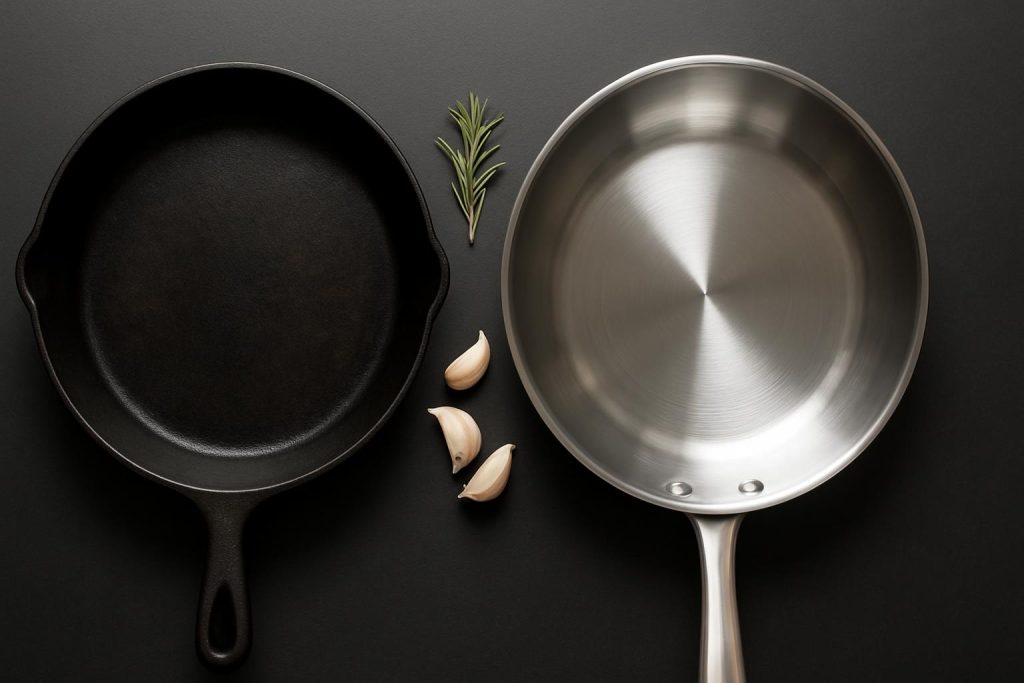
Cast iron is a thick, heavy iron alloy poured into a mold. It holds heat very well and gets very hot. Bare cast iron has a seasoned surface made from baked-on oil. Enameled cast iron has a glass-like coating that prevents rust and removes the need for seasoning. Popular shapes include skillets, grill pans, and Dutch ovens.
Regular Pans In Everyday Kitchens
Regular pans usually means stainless steel, aluminum nonstick, and ceramic nonstick. Stainless steel is tough and uncoated and often has an aluminum or copper core for even heating. Aluminum nonstick uses a PTFE coating for easy release. Ceramic nonstick uses a sol-gel coating that feels slick but wears faster under high heat. Some cooks also use carbon steel, which behaves like lighter cast iron after seasoning. For this guide, regular pans refers to the common stainless steel and nonstick options most households own.
The Core Differences You Will Notice
Heat Retention And Distribution
Cast iron holds heat better than most regular pans. Once hot, it stays hot and recovers temperature quickly after food hits the surface. This makes browning and searing reliable. Heat distribution is good once preheated, but it can be uneven if you rush. Give cast iron a few extra minutes to preheat and it rewards you with stable heat.
Stainless steel with an aluminum core distributes heat more evenly across the surface and preheats faster. It does not hold heat as long as cast iron, so it can lose sizzle when you add a large amount of cold food. Nonstick aluminum heats fast and fairly evenly but drops heat quickly when crowded.
Searing, Browning, And Delicate Foods
Cast iron excels at big heat tasks. It gives steaks, burgers, and chops a strong crust. It roasts vegetables well and bakes cornbread with crisp edges. It is less ideal for delicate foods like thin fish or crepes unless your seasoning is excellent and your technique is careful.
Stainless steel browns well with proper preheating and a light film of oil. It builds fond for pan sauces. It is better for quick tasks and temperature control. Nonstick is best for fragile foods like eggs and pancakes at moderate heat. It is not designed for high-heat searing.
Oven, Broiler, Grill, And Induction Use
Cast iron handles the oven, broiler, grill, and induction with ease. It is safe at very high temperatures and moves between stovetop and oven without issue. Enameled cast iron is also oven safe, but check brand guidance for maximum temperature as enamel can chip with thermal shock.
Stainless steel pans with metal handles are usually oven safe. Many work on induction if the base is magnetic. PTFE nonstick should stay below about 260 C or 500 F, and is not broiler-safe. Ceramic nonstick tolerates heat better than PTFE but still degrades faster with high heat, so avoid the broiler.
Weight And Handling
Cast iron is heavy. A 12 inch skillet can be difficult to lift one-handed, especially with food in it. The weight helps with searing but can strain wrists. Stainless steel is lighter and easier to maneuver. Nonstick aluminum is the lightest and most comfortable for daily flips and tosses.
Reactivity With Food
Bare cast iron can react with acidic foods like tomatoes, vinegar, wine, and citrus if cooked for long periods. This can strip seasoning and cause a metallic taste. Short acidic deglazes are usually fine on a well-seasoned pan. Enameled cast iron is nonreactive and safe for any sauce.
Stainless steel is nonreactive and reliable for all acids. Nonstick coatings are inert, but the aluminum base beneath can be reactive if the coating is damaged. Discard nonstick pans with deep scratches that expose the base.
Durability And Lifespan
Cast iron can last for generations. It tolerates high heat and rough use. If it rusts, you can restore it. Enameled cast iron is durable but chips if dropped or banged against hard surfaces.
Stainless steel is also long-lived. It resists warping, can handle metal utensils, and tolerates scrubbing. Nonstick has a shorter lifespan. Expect two to five years depending on care, heat level, and utensil choice. Once the surface loses release or shows damage, replace it.
Maintenance And Cleaning
Cast iron prefers a simple routine. Use minimal soap or none, scrub while warm, dry thoroughly, and wipe with a thin coat of oil. Do not soak for long. If seasoning wears thin, re-season. Enameled cast iron cleans like regular cookware but avoid scouring the enamel.
Stainless steel cleans with dish soap and a sponge. Stuck-on bits release with a brief simmer and a scrape. For discoloration, use a stainless cleaner or a paste of baking soda. Nonstick needs gentle sponges, no abrasives, and no cooking spray build-up. Hand wash and avoid the dishwasher for coated pans even if labeled dishwasher safe.
Nonstick Behavior And Seasoning
Cast iron becomes naturally nonstick when well seasoned. Seasoning is layers of polymerized oil baked onto the surface. It improves with use, especially when cooking with some fat. Scrambled eggs on a fresh or poorly seasoned skillet will stick. After several uses and proper care, eggs can slide with minimal sticking.
Nonstick coatings release food easily from day one. They require less oil. The trade-off is sensitivity to high heat, metal utensils, and abrasive cleaning. Stainless steel is not nonstick, but you can reduce sticking by preheating, adding oil, and waiting until the food releases before flipping.
Health And Safety Notes
Bare cast iron can add small amounts of iron to food, which can be beneficial for many people. If you have hemochromatosis or are managing iron intake, ask your doctor before frequent use. Seasoning is safe when created with cooking oils. Avoid burning off seasoning with extreme dry heat.
PTFE nonstick should not be overheated. Keep heat at low to medium. Do not preheat empty for long. Replace if the surface is badly scratched or peeling. Ceramic nonstick has no PTFE but still degrades with high heat and rough care. Stainless steel is inert and safe at high temperatures.
Price And Value
Cast iron is affordable for bare skillets and pricier for enameled Dutch ovens. It offers strong long-term value. Stainless steel sets can be a significant investment, but individual pieces are reasonable and last decades. Nonstick pans are inexpensive up front but need regular replacement, so their long-term cost can be higher if used daily.
Which Is Better For Your Kitchen
Choose Cast Iron If These Points Match You
You like searing, roasting, baking, and outdoor cooking. You want a pan that can go from stovetop to oven and handle high heat without stress. You do not mind a little routine maintenance. You have storage space for a heavy skillet or Dutch oven. You cook on induction or gas and value heat retention.
Choose Stainless Steel If These Points Fit
You want versatility for sautéing, making pan sauces, and boiling small quantities. You prefer low maintenance and dishwasher tolerance. You want even heating and quick response to temperature changes. You cook acidic sauces often. You value durability without the weight of cast iron.
Choose Nonstick If These Points Matter Most
You cook eggs, pancakes, and delicate fish and want effortless release. You prefer easy cleanup and low-fat cooking. You use low to medium heat most of the time. You are fine replacing the pan every few years. You avoid broilers and do not need strong searing power.
A Simple Two Pan Strategy That Works
For most home cooks, the best setup is one cast iron skillet plus one nonstick or stainless skillet. Cast iron handles searing, roasting, and oven work. Nonstick or stainless covers eggs, quick sautés, and acidic sauces. Add a stainless steel saucepan for boiling, pasta, and soups as your next piece. This small kit keeps storage simple and covers all daily needs.
Practical Cooking Scenarios
Steak, Burgers, And Chops
Use cast iron. Preheat for several minutes until a drop of water dances and vanishes quickly. Add oil with a high smoke point. Place the meat and let it sear without moving until a crust forms. Finish in the oven if needed. Stainless steel can do this too, but cast iron makes the process more forgiving. Nonstick is not ideal for high heat searing.
Eggs, Omelets, And Pancakes
Use nonstick for the easiest release at moderate heat. Preheat gently, add a small amount of butter or oil, and avoid high heat. A well-seasoned cast iron skillet can work for eggs once the seasoning is mature. Stainless steel is possible with careful technique but is less forgiving for thin pancakes and soft omelets.
Tomato Sauces, Wine Reductions, And Acidic Braises
Use stainless steel or enameled cast iron. You get a clean flavor and no risk to seasoning. Bare cast iron can handle brief deglazing with wine or tomatoes, but avoid long simmering of acidic ingredients.
Fish Fillets And Tender Vegetables
Use nonstick for ease and clean edges on delicate fish. Pat the fish dry, heat gently, use enough oil, and let the fish release naturally before flipping. Stainless steel works if you preheat well and do not rush the flip. Cast iron can overbrown thin fillets unless you manage heat carefully.
Cast Iron Care Guide
Seasoning Basics
Wash the new or stripped pan with hot water and a drop of soap to remove factory residue or old grime. Dry fully on low heat. Apply a thin coat of neutral oil to the entire surface, including the handle and exterior. Wipe off all excess until the pan looks almost dry. Bake upside down at 230 to 260 C or 450 to 500 F for one hour. Let it cool in the oven. Repeat one to three times for a stronger base layer.
Daily Cleaning
After cooking, while the pan is warm, wipe out residue with a paper towel or cloth. If stuck bits remain, add a splash of hot water and scrub with a soft brush or chain mail scrubber. Use a dot of mild soap if needed. Dry completely on the burner for a few minutes. While warm, rub a teaspoon of oil over the surface and buff dry. Store in a dry place with a paper towel between stacked pans to prevent moisture buildup.
Fixing Rust, Flaking, And Sticking
For light rust, scrub with steel wool or a rust eraser until the metal is bright. Rinse, dry, and re-season. For flaking seasoning, scrub down to a stable layer and re-season as above. For persistent sticking, cook a few batches of oily foods like bacon or roasted potatoes to build up a smoother surface. Avoid acidic cooking while rebuilding seasoning.
Stainless And Nonstick Care Guide
Cleaning Stainless Steel Without Fuss
For daily cleaning, use hot water and dish soap. If food sticks, add an inch of water, simmer for a few minutes, and gently scrape with a wooden or silicone tool. For rainbow discoloration or stains, use a stainless cleaner or a baking soda paste. Dry right away to prevent water spots. Avoid bleach and harsh chloride cleaners. Most stainless can go in the dishwasher, but hand washing keeps it looking new longer.
Protecting Nonstick Coatings
Cook on low to medium heat. Do not preheat empty pans for long. Use silicone or wooden utensils only. Avoid aerosol cooking sprays, which leave a sticky film. Hand wash with a soft sponge and mild soap. Do not use steel wool or abrasive powders. Replace the pan if you see peeling, deep scratches, or if food begins to stick even after gentle care.
Enameled Cast Iron Notes
When To Use Enameled Cast Iron
Choose enameled cast iron for soups, stews, braises, and sauces with acid. It does not require seasoning and cleans more like stainless. Use medium heat to protect the enamel. Avoid sudden cold water on a hot pot to prevent thermal shock. Use silicone or wooden tools to preserve the surface.
Storage And Organization Tips
Make Space Work For You
Store the heaviest pans low to avoid lifting injuries. Use a sturdy rack or the bottom cabinet shelf for cast iron and enameled Dutch ovens. Place a paper towel or felt pad between stacked pans to protect seasoning and enamel. Hang stainless and nonstick on hooks if possible to free cabinet space. Keep everyday pans near the stove and specialty pieces higher or farther back. Declutter duplicate sizes. Most homes only need one 10 or 12 inch skillet, one saucepan, and one Dutch oven or stockpot.
Common Myths To Ignore
Soap Always Ruins Cast Iron
Mild soap will not destroy a well-seasoned pan. Harsh scrubbing and long soaks are the real problem. Use soap sparingly when needed and re-oil after drying.
Cast Iron Heats Evenly From The Start
Cast iron needs time to preheat for even cooking. Cold spots can cause sticking. Give it a few extra minutes and test with a drop of water before adding food.
Nonstick Works For High Heat Searing
Nonstick coatings do not belong under high heat or the broiler. Use cast iron or stainless steel for searing and save nonstick for gentle tasks.
A Quick Decision Path
Match Pan To Task
If your goal is crust and deep browning, reach for cast iron. If your goal is a pan sauce or precision heat control, pick stainless steel. If your goal is stick-free eggs and simple cleanup, use nonstick. If your recipe is acidic and long simmered, use stainless or enameled cast iron.
Match Pan To Heat Source
Induction loves cast iron and many stainless pans with magnetic bases. Gas and electric work with all types. Glass cooktops benefit from smooth bottom pans to avoid scratches, so lift cast iron rather than sliding it.
Match Pan To Care Level
If you enjoy maintenance and want a lifetime tool, choose cast iron. If you want low maintenance, choose stainless steel. If you want the easiest cleanup and accept replacement over time, choose nonstick.
Beginner Friendly Starter Kit
Three Pieces To Cover Nearly Everything
One 12 inch cast iron skillet for searing, roasting, and baking. One 10 inch nonstick skillet for eggs and delicate items. One 3 quart stainless steel saucepan for sauces, grains, and boiling. Add a Dutch oven or a larger stainless pot when you cook soups, stews, or pasta often. This lean setup reduces clutter and keeps your workflow smooth.
Conclusion
Cast iron and regular pans both have clear strengths. Cast iron brings power, heat retention, and durability. Stainless steel delivers control, versatility, and simple care. Nonstick gives effortless release for delicate foods. The best choice is not one pan but the right tool for the job. Start with one cast iron skillet and one regular pan that fits your daily cooking. Keep your care routine simple and consistent. Store them well so they last. With the right match of pan and task, you cook better, clean faster, and enjoy your kitchen more every day.