
We are reader supported. When you purchase through links on our site, we may earn an affiliate commission. Also, as an Amazon affiliate, we earn from qualifying purchases.
Enameled cast iron is a favorite for soups, stews, and bread. Many people ask if it can go straight into the oven. The short answer is yes, with a few rules that keep the enamel intact and your food cooking evenly. This guide walks you through safe temperatures, knob limits, broiler use, and daily care so you feel confident every time you move your pot from stove to oven.
Quick answer
Most enameled cast iron cookware is oven safe up to 260 Celsius or 500 Fahrenheit. The lid knob may lower that limit. Stainless steel or metal knobs usually match the 500 Fahrenheit rating. Some older or phenolic knobs are limited to around 190 to 230 Celsius or 375 to 450 Fahrenheit. Check your manual if you have it. If not, stay at or below 232 Celsius or 450 Fahrenheit until you confirm the exact rating.
Typical temperature limits
Pots and pans with enamel coatings commonly allow 232 to 260 Celsius or 450 to 500 Fahrenheit. Most brands fall in this range. The enamel and cast iron can handle the heat, but accessories like knobs and gaskets may not.
For safe default use, aim for 232 Celsius or 450 Fahrenheit or below when you do not know the exact limits. This covers braises, roasts, casseroles, and bread in most home ovens.
Lid knobs matter
The lid is the most common weak point. Phenolic or plastic-like knobs often top out at 190 to 230 Celsius or 375 to 450 Fahrenheit. Stainless steel or nickel knobs usually handle up to 260 Celsius or 500 Fahrenheit. If your knob is not metal and you need higher heat, remove the lid during baking or replace the knob with a metal one rated for high temperatures.
When to avoid the oven
Skip the oven if the enamel shows deep chips exposing large areas of raw iron near food. Small chips are often still safe for home use but handle with care. Avoid the oven if the knob is cracked or wobbly. Never leave enameled cast iron in a self cleaning cycle. The extreme heat can damage enamel.
How to use enameled cast iron in the oven safely
Before you start
Inspect the pot for chips around the rim or lid seat. Small edge chips are common and usually fine, but do not slide the lid if a chip is sharp. Confirm the temperature limit of the cookware and the knob. If unsure, cap your heat at 232 Celsius or 450 Fahrenheit.
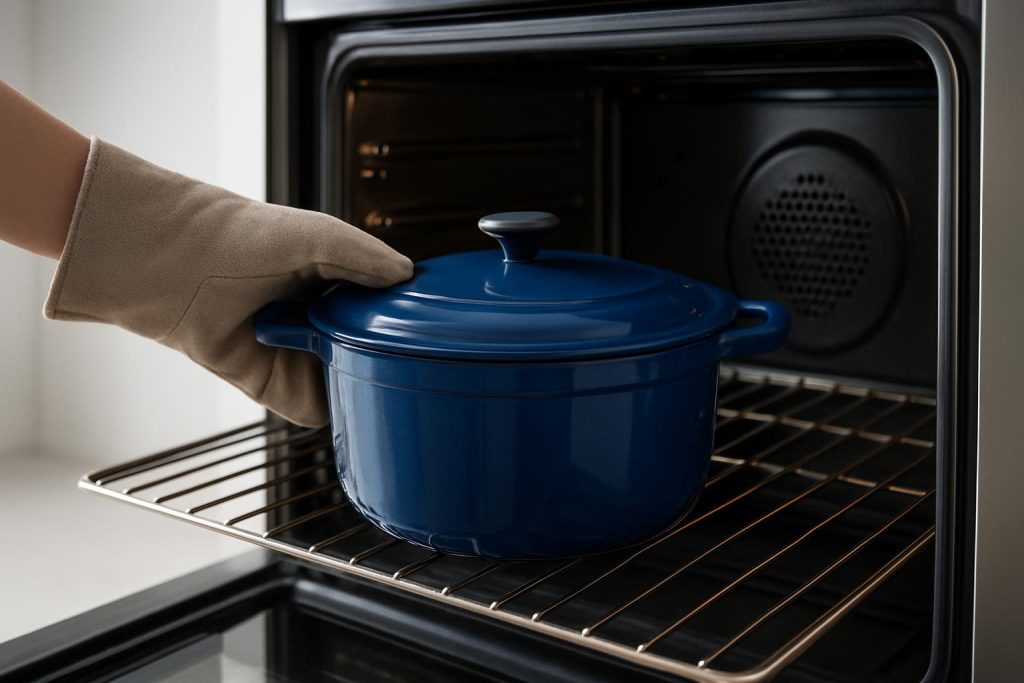
Use oven mitts. Enameled cast iron is heavy and holds heat for a long time. Dry the exterior to avoid water spots and sizzling drips on the oven floor.
Preheating and loading
Preheat the oven with the rack in the center. Enameled cast iron prefers steady heat. Avoid large swings. There is no need to preheat the empty pot unless a recipe requires it, such as for certain breads. If you preheat the pot empty, do not exceed your known temperature limit and do not leave it empty longer than needed. Never heat an empty pot at high heat on the stovetop.
To avoid thermal shock, keep transitions gentle. Do not move a cold pot straight into a very hot oven if the pot came from the fridge. Let it sit on the counter for 20 to 30 minutes first, or warm it slowly on low heat on the stovetop before placing it in the oven.
During cooking
Place the pot in the center of the rack, not touching the oven walls. Keep space around the sides for airflow. If cooking with the lid on, ensure the knob is rated for your oven temperature. For higher heat recipes, remove the lid once the food is simmering and continue uncovered if needed.
For broiler use, read the broiler section below before you proceed. Many lids are not broiler safe.
Cooling and cleaning
When the food is done, set the pot on a dry, thick towel or wooden board. Do not shock the enamel with cold water while hot. Let it cool until warm to the touch before washing. Use warm water, mild dish soap, and a soft sponge or nylon brush. For stuck spots, soak with warm soapy water or use a paste of baking soda and water. Avoid steel wool and harsh abrasives that can dull the enamel.
Dry fully with a soft towel. If you store with the lid on, place a paper towel between lid and pot to allow airflow and prevent odors.
Avoid these mistakes
Do not use the self cleaning oven cycle with the pot inside. The temperature is far beyond enamel ratings.
Do not move the pot from the oven straight into cold water. This can stress the enamel and cause cracks or crazing.
Do not drag the pot across a glass cooktop or across oven racks. Lift to protect surfaces and enamel feet.
Do not use metal utensils aggressively. Gentle stirring with wood, silicone, or nylon helps protect the enamel surface.
Do not exceed the knob rating. If you need more heat, remove the lid or switch to a metal knob.
Do not stack heavy items directly on the lid during storage. Enamel chips if squeezed or dropped.
Oven techniques that work well
Braising and stewing
Brown on the stovetop at medium heat to build flavor, then add liquid and aromatics. Cover and move to a 150 to 175 Celsius or 300 to 350 Fahrenheit oven. The heavy lid and thick walls stabilize heat and keep moisture in. Check every hour. You can finish without the lid for the last 20 minutes to concentrate the sauce.
Baking bread
Enameled cast iron gives great oven spring and crust. Most no knead recipes bake at 232 to 246 Celsius or 450 to 475 Fahrenheit. Confirm both pot and knob limits. If the knob is the limiting factor, remove the lid after the initial covered phase or replace the knob with a metal one. Line with parchment to prevent sticking and keep the enamel clean. Preheating the pot helps crust but is optional if your dough is well proofed and you work quickly.
Roasting and one pot meals
Use the pot to sear chicken pieces or a pork shoulder, add vegetables and herbs, then roast uncovered at 190 to 220 Celsius or 375 to 425 Fahrenheit. The high sides reduce splatter and keep drippings contained. Stir vegetables once midway so they brown evenly.
Casseroles and pasta bakes
Assemble on the stovetop, then top with cheese or breadcrumbs and bake at 175 to 205 Celsius or 350 to 400 Fahrenheit. If your knob is not metal and you want extra browning, remove the lid for the final 10 minutes or move the pot to a lower rack so the top browns without direct broiler intensity.
Broiler use
Many enameled cast iron bases are broiler safe without the lid. The lid and knob often are not. Even when the base is allowed, use caution. Place the rack lower to keep several inches between the enamel and the element. Limit broiler time to just what you need for browning. Avoid sugar heavy glazes that can burn and stain the enamel. Monitor constantly. If your manual forbids broiler use, skip it and brown at high oven heat instead.
Gas vs electric vs convection
All oven types are fine for enameled cast iron with the same temperature rules. Convection cooks faster at the same set temperature, so consider reducing temperature by about 14 Celsius or 25 Fahrenheit or shorten time. With gas, avoid letting flames lick over the pot edges on the stovetop, but oven use is unaffected. In any oven, keep the pot centered and away from heating elements and walls to reduce hot spots.
Troubleshooting and FAQs
Is my pot enameled or bare cast iron
Enameled cast iron has a smooth, glossy coating in color or off white inside. Bare cast iron is matte and dark gray or black. If you see a smooth, shiny surface inside and out, it is enameled.
Hairline lines, craze marks, or stains
Light surface lines that look like a web are often cosmetic crazing and do not affect safety if the surface is still smooth. Brown stains are common after high heat searing or tomato sauces. Soak with warm water and dish soap, then scrub gently. For stubborn stains, use a paste of baking soda and water, or a brief soak with a weak bleach solution followed by a thorough rinse. Avoid abrasive powders that scratch.
Food sticking in the oven
Preheat the oven. Use enough fat to coat the interior. For baking, line with parchment. For roasts, do not move meat too soon. Let it release naturally after browning. If you preheated the pot for bread, lower the dough in with parchment for easier removal.
Metallic marks and light scratches
Gray marks often come from metal utensils rubbing on the enamel. They are cosmetic. Clean with a non abrasive cleaner or a baking soda paste. Switch to wood or silicone utensils to prevent new marks.
Can I put a cold pot into a hot oven
It is safer to avoid big temperature jumps. Let the pot warm on the counter for 20 to 30 minutes, or start in a warm oven and increase gradually. Sudden changes can stress the enamel.
Can it go from freezer to oven
No. Move from freezer to fridge overnight, then to room temperature. Alternatively, place the cold pot in a cold oven and heat them together, staying below your maximum temperature. Rapid changes increase the risk of thermal shock.
Is enameled cast iron dishwasher safe
Many brands say yes, but hand washing extends the life of the enamel and the rim. Dishwasher detergents can dull the gloss over time and can corrode exposed rim areas. If you use the dishwasher, dry the rim and any chipped areas immediately.
Storage and maintenance tips
Dry thoroughly before storing. Leave the lid slightly ajar or use a paper towel spacer to prevent odors. If you stack, place a soft liner between pieces. Do not hang by the knob. Avoid placing heavy objects on the lid. Check screws on knobs occasionally and tighten gently if needed.
A simple oven workflow
Confirm the temperature and knob rating. Preheat the oven. If needed, preheat the empty pot only to the required temperature and not beyond the rating. Load food and cover if your recipe calls for it and the knob rating allows. Position the pot on the center rack with space around it. Bake or braise. For browning, remove the lid near the end. Cool on a dry towel. Wash warm, dry fully, and store with airflow.
Brand notes
Many popular enameled cast iron brands, including French and US makers, publish ratings up to 500 Fahrenheit for pots and metal knobs. Some older phenolic knobs list lower ratings around 375 to 400 Fahrenheit. If you bought secondhand or lost the manual, treat unknown knobs as lower rated and either remove the lid for high heat or replace the knob with a metal one from the same brand or a compatible part.
Safety reminders
Use two hands and dry mitts. The pot is heavy and stays hot. Open the lid away from your face to avoid steam burns. Keep handles clear of the oven walls. Do not attempt to carry a full, hot pot with one hand. Set it on a stable, heat safe surface before serving.
Common recipes and temperatures
No knead bread at 232 to 246 Celsius or 450 to 475 Fahrenheit. Confirm knob rating or remove lid after the steam phase. Braised short ribs at 150 to 165 Celsius or 300 to 325 Fahrenheit for several hours. Roast chicken at 200 to 220 Celsius or 400 to 425 Fahrenheit uncovered for crisp skin. Vegetable gratin at 190 Celsius or 375 Fahrenheit until tender and browned.
Environmental tips
Preheat only as long as needed. Keep the lid on for braises to save energy and retain moisture. Use residual heat. Turn off the oven a few minutes early and let the pot coast to the finish; cast iron holds heat well.
Final checklist before you bake
Is the pot enameled and free from major damage. Is the knob metal or rated for your target temperature. Are you within 232 to 260 Celsius or 450 to 500 Fahrenheit. Is the rack centered and clear. Are you using mitts and a stable trivet for when you pull it out. Will you cool gradually before washing.
Conclusion
You can put enameled cast iron in the oven with reliable results when you respect temperature limits and avoid sudden temperature shifts. The base is usually safe up to 260 Celsius or 500 Fahrenheit, and the lid knob is the main variable. Keep heat controlled, preheat with purpose, and cool gently. With these habits, your enamel stays smooth, your food cooks evenly, and your cookware will serve you well for years.