
We are reader supported. When you purchase through links on our site, we may earn an affiliate commission. Also, as an Amazon affiliate, we earn from qualifying purchases.
Shopping for a new chef knife and wondering where Cooking Guild knives are actually made. This guide gives you a clear, practical answer, plus the context you need to buy with confidence. You will learn the brand’s origin story in plain terms, how its supply chain works, which regions commonly make each type of blade, how to verify the country of origin on the exact model you plan to buy, and how manufacturing location relates to quality, care, and durability.
Introduction
Country of origin matters for many buyers. It signals the type of craftsmanship, the steel options likely in play, and the price you can expect. For Cooking Guild knives, there is frequent confusion online because the company markets hand forged blades but also sells clean, modern stainless options. Different series can come from different partner forges. Instead of guesswork, this article organizes what you need to know in a step by step way so you can check the exact knife in your cart and understand what that means for day to day use and maintenance.
Brand Basics and How It Operates
Cooking Guild is a direct to consumer knife brand. It designs knife collections, collaborates with creators, and sells online to a global audience. Like most modern knife brands that sell at mid range prices, it partners with established forges and factories to manufacture its blades. This model is common in the industry and allows the brand to develop multiple series without running its own steelworks.
The company typically handles product design, specifications, branding, quality targets, and final packaging. Manufacturing is carried out by third party partners who specialize in forging, heat treatment, grinding, and handle fitting. Warehousing and fulfillment are often managed from regional hubs to speed delivery.
Short Answer: Where Cooking Guild Knives Are Made
Most Cooking Guild knives are made in Asia through partner forges. Two regions are the most common for this style of product and price point:
- Pakistan for hand forged, high carbon steel knives that show hammer marks and rustic finishes
- China for stainless steel and pattern welded stainless lines made in modern factories
Exact origin can vary by collection and production run. Always confirm on the specific product page or on the packaging of the knife you receive. The sections below explain how to check and what to expect from each region.
Why These Regions
Pakistan for Hand Forged Carbon Steel
Pakistan, especially the Sialkot region, has a long standing cluster of small and midsize forges that produce hand forged blades in high carbon steels. These shops are set up for hammer forging, differential grinding, and custom handle fitting in small batches. Labor and material costs allow brands to offer a hand forged look and feel at prices that would be higher if produced in Western Europe, Japan, or the United States. If you see a dark, rustic chef knife with a visible forge scale finish, there is a strong chance it was made in Pakistan.
China for Modern Stainless and Pattern Welded Lines
China has world scale knife manufacturing hubs, including Yangjiang, with factories that specialize in stainless steels, CNC profiling, vacuum heat treatment, and consistent fit and finish at volume. If a Cooking Guild series features stainless steel, clean satin grinds, and tight handle fit, it is likely made in China. Pattern welded stainless designs that show a visible layered look are also commonly produced in these facilities.
How to Confirm the Country of Origin for Your Knife
Check the Product Page
Look for a line that states materials and origin near the specifications section. Some listings mention country of origin directly. If not, the steel type, finish, and photos can still provide clues.
Look for Blade or Box Marking
Country of origin is often printed on the blade heel, on the spine near the handle, or on the retail box. Open the package and inspect both the blade and paperwork. If there is a customs declaration on the shipping label, it may also state the origin.
Ask Customer Support Before Buying
If the listing does not say, contact the brand with the exact collection name, blade size, and a link to the page. Factories change, so confirm the current run for the most accurate answer.
What Country of Origin Means Legally
Country of origin is determined by substantial transformation. If a blade is forged, heat treated, ground, and assembled in a country, that country is the origin even if the raw steel was sourced elsewhere. Final packaging or warehousing in another country does not change origin.
Hand Forged vs Factory Made Across Cooking Guild Lines
Hand Forged Carbon Steel Series
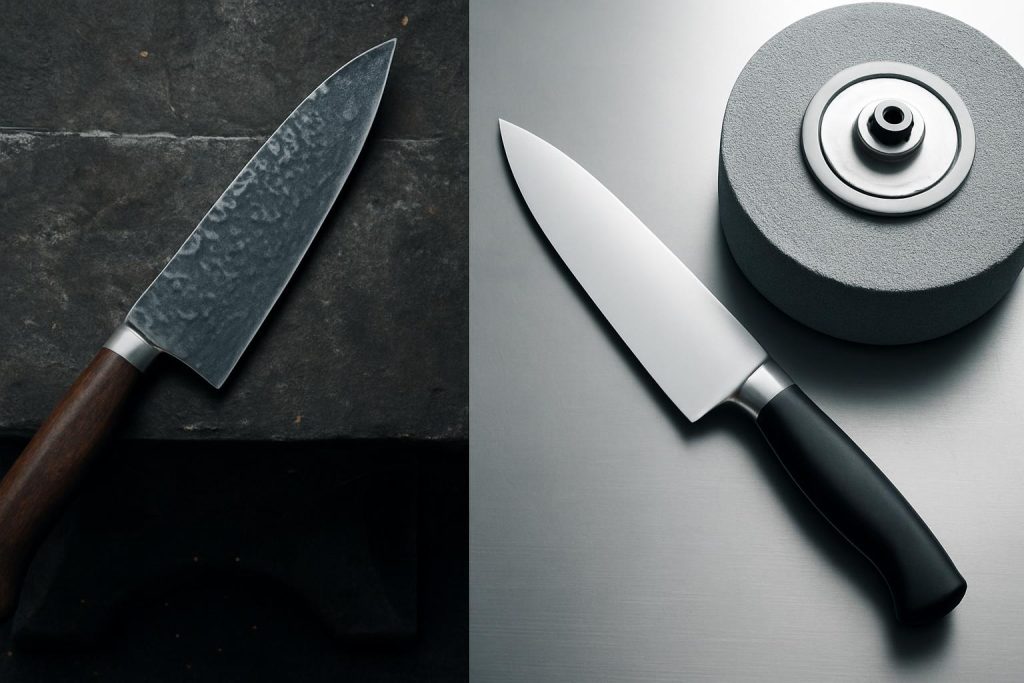
These knives show hammer marks, a darker forge finish near the spine, and brighter ground bevels toward the edge. They often use simple high carbon steels. They take a very sharp edge and develop a patina with use. Expect visible character and small variations from knife to knife. These are commonly made in Pakistan.
Stainless and Modern Production Series
These knives feature clean satin or mirror finishes, full tang or hidden tang handles with tight tolerances, and stainless steels that resist rust. Edge geometry is consistent from knife to knife, and production volumes are higher. These are commonly made in China.
How Origin Relates to Steel, Edge, and Care
Common Steel Types You May See
Hand forged lines often use simple high carbon steels in the 0.8 to 1.0 percent carbon range. Stainless lines may use mainstream cutlery stainless like 1.4116 or 7Cr17MoV. Some upgraded lines may step into 440C or similar. The exact steel varies by series. Check the product page.
Edge Retention and Hardness
High carbon hand forged blades are often hardened to a level that provides strong bite and keen edges, but they require more maintenance to avoid rust. Stainless blades trade a small amount of bite for corrosion resistance and easier upkeep. Both can perform well if heat treated correctly. Quality control matters more than the passport of the blade.
Daily Care by Material
For high carbon knives:
- Wash by hand immediately after use and dry fully
- Apply a thin coat of food safe oil if storing for more than a day
- Expect and welcome patina as normal protection
- Avoid acidic foods sitting on the blade
For stainless knives:
- Wash by hand and dry; avoid the dishwasher
- Stain resistance helps, but do not leave wet in a sink
- Hone lightly and sharpen as needed to maintain bite
Fit, Finish, and What to Inspect on Arrival
Whatever the origin, inspect your knife when it arrives. Look for the following:
- Even grind lines and a centered edge apex
- No gaps between handle scales and tang
- Secure rivets or pins with no play
- Straight spine and no warps
- Cleanly seated bolster or ferrule
If something looks off, contact the brand within the return window. Reputable sellers will make it right.
How Origin Affects Price and Value
Manufacturing in Pakistan and China allows brands to offer aggressive pricing for hand forged and stainless lines. You get access to traditional forging or modern factory consistency without the premiums associated with small batch Western or Japanese shops. Value depends on whether the brand invests in better heat treatment, handles, sheaths, and quality checks. Some series will be a stronger value than others even if they share the same origin.
Collaborations and Limited Runs
Cooking Guild has released collaboration knives with creators. These are usually produced by the same partner forges that handle their core series. A collab label does not automatically change the country of origin. Confirm on the product page just as you would for any other model.
Counterfeits and Lookalikes
Hand forged styles with hammer marks are widely copied. If you see a price that is far below the brand’s site, you may be looking at a counterfeit or a different factory spec. Buy from the official site or an approved retailer. Check logos, stamps, and packaging. Country of origin on counterfeits may be misrepresented.
Warranty, Returns, and Fulfillment
Regardless of origin, after sales support is what you will use if anything goes wrong. Review the warranty and return policy before purchasing. Check where the brand ships from to estimate delivery time and costs for returns. Good support and clear policies can make a bigger difference to your experience than the exact factory location.
How to Choose the Right Cooking Guild Knife for Your Kitchen
Pick by Steel and Maintenance Level
Choose high carbon hand forged if you want sharpness and do not mind extra care. Choose stainless if you want less maintenance and more corrosion resistance.
Pick by Geometry and Use
Look at blade length, height, and profile. If you rock chop, choose a belly that supports rocking. If you push cut, choose a flatter edge. Balance and weight matter more than origin for daily comfort.
Pick by Handle Comfort
Handles vary in shape and material. Choose a shape that fits your grip. Wood handles need occasional oiling. Composite and resin require less care.
Transparency Checklist Before You Buy
- Confirm country of origin on the product page or through support
- Check steel type and hardness target if listed
- Read warranty and return policy
- Inspect photos for grind consistency and handle fit
- Avoid suspiciously low prices from unknown sellers
Conclusion
Cooking Guild knives are designed by the brand and produced by partner forges in Asia. Hand forged carbon steel lines are commonly made in Pakistan. Stainless and pattern welded lines are commonly made in China. This model is standard in the industry and can deliver strong performance if the brand specifies good heat treatment and maintains consistent quality checks. Always verify the country of origin on the exact model you plan to buy, inspect your knife on arrival, and choose a steel and profile that match your cooking style and maintenance routine. Judge the knife in your hand. Origin is a useful data point, but geometry, heat treatment, and build quality decide how it cuts in your kitchen.
FAQ
Q: Where are Cooking Guild knives made
A: Most Cooking Guild knives are made in Asia through partner forges, with hand forged carbon steel lines commonly produced in Pakistan and stainless lines commonly produced in China.
Q: Are Cooking Guild knives hand forged
A: Some series are hand forged high carbon blades, while other series are modern stainless designs made in factories; it depends on the collection.
Q: How can I verify where my Cooking Guild knife was made
A: Check the product page, look for origin marking on the blade or box, and contact customer support with the exact model if the listing does not state it.
Q: Are any Cooking Guild knives made in the USA or Europe
A: The brand’s mainstream manufacturing is in Asia; if you need a specific origin, verify the product page or ask support before purchase.
Q: Does the country of origin decide quality
A: No; heat treatment, geometry, and quality control matter more, and these can be good or poor in any country.