
We are reader supported. When you purchase through links on our site, we may earn an affiliate commission. Also, as an Amazon affiliate, we earn from qualifying purchases.
Clean makeup brushes do three things at once. They protect your skin, make your makeup look better, and help your tools last longer. The process is simple, fast, and does not need special gear. With a few habits and a weekly 10 minute reset, you can keep every brush fresh without stress. This guide walks through clear, beginner friendly methods, from quick daily wipes to a deep clean that removes stubborn buildup. You will see the right products, exact steps, smart drying, and how to avoid damage. Start with one method today and build a routine you can keep.
Why Clean Brushes Matter
Dirty brushes push oil, dead skin, and old makeup back onto your face. That can trigger clogged pores and breakouts.
Residue makes bristles stiff and uneven. Foundation goes on streaky, powders look muddy, and blending takes longer.
Bacteria grow in damp, product packed bristles. Regular cleaning lowers that risk.
Clean brushes keep their shape, shed less, and last longer. That saves money.
Know Your Brush Types And How Often To Clean
By Bristle Material
Synthetic bristles handle liquid and cream products well and can take slightly stronger cleansers. Mild dish soap or gentle brush shampoo works.
Natural bristles are more delicate. Use lukewarm water and a mild shampoo or gentle brush soap. Avoid frequent use of dish soap. A tiny touch of lightweight conditioner once in a while can soften natural hair, but rinse very well.
By Product Type
Liquid and cream brushes clean weekly or every one to three uses. A quick wipe after each use helps a lot.
Powder brushes clean every one to two weeks, depending on how often you use them and how pigmented the products are.
Eye and lip detail brushes clean more often because they touch sensitive areas and intense colors. Do a quick clean after each use and a deep clean weekly.
Simple Frequency Plan
Daily quick wipe for liquid, cream, and eye brushes.
Weekly deep clean for foundation, concealer, and cream product brushes.
Every one to two weeks deep clean for powder face and eye brushes.
Build A Simple Brush Cleaning Kit
Gentle soap options: baby shampoo, unscented castile soap, mild brush shampoo. For heavy foundation on synthetic bristles, mild unscented dish soap works.
Brush cleanser spray for fast daily cleaning.
Micellar water for quick wipes on powder residues.
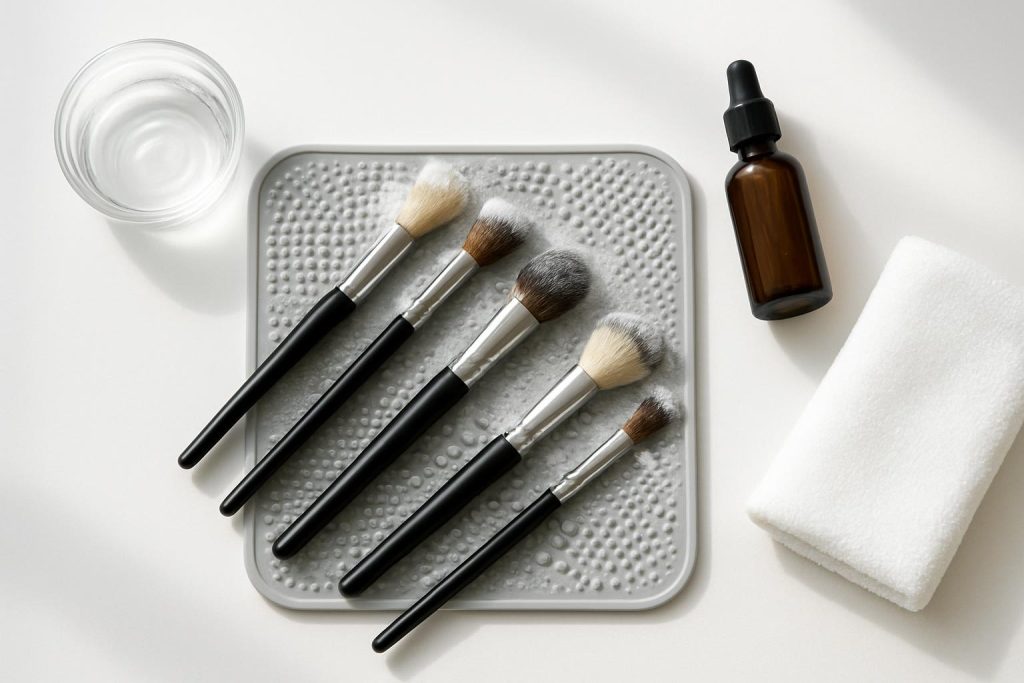
Small bowl and a silicone cleaning mat or textured glove to lift residue faster.
Clean towel that does not shed lint.
Brush guards for reshaping larger fluffy brushes.
A counter edge or rack to dry brushes angled downward.
Seventy percent isopropyl alcohol for handles only. Do not soak bristles in alcohol.
The Core Deep Clean Method
Step 1. Wet only the bristles with lukewarm water, tip pointing down. Keep water away from the ferrule and handle to protect the glue.
Step 2. Add a pea sized drop of gentle soap to your palm, a mat, or the bristles.
Step 3. Gently swirl the brush across your palm or mat. Work from base to tip without pressing too hard. For dense foundation brushes, use small back and forth motions to reach the core.
Step 4. Rinse with the bristles pointing down until the water runs clear. If color or foam remains, repeat steps 2 and 3.
Step 5. Squeeze out extra water from base to tip with your fingers, then blot on a towel. Do not twist.
Step 6. Reshape the bristles with your fingers.
Step 7. Dry with the head angled downward. Lay the handle on a counter with the bristles resting on a towel over the edge so air can flow around the brush head. Avoid sunlight, radiators, and hair dryers.
Dry time ranges from 6 to 12 hours depending on size and density. Flip or rotate once midway if needed.
Extra Notes For Natural Bristles
Use cooler water and mild shampoo. Once every few deep cleans, add a tiny drop of lightweight conditioner, then rinse until the water runs fully clear. Any residue left can affect performance.
Fast Methods When You Are Busy
Quick Clean With Brush Cleanser Spray
Step 1. Spray cleanser onto a clean cloth or paper towel, not directly onto the brush for better control.
Step 2. Wipe the brush back and forth until product stops transferring.
Step 3. Reshape and let the brush air dry for a few minutes before use.
This is ideal for daily upkeep and between shades, especially for eye brushes.
Micellar Water Wipe
Apply micellar water to a cotton pad or cloth. Glide the bristles gently to lift powder pigments. This works well for quick color switches on powder brushes. Follow with a full wash at the end of the week.
Olive Oil Plus Soap For Waterproof Or Long Wear Residue
For synthetic bristles only. Dot a tiny amount of olive oil on the bristles, then add gentle soap and massage on a mat. The oil loosens waxy formulas. Rinse very well and follow with more soap if needed to remove any oily feel. Avoid this on natural bristles and avoid using too much oil.
Dish Soap Trick For Heavy Foundation
For synthetic foundation and concealer brushes, mild unscented dish soap can break down silicones and oils quickly. Lather, rinse fully, and finish with a gentle soap if you want a softer finish. Do not use dish soap often on natural bristles.
Deep Cleaning Upgrades
Use A Silicone Mat
Textured grooves lift product from deep inside dense brushes with less pressure. This reduces scrubbing time and bristle stress.
Double Clean For Stubborn Buildup
First pass with an oil based step, such as a small drop of olive oil on synthetic bristles, then a second pass with a water based gentle soap. Rinse fully between steps.
Short Soapy Dip For Ferrule Buildup
When old liquid makeup hardens near the base, dip only the tips into a bowl of soapy water for two to three minutes, keeping the ferrule dry. Then wash as normal. Never soak past the ferrule.
Drying And Reshaping That Protect Your Brushes
Always dry with gravity helping you. Keep the brush head lower than the handle so water moves away from the glue.
Use brush guards on fluffy natural hair brushes to keep shape while drying. Slide the guard over the damp bristles and set the brush to dry angled down.
Avoid upright drying while wet. Water can travel into the ferrule and loosen glue.
Never use a hair dryer. Heat can warp bristles and weaken adhesive.
Disinfecting And Safety
For personal use, regular cleaning with soap and water is enough. It removes makeup, oils, and most germs you encounter at home.
Clean handles with seventy percent isopropyl alcohol on a cloth. This removes residue and reduces germs on the part you touch most.
If you want extra sanitation, use a brush safe disinfecting spray as directed, and apply sparingly to synthetic bristles. Avoid soaking bristles in alcohol because it can dry and damage them, especially natural hair.
Common Mistakes To Avoid
Do not soak brushes in water past the bristles. Water in the ferrule loosens glue and causes shedding.
Do not use hot water. It can swell wood handles and weaken adhesive.
Do not use harsh detergents, bleach, or vinegar on bristles. These can dry and damage hair and leave odors.
Do not overuse oil cleansers. Excess oil can stay in the brush and affect makeup performance.
Do not skip rinsing. Soap left in the bristles irritates skin and clumps powders.
Do not store damp brushes in closed containers. Trapped moisture encourages odor and bacteria.
Do not scrub aggressively against a towel. This frays and splits bristles.
Do not twist bristles when squeezing water out. Always press from base to tip.
Troubleshooting
Shedding after a clean often points to water in the ferrule or old glue. Review your wash and drying angle. If shedding continues after gentle cleaning and correct drying, the brush may be at the end of its life.
Splayed shape can happen if a brush dried without reshaping. Rewash, gently comb with fingers, use a brush guard, and dry angled down.
Stains can remain on light bristles even when the water runs clear. If the brush feels soft, rinses clean, and applies product evenly, a light stain is not a problem.
Persistent odor means residue remains or the brush dried too slowly. Wash again with gentle soap, rinse well, and dry in a breezy spot angled down.
Dye bleed from colored bristles can show during the first few washes. Keep rinsing until water is clear. This does not mean the brush is dirty.
Loose ferrule or wobbling handle signals failing adhesive. Avoid soaking and heat. If the wobble persists, retire the brush to prevent bristle loss.
Organizing And Storage For Cleaner Brushes
Keep a clean cup for ready to use brushes and a separate space for used brushes that need washing. This stops cross contamination.
Store clean brushes upright in a breathable holder away from steam and direct sunlight.
After washing, leave travel caps off until brushes are fully dry. If you use caps, choose ones with vents.
Rotate a few favorites in and out so each brush has time to dry fully between uses.
Eco And Time Savers
Wash in batches by category. Do detail eye brushes together, then face brushes. You will use less water and soap.
Use a small bowl to lather instead of running water nonstop. Turn the tap on only for rinsing.
Pick a concentrated gentle soap. You need less product and it rinses cleaner.
Dry overnight so you are not tempted to use heat. Plan your wash day before a lighter makeup day.
Set a weekly reminder. Small, regular maintenance beats big, rare wash days.
A Simple Routine You Can Keep
After each use, wipe handles with alcohol on a cloth. Do a quick cleanser spray wipe for eye brushes and any brush used with creams.
Midweek, deep clean foundation and concealer brushes. They carry the heaviest residues.
End of week, deep clean face powder and eye brushes. Check shapes and use guards on fluffy brushes.
Let everything dry overnight angled down. In the morning, your set is ready.
Conclusion
Clean brushes are a small habit with big results. Your skin stays calmer, your makeup applies faster, and your tools work like new. Start with the core deep clean method and add a quick wipe after each use. Protect the ferrule, rinse until clear, reshape, and dry angled down. Avoid harsh products and heat. With this routine, even a busy week will not stand between you and fresh, reliable brushes.
FAQ
Q: How often should I clean foundation and concealer brushes?
A: Clean weekly or every one to three uses, and do a quick wipe after each use to keep performance high.
Q: Can I use dish soap on makeup brushes?
A: Use mild unscented dish soap on synthetic brushes, especially for heavy foundation, and avoid frequent use on natural bristles. Always rinse thoroughly.
Q: How should I dry brushes?
A: Gently squeeze and reshape, then lay the brush at a downward angle on a towel over a counter edge. Avoid heat and upright drying. Allow 6 to 12 hours.
Q: What if my brush keeps shedding after cleaning?
A: It may be glue failure or damage from water in the ferrule. If shedding continues after gentle cleaning and correct drying, retire the brush.
Q: Do I need to disinfect my brushes?
A: For personal use, regular cleaning with soap and water is enough. Use seventy percent alcohol on handles only, and if needed, use a brush safe spray sparingly on synthetic bristles. Never soak bristles in alcohol.