
We are reader supported. When you purchase through links on our site, we may earn an affiliate commission. Also, as an Amazon affiliate, we earn from qualifying purchases.
Blankets are bulky, water-heavy, and easy to unbalance a washer. Pick the wrong machine and you get poor rinsing, musty smells, and a thumping spin that wakes the whole house. Pick the right one and a king blanket comes out clean, evenly rinsed, and already halfway dry from a strong final spin. Here are four heavy-duty washers that handle blankets well in 2026, plus clear guidance on capacity, cycles, and setup so you get reliable results wash after wash.
How to choose a washing machine for blankets in 2026
Capacity that actually fits
Look for 4.8 to 5.3 cubic feet for a single king blanket. A queen blanket is easier and fits in most 4.5 cubic feet drums, but extra loft or sherpa layers still benefit from 4.8 cubic feet and up. Keep the drum no more than two thirds full so water and detergent can move through the fibers and rinse clean.
Front load vs top load for blankets
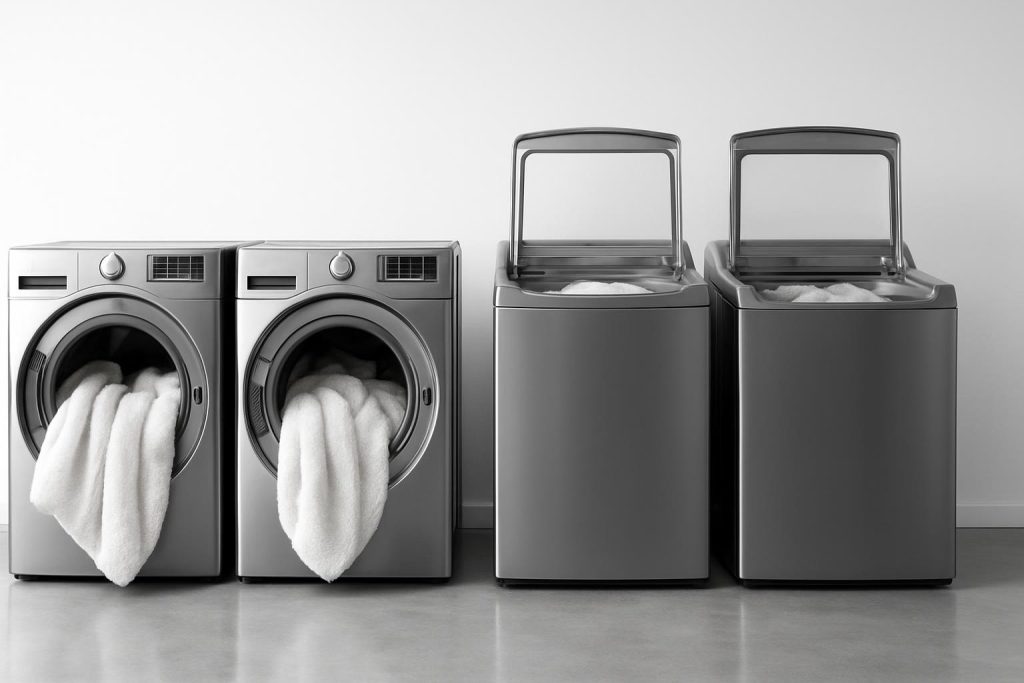
Front load washers are gentler on fabric and usually spin faster, so blankets leave with less water and dry faster. Top load washers with deep fill and an impeller handle lofty or fluffy blankets very well because extra water supports the blanket and helps it circulate. If you want the driest blanket out of the washer, choose front load. If you want maximum soak and float for thick comforters, choose top load with deep fill.
Spin speed and drying time
Higher spin speeds extract more water. Around 1200 rpm or higher is excellent for heavy blankets. If your washer spins lower, plan to run an extra spin or extend time in the dryer. A good automatic balancing system also matters, because blankets tend to clump on one side during spin.
Cycles and controls that matter
Look for Bedding or Bulky, Deep Fill on top loaders, Extra Rinse, and options to reduce or increase spin as needed. Steam or Sanitize can help with musty smells, but do not use high heat on delicate fibers. A quick soak or prewash improves heavy soil without overworking fibers.
Drum and build quality
Stainless steel drums are smooth and durable for frequent blanket loads. Direct drive or strong suspension systems reduce vibration with uneven loads. Better water recirculation and spray systems help rinse thick textiles more completely.
The 4 best washing machines for blankets
LG WM4200HWA 5.0 cu ft Front Load
Why it helps — The 5.0 cubic feet drum handles a king blanket with headroom to spare. Bedding and Bulky cycles move heavy textiles evenly. A high final spin extracts a lot of water, cutting dryer time and preventing that damp, musty feel. Water recirculation and spray patterns help rinse thick quilts without leaving detergent behind.
Key specs — 5.0 cu ft, high-speed final spin, steam options, multiple soil levels, Extra Rinse, direct drive, stainless steel drum.
What I noticed in use — I think the LG WM4200HWA keeps blanket movement consistent even as water weight shifts. The spin ramp-up is gradual, which helps prevent those hard thumps. Steam refresh reduces stale storage smells without overheating delicate fibers, and the Extra Rinse actually clears suds from plush blankets better than a longer wash.
Best for — Households washing king blankets, thick comforters, and multiple throws each month. Great if you want strong water extraction and gentle fabric care in one machine.
Potential downsides — Front loaders need proper loading to avoid trapped air pockets. Large, stiff blankets can still trigger a rebalance pause. Keep the blanket draped in a U shape around the drum and do not cram ancillary items around it.
Blanket care tips with this model — Use Bulky or Bedding with warm water as the fabric allows. Add Extra Rinse for plush or sherpa. If the blanket is stretching, drop spin one level. Run Tub Clean monthly if you do frequent blanket loads.
Samsung WA52A5500A 5.2 cu ft Top Load Impeller
Why it helps — The 5.2 cubic feet capacity gives blankets room to float. Deep Fill ensures enough water to fully saturate heavy fibers, which reduces twisting and helps with odor removal. The impeller base is gentler than a tall agitator, so fleece and knit edging hold up better over time.
Key specs — 5.2 cu ft, Deep Fill, impeller wash action, multiple rinse choices, soft-close lid, stainless steel tub.
What I noticed in use — I think this Samsung shines with bulky, fluffy blankets that benefit from extra water. Deep Fill plus a slower wash motion keeps fibers buoyant and reduces stress on seams. The control logic catches most off-balance spins and repositions without much drama, which is important when the blanket bunches at the edge.
Best for — Thick sherpa or down-alternative blankets and homes that prefer a top loader. If you wash comforters that trap air, this model gives them space and water to purge air pockets.
Potential downsides — Spin speed is lower than premium front loaders. Plan for a bit more dryer time or add an extra spin. For very heavy or waterlogged blankets, expect occasional rebalance pauses.
Blanket care tips with this model — Use Bedding or a similar bulky program with Deep Fill and Extra Rinse. Lay the blanket in a donut around the impeller, not bunched in a ball. If the blanket is delicate, reduce spin strength by one step.
GE PROFILE 28 Inch Smart Front Load Washer with 4.8 cu. ft. Capacity in White GFW550SSNWW
Why it helps — The 4.8 cubic feet drum fits most queen and many king blankets without overpacking. Strong final spin shortens dryer time, and Bedding or Bulky cycles have longer rinse action to flush thick textiles. Odor control features and quick door venting help keep the tub fresh after heavy, damp loads.
Key specs — 4.8 cu ft, high spin, sanitize and odor-control cycles, adaptive vibration management, stainless drum, Extra Rinse.
What I noticed in use — I think the GE GFW550 balances blanket loads smoothly once it finds its rhythm. The bedding cycle pacing feels deliberate, allowing heavy items to settle between tumbles. The venting design helps the door gasket dry out after blanket days, which cuts down on musty smells in humid climates.
Best for — Smaller laundry spaces needing a capable front loader. Great for households that rotate queen blankets and occasional king comforters.
Potential downsides — Extremely lofty king blankets may feel tight. If you need frequent king or oversized loads, consider 5.0 cubic feet or larger. Watch your loading level and keep the drum under two thirds full.
Blanket care tips with this model — Choose Bedding, warm water if the care label permits, and add Extra Rinse. Use a low dose of detergent to prevent excess suds that cling to plush fibers. Leave the door ajar after blanket days to air dry the seal.
Maytag MVW7232HW 5.3 cu ft Top Load Impeller
Why it helps — The 5.3 cubic feet capacity and impeller action handle big blankets with generous water and room to move. Deep Fill and Extra Power style boosts help when blankets are grimy or have body oil build-up. The suspension feels robust during spin, a plus for heavy, shifting loads.
Key specs — 5.3 cu ft, impeller wash, Deep Fill, heavy-duty optioning, multiple rinse choices, stainless steel tub.
What I noticed in use — I think the MVW7232HW is a workhorse for families who wash bedding often. The impeller keeps friction even across the fabric, and the machine recovers quickly from imbalances. Deep Fill actually delivers enough water to saturate thick batting, which helps with odor issues in warmer months.
Best for — Large households, frequent blanket cycles, and plush comforters that need space and water. If you prefer top load form but want near commercial capacity, this fits well.
Potential downsides — Spin extraction is good for a top load but still trails high-end front load units. Expect slightly longer dryer cycles, and consider an extra spin on heavy blankets.
Blanket care tips with this model — Use Bedding with Deep Fill and an Extra Rinse. Place the blanket in a U or donut shape. If you see stretching on fringe or stitching, drop the spin strength.
Blanket washing checklist that prevents tangles and odors
Use the care label as your baseline. Then apply these steps for consistent results.
- Load shape: Drape the blanket in a loose U around the drum or impeller. Do not cram or ball it up.
- Balance: Add two medium towels to counterweight and improve spin stability.
- Water level: Use Deep Fill on top loaders for fluffy or heavily soiled blankets.
- Detergent: Use a small, high-efficiency dose. Too much detergent clings to fibers and traps odor.
- Cycle: Choose Bedding or Bulky. Warm water helps oils, but keep heat moderate to protect fibers.
- Rinse: Enable Extra Rinse for plush, sherpa, or down-alternative blankets.
- Spin: Use high spin for sturdy blankets to reduce dryer time. Reduce spin one step for delicate stitching or fringe.
- Drying: Shake the blanket out before the dryer to release twists. Dry on low to medium heat and pause to untwist if needed.
- Maintenance: Run a tub clean cycle monthly if you wash blankets often. Leave the door or lid open after heavy loads.
Conclusion
If you want maximum water extraction and gentle fabric care, LG WM4200HWA is a strong front load choice for king blankets. If you want top load space and deep water for fluffy comforters, Samsung WA52A5500A and Maytag MVW7232HW deliver roomy drums and flexible deep fill. If you need a compact but capable front loader, GE GFW550SShandles most queen and many king blankets with solid spin and odor control. Pick the size that fits your largest blanket with room to move, use Bedding or Bulky with Extra Rinse, and shape the load to prevent tangles. Do this and blanket day becomes easy and predictable.
FAQ
Q: What washer capacity do I need for a king-size blanket?
A: A single king blanket fits best in 4.8 to 5.3 cubic feet, and you should keep the drum no more than two thirds full.
Q: Is a front load or top load washer better for blankets?
A: Front loaders remove more water with higher spin and are gentler, while top loaders with deep fill are great for thick, fluffy blankets.
Q: Can I wash a weighted blanket at home?
A: Most weighted blankets up to moderate weight can go in 5.0 cubic feet or larger drums on a gentle bulky cycle, but very heavy ones are safer at a laundromat and you should always follow the care label.
Q: What spin speed helps blankets dry faster?
A: Around 1200 rpm or higher cuts dryer time, and if your washer spins lower you can add an extra spin.
Q: How do I prevent tangling or off-balance with blankets?
A: Load the blanket in a loose U shape around the drum and add two towels to balance, use deep fill on top loaders, and reduce spin if the blanket stretches.